“Lapis Surabaya has always been one of my favorite cakes. It usually appears during Eid al-Fitr as a special treat when visiting family and friends. Its texture is incredibly soft thanks to the generous amount of eggs, and what I love most is the thin layer of strawberry jam between the tiers—it’s not much, but it balances the sweetness perfectly. During the holiday, this cake disappears fast because it’s just that good.”
This nostalgic memory captures what many Indonesians feel about Lapis Surabaya: a special-occasion cake that carries history, identity, and warmth in every slice. For American, European, and international readers, this cake is not only a delicious discovery—it is a window into Indonesia’s layered culinary heritage.
A Brief History of Layered Cakes in the World
Before Lapis Surabaya became a beloved icon in Indonesia, layered cakes already had deep roots in European baking traditions. The layered sponge cake, butter cakes of Germany and Austria, and spiced cakes from the Low Countries shaped how European settlers baked abroad. During the colonial era, European cakes traveled globally, influenced local ingredients, and evolved into new regional specialties.
One of the most relevant influences is spekkoek, a Dutch–Indonesian spiced layer cake born during the colonial period in the archipelago. When Dutch settlers brought baking traditions to Indonesia, local bakers adapted the techniques using native spices like cinnamon, cloves, nutmeg, and star anise. This combination formed what is known today as spekkoek or lapis legit, a famous layered cake associated with the colonial elite.
It was in this culinary environment—where European techniques met Southeast Asian creativity—that Lapis Surabaya eventually emerged.
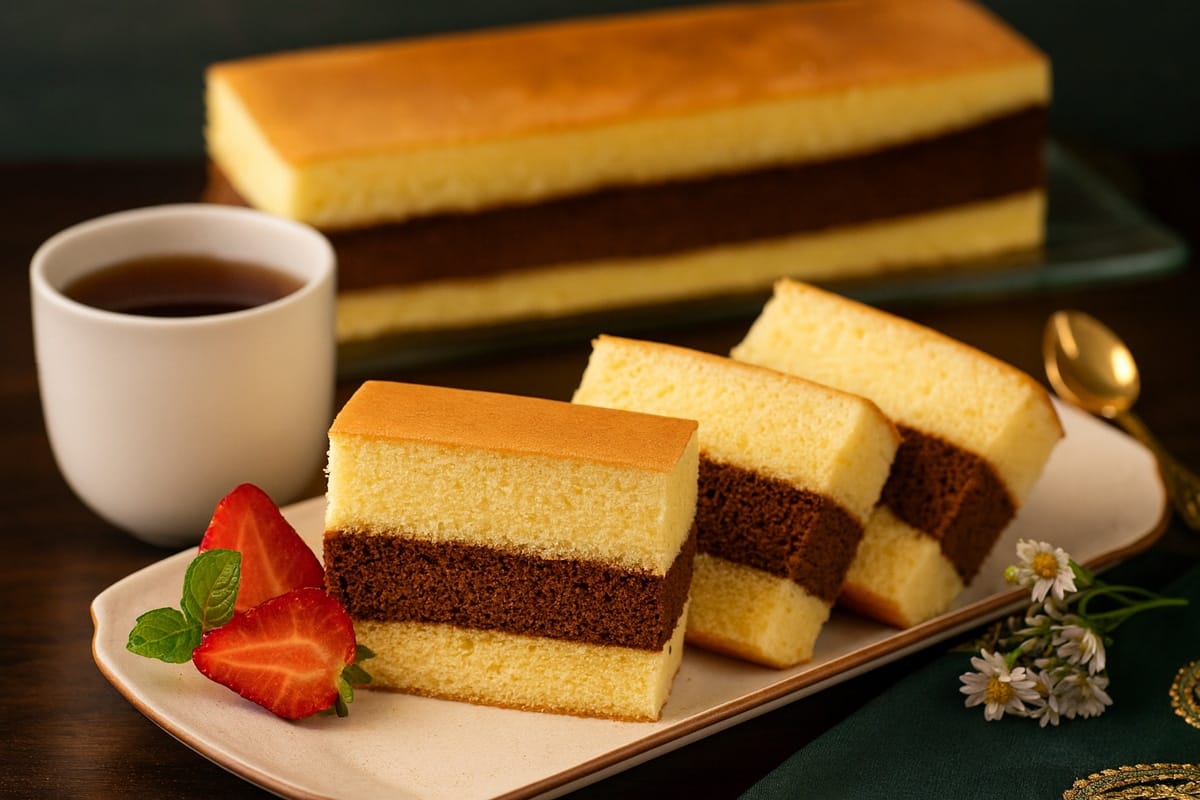
Surabaya Layer Cake (Lapis Surabaya)
Ingredients
Instruction
- Prepare the pans– Line three 9 × 9 inch (22 × 22 cm) square pans with parchment paper.– Lightly grease the sides and set aside.
- In a large bowl, beat the egg yolks, egg whites, and powdered sugar until pale, thick, and slightly fluffy.
- Add the cake emulsifier (if using) and continue beating until the mixture becomes very light and stable.
- Sift in the flour and cornstarch. Fold gently with a spatula until just combined.
- Pour in the melted-and-cooled margarine (or butter), folding carefully until fully incorporated.
- Divide the batter evenly into two pans.
- Bake at 350°F (180°C) for 25–30 minutes, or until the tops spring back when touched.
- Let cool completely.
- Beat the egg yolks, egg whites, and powdered sugar until pale and thick.
- Add the emulsifier and continue mixing until fluffy.
- Sift in the flour, cocoa powder, and cornstarch. Fold gently.
- Add melted-and-cooled margarine (or butter). Fold until smooth.
- Pour into one pan and bake at 350°F (180°C) for 25–30 minutes.
- Cool completely.
- Place one vanilla cake layer on a board. Spread a thin layer of strawberry jam.
- Place the chocolate cake on top. Spread a thin layer of jam again.
- Top with the remaining vanilla layer.
- Press lightly to help the layers adhere.
- Slice cleanly and serve.
Notes
1. About Cake Emulsifier (SP)
- SP is common in Indonesian baking to stabilize airy sponge cakes.
- In the U.S./Europe, it can be omitted.
- Substitute: Add ½ tsp cream of tartar + ensure eggs are well-whipped.
- Without emulsifier, cakes may be slightly less tall but still delicious.
2. Butter vs. Indonesian Margarine
- Indonesian margarine has a bold flavor and higher salt content.
- Use unsalted butter for a more refined, Western-leaning taste.
- For a more “authentically Indonesian” flavor, add a small pinch of salt.
3. Preventing a Dense (Bantat) Cake
- The melted margarine/butter must be cool, or it will deflate the batter.
- Fold gently—stop mixing as soon as ingredients are combined.
- Ensure the oven is fully preheated to 350°F.
4. To Keep Layers Even
- Spread batter evenly in pans—use a spatula to level.
- If cakes dome slightly, trim the top for perfectly flat stacking.
5. Filling Tips
- Spread jam thinly; too much will make layers slip.
- Chill the assembled cake for 15–20 minutes before slicing.
The Origins of Lapis Surabaya: A Cake Born in the City of Heroes
Lapis Surabaya is believed to have originated in Surabaya during the nineteenth century. One of the names often associated with its early development is Ong Swie Thian, a local baker whose creativity helped shape the aesthetic and taste of the cake. Inspired by European layered desserts, he experimented with rich egg-based batters and colorful layers, ultimately giving birth to the visually striking two-tone cake we know today.
While lapis legit features dozens of thin layers baked separately and stacked over four to six hours, Lapis Surabaya takes a different approach. It focuses on three thick, luxurious layers—two golden-yellow layers sandwiching a single cocoa-brown layer. The contrast is bold, elegant, and instantly recognizable.
The name “Surabaya” reflects its birthplace, and over time the cake became tightly woven into the culinary identity of the city. When people think of souvenirs from Surabaya, this cake—alongside rawon, sambal bu rudy, and other classics—is always at the top of the list.

Why “Spiku”? The Dutch Connection
Locally, Lapis Surabaya is also called spiku, derived from the Dutch words spek (pork belly fat) and koek (cake). Although the cake contains no pork, the name comes from the resemblance between its distinct layers and the alternating fat-and-meat pattern found in pork belly. During the Dutch colonial era, Europeans frequently baked layered cakes in Indonesia, and the local population eventually adapted, reimagined, and perfected versions that used local ingredients and local taste preferences.
Interestingly, while lapis legit reflects the spice-heavy European influence, Lapis Surabaya reflects a more Indonesian reinterpretation: rich, buttery, egg-forward, and naturally sweet without relying on aromatic spices.
How Indonesians Enjoy This Cake
Lapis Surabaya is more than an Indonesian butter cake—it is a symbol of abundance, prosperity, and heartfelt hospitality. Because it requires dozens of egg yolks, real butter, and careful craftsmanship, Indonesians traditionally reserve it for meaningful moments. The cake communicates respect for guests and the desire to offer something truly special, not something ordinary.
A Cake for Special Occasions
In Indonesia, Lapis Surabaya is rarely an everyday treat. Instead, it appears during moments of celebration and family connection, including:
- Eid al-Fitr (Lebaran)
- Christmas
- Weddings and engagement ceremonies
- House visits and family reunions
- Gift-giving (oleh-oleh)
- Festive holidays and milestone events
Its richness represents:
- Abundance
- Prosperity and good fortune
- Celebration and gratitude
- Warm hospitality for honored guests
For many families, presenting Lapis Surabaya is a gesture of love and generosity—something reserved for the most important people.
Modern Variations
While the classic version uses strawberry jam between the layers, modern bakeries across Indonesia have expanded the flavor palette. Today you can find:
- Blueberry jam
- Pineapple jam
- Raspberry jam
- Chocolate ganache or chocolate fudge layers
- Pandan + yellow + chocolate triple-layer combinations
- Premium interpretations with rum essence or artisanal butter
Despite the innovations, the buttery yellow cake paired with bright strawberry jam remains the most iconic—and the most nostalgic.
What Makes Lapis Surabaya Different from Lapis Legit?
Even though both cakes share historical roots, they differ dramatically in texture, technique, and flavor.
Lapis Legit
- Derived from Dutch spekkoek.
- Uses a spiced batter with cinnamon, cloves, nutmeg, and star anise.
- Built from 18–23 ultra-thin layers baked individually.
- Time-consuming: can take up to six hours.
- Dense, moist, and aromatic.
Lapis Surabaya
- Focuses on simplicity and elegance with just three thick layers.
- No spices—just pure buttery richness.
- Uses a large amount of egg yolks, often 20–30 in traditional recipes.
- Soft, delicate crumb with a melt-in-the-mouth texture.
- Finished with a thin layer of strawberry jam.
While lapis legit is complex and heavily spiced, Lapis Surabaya is refined, lighter in flavor, and beloved for its silky tenderness. Many Indonesians serve Lapis Surabaya during celebrations such as Eid, weddings, birthdays, and family gatherings because it symbolizes generosity, abundance, and togetherness.
What the Cake Represents Culturally
In Indonesia, Lapis Surabaya is more than dessert—it is a status cake. Because of the cost (eggs and butter are not cheap) and the skill required to make it successfully, the cake is often associated with holidays and important events. It is gifted to relatives during Eid al-Fitr, presented to guests during formal gatherings, and purchased as a premium souvenir when visiting Surabaya.
The layers also hold symbolic meaning. Just like lapis legit, the structure of multiple layers represents prosperity, growth, and good fortune. While these symbols are subtle, they contribute to the cake’s longstanding prestige in Indonesian culinary culture.
Challenges of Making Lapis Surabaya in Western Countries (and Solutions)
While the recipe seems straightforward, Western home bakers face several challenges:
1. Ingredient Differences
- American and European butter often has slightly higher water content.
- Yolks may vary in color and richness compared to Indonesian eggs.
Solution:
Use European-style butter (82% fat) for better richness.
2. Oven Temperature Variability
Western ovens—especially gas ovens—can run hot or have uneven heat distribution.
Solution:
Bake each layer one at a time in the center rack, and use an oven thermometer.
3. Cake Flour Availability
Indonesia commonly uses low-protein flour, which creates a tender crumb.
Solution:
Use cake flour or mix all-purpose flour with cornstarch.
4. Strawberry Jam Differences
American and European strawberry jams can be sweeter or thicker.
Solution:
Choose a jam labeled “extra fruit” or “reduced sugar” to avoid overpowering sweetness.
5. Cake Emulsifier (SP) Is Uncommon in the West
One of the biggest challenges when recreating Lapis Surabaya outside Indonesia is finding cake emulsifier, known locally in Indonesia as SP.
This ingredient helps stabilize the eggs, improves aeration, and gives the cake its signature tight yet tender crumb.
However, SP is rarely available in American or European grocery stores.
Here’s the solution:
- Replace SP with 1 teaspoon baking powder
- Make sure to cream the butter and sugar properly until pale and fluffy
- Ensure the eggs are at room temperature so the batter emulsifies correctly
- Do not overmix after adding flour to avoid deflating the batter
This combination gives stability and volume that closely replicates the results of SP—without needing a specialty ingredient.
Tips for Western Home Bakers (Fail-Proof)
- Use room-temperature ingredients—this ensures better mixing and aeration.
- Beat the eggs and sugar until very thick and pale to achieve the signature softness.
- Fold the flour gently to avoid deflating the batter.
- Use parchment paper for easier release without breaking the delicate layers.
- Let each layer cool completely before assembling to prevent slipping.
- Apply only a thin smear of strawberry jam; too much will make the layers slide.
How Western Readers Can Serve Lapis Surabaya
Lapis Surabaya fits beautifully into Western dining culture because it pairs well with beverages and desserts already popular in the US and Europe. Serve it:
- With black tea, Earl Grey, or chamomile.
- With medium-roast coffee or cappuccino.
- As a refined dessert for holidays, potlucks, or Asian-themed dinner parties.
- With fresh berries to balance the richness.
- As a brunch dessert alongside pastries.
Its look is elegant enough for events but simple enough for casual sharing.
Nutrition Information and Consumption Considerations
Because of the large quantity of egg yolks, butter, and sugar, Lapis Surabaya is naturally calorie-dense. A small slice (about 80–100 g) may contain:
- 350–450 calories
- High levels of fat (20–30 g)
- High cholesterol due to egg yolks
- Significant sugar content
Enjoying the cake in moderation is advisable—particularly for those monitoring cholesterol, weight, or blood sugar. However, its richness also means that small portions are satisfying, making it easy to savor without overindulging.
Try it at home!
For Western readers who love exploring international flavors, Lapis Surabaya offers:
- A meaningful taste of Indonesian history.
- A luxurious, soft, buttery cake different from anything in typical Western baking.
- A chance to connect with a cultural story layered into each slice.
Making it is both a rewarding baking challenge and an immersive culinary adventure.
If you do try baking it at home, don’t hesitate to share your experience—every attempt, every success, and even every funny mistake contributes to keeping this iconic cake alive and appreciated around the world. Post it, tag it, or share it with friends so more people can discover the magic of Indonesia’s most elegant layer cake.