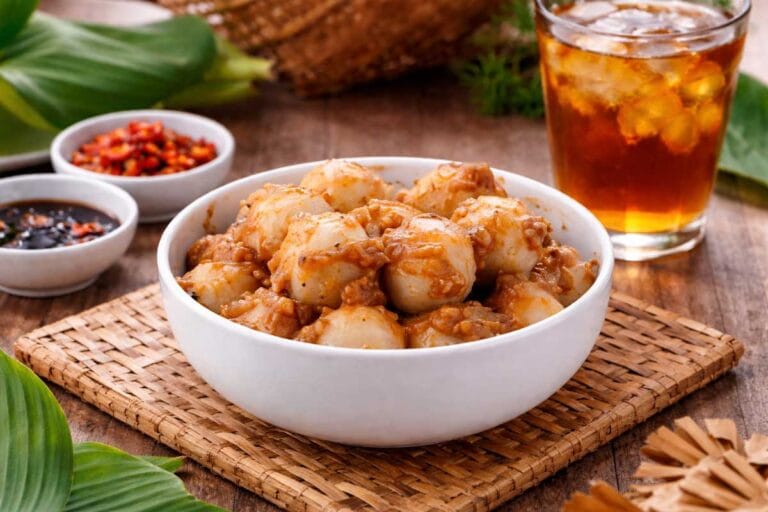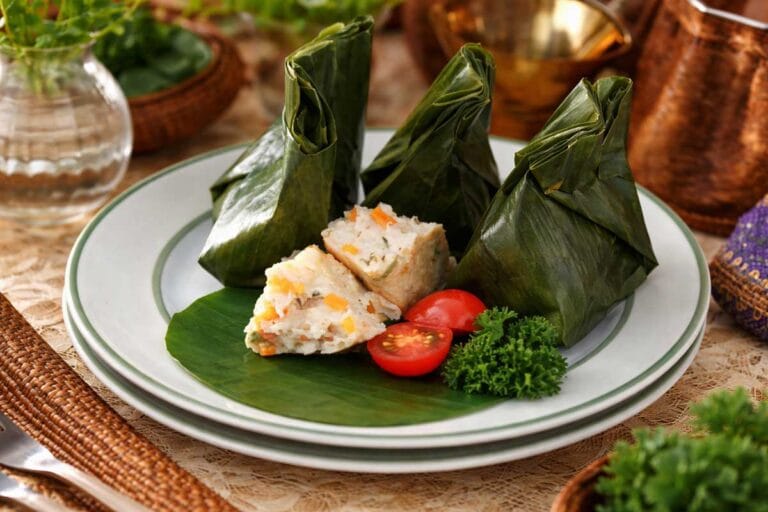
“In 2023, Rawon, Indonesia’s Black Beef Soup was named the world’s best soup, ranking first among dozens of soups across the globe. Once again, it proved that Indonesian cuisine — with all its diversity and depth — holds a truly universal appeal. Indonesians know flavor, and they know how to cook it well.”
What Exactly Is Rawon?
Imagine a bowl of beef soup — dark as midnight, rich as espresso, and perfumed with tropical spices. That’s Rawon, a legendary dish from East Java, Indonesia, that has captured hearts (and taste buds) for over a thousand years.
While many soups around the world lean on clarity or creaminess, Rawon stands out with its black broth made from buah kluwek (black nuts or Pangium edule). This ingredient gives Rawon its distinctive color, earthy aroma, and deep, nutty umami — a flavor unlike any other.
In Indonesia, Rawon isn’t just food; it’s a story, a memory, and a proud symbol of Javanese culinary artistry.
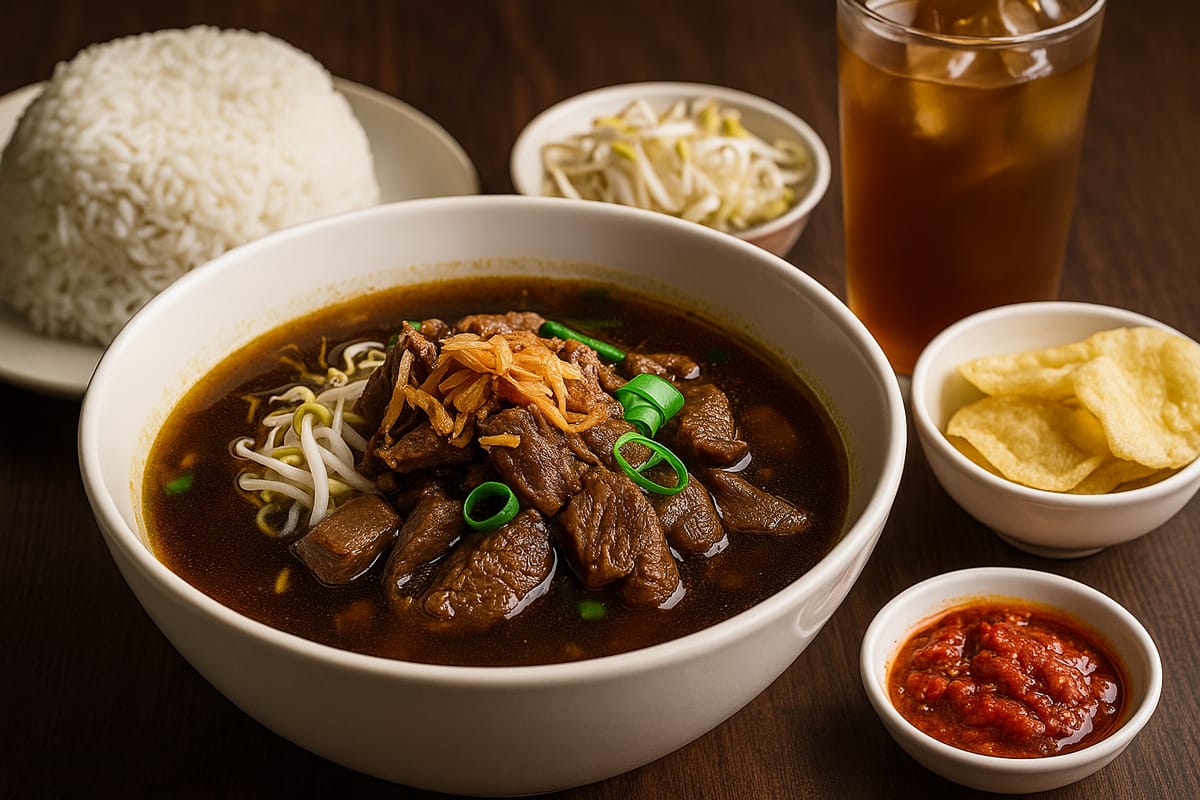
Rawon Daging Khas Surabaya (Indonesian Black Beef Soup)
Ingredients
Instruction
- Parboil the beefBring water to a boil in a large pot. Add beef cubes and boil for 5 minutes. Drain and discard the water to remove impurities and excess fat.
- Simmer the beefAdd fresh water (8–10 cups) to the pot. Return the beef and simmer over medium heat until partially tender, about 45 minutes.
- Prepare the spice pasteBlend all the bumbu halus ingredients (shallots, garlic, keluak, candlenuts, coriander, turmeric, and oil) into a smooth paste. Add a splash of water if needed to blend easily.
- Sauté the pasteHeat a few tablespoons of oil in a pan. Add the spice paste, lemongrass, kaffir lime leaves, bay leaves, and galangal.Sauté over medium heat until fragrant, darker in color, and the oil separates from the paste — this step builds deep flavor.
- Combine and simmerTransfer the sautéed spice mixture into the simmering beef pot. Stir well and add tamarind water, salt, sugar, and beef bouillon to taste.Continue cooking on low heat for another 30–45 minutes, until the beef is tender and the broth turns dark brown-black and aromatic.
- ServeLadle the soup into bowls. Serve hot with steamed rice, bean sprouts, salted egg, fried shallots, scallions, and sambal on the side.Enjoy with emping or chips for extra crunch.
Notes
-
Keluak Substitute:
If keluak is unavailable, mix 1 tsp fermented black bean paste, ¼ tsp cocoa powder, and ½ tsp dark miso paste to mimic its earthy, nutty flavor and dark color. It’s not identical but creates a similar depth. -
Tamarind Water:
Use tamarind concentrate from Indian or Mexican stores. If unavailable, replace with 1 tsp lime juice + ½ tsp brown sugar for a balanced tang. -
Candlenuts:
Substitute with macadamia nuts — they provide a similar creamy texture when blended. -
Beef Options:
You can use chuck roast or short ribs if brisket is unavailable. Slow-cook them for a melt-in-the-mouth texture. -
Cooking Equipment:
A slow cooker or Instant Pot works wonderfully — just sauté the spice paste first, then cook everything together for 1 hour on high pressure or 6–8 hours on low heat. -
Serving Suggestion:
For a Western-style presentation, serve Rawon in a deep bowl like beef stew, with jasmine rice or crusty bread on the side. - Authentic Rawon Surabaya is never served with lime or lemon — unlike Soto, which uses citrus for freshness. The slight tang in rawon comes from tamarind water (asam jawa) inside the broth, not from added lime juice.
- In Surabaya, locals take pride in the depth of rawon’s flavor — dark, nutty, and full-bodied — without needing any citrus. Adding lime would be like squeezing lemon into a cup of espresso: it changes the soul of the dish.
A Thousand Years of Flavor: The History of Rawon
The story of Rawon stretches back more than 1,000 years. The earliest written record dates to 901 AD, found on the Taji Inscription in Ponorogo, East Java. The inscription mentions a dish called “Rarawwan”, believed to be the ancient ancestor of Rawon.
Back then, Rawon was a dish reserved for royalty. It appeared in palace banquets during the Majapahit Kingdom, often served to kings and nobles. In those days, cooks used buffalo meat, as beef was rare and considered luxurious. Over centuries, buffalo gave way to beef, but the soul of the dish remained unchanged.
Even the name “Rawon” is poetic — derived from rawa (Javanese for “swamp”), referencing the black, inky color of its broth that resembles dark water.
By the 18th and 19th centuries, the dish had spread beyond palace walls into the daily lives of ordinary Javanese families. Old manuscripts like Serat Centhini (1735) and Serat Wulangan Olah-olah Warna-warni (1926) include Rawon among the treasured recipes of Javanese culture.
Today, from the bustling streets of Surabaya to kitchens in Amsterdam, Tokyo, and Los Angeles — Rawon is known proudly as “Indonesian Black Soup.”
Cultural Context — The Indonesian Touch
Food in Indonesia is never just about taste — it’s about togetherness. Rawon is often enjoyed at family gatherings, weddings, and special celebrations.
Traditionally, it’s served with:
- Steamed rice (nasi putih)
- Short bean sprouts (taoge pendek)
- Salted eggs (telur asin)
- Fried shallots and scallions
- Sambal terasi (shrimp chili paste)
- Emping (melinjo crackers)
In Surabaya, you might even find this best soup paired with “dendeng empal” (crispy fried beef) or mendol tempeh — a fermented soybean fritter that adds extra texture.
The dish is often cooked slowly, allowing the flavors to deepen. The longer it simmers, the darker and richer the broth becomes — almost like Indonesia’s answer to French boeuf bourguignon or Mexican mole negro.
Flavor Philosophy — Why It Works
Rawon is built on balance:
- Earthiness from the fermented black nut (kluwek)
- Warmth from spices like galangal, coriander, turmeric, and lemongrass
- Richness from slow-cooked beef brisket
- Slight tang from tamarind water (asam jawa) to keep the palate lively
Unlike bright soups like tom yum or pho, Rawon is dark, grounded, and meditative. It’s a dish that grows deeper with each spoonful — comforting but mysterious, rich yet never heavy.
Every spoon tells a story: one of patience, precision, and the art of transforming something potentially dangerous — the toxic raw kluwek nut — into something profoundly delicious.
The Science and Soul of Kluwek
The magic (and mystery) of Rawon lies in kluwek, a tropical nut from the Pangium edule tree.
In its raw state, it contains natural cyanogenic compounds, which can be toxic. But centuries of local wisdom have perfected a safe, natural fermentation process:
- The nuts are buried in ash or soil for weeks.
- Natural microbes break down the toxins.
- The result? A soft, black, earthy nut paste — perfectly safe and wonderfully aromatic.
That’s why in Javanese kitchens, kluwek is treated with reverence. It’s a reminder that good things take time — and that nature’s wild flavors can be tamed into beauty.
Did you know?
The phrase “mabuk kepayang” (“intoxicated by love”) comes from the kluwek tree’s old name, kepayang. The nut’s mild toxicity inspired the metaphor — a feeling so strong, it makes you dizzy.
About Kluwek (Black Nut): The Soul and Science Behind Rawon
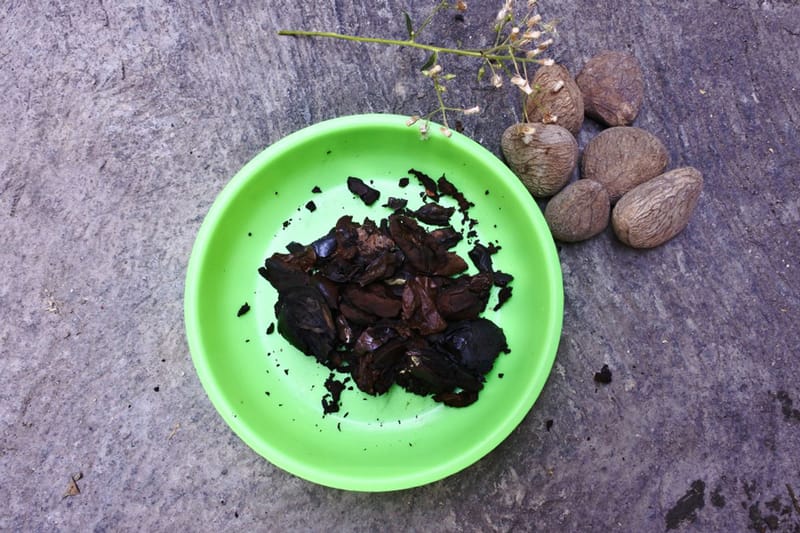

Kluwek comes from the tropical Pangium edule tree, native to Indonesia. The raw nut contains cyanogenic compounds, which can release small amounts of hydrogen cyanide — a compound that is harmful in large doses.
Before you panic, here’s the reassuring part:
👉 The kluwek you buy in markets is completely safe.
Traditional Javanese processing neutralizes these natural toxins through fermentation and aging. The nuts are buried in warm, humid soil (often wrapped in banana leaves or ash) for 30–60 days. During this time, a natural fermentation process turns them dark brown to black, soft, and aromatic.
This transformation not only makes kluwek edible but also unlocks its complex umami flavor, somewhere between dark chocolate, mushrooms, and truffles — the very soul of Rawon.
💡 Tips for Cooks
- Always buy pre-fermented kluwek from a trusted Indonesian or Asian grocery.
- Avoid cracking open raw nuts unless you’re experienced in traditional processing.
- You can store fermented kluwek in an airtight container in the refrigerator for several weeks.
- If you’re unsure, look for the soft, black paste sold in jars — it’s ready to use.
🌿 Cultural Insight
For East Javanese cooks, mastering kluwek means more than knowing how to use a spice — it’s understanding the balance between nature’s danger and flavor. The process of taming its natural poison into something beautiful mirrors the Javanese cooking philosophy: patience, respect for ingredients, and harmony of taste.
“In Surabaya, we say Rawon isn’t just soup — it’s proof that time, wisdom, and flavor can turn something dangerous into something divine.”
How Indonesians Enjoy Rawon
In Surabaya, Rawon is a breakfast favorite (yes, really!). People start their morning with a steaming bowl of black soup, rice, and empal beef.
In Pasuruan, Rawon is served on banana leaves with a side of tempe mendol. In Solo, it’s known as Rawon Penjara, a dish famous near the old city jail. And in Malang, Rawon Nguling is so legendary that locals line up before dawn.
Each region adds its twist, but one rule remains universal:
Never add lime juice. Unlike Soto or Tom Yum, Rawon’s harmony depends on deep savoriness, not acidity.
Why the World Fell in Love with Rawon
In 2023, the culinary encyclopedia TasteAtlas named Rawon the Best Soup in the World, outranking Japan’s ramen and Thailand’s Tom Kha Gai.
This global recognition wasn’t just about taste — it celebrated how Indonesian cuisine brings together history, technique, and culture in one bowl.
Earlier, in 2020, Rawon had already earned the title of Asia’s Best Soup, beating over 20,000 dishes in an international taste survey.
To the world, Rawon might look unusual — dark, unfamiliar, and complex. But once you take a sip, its warmth and depth make perfect sense.
Tips for Making Great Rawon
If you want to make Rawon at home, here’s how to succeed — whether you’re in Jakarta or California:
Key Tips
- Use the right beef: Brisket or shank with some fat gives the broth its silky mouthfeel.
- Toast your spices: Lightly roast coriander, candlenuts, and turmeric to bring out their aroma.
- Cook low and slow: Let the broth simmer for at least 90 minutes for full-bodied flavor.
- Blend the spice paste finely: The smoother the bumbu halus, the better it clings to the beef.
- Don’t rush the sautéing: Sauté the paste until the oil separates — that’s the secret to Rawon’s depth.
Modern Shortcuts
- Use a slow cooker or Instant Pot for tender beef with minimal effort.
- If you can’t find kluwek, mix fermented black bean paste + a touch of cocoa powder to mimic its earthy tone.
- Pair Rawon with jasmine rice, soft-boiled eggs, or even crusty bread for a Western-style serving.
Nutritional and Enjoyment Tips for Western Audiences
Rawon may look indulgent, but it’s surprisingly balanced:
- High in protein from beef
- Rich in iron and B vitamins
- Low in gluten and dairy-free
- Contains natural antioxidants from herbs and kluwek
It’s the kind of comfort food that warms you inside out — like a hug in a bowl.
To enjoy it Western-style:
- Serve Rawon like a stew with a slice of toasted sourdough.
- Add a side salad of cucumber and herbs for freshness.
- Pair with a glass of iced tea or dry red wine for a cross-cultural twist.
Why You Should Try It
Rawon is more than just Indonesia’s best soup — it’s a symbol of patience, tradition, and transformation. It turns humble ingredients into something extraordinary, blending earth, spice, and time into perfect harmony.
So next time you crave something new and soulful, don’t stop at ramen or pho.
Make Rawon. Share it with your friends. Tell them it’s the soup that won the world — and maybe, it’ll win their hearts too.
Quick Facts
- 🏆 Named World’s Best Soup (TasteAtlas, 2023)
- 📜 Recorded in Taji Inscription, 901 AD
- 🍲 Origin: East Java, Indonesia
- 🥩 Signature ingredient: Kluwek (black nut)
- 🌍 Nickname: Rawon – Indonesian Black Soup