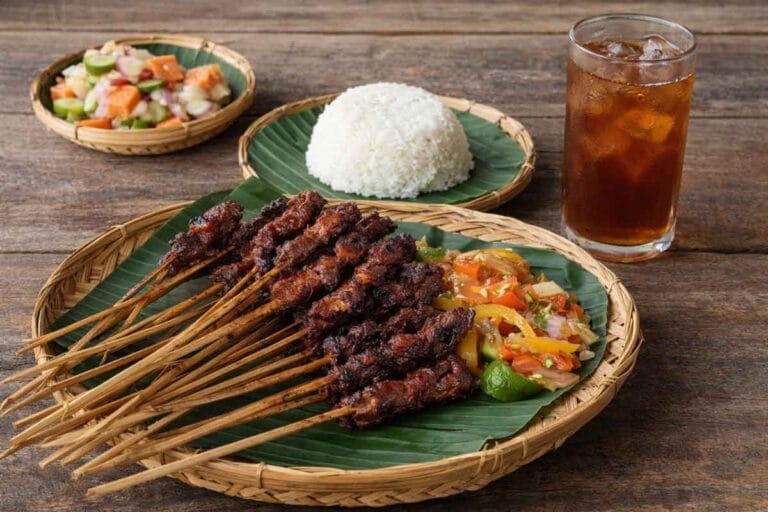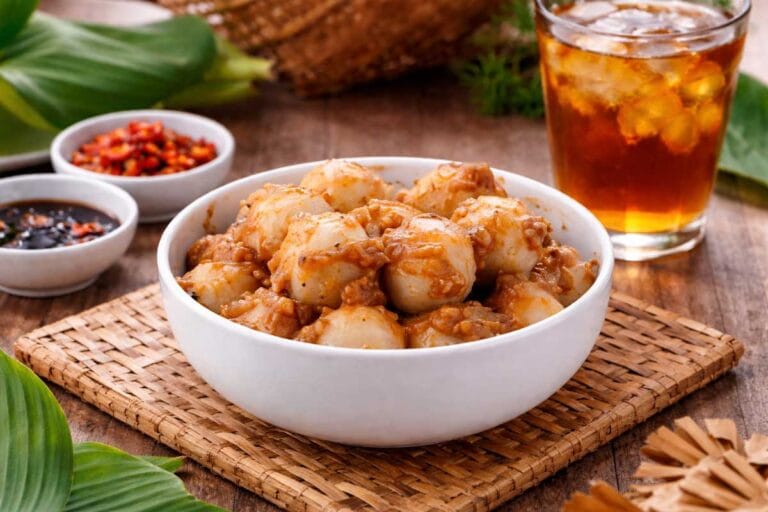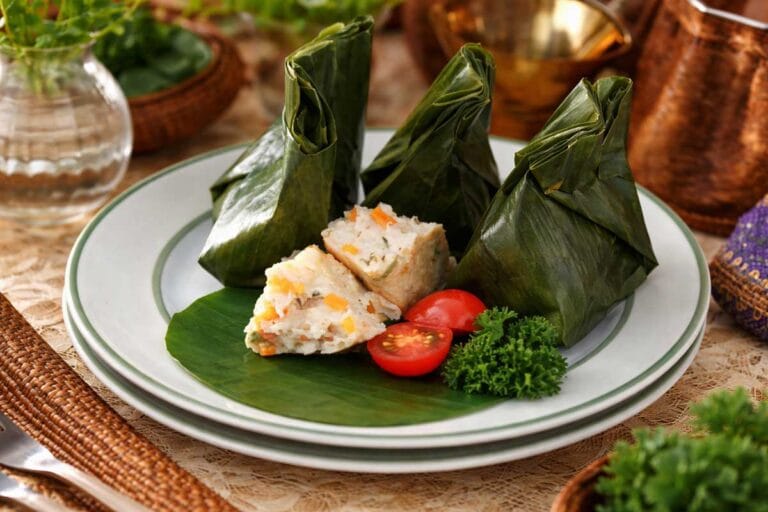
“Soto Kudus is one of the many kinds of soto in Indonesia. It has its own unique charm, the serving bowl is small, and unlike other types of soto where rice is served on the side, Soto Kudus is served with rice inside the bowl, soaked in broth and toppings. For Indonesians, one bowl might be enough to fill the stomach—but for my Western friends, you may want to double the portion size!”
Introduction: What Makes Soto Kudus Special
For Indonesians, soto isn’t just soup — it’s a story. Each region has its own interpretation, and Soto Kudus from Central Java holds one of the most meaningful tales. Its clear, golden broth may look simple, but every spoonful carries history, culture, and warmth.
This iconic dish from the small city of Kudus, on the north coast of Java, reflects more than culinary skill — it embodies a centuries-old message of tolerance and respect. While Soto Betawi is creamy, Soto Lamongan garlicky, and Soto Banjar aromatic with coconut milk, Soto Kudus stands apart with its light, clear broth, free-range chicken or buffalo meat, and a presentation as humble as the people who created it.
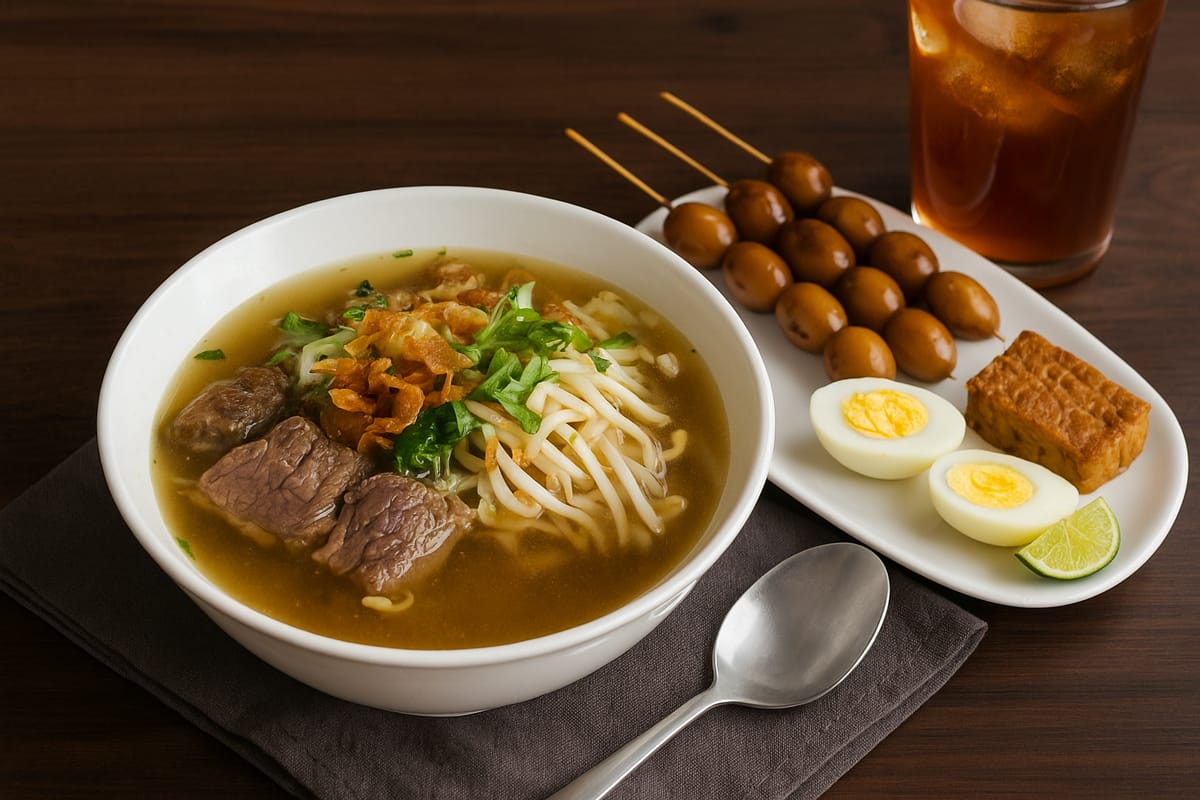
Soto Kudus – Central Javanese Chicken Soup
Ingredients
Instruction
- Rinse the chicken pieces thoroughly under running water.
- In a large pot, add 4 cups of water and bring to a boil with the chicken. Once it starts boiling and foam appears, discard this first batch of water.
- Add another 4 cups of fresh cold water, then simmer the chicken over medium heat until tender and the broth turns slightly golden.
- Blend or grind all ingredients for the bumbu halus into a smooth paste (you can add 1–2 tbsp water if needed).
- Heat 2–3 tbsp oil in a pan. Sauté the spice paste over medium heat until fragrant and slightly golden.
- Add serai, daun salam, daun jeruk, and half of the sliced daun bawang. Cook until aromatic and the herbs soften.
- Pour the sautéed spice paste into the simmering chicken broth.
- Add gula merah, garam, and lada bubuk.
- Simmer gently for another 15 minutes to let the flavors blend.
- Taste and adjust seasoning — the flavor should be savory with a hint of sweetness and citrusy freshness from the lime leaves.
- Remove the chicken pieces from the broth and let them cool slightly.
- Shred (suwir-suwir) the meat using your hands or forks.
- (Optional) Pan-fry the shredded chicken briefly until golden for a firmer texture.
- In individual serving bowls, place a small scoop of rice.
- Top with shredded chicken, tauge, and seledri.
- Ladle hot broth over the top.
- Sprinkle bawang goreng, and serve with sambal rawit and jeruk nipis on the side.
Notes
- Chicken substitution: Use free-range or organic chicken to mimic ayam kampung. Regular broiler chicken will work, but the broth may be lighter.
- Candlenuts (kemiri): Found in Asian or Indonesian stores; substitute macadamia nuts for similar creaminess.
- Daun salam (Indonesian bay leaf): The aroma is milder and more herbal than Western bay leaves. You can mix 1 bay leaf + 1 pandan leaf for a close flavor.
- Daun jeruk (kaffir lime leaves): Use lime zest if unavailable, but add it sparingly.
- Palm sugar (gula merah): Substitute light brown sugar or coconut sugar.
- Bawang goreng: You can make your own by frying thinly sliced shallots in neutral oil, or buy crispy onions at Asian or Middle Eastern stores.
- Serving idea: Try serving it with jasmine rice or steamed rice noodles if you prefer a noodle bowl version.
- Storage: The broth keeps well in the fridge for up to 3 days; reheat gently to preserve the clear texture.
A Taste of History — The Story Behind the Broth
The origins of Soto Kudus trace back to the 16th century, during the time of Sunan Kudus (Ja’far Shadiq Azmatkhan) — one of the nine Islamic saints (Wali Songo) who spread Islam throughout Java.
At that time, the city of Kudus was home to both Muslims and Hindus. Knowing that Hindus regard cows as sacred, Sunan Kudus forbade his Muslim followers from slaughtering or eating beef — even though it’s halal in Islam — as an act of religious tolerance and mutual respect.
To honor this principle, he encouraged the use of buffalo meat (daging kerbau) instead of beef in local dishes. Thus, Soto Kudus was born — a dish that literally represents harmony in a bowl.
Over the centuries, this tradition persisted. Even today, authentic Soto Kudus vendors in the city often display a sign:

“Tidak menggunakan daging sapi” — No beef served here.
It’s a quiet but powerful reminder that food can bridge differences and unite communities.
The Flavor of Simplicity: What’s in a Bowl of Soto Kudus
While Soto Kudus looks unassuming, the flavor is a masterclass in balance.
The broth is made by gently simmering ayam kampung (free-range chicken) or kerbau (buffalo) with traditional Javanese spices:
- Serai (lemongrass) for a citrusy freshness
- Jahe (ginger) and kunyit (turmeric) for warmth and color
- Daun jeruk (kaffir lime leaves) for a subtle tropical aroma
- Ketumbar (coriander seeds) for nutty undertones
The result? A light, clear, golden broth that feels restorative — soothing enough for breakfast yet flavorful enough for dinner.
Each small bowl is filled with rice, topped with shredded meat, bean sprouts (tauge), celery leaves, and a generous sprinkle of crispy fried shallots (bawang goreng). A squeeze of lime and a dollop of chili paste (sambal rawit) complete the experience.
The Serving Tradition in Indonesia
If you visit a warung (local eatery) in Kudus, you’ll notice the bowls are tiny — barely the size of a cereal bowl. Indonesians enjoy this way of serving not because of small appetites, but because the spirit of Soto Kudus lies in moderation and mindfulness.
A single serving is meant to be savored slowly. Locals often order two or three bowls in one sitting, sharing laughter and conversation between spoonfuls. The small size encourages people to eat communally — an expression of togetherness and gratitude.
Common side dishes include:
- Sate telur puyuh (quail egg skewers)
- Sate usus (chicken intestine satay)
- Tahu bacem (sweet marinated tofu)
- Paru goreng (crispy fried beef lung)
These sides add variety and texture — salty, sweet, and chewy — turning a humble bowl of soup into a full feast.
Cultural Context — The Indonesian Touch
Indonesian cuisine often carries layers of meaning beyond taste. In Soto Kudus, food becomes a vessel of cultural diplomacy.
The act of switching from beef to buffalo in the 16th century wasn’t just a culinary choice — it was a moral one. It reflected the Javanese value of “tepa selira”, or empathy toward others.
This cultural nuance makes Soto Kudus more than soup; it’s a culinary metaphor for harmony. In a world that often emphasizes differences, Soto Kudus reminds us how simple acts of respect — even changing one ingredient — can sustain peace.

Flavor Philosophy — Why It Works
What makes Soto Kudus universally appealing is its delicate balance:
- It’s light, but never bland.
- Aromatic, but not overpowering.
- Comforting, yet refreshing.
Unlike creamy Western chowders or French consommés, this Indonesian broth achieves depth without butter or cream. The secret lies in slow simmering — coaxing out natural sweetness from bones, aromatics, and spices.
For Western palates, Soto Kudus feels both exotic and familiar. The warm spices echo chicken soup comfort, but the lemongrass and lime lift it into something new. It’s Southeast Asia’s answer to “soul food.”
How to Make Soto Kudus at Home
You don’t need to fly to Java to taste its soul. With a few substitutions, you can make an authentic Soto Kudus right in your kitchen:
What You’ll Need:
- Free-range chicken (or substitute buffalo with beef if available)
- Lemongrass, ginger, turmeric, coriander, and kaffir lime leaves
- Shallots, garlic, and a dash of palm sugar
- Rice, bean sprouts, and fried shallots for serving
Basic Steps:
- Simmer the chicken in water; discard the first cloudy boil for a clear broth.
- Make a spice paste by blending shallots, garlic, turmeric, coriander, and candlenuts.
- Sauté the paste until fragrant, then add lemongrass and lime leaves.
- Combine the spice mix with the broth and simmer gently.
- Serve hot over rice, topped with shredded chicken, sprouts, and crispy shallots.
💡 Tip: A squeeze of lime before serving brightens everything.
Tips for Western Home Cooks
- Buffalo meat can be replaced with beef shank or brisket, though chicken remains closest to the flavor profile.
- Palm sugar adds depth; if unavailable, use light brown sugar.
- Candlenuts (kemiri) give richness — substitute macadamia nuts.
- Kaffir lime leaves can be mimicked with a mix of lime zest and bay leaf.
- For a noodle version, swap rice with rice vermicelli (bihun).
- Serve in smaller bowls for authenticity — or larger ones if you prefer a Western-sized portion!
Nutrition and Health Benefits
Healthy comfort food perfectly describes Soto Kudus. Unlike many Southeast Asian soups, it uses no coconut milk, making it low in fat but rich in protein and antioxidants.
- High protein: from chicken or buffalo meat
- Low fat: clear broth, minimal oil
- Rich in antioxidants: turmeric, garlic, and lemongrass
- Digestive aid: ginger and lime refresh the palate and support gut health
Fun fact: In Javanese households, Soto Kudus is often served to people recovering from illness — it’s light yet nourishing, just like chicken soup in the West.
Modern Interpretations — Bridging East and West
Today, Soto Kudus has traveled far beyond its hometown. Indonesian restaurants in cities like Amsterdam, Melbourne, and New York often feature it as a “heritage soup.” Some chefs have even experimented with:
- Sous-vide chicken for tender texture
- Bone broth base for added depth
- Gluten-free rice noodles for accessibility
Yet no matter how it’s presented, the essence remains: clear broth, soulful aroma, and a story that transcends borders.
A Dish of Harmony: The Philosophy in Every Spoon
Soto Kudus teaches a timeless lesson — that respect can be expressed through food. By honoring others’ beliefs, Sunan Kudus transformed a local dish into a symbol of unity.
Every bowl served is a reminder that food connects humanity. When you prepare or enjoy Soto Kudus, you’re not just tasting Indonesia — you’re tasting history, empathy, and peace.
Ready to Try It Yourself?
Why not bring a bit of Java into your kitchen this weekend? Soto Kudus is simple enough for beginners yet soulful enough to impress your friends.
- Try the classic recipe with chicken for a light meal.
- Or go bold with buffalo or beef for richer depth.
- Serve with lime wedges and chili sauce for that authentic Indonesian punch.
And when you do — share your experience. Food is best when it travels, not just across tables but across cultures.
Final Thought
Soto Kudus is more than a soup — it’s a bowl of wisdom. In its golden broth lives a story of compassion, culture, and connection. Whether enjoyed in a humble street-side stall in Central Java or recreated in a modern Western kitchen, its message remains the same:
Respect, simplicity, and shared humanity make every meal taste better.