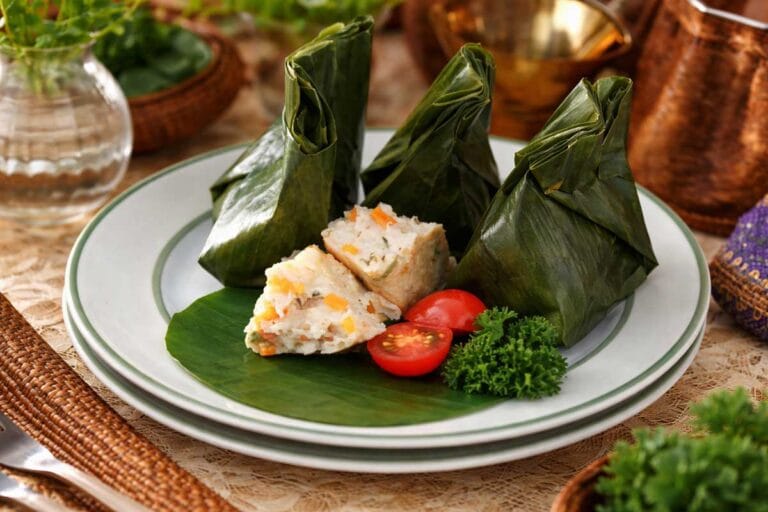
If you love meals that are light but flavorful, simple yet rich with cultural depth, let us introduce you to one of Indonesia’s culinary gems: Asam Pedas Ikan Patin—a spicy and sour fish stew from the province of Riau on the island of Sumatra, Indonesia.
This isn’t just a tasty local dish. It’s a story of migration, trade, tradition, and community—served warm, often with rice, and always with a sense of togetherness.
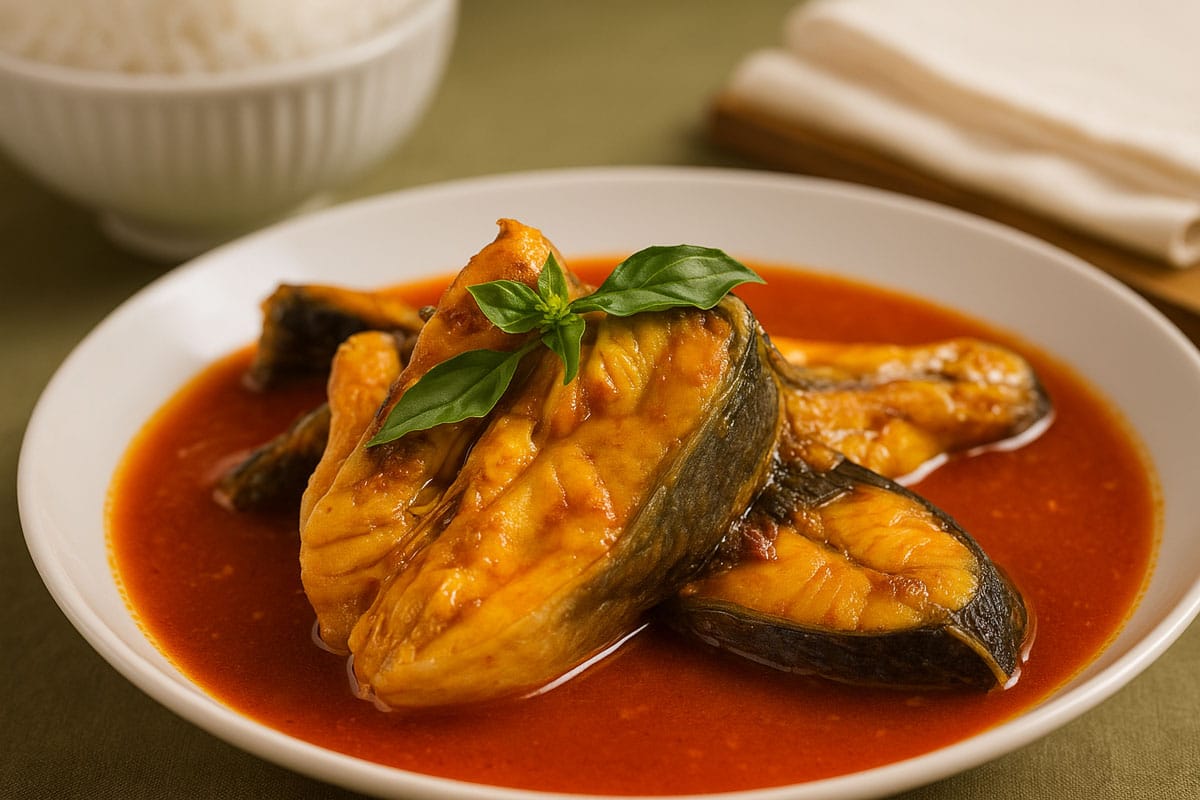
Spicy and Sour Fish Stew (Patin Asam Pedas)
Ingredients
Instruction
- Prepare the FishRinse and pat dry the fish. Cut into thick crosswise slices (about 1.5 inches wide). Set aside.
- Sauté the SpicesIn a large saucepan or Dutch oven, heat the oil over medium heat. Add the blended red chilies, galangal, ginger, lemongrass, Indonesian bay leaves, and kaffir lime leaves. Sauté for 5–6 minutes until fragrant and the oil separates from the paste.
- Make the BrothPour in the water and add the asam kandis (or tamarind paste). Bring to a boil.
- Add the FishGently slide the fish pieces into the boiling broth. Add salt, sugar, and optional seasoning.
- Simmer GentlyReduce heat to low and simmer uncovered for 10–12 minutes, or until the fish is fully cooked and the flavors have blended. Avoid stirring too much to prevent the fish from breaking apart.
- ServeRemove from heat. Let sit for a few minutes before serving with steamed rice.
Notes
- Fish substitution: While ikan patin (pangasius/catfish) is traditional, you can use any mild, firm white fish like trout, cod, tilapia, or snapper. Avoid oily or delicate fish like salmon or sole.
- Asam Kandis: This rare dried fruit gives the dish its signature sourness. If unavailable, use tamarind paste (1 tsp) or fresh lemon juice (2 tsp) to mimic the tang. Add toward the end of cooking if using lemon.
- Chili level: Indonesian chilies are medium-spicy. Adjust to taste. You can also use chili paste like sambal oelek for convenience.
- Galangal vs Ginger: Both are in the recipe, and not interchangeable. If galangal isn’t available, you can substitute with more ginger and a squeeze of lime zest, though the result will differ.
- Daun Salam and Daun Jeruk: These herbs are essential for fragrance. Kaffir lime leaves (daun jeruk) are commonly found in frozen form at Asian grocery stores. Daun salam is harder to find and can be skipped if needed.
- Serving tip: Serve hot with jasmine rice or steamed short-grain rice. Best enjoyed on a rainy day!
Origin Patin Asam Pedas: Riau, A Cultural and Culinary Crossroads
Located on the east coast of Sumatra, Riau is a region defined by its rivers—Siak, Kampar, Indragiri, and Rokan. These waters are home to ikan patin (Pangasius, or river catfish), a freshwater fish that’s long been a dietary staple for the coastal Malay communities.
In the past, villagers would cook patin in simple ways—grilled or fried. But things started to change as Riau became a cultural intersection for traders from China, the Middle East, and India. These merchants brought spices such as ginger, turmeric, galangal, cloves, and cardamom, which slowly blended with local ingredients and cooking traditions.
That’s how dishes like asam pedas—which literally means “sour and spicy”—emerged. It represents a new style of modern Malay cuisine: fresh, bold, and built on balance.

Today, asam pedas is a must-have in Riau households. It’s almost always present at major gatherings: weddings, religious celebrations, or family reunions.
What It Tastes Like
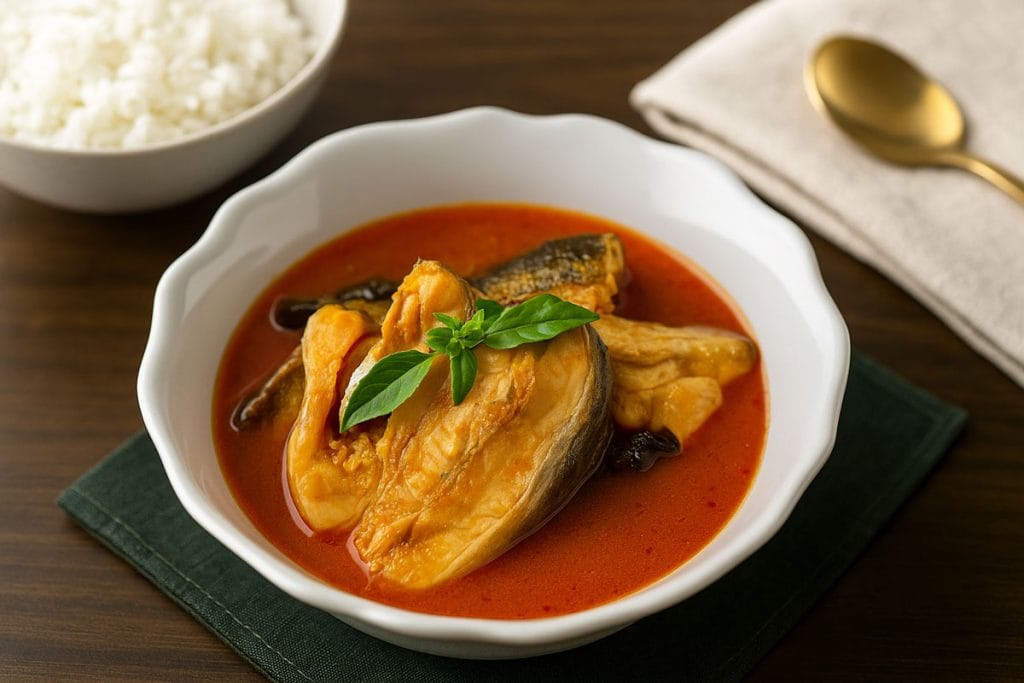
Imagine a clear, red-tinged broth that’s tangy but not overly sour, spicy but still smooth. The heat comes from red chilies, while the tangy notes are traditionally sourced from asam kandis (a dried sour fruit), or belimbing wuluh (a local sour starfruit). These give it a depth that’s different from lemon juice or vinegar.
Herbs like lemongrass, kaffir lime leaves, turmeric, and galangal add layers of fragrance. The fish—firm yet soft—is simmered just long enough to absorb all the flavor, without falling apart.
Think of it as Southeast Asia’s version of cioppino or tom yum, but cleaner and lighter in texture. There’s no coconut milk involved, which makes it a great choice for those who want something less creamy, yet deeply flavorful.
How It’s Traditionally Served
Always with steamed white rice—that’s non-negotiable.
The warmth of the broth, the rich aroma of spices, and the tender patin fish pair beautifully with fluffy rice. Some people add spicy sambal or side vegetables like cucumber and fresh herbs (lalapan). Others enjoy it with crunchy fried snacks like kerupuk (crackers).
A Dish That Brings People Together
In Riau’s Malay culture, food plays a big role in social life. Asam pedas ikan patin isn’t just comfort food—it’s a symbol of hospitality, generosity, and unity.

When someone visits their in-laws for the first time, this dish is often served as a welcoming gesture. It’s also a popular dish to bring when visiting relatives or celebrating milestones. Sharing this meal is seen as a way to strengthen kinship and social bonds.
The balance of spicy and sour flavors even reflects the philosophy of life in Malay tradition—where harmony between emotions, thoughts, and actions is considered essential. The dish is a metaphor for finding balance in everyday life: bold but not overpowering, warm but not aggressive.
Will Western Palates Enjoy This?
Absolutely. In fact, it might be one of the most Western-friendly Indonesian dishes out there.
Its flavor profile is bright and approachable, with none of the complexity that comes with heavy curries or fermented ingredients. The heat level is adjustable. The sourness is subtle and layered. It’s easy to love, even for people who haven’t tried Southeast Asian food before.
If you’ve enjoyed dishes like bouillabaisse, tom yum, or even spicy tomato-based fish stews, you’ll probably love this too.
Health Bonus: Delicious and Nutritious
The star ingredient, patin fish, is not only delicious but also nutrient-dense. It contains:
- Omega-3 fatty acids and DHA
- Vitamin A, B6, B12, D
- Selenium and iron
- Healthy fats that support cardiovascular health
Its soft texture and mild flavor make it a great protein source for all ages—including children and older adults. Compared to many fried or cream-heavy dishes, this one feels light yet satisfying.
Where to Find It in Indonesia
If you’re traveling and want to try asam pedas in its natural habitat:

- Pekanbaru (capital of Riau) – Try Pondok Patin HM Yunus or other local restaurants
- Kampar and Dumai – Famous for their fresh river fish
- Jakarta, Batam, and Medan – Look for Malay or seafood restaurants offering regional menus
Or… just make it at home. With today’s access to global ingredients, it’s surprisingly doable.
Cooking Notes (Quick Tips for Western Kitchens)
- Fish: Use catfish, tilapia, trout, or cod if you can’t find Pangasius.
- Sour agent: Tamarind paste or lemon juice can replace asam kandis.
- Herbs & spices: Lemongrass, ginger, galangal, turmeric, and kaffir lime leaves are essential. Find them at Asian grocery stores or online.
- Spice level: Start mild—then turn it up if you’re into heat.
- Pairing: Always serve with steamed rice. Optionally add sambal, fresh herbs, or even crusty bread for dipping.
Final Thoughts
Asam Pedas Ikan Patin is more than just another fish soup. It’s a dish that captures the history of trade, the wisdom of balance, and the warmth of Southeast Asian hospitality.
For those exploring international flavors, this is an easy entry point to Indonesian cuisine—familiar yet exciting, light yet soulful. Whether you’re a home cook, a culinary traveler, or just someone curious about new flavors, this dish deserves a spot on your radar.
Who knows? One bowl of asam pedas might just become your next comfort food obsession.