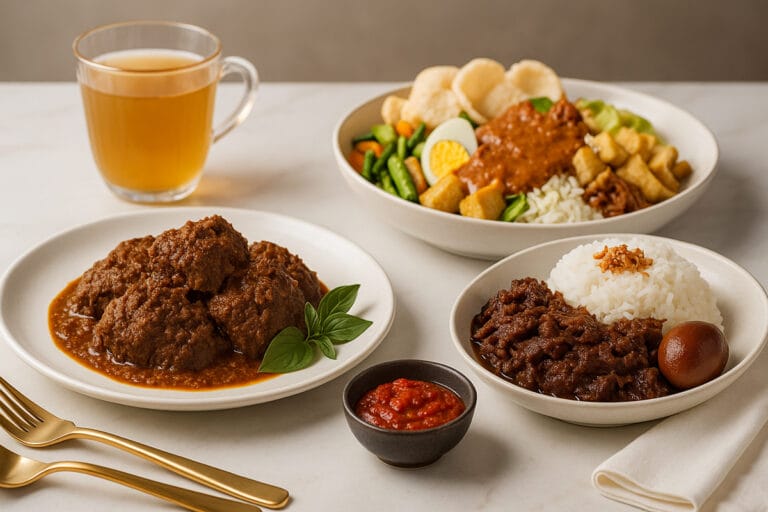
In Indonesia, two types of food stalls are especially popular and deeply rooted in everyday life: warung Tegal and warung nasi Padang. Both serve humble, home-style meals that are fast, affordable, and filling—but each carries a distinct cultural identity and style of service.
“Touch Screen” Dining, the Warteg Way
Warteg, short for warung Tegal, is known for its efficient, no-frills service. There’s even a local joke that warteg has gone high-tech with a “touch screen” system. Of course, this isn’t literal—it just means that customers point their finger at the dishes behind the glass display, and the vendor quickly scoops them onto a plate.
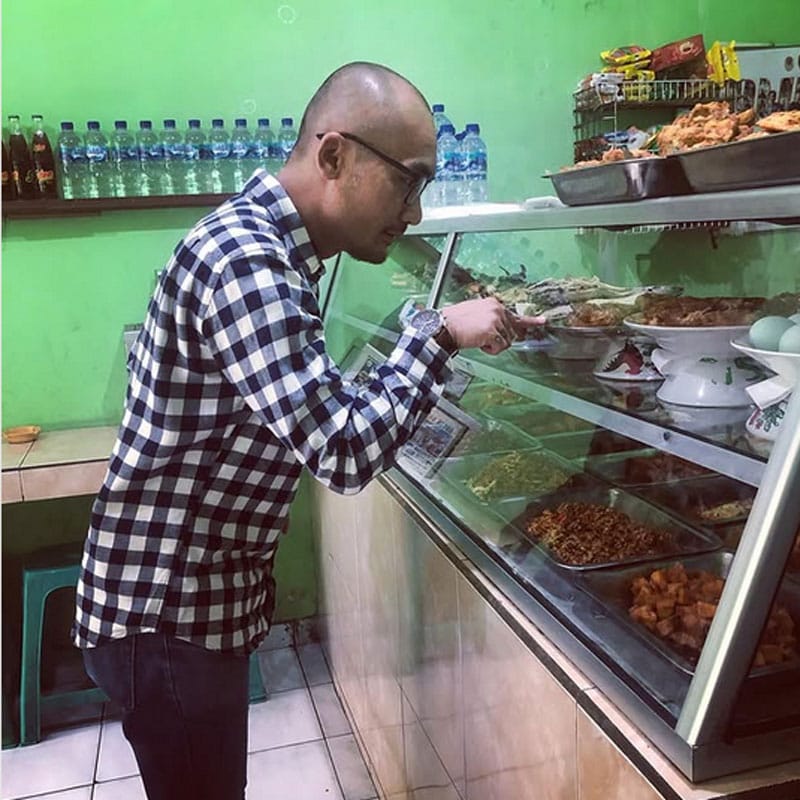
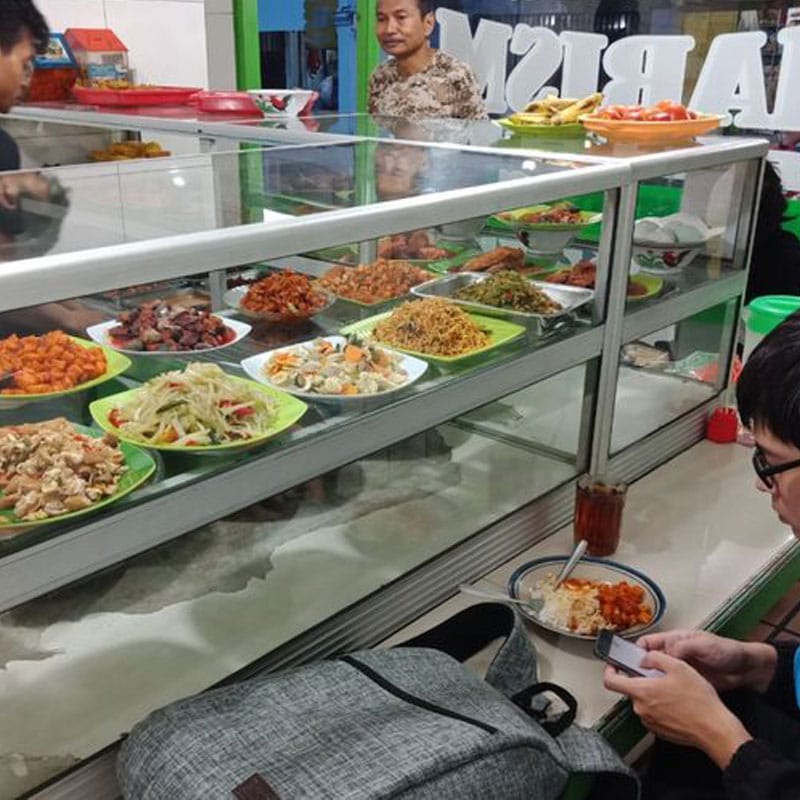
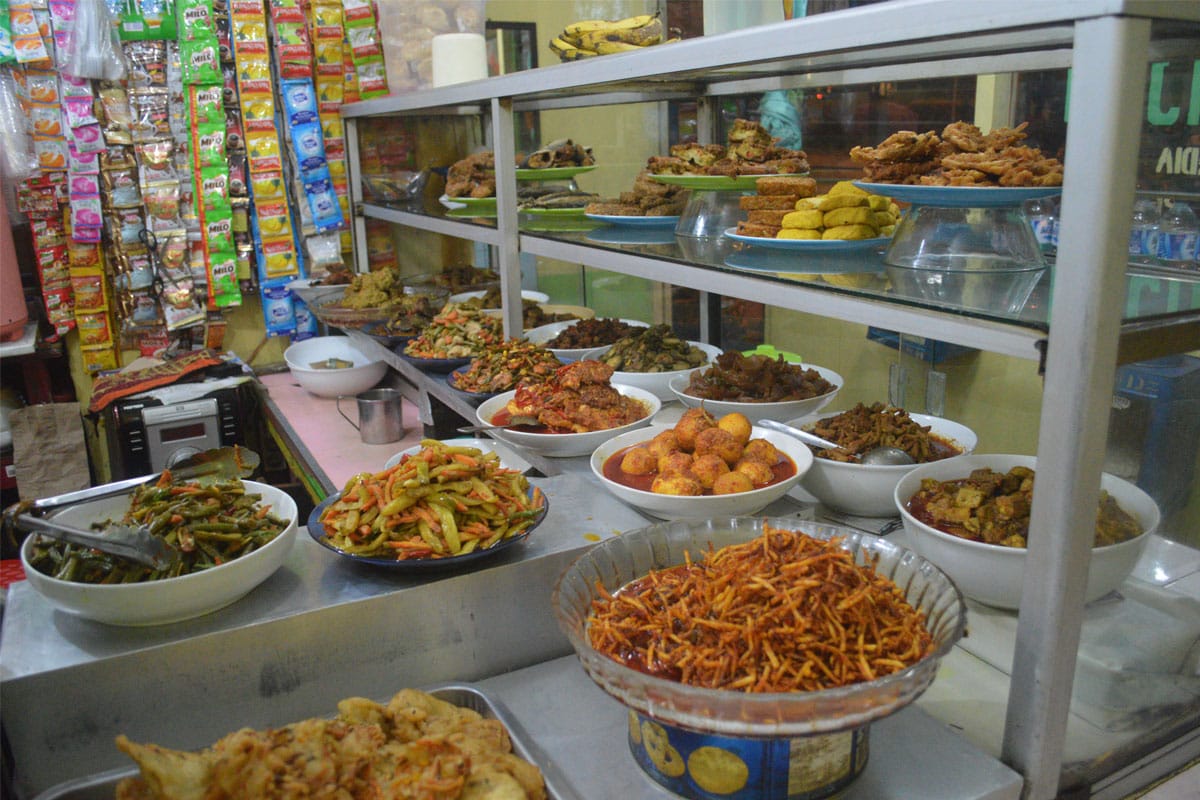
Typically located on busy street corners or tucked into alleyways, wartegs are humble but beloved. The glass display is filled with trays of fried tempeh, spicy eggplant, perkedel (mashed potato fritters), stewed tofu, curried eggs, sautéed greens, and beef or chicken in mild coconut-based sauces. The air smells of fried shallots, steamed rice, and reheated oil—familiar and comforting. There’s usually a jug of free hot tea waiting by the side, poured into floral-printed metal cups.
Warteg meals are simple, fast, and incredibly democratic. Everyone eats here—students, construction workers, office employees, even taxi drivers grabbing a quick bite between fares. It’s a place where you can have a full meal for very little money, served in under a minute. You eat quickly, pay at the counter, and get on with your day.
While wartegs offer speed and practicality, Padang restaurants are a different story altogether—built on ritual, abundance, and culinary boldness.
The Uda and His Tradition
In contrast, warung nasi Padang (often shortened to “warpad”) offers a different kind of ritual. As soon as you walk in, the server—usually addressed as Uda, a respectful term in Minang culture—greets you with a familiar line: “What would you like to eat?(Mau makan apa, Bang)“ Mention something like “rames with chicken curry,” and your plate will be assembled on the spot.
But here’s what’s unique: even if you only request a main dish, your plate will almost always come with a trio of classic sides—young jackfruit curry, boiled cassava leaves, and the iconic sambal ijo (green chili sambal). These aren’t extras; they’re essentials in almost every nasi Padang meal.
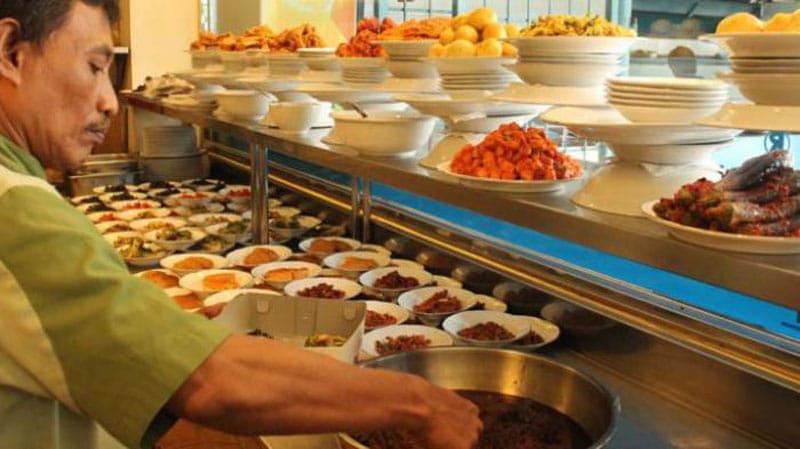
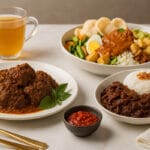
The typical warung nasi Padang is modest in size, with a glass display case filled with colorful and aromatic dishes: dark, glistening rendang, pale and tender ayam pop, bright red chili balado, golden gulai with floating spices. The moment you step in, you’re enveloped in the warm aroma of coconut milk and spices. The clatter of cutlery, the shout of “Nasi tamboh!” from a hungry diner, and the sizzle of a fresh batch of sambal all add to the vibrant sensory experience.


Big Restaurants, Bigger Rituals
In small stalls, you order and get your food plated immediately. But in larger Padang restaurants—like Sederhana, Simpang Raya, Garuda, or the trendy Pagi Sore—the dining experience becomes a kind of theatrical ritual.
Here, you don’t need to order upfront. Just sit down, and moments later, a server arrives with a dozen or more dishes. Everything is placed on your table—whether you asked for them or not. It’s not a buffet; it’s hidang style, a traditional method of serving where food comes to you.
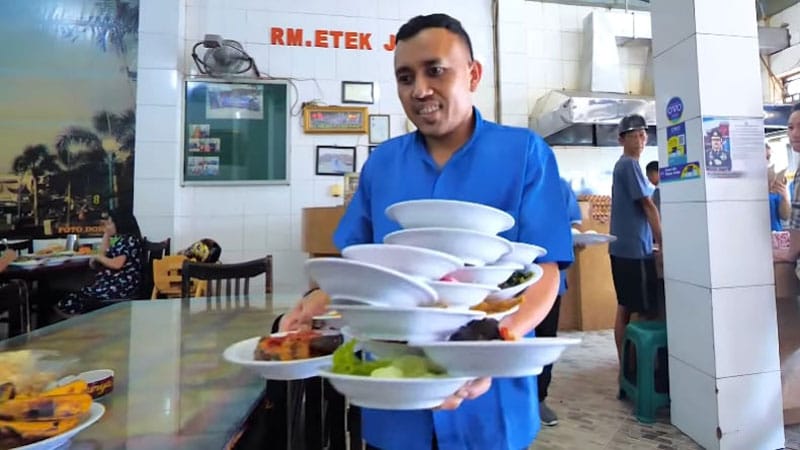
In the past, servers would carry stacks of small plates balanced expertly on their arms—an impressive display of skill. One slip, and the consequences could be severe. These days, many use trolleys for practicality, but the sense of abundance remains.
You can eat whatever you like from the array. You’ll usually be given a plate of rice, along with a small extra side plate known as “nasi tamboh” (extra rice). Still hungry? Just wave over a server and call out “Nasi tamboh!”—and more rice will be delivered to your table with a smile.
Afterward, the server will calculate your bill based on what you actually ate. They know what’s been touched and what hasn’t—so you might want to remember too, just to be sure.
Food as Hospitality and Philosophy
The hidang method isn’t just about convenience. In Minangkabau culture, serving all the food at once is a symbol of generosity and respect. It reflects the idea that a guest should never have to ask—they should simply be given the best and allowed to choose freely.
It’s also a reflection of communal values. In traditional Minang households, meals are shared with everyone at the table, and each person picks the dishes they love without needing to compete or queue.
Bold Flavors, Deep Satisfaction
Padang cuisine is unapologetically bold. Rich with coconut milk, fiery with chilies, and layered with complex spices, it’s a cuisine that doesn’t hold back. Some of the most iconic dishes include:
- Rendang – slow-cooked beef in coconut and spice until deeply caramelized
- Gulai ayam or fish head curry – fragrant yellow curries that are both savory and creamy
- Ayam pop – pale boiled chicken that’s briefly fried, soft and full of flavor
- Balado – chili-based dishes using eggs, potatoes, or beef with a sweet-spicy kick
Combined with hot rice, green sambal, and boiled greens, these flavors form a perfect balance of heat, fat, freshness, and umami.
For me, if there’s one meal that brings both deep satisfaction and bold flavor, it’s hard to beat a plate of nasi Padang. But everyone has their own favorite comfort food—what’s yours?