A Culinary Story from Aceh, Where Food Marks Time and Togetherness
In Aceh, food is never just about taste. It marks time, carries memory, and reflects a community’s shared values. Among the many dishes that embody this philosophy, Daging Masak Aceh, also known locally as Daging Masak Merah Aceh, stands out as one of the most culturally significant. This deeply spiced beef dish is inseparable from Meugang, a long‑standing Acehnese tradition centered on cooking and sharing meat before major Islamic holidays.
This article explores Daging Masak Aceh in its full cultural context: what Meugang is, why meat takes center stage, how this dish developed historically, how it differs from other “masak merah” dishes across Indonesia, and how it can be appreciated and adapted by international home cooks without losing its authenticity.
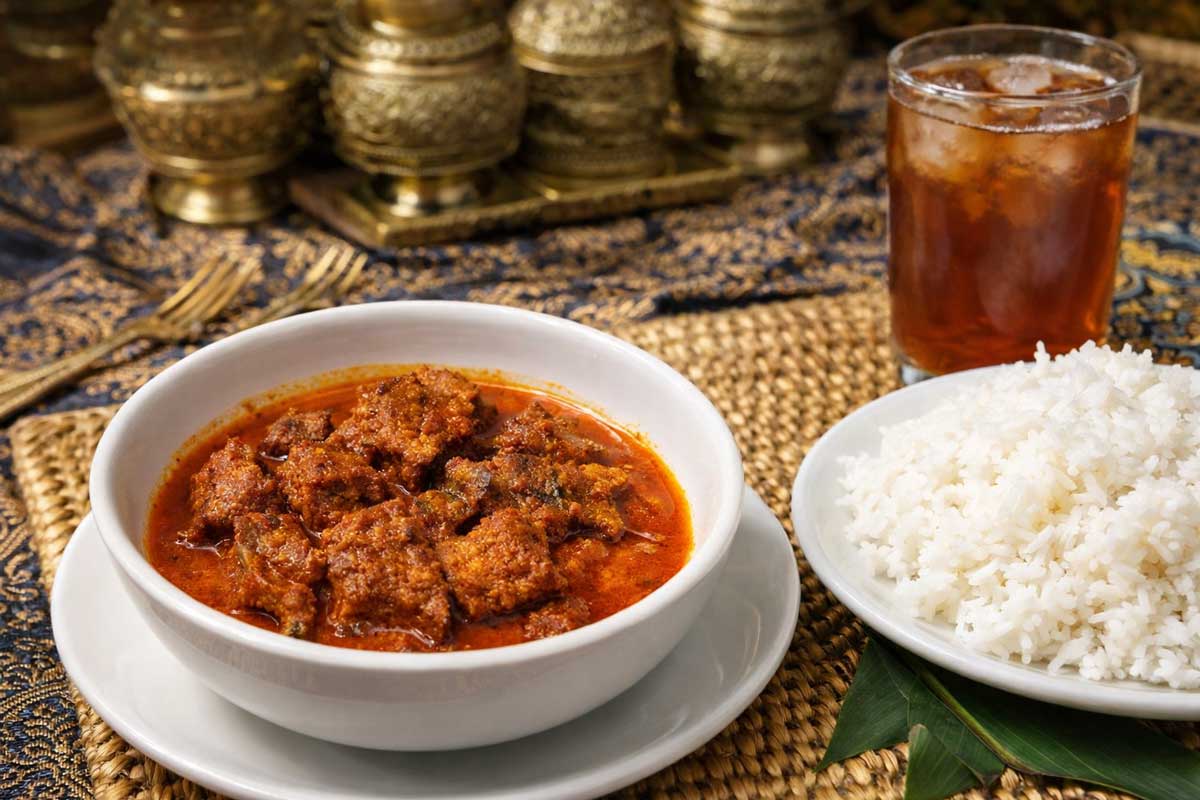
Acehnese Spiced Beef with Roasted Coconut (Daging Masak Aceh)
Ingredients
Instruction
- Prepare the roasted coconutToast the grated coconut in a dry skillet over medium-low heat, stirring constantly, until golden brown and fragrant. Let cool, then grind into a coarse paste using a food processor or mortar and pestle. Set aside.
- Make the spice pasteBlend all spice paste ingredients into a smooth paste, adding a little soaking water from the dried chilies if needed.
- Sauté the spicesHeat oil in a heavy pot. Add the spice paste and cook over medium heat until deeply fragrant and the oil begins to separate, about 6–8 minutes.
- Build the aromaAdd lemongrass, pandan leaves, cardamom, cloves, star anise, and cinnamon. Stir for 1–2 minutes until aromatic.
- Cook the beefAdd beef pieces and stir until lightly coated and browned. Pour in water, bring to a boil, then reduce to a gentle simmer. Cover and cook for 45–60 minutes until the beef is tender.
- Finish the dishStir in the roasted coconut paste and tamarind water. Simmer uncovered for another 10–15 minutes until the sauce thickens slightly and becomes glossy. Taste and adjust salt or acidity.
- Serve hot with steamed rice.
Notes
- Beef choice matters: Avoid tender cuts like sirloin; chuck or shank gives better flavor after slow cooking.
- Heat control: Acehnese food is spicy but balanced. Reduce bird’s eye chilies for milder heat.
- Coconut substitution: Use unsweetened shredded coconut only. Sweetened coconut will ruin the dish.
- No coconut milk: This dish relies on roasted coconut, not coconut milk—do not substitute.
- Make-ahead friendly: Flavor improves the next day; reheat gently.
-
Hard-to-find ingredients:
- Pandan leaves → optional but aromatic
- Galangal → replace with ginger if unavailable
- Tamarind → bottled tamarind concentrate works well in the U.S.
How to Keep the Color Red (Authentic Acehnese Style)
-
Use dried red chilies, not tomatoes.
The deep red color in Daging Masak Aceh comes from dried and fresh red chilies, not tomato sauce or paste. -
Toast the spice paste properly.
Cook the spice paste until the oil separates and turns brick-red. Undercooked spices result in a pale, dull sauce. -
Choose fresh red chilies.
Avoid old or pale chilies, which can dull the color. Fresno or red jalapeños work well in the U.S. -
Don’t overdo turmeric.
Too much turmeric will shift the color toward yellow-orange rather than red. -
Roast the coconut until golden brown, not dark.
Properly toasted coconut deepens the red color. Burnt coconut turns the sauce brown and bitter. -
Simmer gently, not aggressively.
High heat can darken the sauce too quickly. A slow simmer preserves the vibrant red tone. -
Finish uncovered for a glossy red oil sheen.
Letting the dish simmer uncovered at the end allows excess moisture to evaporate and the natural red oil to rise.
-
Use dried red chilies, not tomatoes.
What Is Meugang?
Meugang is an Acehnese tradition of cooking and eating meat together with family and neighbors ahead of important Islamic occasions. It takes place three times a year:
- Two days before the start of Ramadan
- Two days before Eid al‑Fitr
- Two days before Eid al‑Adha
The word Meugang (pronounced mee-uhng) is closely associated with the Acehnese expression makmu that gang, describing how markets become exceptionally crowded during this period. On Meugang days, butcher shops and traditional markets overflow with people buying beef or water buffalo, often despite sharply rising prices.
Yet Meugang is far more than a shopping rush or a festive meal. It is a social ritual—a collective pause that signals gratitude, preparation, and togetherness.
The Philosophy and Cultural Meaning of Meugang
For the Acehnese, Meugang carries layered meanings:

- Gratitude for sustenance received throughout the year
- Spiritual preparation before entering Ramadan
- Family reunion, especially for those returning from migration
- Social solidarity, as families who are able are expected to share meat with neighbors, the poor, and orphans
Historically, Meugang dates back to the era of the Aceh Sultanate. During the reign of Sultan Iskandar Muda in the 17th century, the court organized large‑scale animal slaughter and distributed meat to the population ahead of Ramadan. What began as a royal social policy gradually evolved into a community‑driven tradition that persists today.
At the same time, Meugang reflects social responsibility and dignity. In many communities, being able to provide meat during Meugang is still seen as a marker of accountability and honor within the family.
Why Meat Is Central to Meugang
Meat occupies a special place in Acehnese food culture. Historically, it was not an everyday ingredient but a luxury reserved for meaningful occasions. Meugang became the moment when everyone was expected to eat meat, regardless of social class.
Several beef dishes traditionally appear during Meugang, including:
- Daging Masak Aceh (Masak Merah) – richly spiced beef with roasted coconut
- Sie Reuboh – vinegar‑preserved beef designed to last several days
- Masak Asam Keuëung – beef cooked in a sour, chili‑forward broth
- Acehnese Gulai Merah – a spiced red curry with coconut milk
Each dish serves a purpose. Daging Masak Aceh, in particular, is favored because it can be cooked in large batches, holds its flavor well, and represents celebration rather than preservation.
The History of Daging Masak Aceh
Daging Masak Aceh grew out of Aceh’s long history as a crossroads of global trade. For centuries, merchants from India, the Middle East, and Southeast Asia passed through Acehnese ports, bringing spices and cooking techniques that were gradually adapted to local tastes.
What distinguishes Daging Masak Aceh is its use of red chilies, dry aromatic spices, and roasted coconut, rather than coconut milk. This method produces a dish that is bold, aromatic, and relatively stable—well suited to communal feasts like Meugang.
Over generations, families refined their own versions, but the core identity of the dish remained intact.
Is Daging Masak Aceh the Same as Daging Masak Merah?
In Aceh, this dish is widely known as Daging Masak Merah, a name that refers to its deep red color created naturally by red chilies and slow-cooked spices. Within the region, the terms Daging Masak Aceh and Daging Masak Merah are often used interchangeably and point to the same beloved dish.
Outside Aceh, however, the phrase masak merah can describe a variety of unrelated dishes—some sweeter, some tomato-based, and others prepared with entirely different techniques. Because of this regional variation, using the name Daging Masak Aceh helps clarify that the dish discussed here refers specifically to the Acehnese version, with its roasted coconut, bold spices, and strong cultural ties to Meugang.
Defining Characteristics of Daging Masak Aceh
Several elements distinguish this dish:
- A deep brick‑red color, never bright tomato red
- A slow‑building heat rather than sharp spiciness
- Rich savoriness from roasted coconut, not coconut milk
- A complex aroma from spices such as cardamom, cloves, star anise, and cinnamon
- A sauce that is glossy and lightly oily rather than soupy
Why Is It Called “Red”?
The word merah—meaning “red”—refers to the dish’s deep, earthy color, which develops naturally through the careful use of red chilies and slow-cooked spices. This is not a bright tomato red, but a darker brick-red hue that deepens as the spice paste is sautéed until fragrant and the oil begins to rise.
Unlike many red stews familiar to Western kitchens, Daging Masak Aceh contains no tomatoes, tomato paste, or artificial coloring. Its color comes entirely from chilies, turmeric in small amounts, and the caramelized tones of roasted coconut. When prepared correctly, the sauce turns glossy and richly colored, signaling that the spices have fully matured and the dish is ready to serve.
How Daging Masak Aceh Is Traditionally Served in Indonesia
In Aceh and elsewhere in Indonesia, Daging Masak Aceh is typically served with:
- Steamed white rice
- Pickled shallots and cucumber
- Crackers or emping
- Additional chili condiments for heat lovers
It is almost always eaten in a communal setting, reinforcing its role as a dish of togetherness.
Flavor Profile: What to Expect
Daging Masak Aceh delivers layered flavors:
- Warm, rounded spiciness
- Deep savory notes from roasted coconut
- Lingering aromatic spices
- A subtle tang that balances the richness
For Western palates, it is often described as bold yet comforting—complex without being overwhelming.
What Is Beulangong?
Beulangong refers to a large iron cauldron used for cooking on a communal scale. From this vessel comes Kuah Beulangong, a celebrated Acehnese stew cooked with beef and young banana or jackfruit for village feasts and religious gatherings.
If Daging Masak Aceh represents Meugang at the household level, Kuah Beulangong embodies the same spirit at the community level.
Meugang, Daging Masak Aceh, and Kuah Beulangong: One Cultural Thread
These three elements form a single narrative:
- Meugang provides the moment and meaning
- Daging Masak Aceh expresses the tradition within the family kitchen
- Kuah Beulangong extends it to the wider community
Together, they illustrate Aceh’s deeply collective approach to food and celebration.
Can Daging Masak Aceh Be Adapted Internationally?
Absolutely. Successful adaptation depends on respecting the core principles:
- Choose beef cuts suitable for slow cooking
- Adjust chili levels without eliminating them
- Keep roasted coconut as a defining element
- Provide cultural context when serving
In the U.S. and Europe, the dish works well as a main course paired with rice, flatbreads, or simply prepared vegetables.
Nutritional Overview
From a nutritional perspective, Daging Masak Aceh offers:
- High‑quality protein from beef
- Natural fats from coconut
- Antioxidants from spices
- No refined sugars and no coconut milk
When eaten in moderation, it fits well into a balanced diet.
Glossary of Acehnese Food Terms
- Meugang (pronounced mee-uhng): A long-standing Acehnese cultural tradition centered on cooking and sharing meat with family, neighbors, and those in need ahead of major Islamic holidays such as Ramadan and Eid. More than a meal, Meugang represents gratitude, social responsibility, and communal belonging.
- Beulangong: A large iron cauldron traditionally used in Aceh for cooking food on a communal scale. Beulangong cooking is closely associated with village feasts, religious celebrations, and collective labor, symbolizing cooperation and unity.
- Kuah Beulangong: A celebrated Acehnese communal beef stew, typically cooked in a beulangong with spices, chilies, and young banana or jackfruit. It is prepared for large gatherings and reflects the collective spirit of Acehnese food culture.
- Sie: The Acehnese word for meat, most commonly referring to beef or water buffalo. The term appears in many traditional dish names and highlights the importance of meat in ceremonial cooking.
- Asam Keuëung: A classic Acehnese sour and spicy preparation characterized by bold chilies and tangy acidity. It represents the sharp, assertive flavor profile that distinguishes much of Acehnese cuisine.
A Final Invitation to the Reader
Daging Masak Aceh is more than a recipe—it is a story of time, place, and people. Cooking it at home is a way to experience the spirit of Meugang: sharing, gratitude, and celebration.
If you try making Daging Masak Aceh in your own kitchen, take a moment to reflect on its origins—and consider sharing your experience. Every kitchen adds a new chapter to this living tradition.