Cilok is a traditional Sundanese street snack from West Java, Indonesia, that has endured for decades as a symbol of everyday comfort food. Made primarily from tapioca starch—locally known as aci—cilok is instantly recognizable by its round shape, chewy texture, and simple yet satisfying flavor. Often compared to meatballs due to its appearance, cilok is in fact a starch-based dumpling with a character entirely its own.
The name “cilok” comes from the Sundanese phrase “aci dicolok,” which literally means “tapioca dough pierced with a skewer.” This name perfectly captures both the main ingredient and the traditional way of eating it: small dumplings skewered with bamboo sticks and dipped into a rich peanut sauce. Like many elements of Sundanese cuisine, cilok is humble, practical, and deeply rooted in everyday life.
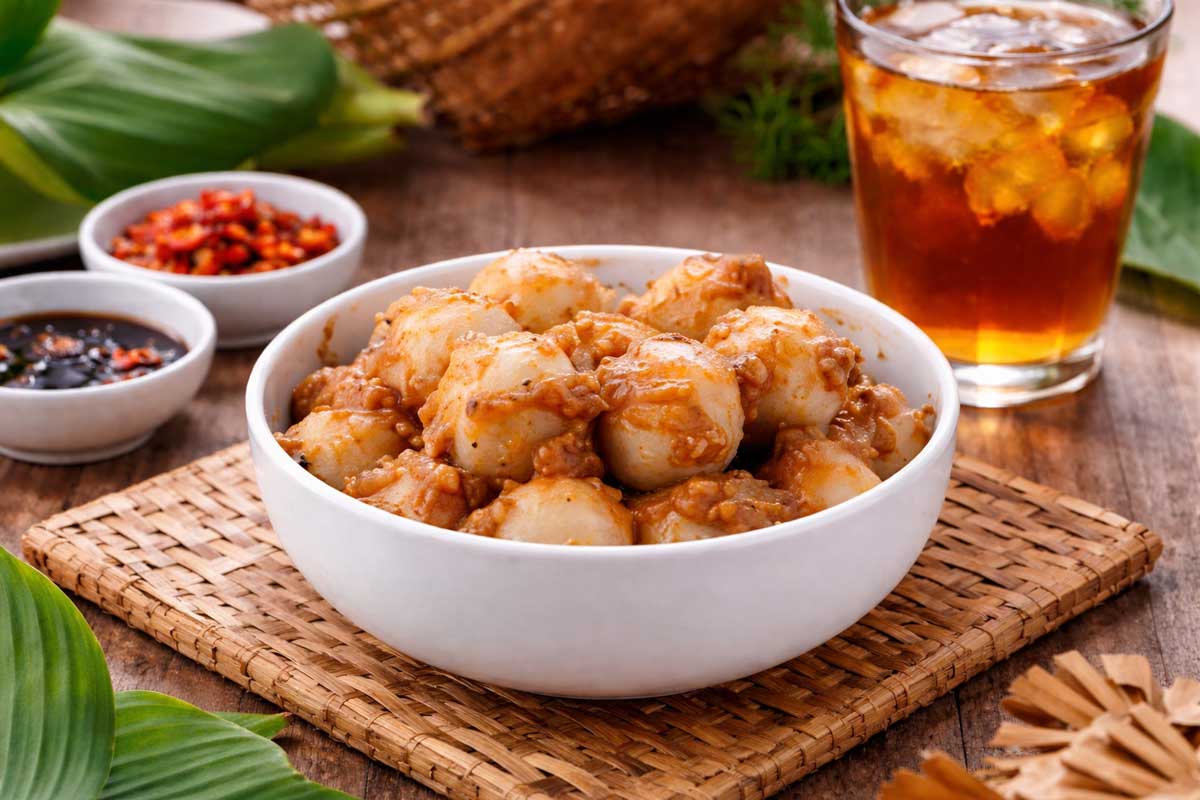
Cilok Bumbu Kacang (Indonesian Chewy Tapioca Dumplings with Peanut Sauce)
Ingredients
Instruction
- In a mixing bowl, combine tapioca starch, all-purpose flour, salt, and minced garlic. Mix well.
- Slowly pour in boiling water while stirring with a spoon until the dough begins to come together.
- If using an egg, add it now and mix gently until incorporated.
- Add sliced green onions and lightly knead just until smooth and pliable. Do not overwork the dough.
- With lightly oiled hands, shape the dough into small balls (about 1 inch / 2.5 cm in diameter).
- Bring a large pot of water to a rolling boil. Add the oil.
- Drop the cilok into the boiling water and gently stir once to prevent sticking.
- When the dumplings float to the surface, continue boiling for 2–3 minutes to ensure even cooking.
- Remove with a slotted spoon and drain.
- Blend or finely crush the roasted peanuts.
- Mix peanuts with sweet soy sauce, palm sugar, tamarind water, salt, and water.
- Stir until smooth, thick, and pourable. Adjust seasoning to taste.
Serving
Serve warm cilok generously drizzled with peanut sauce. Cilok can also be enjoyed with chili sauce or extra sweet soy sauce on the side.
Notes
-
Tapioca starch is essential
Tapioca starch (tepung tapioka) gives cilok its signature chewy, bouncy texture. Do not substitute with cornstarch or potato starch, as the result will be very different. -
Correct flour ratio matters
Cilok should be dominated by tapioca starch. A 2:1 ratio (tapioca starch to all-purpose flour) creates a chewy yet tender dumpling. Too much wheat flour will make cilok dense and tough. -
Always use boiling water
Hot water partially gelatinizes the tapioca starch, helping the dough bind properly. Using warm or cold water can result in sticky, mushy, or unevenly cooked cilok. -
Avoid over-kneading the dough
Mix just until the dough comes together. Overworking the dough can make the dumplings firm and rubbery. -
Egg is optional, not required
Traditional cilok is often made without egg. Adding one makes the texture softer and richer, but cilok without egg will still be pleasantly chewy. -
If using chicken, mince it very finely
Ground chicken should be extremely fine so it blends evenly into the dough. Always boil cilok thoroughly when adding meat to ensure it is fully cooked. Cilok with meat is best eaten the same day. -
Use only a small amount of oil when boiling
A little oil in the boiling water helps prevent sticking. Too much oil can make the surface slippery and prevent sauces from clinging. -
Do not overboil
Once the dumplings float, boil for only 2–3 additional minutes. Overcooking may cause cilok to split or develop a slimy surface. -
Cilok naturally firms up as it cools
This is normal for tapioca-based foods. To soften, steam briefly or microwave with a damp paper towel before serving. -
Sweet soy sauce substitution
If kecap manis is unavailable, mix regular soy sauce with brown sugar or honey to approximate its sweet-savory flavor. -
Palm sugar substitution
Palm sugar (gula merah) can be replaced with light or dark brown sugar. -
Texture expectation
Cilok is meant to be chewy and elastic, not fluffy like Western dumplings or bread-based fritters.
The Origins of Cilok
Cilok is widely believed to have originated in Bandung, the capital of West Java, during the late 1970s to early 1980s. While no formal written records document its exact creation, culinary historians and local narratives agree that cilok emerged as a street food innovation created by small vendors looking to offer an affordable, filling snack.
At the time, tapioca starch was inexpensive and widely available, especially in regions where cassava had long been a staple crop. Sundanese cooks were already well-versed in transforming cassava into various snacks, and cilok became one of the most successful outcomes of this tradition. Its simple ingredients, low production cost, and satisfying texture made it ideal for street vending, particularly around schools and residential areas.
Cilok as a People’s Snack
From its earliest days, this snack has been closely associated with everyday life. It was sold from pushcarts, bicycles, and simple stalls, often near elementary schools, markets, and public gathering spots. For generations of Indonesians, cilok is inseparable from childhood memories—bought with pocket money after school, shared among friends, and eaten while standing on the sidewalk.
In Sundanese society, cilok also represents accessibility and togetherness. It is not a dish reserved for special occasions or formal dining. Instead, it thrives in casual, communal settings: eaten while chatting, waiting for public transport, or taking a short break from daily routines. This lack of pretension is precisely what gives cilok its enduring appeal.

Growth and Regional Variations
As cilok grew in popularity throughout the 1990s, it spread beyond Bandung to other parts of West Java and eventually across Indonesia. Each region adapted this dish according to local tastes, giving rise to distinct variations.
In Bandung, cilok is typically served dry, skewered, and dipped into thick peanut sauce, often accompanied by sweet soy sauce (kecap manis) and chili paste. The dough itself is usually seasoned with garlic and sometimes stock, resulting in a savory, aromatic base.
In contrast, Tasikmalaya is known for Cilok Goang, a version served in a spicy red broth. This variation emphasizes heat and warmth, featuring crushed chilies, savory stock, and additional toppings such as tofu or chicken feet. While both versions share the same tapioca foundation, their eating experience is markedly different.
Cilok Beyond Indonesia
In recent years, cilok has gained international attention through Indonesian diaspora communities. One notable example is its rise in South Korea, where Indonesian street vendors began selling cilok to migrant workers longing for familiar flavors. A vendor in Ansan, Gyeonggi Province—popularly known online as “Cilok Hengnim”—became viral on social media for selling cilok from a bicycle.
Platforms like TikTok and Instagram have played a crucial role in introducing cilok to global audiences. These short videos transformed a modest Indonesian street snack into a cultural ambassador, demonstrating how food can carry identity, memory, and belonging across borders.
Language, Food, and Sundanese Identity
Cilok belongs to a broader tradition in Sundanese cuisine where foods are named descriptively, based on their ingredients and cooking methods. This linguistic creativity makes local foods easy to understand and remember.
Examples include:
- Cireng (aci digoreng – fried tapioca)
- Cimol (aci digemol – rounded tapioca balls)
- Cilung (aci digulung – rolled tapioca)
These names reflect a cultural emphasis on clarity and practicality, reinforcing the close relationship between language, food, and daily life in Sundanese society.
How Cilok Is Traditionally Served and Eaten
Traditionally, cilok is served warm and skewered with bamboo sticks. Diners dip the dumplings into thick peanut sauce that balances savory, sweet, and spicy flavors. Sweet soy sauce and chili paste are often added according to personal preference.
Texture is central to the cilok experience. The dumplings are meant to be chewy and elastic, while the sauce provides richness and depth. Modern versions may include fillings such as chicken, beef, or cheese, but the essential structure remains unchanged.
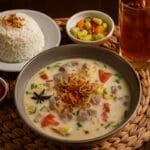
Cilok Bandung vs. Cilok Tasikmalaya
While both are rooted in Sundanese tradition, cilok Bandung and cilok Tasikmalaya highlight different culinary priorities.
Cilok Bandung focuses on texture and sauce. It is versatile and easily adapted for modern variations, making it popular among contemporary vendors and home cooks.
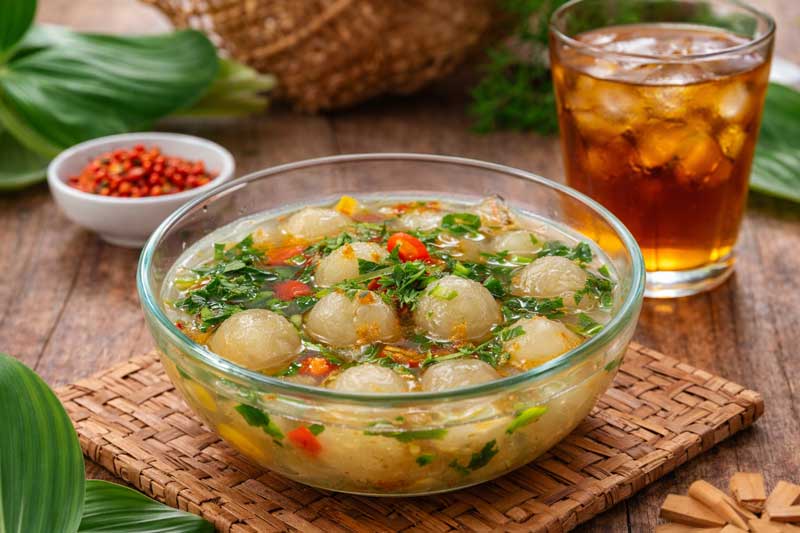
Cilok Tasikmalaya, on the other hand, emphasizes spice and warmth. Served in a chili-forward broth, it resembles a comforting soup rather than a dry snack, showcasing how regional preferences shape culinary identity.
The Importance of Peanut Sauce
The peanut sauce used in cilok Bandung is a defining element. Made from ground peanuts sautéed with garlic, chilies, tamarind, palm sugar, kaffir lime leaves, salt, and sweet soy sauce, it is thick, aromatic, and intensely flavorful.
Its consistency is key: thick enough to cling to the dumplings without being heavy. Garnishes such as fried shallots or crushed crackers add texture and visual appeal, elevating an otherwise simple dish.
Flavor and Texture Experience
A well-made cilok delivers a satisfying contrast. The initial bite reveals a soft yet springy interior, subtly savory from garlic and seasoning. Almost immediately, the peanut sauce melts over the surface, releasing notes of sweetness, umami, gentle acidity, and mild heat.
This harmony of textures and flavors explains why cilok remains deeply addictive despite its simplicity.
A Personal Perspective on Nutrition and Modern Adaptation
When we look closely at traditional cilok recipes—whether from Bandung or Tasikmalaya—it becomes clear that the dish is largely composed of starch. From a culinary standpoint, this is perfectly acceptable, as cilok is designed to be a snack rather than a complete meal.
However, in my view, this simplicity also presents an opportunity. While cilok is undeniably delicious, enhancing its nutritional value can make it more suitable for modern lifestyles. Adding protein-rich fillings such as chicken or beef, or pairing cilok with thoughtfully prepared sauces, allows the dish to evolve without losing its authenticity.

These adaptations do not diminish cilok’s cultural identity. On the contrary, they reflect the same creativity and practicality that gave birth to cilok in the first place.
A Living Street Food Tradition
Cilok stands as a testament to the power of simple ingredients and cultural ingenuity. From Bandung’s sidewalks to international streets, this chewy tapioca dumpling continues to adapt while staying true to its roots.
By preserving its essence and embracing thoughtful innovation, cilok remains not only a nostalgic street snack but also a living part of Indonesia’s culinary heritage—one that continues to resonate with new generations around the world.
Try Making Cilok at Home
If you’ve never made cilok before, now is the perfect time to try. With just a few basic ingredients and simple techniques, you can recreate this iconic Indonesian street food in your own kitchen.
Once you do, don’t keep it to yourself—share your homemade cilok with friends, family, or on social media, and let others discover the joy of this chewy, comforting snack. Food like cilok is meant to be shared, just as it always has been on the streets of West Java.
Happy cooking—and selamat menikmati!