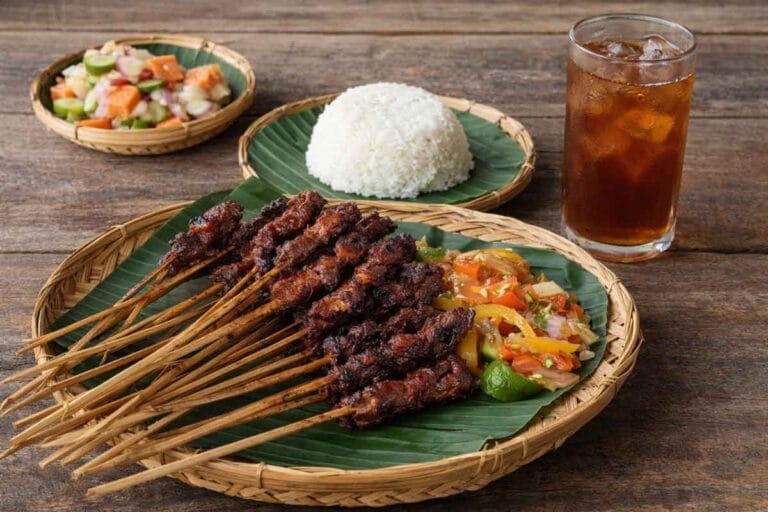
In the latest edition of the TasteAtlas Awards 25/26, the global culinary spotlight once again turned to Indonesia. In the 100 Best Dishes in the World list released on December 5, Indonesian goat satay (sate kambing)—one of the archipelago’s most iconic dishes—secured the impressive fourth place, positioning itself among the finest foods worldwide. This remarkable achievement is more than just a point of pride; it stands as global recognition that Indonesian cuisine possesses a unique, bold flavor identity worthy of international acclaim.
According to the official description from TasteAtlas, goat satay is made from relatively large chunks of goat or lamb, marinated in a mixture of sweet soy sauce, onions, galangal, pineapple juice, and sometimes chili to give it a signature sweet-and-spicy profile. The marinated meat is threaded onto bamboo skewers and grilled over hot charcoal until smoky and caramelized. Authentic goat satay is traditionally served with sweet soy chili relish or peanut sauce, accompanied by steamed rice or lontong. With an impressive rating of 4.52, goat satay solidifies its status as one of the world’s best-loved dishes.
For Indonesians, however, this recognition is far from surprising. Goat satay has long been a beloved favorite across generations—from humble street-side vendors to high-end restaurants. Its fame comes not only from its unmistakably delicious flavor but also from the richness of its variations and the depth of its seasoning traditions. In another recipe section of this blog, I’ve also shared a recipe for Sate Torpedo Kambing, a unique variation that showcases just how wide-ranging goat satay can be in terms of ingredients, flavor, and presentation. You’ll also find an authentic goat satay recipe in this article—a hands-on guide that allows you to experience the real taste of Indonesian satay at home. These variations will be internally linked so readers can easily explore the world of satay in greater depth.
Before diving into the specific history of goat satay, it helps to look back at the broader origins of satay itself—how a simple method of skewering and grilling meat evolved into one of Indonesia’s most celebrated culinary icons.
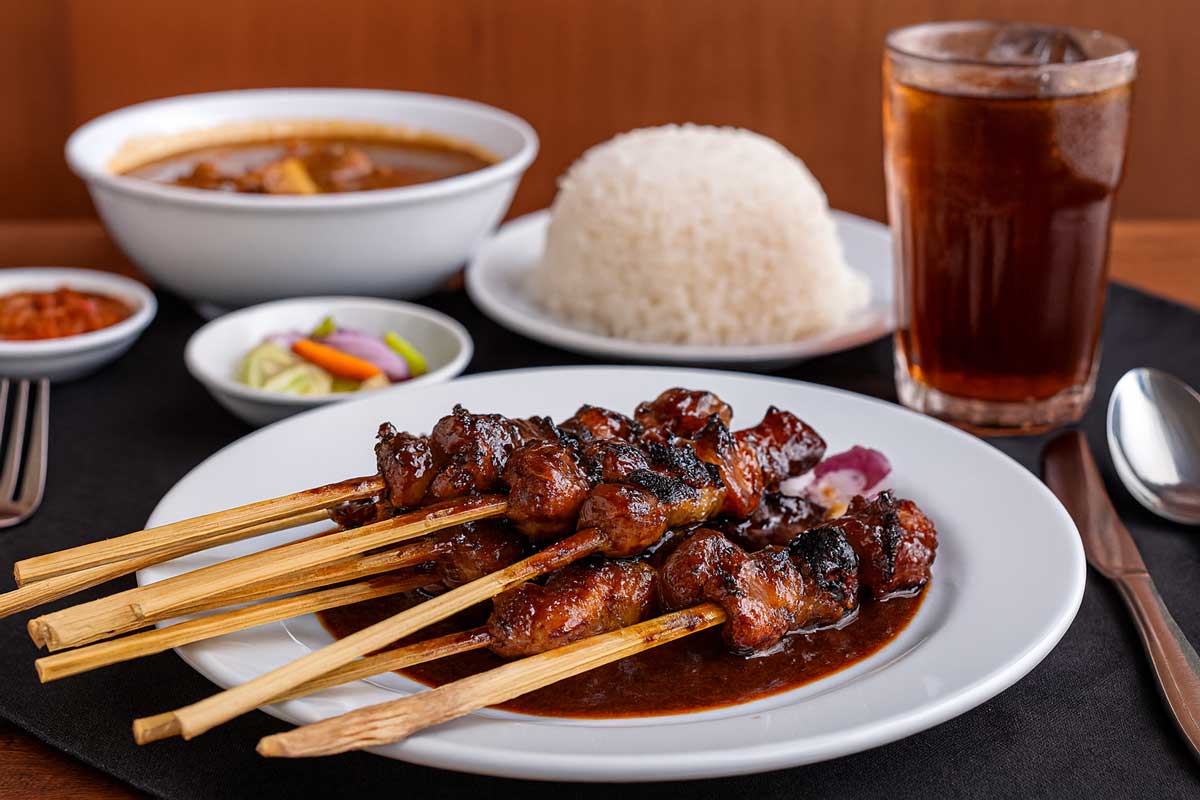
Indonesian Goat Satay (Sate Kambing)
Ingredients
Instruction
- Tenderize the MeatMix goat (or lamb) with pineapple juice and let it sit for 15 minutes.Rinse lightly to prevent over-tenderizing.
- Prepare the MarinadeBlend garlic, shallots, ground coriander, kecap manis, vegetable oil, salt, and pepper into a smooth paste.
- MarinateCoat the meat thoroughly with the marinade.Rest for 1 hour, or refrigerate overnight for deeper flavor.
- Skewer the MeatThread the meat onto soaked bamboo skewers.If using goat fat, alternate pieces of meat and fat for extra juiciness.
- GrillPreheat a charcoal grill, gas grill, or grill pan to medium–high heat.Mix kecap manis, melted margarine/butter, and lime juice to make the glaze.Grill the skewers for 2–3 minutes per side, brushing frequently with the glaze, until the surface becomes caramelized and slightly charred.
- ServeServe the hot skewers with Sambal Kecap, steamed rice, or Indonesian rice cakes (lontong).
Notes
1. Goat vs. Lamb
Goat is traditional but lamb is easier to find in Western markets.Lamb shoulder or leg delivers excellent tenderness and flavor.
2. About Kecap Manis
This Indonesian sweet soy sauce is thick, syrupy, and essential to the flavor.If unavailable, substitute with:
- 3 tbsp soy sauce
- 1 tbsp brown sugar
- ½ tsp molasses or maple syrup
3. Controlling the Heat Level
Bird’s-eye chilies are extremely spicy.For milder heat: use jalapeño, Fresno chili, or chili flakes.
4. Grilling Options
- Charcoal grill = closest to Indonesian street food flavor
- Gas grill = convenient & reliable
- Grill pan = great for indoor cooking
- Broiler = workable alternative in winter
5. Pineapple Juice Reminder
Do not exceed 4 tbsp for 1 kg of meat.Too much bromelain will break down the meat into mush.
6. Serving Ideas
- Serve with steamed jasmine rice
- Add sliced cucumbers or a simple salad
- Pair with iced tea, or lime soda
The History of Goat Satay: Arab Influences, Javanese Adaptation, and the Making of an Indonesian Identity
Among the many types of satay that exist today, goat satay is arguably the one most deeply associated with Indonesian identity. Goats have long been a common livestock animal in rural communities across Java, Madura, and Sumatra. When kebab-style cooking techniques were introduced centuries ago, goat meat was naturally the most readily available protein to adapt.
The Arab influence is unmistakable, as Middle Eastern cuisine traditionally features many goat-based dishes. Yet Indonesian goat satay developed into something unmistakably its own: sweet soy sauce as a primary seasoning, peanut-based condiments, spices that lean toward sweet and savory, and fresh components like lime juice and thinly sliced shallots.
In its early days, goat satay was reserved for special occasions—traditional ceremonies, family celebrations, or religious gatherings. Goat meat was pricier and more difficult to obtain, making the dish a symbol of festivity. Over time, as goat farming became more widespread and traditional markets expanded, goat satay transitioned from a ceremonial delicacy to a common street food enjoyed daily by people from all walks of life.
To this day, goat satay holds a special place during Eid al-Adha. When families prepare sacrificial meat, goat satay is often the first dish made—simple, flavorful, and perfect for sharing with loved ones. Grilling satay in the yard while surrounded by family and neighbors has become a cherished tradition that reflects the warmth and togetherness of the holiday.

Variations of Goat Satay Across Indonesia
Though the basic technique remains the same, each region in Indonesia brings its own twist to goat satay:
1. Madura-Style Goat Satay
The most famous variant nationwide. The seasoning leans sweet, using sweet soy sauce, shallots, bird’s-eye chilies, and a smooth peanut sauce. One hallmark of Madura-style satay is the peanut glaze that caramelizes beautifully as it grills.
2. Ponorogo Goat Satay
Featuring long, thin slices instead of cubed meat. The marinade is more intense because the spices are ground finely and applied repeatedly. Ponorogo is widely considered a birthplace of early satay street food culture.
3. Tegal Goat Satay
Known as sate balibul (“under five months”), this variation uses young goat meat, resulting in tender texture and mild aroma. The meat is typically not heavily marinated, relying instead on its natural freshness.
4. Maranggi Satay
Although often made with beef, Maranggi satay also has a goat version. It skips sweet soy sauce entirely and uses fermented spices, paired with fresh tomato sambal.
These variations reflect the creativity and adaptability of Indonesian cooking traditions, molded by local ingredients and cultural influences.
Is Goat Satay Truly Indonesian?
This question often arises, especially considering its similarities to Middle Eastern kebabs or Russian shashlik. Yet most experts agree that Indonesian satay is a uniquely indigenous creation. The reasons are clear:
- Sweet soy sauce as a primary seasoning is distinctly Indonesian.
- Modern peanut sauce in its satay form is also an Indonesian innovation.
- Indonesia boasts more satay variations than any other country.
- Traditional accompaniments—lontong, sweet soy sambal, shallots, lime—are uniquely Indonesian.
While satay dishes exist in Malaysia, Singapore, and Thailand, many were introduced and shaped by Javanese and Madurese migrants.
Seasonings and Cooking Technique: The Secret to Perfect Goat Satay
Goat satay typically revolves around two main seasoning styles:
1. Sweet Soy Relish (Sambal Kecap)
This is the quintessential accompaniment for Indonesian goat satay—simple, bright, and irresistibly fresh. Sambal kecap combines Indonesian sweet soy sauce (kecap manis) with thinly sliced shallots, bird’s-eye chilies, diced tomatoes, and a squeeze of fresh lime.
The result is a syrupy, glossy relish that balances sweetness, heat, and acidity in a way that cuts beautifully through the richness of grilled goat or lamb. Every spoonful adds a burst of brightness and a hint of smokiness when mixed with the charred edges of the satay. Despite its simplicity, sambal kecap is often considered the soul of goat satay in many regions of Java and Madura.
2. Peanut Sauce
Indonesia’s peanut sauce is unlike any peanut sauce found elsewhere—it is deeper, more aromatic, and layered with traditional spices. The base is made from roasted peanuts, which are blended with garlic, candlenuts (a natural thickener), and palm sugar for a mellow caramel-like sweetness. A splash of sweet soy sauce enhances the color and adds a savory glaze-like quality.
The sauce is then thinned with hot water and simmered until it becomes creamy, rich, and velvety, creating a comforting contrast to the smoky grilled meat. Unlike the lighter sweet soy relish, the peanut sauce offers a thicker, more indulgent experience—perfect for those who love bold, nutty flavors.

In many parts of Indonesia, especially Madura and Java, this sauce is not only served on the side but sometimes brushed onto the meat as it grills, creating a caramelized coating that clings beautifully to each skewer.
Beyond the seasoning, grilling technique is critical. One essential tip from seasoned satay vendors is:
Do not brush sweet soy sauce onto the meat at the beginning of grilling.
Because sweet soy sauce contains a high sugar content, it caramelizes too quickly and can easily burn, resulting in bitter, scorched satay.
The correct method is:
- Brush the meat with oil first so it cooks evenly.
- Grill until nearly done.
- Then, apply the sweet soy glaze gradually.
- Flip quickly to prevent burning.
This simple technique produces satay that stays juicy, evenly cooked, and beautifully caramelized without bitterness.
Peanut Sauce for Goat Satay
This Indonesian peanut sauce is a richer, nuttier alternative to the classic sweet soy glaze used for Sate Kambing. Made from roasted peanuts, sweet soy sauce, garlic, and gula merah, the sauce creates a creamy, aromatic coating that pairs beautifully with grilled goat or lamb skewers. This recipe has been adapted for Western home cooks while keeping the authentic Indonesian flavor profile.
Ingredients
Peanut Sauce (Bumbu Kacang)
- 250 g peanuts
(kacang tanah — regular roasted peanuts or raw peanuts fried until golden) - 10 cloves garlic (bawang putih)
- 4 candlenuts (kemiri)
(substitute: 1 tbsp macadamia nuts for similar creaminess) - 6 tbsp fried shallots (bawang goreng)
- Gula merah (Indonesian palm sugar — substitute: coconut sugar or brown sugar)
- Kecap manis (Indonesian sweet soy sauce)
- Salt (garam), to taste
- Cooking oil for frying the peanuts (minyak goreng)
Toppings (Pelengkap)
- Thinly sliced shallots (bawang merah)
- Fresh lime (jeruk nipis)
- Bird’s-eye chilies (cabai rawit — substitute: chili flakes or diced jalapeño)
Instructions
- Fry the Aromatics
Heat oil in a pan. Fry peanuts, garlic, and candlenuts until golden and fragrant. Drain well. - Grind the Sauce Base
Using a mortar & pestle or food processor, grind peanuts, garlic, candlenuts, palm sugar, and salt until smooth or slightly textured (based on preference). - Add Fried Shallots
Mix in fried shallots and grind again until incorporated. - Adjust the Consistency
Add kecap manis and hot water gradually until the sauce reaches your desired thickness.
(Traditional peanut sauce is thick but pourable.) - Add Freshness (Optional)
Stir in lime juice and mashed bird’s-eye chilies for a fresh, spicy kick. - Serve
Spoon the peanut sauce over freshly grilled Sate Kambing or serve on the side as a dip.
Notes for Western Cooks
1. Peanut Options
If using raw peanuts, fry until deep golden for the best nutty flavor.
If using pre-roasted peanuts, skip frying and lightly toast in a dry pan.
2. Sweetness & Salt
Indonesian gula merah gives deep caramel notes. Western substitutes:
- coconut sugar
- dark brown sugar
- muscovado sugar
3. Kemiri (Candlenuts)
Kemiri adds creaminess but can be hard to find.
Best substitute: macadamia nuts.
Do not eat raw candlenuts—they must be cooked.
4. Consistency Tips
For dipping: add more hot water to make it pourable.
For topping satay: keep it thick and spreadable.
5. Heat Level
Bird’s-eye chili is extremely spicy; Western alternatives:
- jalapeño
- Fresno chili
- chili flakes
6. Flavor Adjustment
You can make the sauce ahead of time.
Reheat with a splash of hot water to loosen before serving.
Can Western Home Cooks Make Authentic Goat Satay?
Absolutely. Goat satay is surprisingly accessible for readers in the U.S. and Europe:

- Goat or lamb is easy to find at Middle Eastern or specialty butchers.
- Sweet soy sauce is available in most Asian markets (or can be substituted with soy sauce, brown sugar, and molasses).
- Essential spices like coriander, shallots, garlic, and chili are widely available.
- Gas grills and grill pans work well as substitutes for charcoal.
For the most authentic results:
- Use lamb shoulder if goat is unavailable.
- Choose real Indonesian sweet soy sauce when possible.
- Don’t marinate with pineapple juice for too long.
- Serve with lime and sliced shallots.
- Keep the sweet soy relish simple—that’s the heart of Indonesian goat satay.
Nutritional Profile of Goat Satay
Goat satay is a good source of high-quality protein, iron, vitamin B12, and zinc—nutrients that support muscle health, energy production, and immune function. When enjoyed in moderation, especially with excess fat trimmed off, it provides steady energy without feeling overly heavy. On average, each skewer contains about 200–230 calories, depending on the cut of meat and the richness of the seasoning.
However, like many grilled meats, goat satay should be enjoyed mindfully. Because goat meat naturally contains saturated fat, eating it in large quantities can contribute to higher cholesterol levels for some individuals. The sweet soy glaze and peanut sauce—while delicious—also add sugar and fat that can quickly increase overall calorie intake. In addition, heavily charred meat may contain compounds that can be harmful if consumed excessively over long periods.
Enjoying goat satay as part of a balanced diet, pairing it with fresh vegetables, and avoiding over-caramelizing the meat on the grill are simple ways to keep this beloved dish both flavorful and health-friendly.
A Warm Invitation to Try It Yourself
Goat satay is more than just a delicious dish—it is a bridge connecting Indonesia’s culinary history, cultural traditions, and global recognition. From the influence of Arab and Indian traders to the creative adaptation by Javanese cooks, and finally to its place among the world’s best dishes, every skewer carries a story.
If you’ve never made goat satay before, now is the perfect time to try. Use the recipe provided in this article, explore both sweet soy and peanut variations, or even experiment with the unique sate torpedo kambing recipe available elsewhere on this blog. Share your experiences, adaptations, and how your family enjoys it.
The more people around the world who cook goat satay, the more Indonesian culinary heritage continues to inspire and flourish globally.