A Bowl of Comfort from East Java
When you first hear the words cow foot soup, your mind might hesitate. Foot? Really?
But in Indonesia, this dish—called Sop Kikil—isn’t just comfort food. It’s a regional treasure with a soft, rich broth and silky, chewy pieces of slow-cooked kikil, or cow foot skin and tendons. What may sound bizarre at first to Western ears becomes unexpectedly delicious once you’ve taken your first bite. It’s hearty, warming, and layered with the kind of savory depth that only slow cooking and the right blend of spices can achieve.
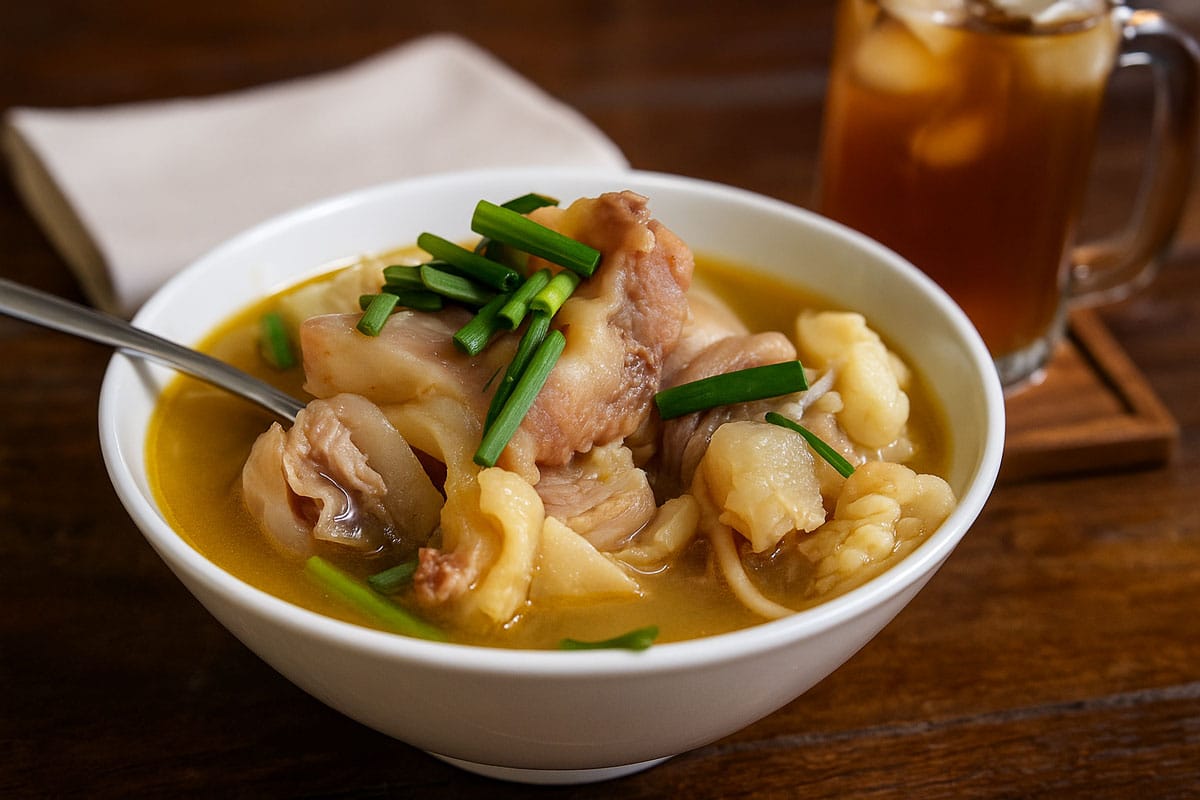
Indonesian Cow Foot Soup (Sop Kikil)
Ingredients
Instruction
- Prepare the kikil (cow foot skin and tendon)Rinse kikil thoroughly. Place in a pot with 8 cups (2 liters) of water. Add cloves, nutmeg, cinnamon stick, and smashed ginger. Bring to a boil, then reduce to a simmer. Cook uncovered for 45–60 minutes, or until the kikil is tender and gelatinous. Skim off foam or impurities during cooking.
- Strain and sliceRemove the kikil and slice into bite-sized pieces. Reserve 4 cups (1 liter) of the cooking liquid as broth. Strain to remove whole spices if desired.
- Build the soup baseIn a clean pot, heat the reserved broth. Add milk, black pepper, salt, sweet soy sauce, and vegetable oil. Stir gently and heat until hot, but do not boil vigorously to prevent the milk from curdling. Add lime juice and turn off the heat.
- Assemble and serveDivide sliced kikil into bowls. Ladle the hot soup over. Top each serving with sliced tomato, scallions, celery leaves or parsley, and fried shallots. Serve hot with emping or your favorite crunchy crackers on the side.
Notes
- Kikil substitution: If cow foot or tendon is unavailable, you can substitute with beef tendon, oxtail, or even beef shank. While the texture differs, it still pairs well with the spiced broth.
- Where to find kikil: Look for it in Asian markets under “cow feet,” “beef tendon,” or ask your butcher. Frozen versions are easier to find.
- Kecap manis: An essential sweet soy sauce in Indonesian cooking. Brands like ABC or Bango are sold in Asian supermarkets or online. To mimic the flavor, mix regular soy sauce with molasses or brown sugar.
- Milk variations: For a creamier soup, use evaporated milk. For a dairy-free version (not traditional), coconut milk can be used.
- Emping alternatives: Unsalted tortilla chips or rice crackers make good substitutes if emping is unavailable. You can also omit for a lighter version.
- Texture tip: If you’re new to kikil, be aware the texture is gelatinous and chewy — a delicacy in Indonesian cuisine but unfamiliar to some Western palates.
The Heart of Sop Kikil: What Is Kikil?
Let’s start with the star of the show—kikil.
Kikil refers to the thick skin and connective tissues from a cow’s lower legs and feet, especially the area around the ankle and hoof. This includes collagen-rich tendons and gelatinous skin that, when cooked low and slow, transform into a soft, bouncy texture with a subtle beefy flavor. It’s not exactly tripe, nor is it just fat—it’s somewhere in between, and that’s where the magic lies.
In Indonesian culinary tradition, no part of the animal is wasted, and kikil is a great example of this nose-to-tail approach. It offers both nutrition and unique texture. While it might sound exotic or even off-putting to some in the West, many global cuisines—like Jamaican cow foot stew or Mexican pata de res soup—also celebrate similar cuts.
From Surabaya and the Roots of Sop Kikil
Sop Kikil originates from East Java, particularly the bustling port city of Surabaya, where it’s a staple in traditional warungs (roadside eateries) and family kitchens alike. In this region, the broth is typically light and clear, spiced gently with cloves, nutmeg, cinnamon, and ginger. Sometimes milk or coconut milk is added for a richer finish, but not always.
The version in Surabaya is refreshingly mild, balanced with slices of tomato, fried shallots, lime juice, and sometimes sweet soy sauce (kecap manis). It’s the kind of meal locals crave on rainy afternoons or when recovering from a cold.
Similar Dishes Around the World
Though kikil may sound uniquely Indonesian, the idea of using cow feet in soup isn’t foreign in many cultures:
- Jamaica: Cow Foot Stew is beloved for its thick, gelatinous gravy.
- Mexico: Caldo de Pata is made with cow feet, vegetables, and often chickpeas.
- China: Cow tendon and feet are often slow-braised and served with noodles or in dim sum.
- Turkey & the Balkans: Kelle Paça is a soup made from sheep’s head and feet, considered a delicacy and a hangover cure.
So while sop kikil might raise eyebrows, it’s actually part of a global club of collagen-rich comfort soups.
What It Tastes Like
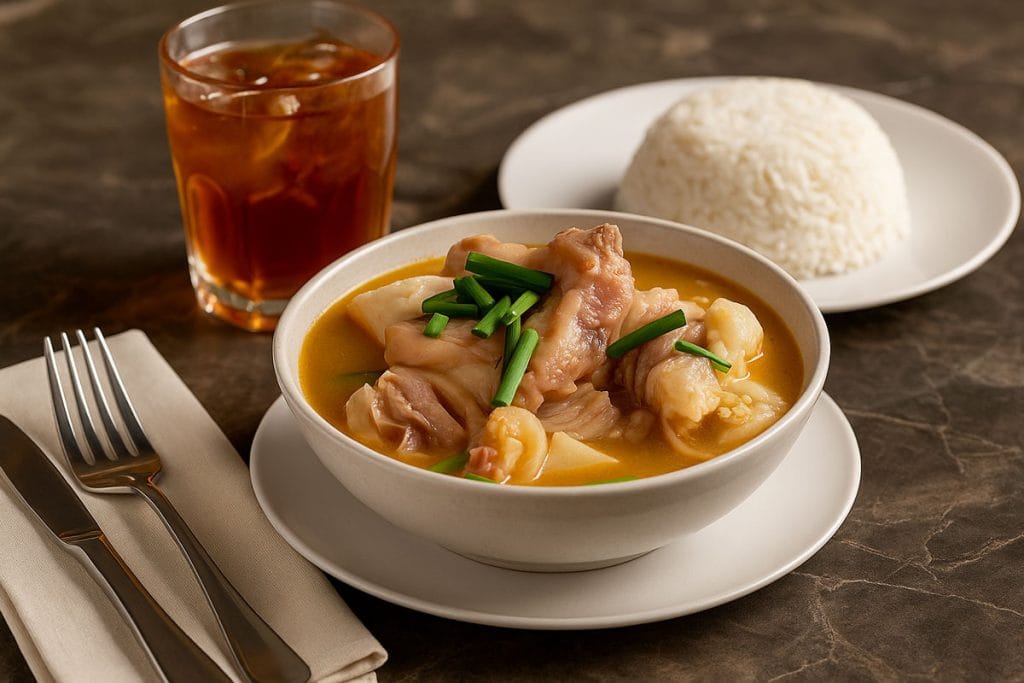
When prepared properly, sop kikil is light yet savory, with a broth that tastes clean and spiced—not overwhelming. The flavor leans toward umami-rich beef broth, infused with subtle spice warmth from cinnamon and clove. A squeeze of lime adds brightness, while the kikil itself is chewy, soft, and almost silky, somewhat like well-braised tendon.
Many Indonesians describe it as “segarnya kaldu gurih yang bikin nagih” – the kind of broth that refreshes and satisfies at once.
Regional Variations Across Indonesia
While East Java (especially Surabaya) is the heartland of sop kikil, several other regions have their own takes:

- Madura: Often makes kikil soup spicier, richer, and heavier on coconut milk.
- Betawi (Jakarta): Kikil is commonly used in Soto Betawi, which includes cow’s foot in a creamy, milky broth.
- Central Java & Yogyakarta: Kikil is used in tengkleng, a rustic soup usually made with goat bones or beef offal.
Each version adjusts the level of spice, creaminess, and accompaniments, making sop kikil a culinary chameleon that reflects local tastes.
Where to Try Sop Kikil in Indonesia
If you’re traveling to Indonesia and curious to try it, head to:
- Sidoarjo (near Surabaya) – One of the most popular places to enjoy kikil is Kikil Sapi Pak Said, a humble but beloved eatery known for its tender, flavorful kikil and rich, comforting broth. This spot has a loyal local following and is often recommended in East Java culinary circles.
- Surabaya – You’ll find numerous warungs (street-side eateries) offering sop kikil, especially in traditional markets or roadside stalls. While they might not be famous by name, many serve delicious home-style versions.
- Madura – Look for spicy versions of sop kikil, often enriched with coconut milk and chili heat.
- Jakarta – Some Betawi-style restaurants serve Soto Kikil or Soto Betawi with kikil as an option, offering a more creamy, hearty broth.
Whether you’re in a big city or a small town, asking locals where to get a good bowl of kikil will often lead you to the most satisfying meals.
Nutrition & Health: Is Kikil Good for You?
Kikil is rich in collagen, which supports skin, joints, and bones. It’s also low in fat compared to cuts like brisket. However, it’s made mostly of gelatin and connective tissue, so while it provides protein, it doesn’t have much fiber or essential vitamins.
Some points to consider:
- High in collagen, low in calories
- Low fat, but can be high in cholesterol depending on portion
- Not ideal in large amounts for people with gout or high uric acid
Like most indulgent dishes, moderation is key. One or two servings a week is generally fine for healthy individuals.
Will Americans or Europeans Like It?
If you’re used to eating only boneless, skinless cuts of meat, the idea of kikil might feel like a leap. But for adventurous eaters and fans of dishes like bone marrow, tendon pho, or oxtail stew, this soup will feel both new and familiar.
The chewy, gelatinous texture isn’t for everyone—but with the right broth and toppings, even skeptics are often pleasantly surprised.
“I thought I’d be grossed out, but it’s actually really good,” is a common reaction among first-timers.
Why You Should Try It
Sop kikil isn’t just about eating something unusual—it’s about stepping into a culture where food tells stories, where each bowl reflects generations of resourcefulness, warmth, and flavor.
So if you’re exploring Indonesian cuisine or want to push your culinary boundaries, this is your chance. Start by finding a good Asian grocery store for ingredients—or better yet, book a ticket to Surabaya.
Would You Eat Cow Foot Soup?
If you’re curious about bold, traditional, globally shared flavors, Sop Kikil is a dish that challenges your expectations and rewards you with comfort and culture in every bite.