The true heartbeat of Indonesian cuisine does not reside exclusively within the labor-intensive, slow-simmered curries that dominate international restaurant menus. Instead, it pulses vigorously in the rapid, rhythmic clatter of a spatula against a hot wok in millions of domestic kitchens across the archipelago. This is the domain of oseng-oseng—a humble yet profoundly effective Javanese stir-frying technique that transforms everyday vegetables and pantry staples into deeply comforting, aromatic masterpieces. Among the most beloved iterations of this culinary tradition is Oseng-Oseng Kembang Kol dan Soun, a vibrant amalgamation of crisp cauliflower, earthy oyster mushrooms, and diaphanous glass noodles, all bound together by a savory, chili-flecked soy broth.
Far from a mere side dish, this recipe is a masterclass in textural contrast and flavor balance. It serves as a historical document on a plate, chronicling the centuries of trade, migration, and colonial influence that have shaped the modern Indonesian palate. For the international cook, mastering this dish offers a window into the pragmatic, highly efficient, and deeply flavorful world of Southeast Asian home cooking.
The Historical Tapestry: A Fusion of Three Worlds
To understand Oseng-Oseng Kembang Kol dan Soun, one must dissect its components, as each ingredient tells a distinct story of Indonesia’s socio-culinary evolution. The dish is a flawless triad of Javanese technique, Chinese culinary influence, and European agricultural introductions.
The term oseng-oseng (or simply oseng) originates from the Javanese language, referring specifically to a quick stir-frying method. Unlike the high-heat, oil-heavy wok hei of Cantonese cooking, Javanese oseng relies on a moderate amount of oil and a foundational trinity of aromatics: bawang merah (small Asian shallots), bawang putih (garlic), and cabai (chilies). These are sweated down to release their volatile oils, creating a deeply fragrant base before the primary ingredients are introduced.
The inclusion of soun—mung bean thread noodles, often called glass noodles or cellophane noodles—speaks to the enduring legacy of the Peranakan Chinese diaspora in Indonesia. Chinese traders and immigrants, particularly from the Hokkien region, brought their noodle-making traditions to the archipelago centuries ago. As documented by Indonesian culinary historians and publications such as Historia.id, the assimilation of Chinese noodles into local Indonesian diets birthed iconic dishes from Bakmi to Soto. In the context of an oseng-oseng, the soun acts as a sponge, soaking up the savory chicken bouillon and soy sauce while providing a slippery, satisfying chew that contrasts beautifully with the vegetables.

Finally, the cauliflower (kembang kol). This cruciferous vegetable is not indigenous to the tropical climates of Southeast Asia. It was introduced during the Dutch East Indies colonial era, specifically cultivated in the cooler, mountainous regions of Java, such as Lembang and Bogor. Over decades, what was once a European colonial import was thoroughly localized, finding its way into traditional Indonesian soups (sayur sop) and, inevitably, the ubiquitous wok of the Javanese home cook.
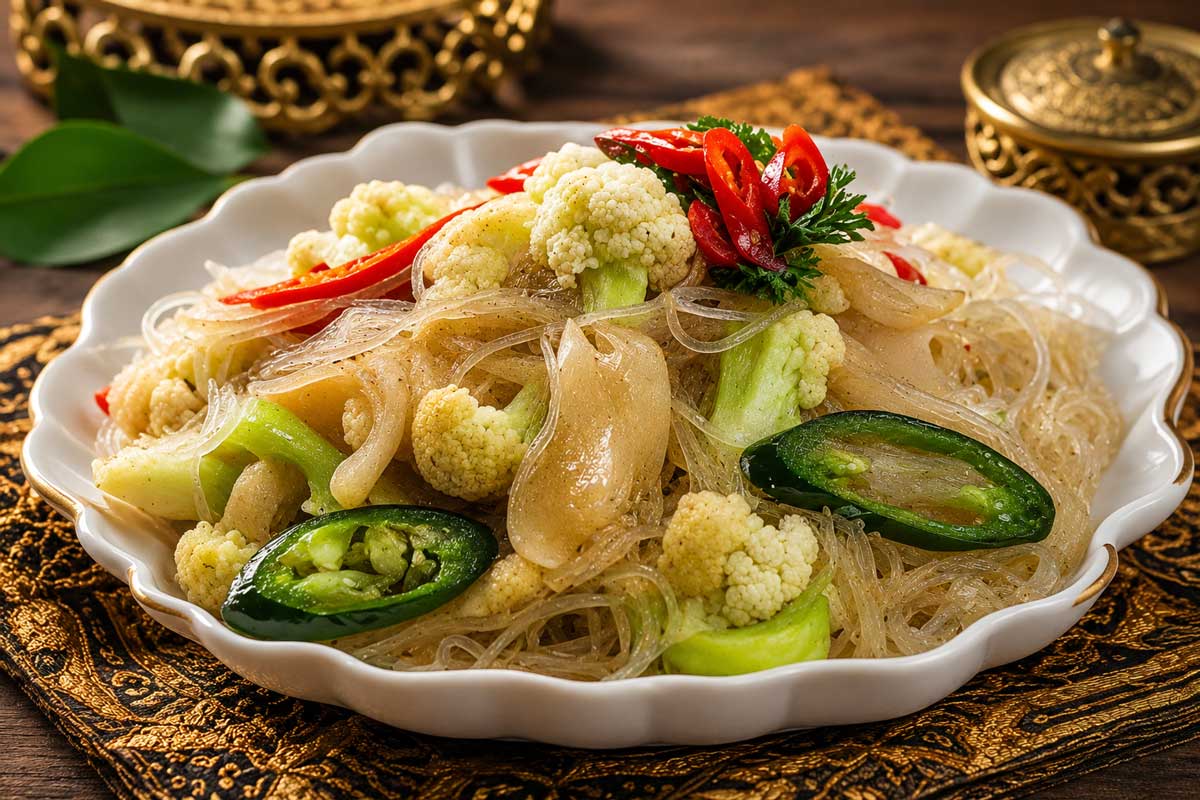
Oseng-Oseng Kembang Kol dan Soun
Ingredients
Instruction
- Heat the cooking oil in a wok or large frying pan over medium-high heat. Sauté the sliced shallots, garlic, red chilies, and green chilies until they release their aroma and soften slightly.
- Add the cauliflower florets and chopped oyster mushrooms to the wok. Toss and stir-fry until the vegetables begin to wilt and soften.
- Season with salt, black pepper powder, chicken bouillon powder, and soy sauce. Stir thoroughly to ensure the vegetables are evenly coated in the spices.
- Pour in the water. Bring to a simmer and cook until the cauliflower is tender-crisp and the liquid has slightly reduced and thickened.
- Add the soaked glass noodles and the cut scallions. Toss everything together until the noodles absorb the remaining liquid and are heated through.
- Remove from heat and serve immediately, ideally with a side of steamed rice.
Notes
International Ingredient Substitutions
- Glass Noodles (Soun): These are mung bean thread noodles. If you cannot find them, you can substitute them with thin rice vermicelli (bihun). Avoid using wheat noodles, as they will completely alter the texture and absorbency of the dish.
- Oyster Mushrooms (Jamur Tiram): If fresh oyster mushrooms are unavailable, fresh Shiitake mushrooms or even standard Cremini (brown button) mushrooms can be used, though they will provide a denser texture.
- Asian Shallots (Bawang Merah): Standard Western shallots are the perfect 1:1 substitute. If unavailable, use ¼ of a medium red onion, finely chopped.
- Chicken Bouillon (Kaldu Ayam Bubuk): To make this dish completely vegan, easily substitute the chicken bouillon with a high-quality vegetable or mushroom bouillon powder.
- Large Red/Green Chilies: Indonesian large chilies (cabai merah/hijau besar) are relatively mild and used more for color and subtle capsicum flavor than extreme heat. You can substitute them with mild Anaheim peppers, Fresno chilies, or even thinly sliced red and green bell peppers for a zero-heat option.
Culinary Counterparts Across the Globe
While the specific flavor profile of Oseng-Oseng Kembang Kol dan Soun—anchored by the distinct sweetness of Indonesian shallots and the sharp heat of local chilies—is unique, the structural concept of a vegetable and glass noodle stir-fry resonates globally.
In Thailand, a similar comfort can be found in Pad Woon Sen, where glass noodles are stir-fried with egg, cabbage, and soy sauce, though it typically leans sweeter and features a heavy fish sauce umami. In the Philippines, Pancit Sotanghon utilizes the same mung bean noodles, often paired with chicken, wood ear mushrooms, and annatto for color, reflecting Spanish and Chinese influences.
Looking further north, Korea’s celebrated Japchae shares a striking textural resemblance. Although Japchae utilizes dangmyeon (sweet potato starch noodles) rather than mung bean noodles, the philosophy of combining a bouncy, translucent noodle with crisp vegetables and savory soy notes is an identical culinary pursuit of balance. However, the Indonesian oseng distinguishes itself through its unapologetic use of sliced green and red chilies, embedding a foundational, slow-burning heat that defines the archipelago’s cuisine.
Nutritional Biochemistry: The Power of Cauliflower and Oyster Mushrooms
Beyond its historical pedigree, this dish is an absolute powerhouse of nutrition, heavily championed by the dual presence of cauliflower and oyster mushrooms.
Cauliflower is a nutritional titan. As a member of the cruciferous vegetable family, it is exceptionally rich in Vitamin C, Vitamin K, and folate. More importantly, when cauliflower is chopped and briefly cooked—such as in the quick oseng method—it retains a high concentration of glucosinolates. When chewed, these compounds break down into sulforaphane, an antioxidant that has been extensively studied for its potential to reduce cellular damage and inflammation. According to nutritional data from Indonesia’s Ministry of Health (Kemenkes), incorporating locally grown cruciferous vegetables is highly recommended for maintaining cardiovascular health and managing metabolic syndromes.
The oyster mushrooms (jamur tiram) elevate the dish from a simple vegetable stir-fry to a deeply savory experience. They are rich in ergothioneine, a unique antioxidant amino acid that protects cells from oxidative stress. Furthermore, oyster mushrooms provide a substantial dose of beta-glucans, a type of soluble dietary fiber strongly linked to lowering cholesterol and boosting the immune system’s defense mechanisms.
The soun (glass noodles) offers a distinct advantage for those with dietary restrictions: they are entirely gluten-free. Made primarily from mung bean starch and water, they possess a low glycemic index compared to wheat noodles or white rice, meaning they cause a slower, more manageable rise in blood sugar levels, providing sustained energy without the subsequent crash.

The Risks of Overconsumption: A Word of Caution
Despite its wholesome ingredients, moderation remains key, primarily due to the modern condiments used to season the dish.
The primary health concern with Oseng-Oseng Kembang Kol dan Soun lies in its sodium content. The combination of salt, soy sauce (kecap asin), and chicken bouillon powder (kaldu ayam bubuk) can rapidly elevate the sodium levels of the dish. Diets consistently high in sodium are a primary risk factor for hypertension (high blood pressure) and cardiovascular disease. For individuals monitoring their sodium intake, the bouillon and added salt should be significantly reduced or replaced with low-sodium alternatives.
Additionally, while cauliflower is incredibly healthy, it contains complex carbohydrates known as FODMAPs (Fermentable Oligosaccharides, Disaccharides, Monosaccharides, and Polyols). For individuals with Irritable Bowel Syndrome (IBS) or sensitive digestive tracts, consuming large quantities of cauliflower can lead to significant bloating, gas, and abdominal discomfort.
Kitchen Economics: Time, Occasion, and Cost
One of the most compelling aspects of Oseng-Oseng Kembang Kol dan Soun is its brilliant efficiency—a perfect reflection of the pragmatic, high-value mindset necessary in modern domestic cooking.
- Time Investment: This dish is a quintessential fast-food alternative. The prep work (slicing the aromatics, cutting the cauliflower, and soaking the noodles) takes roughly 10 minutes. The actual cooking time in the wok is a mere 10 minutes. Within 20 minutes, a complex, steaming dish is ready for the table.
- The Perfect Occasion: In Indonesia, this dish is a staple of the family dinner table (masakan rumahan). It is versatile enough to serve as a standalone vegan/vegetarian main course (if vegetable bouillon is used) or as a complementary side dish to grilled fish (ikan bakar) or fried chicken (ayam goreng). Because it retains its texture well, it is also a favorite for lunchboxes (bekal).
- Cost Analysis: Economically, this dish is incredibly gentle on the wallet. Cauliflower and oyster mushrooms are high-yield, low-cost ingredients in most global markets. A packet of glass noodles is famously inexpensive. To feed a family of four, the total ingredient cost is estimated between $4 to $6 USD, making it an accessible luxury that delivers maximum flavor and nutritional value per dollar spent.
In conclusion, Oseng-Oseng Kembang Kol dan Soun is far more than a hasty weeknight dinner. It is a vibrant celebration of Indonesian culinary ingenuity, where diverse historical influences and humble ingredients are tossed together in a hot wok to create something entirely greater than the sum of its parts.