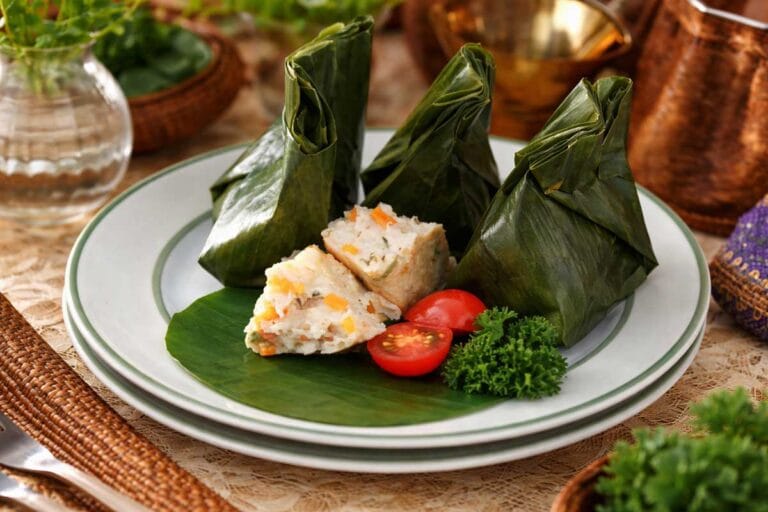
If you’ve never heard of gudeg (pronounced “goo-deg”), you’re not alone. This traditional Indonesian dish is still a hidden gem for most Americans. But for the people of Yogyakarta, a historic city on the island of Java, this dish is not just food—it’s a cultural identity served on a plate. Sweet, savory, and rich with tropical spices, gudeg is a slow-cooked jackfruit stew that’s comforting, unique, and surprisingly adaptable for Western palates.
What Is Gudeg?
At its core, the dish is made from unripe (young) jackfruit that is stewed for hours in coconut milk, palm sugar, and aromatic herbs such as galangal, bay leaves (daun salam), and lemongrass. The result is a rich, tender, and slightly sweet dish with a warm brown color and a melt-in-your-mouth texture.
It’s typically served with rice, marinated hard-boiled eggs, crispy tofu, tempeh, and sometimes shredded chicken or fried chicken. A complete gudeg platter offers a perfect harmony of flavors—sweet, salty, earthy, and umami.

Gudeg, Slow-Cooked Young Jackfruit Stew – Authentic Indonesian Recipe Adapted for American Kitchens
Ingredients
Equipment
Instruction
- Toast the black-eyed peas in a dry skillet for 3–4 minutes until aromatic. Then, boil them in about 2½ cups (600 ml) water until half-cooked (about 20–25 minutes). Drain and reserve the cooking liquid.7 oz 200g black-eyed peas
- In a large pot, bring the thin coconut milk (4 cups) to a gentle boil. Add the black-eyed peas along with the reserved cooking water.4 cups 1 liter thin coconut milk
- Add the young jackfruit, blended spice paste, and aromatics (galangal, bay leaves, lemongrass, and palm sugar). Stir well.1 pound ≈500g young green jackfruit, roughly chopped
- Cover tightly and cook over very low heat for 4 hours. Keep the lid closed to trap moisture and flavor. Stir only twice during the entire cooking process:First stir: after 2.5 hoursSecond stir: after 4 hours
- After 4 hours, pour in the thick coconut milk (1 cup) and stir gently to combine.Continue simmering uncovered for the final 1 hour, or until most of the liquid has reduced and the jackfruit has turned deep reddish-brown and slightly sticky.
- Once the liquid has reduced and the jackfruit is dark reddish-brown and almost dry, it’s ready. Serve with steamed rice, hard-boiled eggs, or chicken if desired.
Notes
For American Kitchens
- Slow Cooker Option: You can cook this on a low setting for 7–8 hours in a slow cooker. Make sure to stir halfway through and keep the lid on.
- Make-Ahead Friendly: Gudeg keeps well in the fridge for up to 5 days and can be frozen for a month.
- Flavor Tip: The signature sweetness of gudeg comes from palm sugar and long, slow simmering. Don’t rush this dish!
A Taste of History and Culture
This Indonesian classic originated in Yogyakarta, a city in Central Java known for its classical Javanese culture and royal heritage. Some even call Yogyakarta Kota Gudeg (Gudeg City), because of the dish’s deep cultural roots there. It is believed that the Javanese jackfruit curry was first made as a way to preserve food, especially young jackfruit, using natural ingredients and traditional slow-cooking techniques.

In the early days, before modern refrigeration, slow cooking with coconut milk and palm sugar helped extend the shelf life of the food. Over time, the recipe evolved into a regional staple served at homes, warungs (small eateries), and ceremonial occasions.

What makes the dish is unique is its cultural symbolism. The slow cooking process reflects the Javanese value of patience and harmony. In local traditions, preparing gudeg is often a communal act—especially during holidays, weddings, or religious festivals.
Why Americans Might Love Gudeg
If you enjoy plant-based comfort food, slow-cooked stews, or dishes with complex sweet-and-savory layers, gudeg is right up your alley. The main ingredient, young jackfruit, has already gained popularity in the U.S. as a meat substitute, especially among vegans and vegetarians. It has a fibrous texture similar to pulled pork, but absorbs whatever flavor it’s cooked in.
Indonesian jackfruit stew, Indonesian food, traditional Indonesian dishThough traditional gudeg contains egg and sometimes chicken, the base dish is fully plant-based and can easily be adapted for vegan diets.
Taste-wise, the sweetness of the dish might remind Americans of candied yams or sweet barbecue baked beans, especially when paired with spiced sides. But unlike sugary comfort food, gudeg gets its sweetness from gula jawa (Indonesian palm sugar), which has a low glycemic index and a smoky caramel-like flavor.
Why Is Thick Coconut Milk Added Later in Cooking?
> The aroma and richness of thick coconut milk come through better when added toward the end of cooking.

> If added too early, it can curdle or separate after being simmered too long.
> In many traditional Indonesian dishes, thick coconut milk is usually added during the last hour of cooking to keep the flavor rich, creamy, and to avoid an overly oily result.
Is It Healthy?
Like many traditional dishes, this sweet jackfruit stew is all about balance. Coconut milk provides healthy fats (mainly MCTs), which may support metabolism and brain health. Jackfruit is high in fiber, potassium, and antioxidants. The hard-boiled eggs add protein, while tofu or tempeh bring in plant-based amino acids and probiotics—especially helpful for gut health.
That said, Americans should enjoy gudeg in moderation due to the richness of the coconut milk and palm sugar. It’s not a “diet” food, but when eaten in a balanced meal, it offers a satisfying, nutrient-rich option that’s worlds apart from fast food or ultra-processed meals.
How to Serve Gudeg in an American Home
Traditionally, the dish is served warm on a plate lined with banana leaves for extra aroma and visual appeal. You don’t need banana leaves to enjoy it, but serving it in a bowl over steamed jasmine or basmati rice works perfectly.
For a fully satisfying meal, pair it with:
- Hard-boiled eggs marinated in soy sauce or tea
- Oven-baked tofu or crispy tempeh
- Lightly sautéed spinach or kale
- Fresh cucumber slices or pickled vegetables (acar) to cut the richness
If you’re looking to Americanize the experience a bit, try serving gudeg with cornbread, roasted sweet potatoes, or even in a sandwich or taco as a meat-free filling.
When The Dish Typically Eaten?
In Indonesia, gudeg is served from breakfast through dinner. It’s especially popular during family gatherings, national holidays, and spiritual ceremonies. You might also find it in lunch boxes (nasi kotak) or hotel breakfast buffets in Yogyakarta.
For Americans, the dish makes a hearty lunch or dinner, especially in colder seasons when something slow-cooked and comforting is welcome. It’s also a great meal-prep option since it keeps well in the fridge and reheats beautifully.

How Long Does It Last?
Because of its natural preservation method (slow cooking with coconut milk and sugar), the dish can last up to 3–4 days in the refrigerator. Stored in an airtight container and reheated gently, the flavor actually deepens over time—much like chili or curry.
You can also freeze it in portions for up to 2 months. Just thaw in the fridge and reheat with a splash of water or coconut milk.
Can It Be Adjusted for American Palates?
Absolutely. While traditional the dish is quite sweet for a savory dish, you can easily reduce the palm sugar if you’re aiming for less sweetness. You can also add a touch of soy sauce, chili flakes, or even a splash of apple cider vinegar to balance things out.
Some restaurants in Indonesia already offer gudeg pedas (spicy gudeg), which might appeal more to Americans who like bold, punchy flavors.
Final Thoughts
Trying gudeg is like taking a culinary journey to Java—without leaving your kitchen. It’s soulful, rich, and full of history. As Indonesian cuisine begins to enter the global spotlight, gudeg has all the potential to be the next big thing for adventurous eaters in the U.S.
Whether you’re a home cook, a plant-based foodie, or just curious about world cuisine, give gudeg a chance. You might be surprised how this humble jackfruit dish finds its place at your dinner table.