Sate Maranggi is one of West Java’s most distinctive culinary treasures—an Indonesian grilled meat dish that has successfully crossed regional and cultural boundaries. Originating from Purwakarta, this satay is defined not by heavy sauces, but by a deeply aromatic marinade and precise grilling technique. More than just food, Sate Maranggi carries history, Sundanese philosophy, and a refined balance of flavors that makes it surprisingly approachable for international palates.
This article explores Sate Maranggi in depth: its origins, the legendary figures behind its name, the differences between Purwakarta and Cianjur styles, the cultural philosophy of Tri Tangtu, a firsthand flavor perspective, and why this dish continues to resonate globally.
The Origins of Sate Maranggi: A Culinary Tradition Rooted in Everyday Life
Sate Maranggi originates from Purwakarta, West Java, and is widely regarded as a traditional Sundanese dish that has existed for centuries. From the beginning, it was a humble, practical food—created by local communities using available resources, simple techniques, and a deep understanding of flavor.
One historical account suggests that Sate Maranggi was first made by sheep and cattle workers in the Plered district of Purwakarta. To preserve leftover meat and improve its taste, they marinated it in spices and palm sugar before grilling. This marination technique eventually became the defining characteristic of Sate Maranggi.
Another narrative points to the influence of Chinese traders who settled in the region hundreds of years ago. They may have introduced the idea of marinating meat before grilling—distinct from many Javanese satay styles where raw meat is grilled first and seasoned during cooking. Regardless of which account is most accurate, both highlight Sate Maranggi as a product of cultural exchange and practical ingenuity.
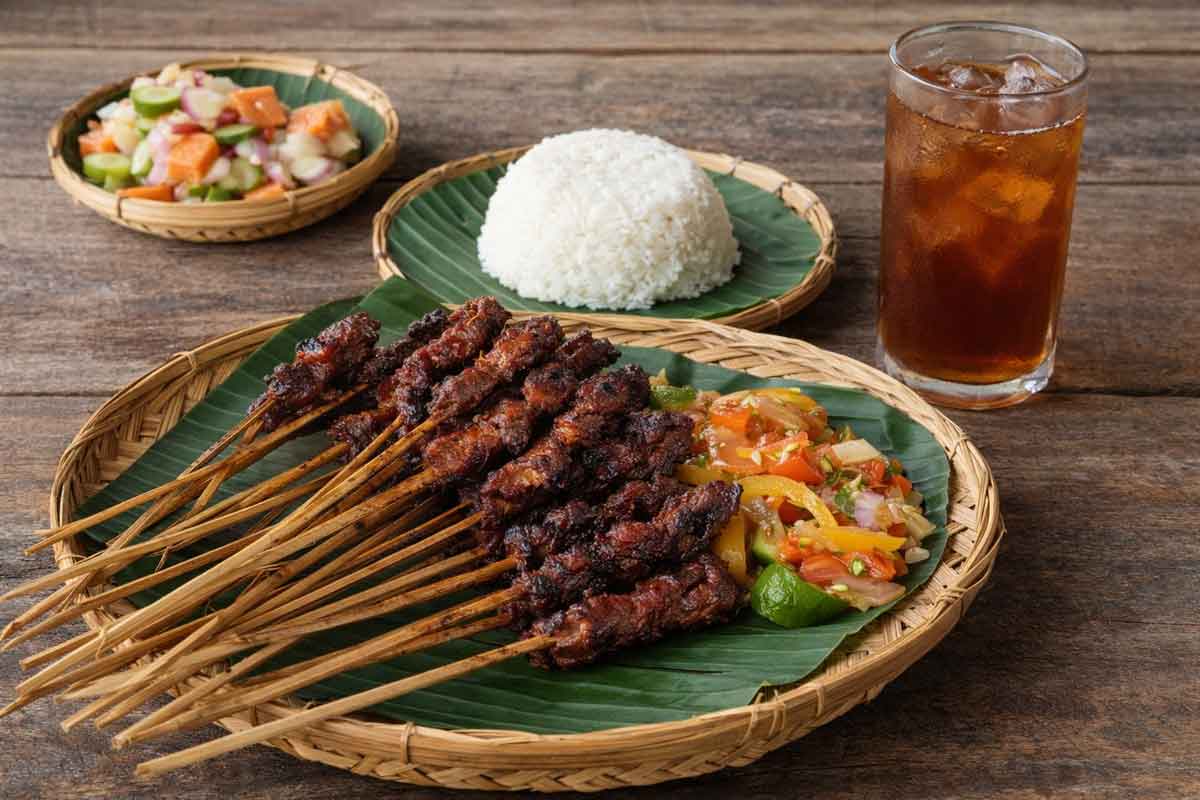
Sate Maranggi (Purwakarta-Style)
Ingredients
Instruction
- Tenderize the Beef (Traditional Method)Wrap the beef cubes loosely in papaya leaves. Gently massage for 5–10 minutes only, then rinse thoroughly under running water and pat dry.This step helps tenderize the meat naturally without affecting flavor.
- Prepare the MarinadeGrind shallots, garlic, toasted coriander, and palm sugar into a smooth paste using a mortar, food processor, or blender.
- Marinate the BeefIn a bowl, combine beef with the ground marinade, sweet soy sauce, tamarind water, salt, and black pepper. Mix well until evenly coated.Cover and refrigerate for at least 1 hour, preferably 2–4 hours for deeper flavor.
- Skewer the BeefThread 3–4 pieces of marinated beef onto each skewer, leaving a little space between pieces for even grilling.
- Grill the SatePreheat a charcoal grill or grill pan to medium-high heat.Grill the skewers, turning frequently, until the beef is lightly charred and caramelized on the outside but still juicy inside.Brush lightly with leftover marinade only if needed—do not over-glaze.
- Serve ImmediatelyRemove from grill and serve hot with fresh tomato, chilies, and a squeeze of lime.
Notes
-
No Peanut Sauce:
Authentic Sate Maranggi is never served with peanut sauce. Its flavor relies on the marinade and grilling technique. -
Papaya Leaf Substitute:
If papaya leaves are unavailable, use:- A commercial meat tenderizer (very lightly), or
- Marinate longer (up to overnight) using flank or sirloin steak.
-
Sweet Soy Sauce (Kecap Manis):
Available in most Asian grocery stores in the U.S. and Europe. If unavailable, mix soy sauce with a small amount of molasses or brown sugar. -
Grilling Tip:
High heat and quick turning are key. This keeps the beef juicy while developing the signature smoky aroma. -
Traditional Pairing:
Serve with grilled sticky rice (ketan bakar) or plain steamed rice for a truly Indonesian experience. - Soak the bamboo skewers in water for about 30 minutes before grilling to prevent them from burning.
The Name “Maranggi” and the Legendary Vendors Behind It
The name Maranggi itself is closely tied to local oral history. The most widely accepted story connects it to Mak Anggi (also known as Mak Ranggi), a satay vendor who sold her skewers in the Cianting area around the 1960s. Locals referred to her food as sate Mak Anggi, which gradually evolved into Sate Maranggi.
Other notable figures also contributed to the dish’s popularity, including Mang Udeng, who began selling Maranggi in 1962, and Mak Unah, who gained recognition in the 1970s in Plered and Wanayasa. From roadside tents and modest stalls, Sate Maranggi steadily spread across West Java, particularly to Cianjur, Sukabumi, and Subang.
From Local Street Food to National Culinary Icon
As Sate Maranggi traveled beyond Purwakarta, it adapted slightly to regional tastes—especially in Cianjur—while maintaining its essential identity: marinated meat grilled over charcoal.
Today, Sate Maranggi is recognized as a national culinary icon. It frequently appears at food festivals, cultural exhibitions, and even diplomatic events representing Indonesian cuisine abroad. Its growing international appeal lies in its flavor profile: smoky, savory, subtly sweet, and free from heavy sauces—qualities that align well with global grilling traditions.

Firsthand Experience: Tasting Sate Maranggi for the First Time
Personal experience often provides the clearest insight into a dish’s character. My first encounter with Sate Maranggi was the Cianjur version, largely because Cianjur is geographically closer to my home in Bogor.
The version I tried used beef, and from the very first bite, it was clear that the meat had been marinated beforehand. This immediately set it apart from more familiar Indonesian satays such as Sate Madura, where raw meat is typically grilled first and then brushed with a sweet soy-based sauce during cooking.
With Sate Maranggi, the flavor is already embedded in the meat before it ever touches the grill. As it cooks, the marinade caramelizes gently, creating depth rather than surface sweetness. In the Cianjur style, the satay is usually served with sambal oncom as the primary accompaniment, without heavy use of sweet soy sauce.
Later, when I tried the Purwakarta version, the contrast became even more apparent. This style often includes a light drizzle of sweet soy sauce, paired with chopped fresh tomatoes, bird’s eye chilies, and shallots. The flavor leans slightly sweeter, well-balanced, and deeply satisfying, with a more pronounced charcoal aroma. This experience confirmed that the essence of Sate Maranggi lies in its marinade and grilling technique—not in thick sauces.
Purwakarta vs. Cianjur: Regional Differences in Sate Maranggi
Serving Style
- Purwakarta: Typically served with steamed rice and a fresh tomato–soy sambal made with tomatoes, chilies, shallots, sweet soy sauce, and sometimes basil.
- Cianjur: More commonly paired with grilled sticky rice (ketan bakar or uli) and sambal oncom.
Flavor Emphasis
- Purwakarta: Highlights the sweet-savory character of the marinade, often enhanced by palm sugar and coriander, balanced by the freshness of tomato sambal.
- Cianjur: Still marinated, but the defining flavor comes from the rich, savory, and slightly fermented sambal oncom.
Local Variations
Even within Purwakarta, variations exist. In areas like Cibungur, tomato sambal is more common, while in Wanayasa, sambal oncom and grilled sticky rice are frequently served—showing that these regional styles often overlap rather than remain strictly divided.
The Philosophy of Tri Tangtu: Three Pieces, One Meaning
One of the most intriguing aspects of Sate Maranggi is the traditional use of three pieces of meat per skewer. This practice reflects the Sundanese philosophy known as Tri Tangtu.
The Meaning of Tri Tangtu
- Intent (Tekad) – The first piece represents strong intention or determination.
- Speech (Ucap) – The second symbolizes honest, thoughtful words.
- Action (Lampah) – The third represents real action aligned with intent and speech.
Together, these principles emphasize balance between thought, words, and deeds. In this way, Sate Maranggi is more than food—it becomes a cultural reminder of ethical living and harmony.
The Authentic Flavor Profile of Sate Maranggi
Sate Maranggi is defined by a savory-sweet flavor that comes directly from its spice marinade, which penetrates deep into the meat fibers. Without peanut sauce, the natural taste of the meat remains front and center.
Beef or lamb becomes tender, infused with the natural sweetness of palm sugar, the earthiness of coriander, and the aroma of garlic and mild spices. Charcoal grilling adds a gentle smokiness, while tomato sambal or lime provides a subtle acidity that lifts the overall flavor.
Sambal Variations
- Purwakarta Style: Fresh tomato sambal with chilies, shallots, sweet soy sauce, and basil—bright, tangy, and refreshing.
- Cianjur Style: Savory, fermented sambal oncom paired with chewy grilled sticky rice, adding complexity and depth.
The overall experience is a harmonious balance of sweet, savory, spicy, and acidic notes, finished with a warm, aromatic aftertaste and a lingering charcoal aroma.
Grilling Technique: The Key to Tender Sate Maranggi
Tenderness in Sate Maranggi comes not only from marination but also from careful grilling.
Charcoal and Heat Control
Use wood charcoal or coconut-shell charcoal that has burned down to steady embers. Avoid large flames that char the outside while leaving the inside undercooked. The ideal distance between skewers and embers is about 10–15 cm.
Timing and Movement
Total grilling time is around 10–15 minutes. Turn the skewers every 1–2 minutes to ensure even cooking. Properly cooked meat should look glossy, release natural juices, and feel springy—not hard—when pressed.
Basting
Lightly brush strained leftover marinade or a small amount of beef fat during grilling for moisture and sheen. Avoid overcooking; Sate Maranggi should be juicy, not dry.
Why Sate Maranggi Appeals to Global Audiences
For Western palates, Sate Maranggi often feels familiar yet novel. Its savory-sweet marinade resembles grilled steak or kebab flavors, while its smoky aroma aligns naturally with barbecue culture in the U.S. and Europe.

Additional advantages include:
- No heavy peanut sauce
- Naturally halal-friendly
- Easily adapted to low-carb or protein-focused diets
Its global recognition continues to grow. Notably, Chef Alfan Musthafa won Queensland Chef of the Year 2025 in Australia with a Sate Maranggi–inspired dish. The satay has also appeared at food festivals in the Netherlands, Malaysia, and Singapore.
Challenges for International Home Cooks — and Practical Solutions
For home cooks outside Indonesia, making Sate Maranggi can feel unfamiliar at first. However, with the right substitutions and techniques, the dish is very achievable in Western kitchens. Below are the most common challenges—and how to solve them.
1. Finding Traditional Indonesian Ingredients
Challenge:
Key ingredients such as kecap manis (sweet soy sauce), palm sugar, or bird’s eye chilies may not be readily available in regular supermarkets.
Solution:
- Sweet soy sauce (kecap manis) is widely available at Asian grocery stores in the U.S. and Europe. If unavailable, mix regular soy sauce with dark brown sugar or molasses until slightly thick and sweet.
- Palm sugar (gula aren) can be substituted with dark brown sugar or coconut sugar for a similar caramel note.
- Bird’s eye chilies can be replaced with Thai chilies, serrano peppers, or even red chili flakes, adjusted to taste.
These substitutions preserve the spirit of the dish while remaining accessible.
2. Achieving Proper Meat Tenderness
Challenge:
Western cuts of beef can be lean or firm, making it harder to achieve the signature tenderness of Sate Maranggi.
Solution:
- Choose sirloin, flank steak, or tenderloin, cutting against the grain.
- Marinate the meat for at least 2–4 hours, or overnight for tougher cuts.
- If papaya leaves are unavailable, extend marination time or add a small amount of grated pineapple—used sparingly to avoid over-tenderizing.
3. Balancing the Marinade Without Overpowering the Meat
Challenge:
Over-marinating or using too much sweet soy sauce can result in overly sweet or burnt flavors during grilling.
Solution:
- Keep the marinade aromatic, not heavy. The goal is to season the meat, not coat it in sauce.
- Use sweet soy sauce sparingly; palm sugar and coriander should remain the dominant notes.
- Reserve some marinade, strain it, and use it lightly for basting—never drench the meat.
4. Grilling Without Charcoal
Challenge:
Many Western kitchens rely on gas grills or grill pans, which lack the smoky aroma of charcoal.
Solution:
- A cast-iron grill pan works well for indoor cooking. Preheat it thoroughly before grilling.
- For outdoor gas grills, add a smoker box or foil packet with wood chips to introduce smoke.
- Finish with a quick high-heat sear to mimic charcoal caramelization.
5. Managing Heat and Preventing Dry Meat
Challenge:
High sugar content in the marinade can cause the meat to burn before it cooks through.
Solution:

- Grill over medium-high heat, not open flames.
- Turn the skewers frequently—every 1–2 minutes—to prevent scorching.
- Remove the satay as soon as it looks glossy and springy; overcooking is the most common mistake.
6. Understanding the Serving Style
Challenge:
Many international cooks expect satay to be served with peanut sauce, which can lead to misinterpretation of the dish.
Solution:
For a fusion approach, Sate Maranggi works surprisingly well with flatbread, salads, or even slider buns—while still honoring its roots.oking.
Embrace Sate Maranggi’s identity as a marinated grilled meat, closer to kebabs or steak skewers.
Serve with fresh tomato, chilies, lime, and rice or grilled potatoes.
Final Thought for International Cooks
Sate Maranggi rewards patience and balance. When the focus remains on good-quality meat, a restrained marinade, and controlled heat, the dish becomes surprisingly approachable in any kitchen. Mastering these fundamentals is the key to achieving its signature tenderness and depth of flavor—regardless of location.
An Invitation to Cook, Taste, and Share
Sate Maranggi is more than grilled meat on a skewer—it is a reflection of tradition, philosophy, and lived culinary knowledge passed down through generations. From the streets of Purwakarta to kitchens around the world, it carries a story of balance, intention, and craftsmanship.
If you have never cooked Sate Maranggi before, this is an invitation to begin. Adapt it to your kitchen, respect its essence, and discover the harmony of flavors that defines it. And when you do, share your experience—because every skewer of Sate Maranggi tells a story worth preserving.