Ketupat is one of Indonesia’s most recognizable culinary icons. More than just compressed rice wrapped in palm leaves, ketupat carries centuries of cultural meaning, religious symbolism, and everyday nourishment. Its story begins in Java, but its influence spreads across the Indonesian archipelago, touching everything from royal feasts to humble street food. Among the many dishes that use ketupat, one stands out in West Java: Ketupat Tahu Bandung, a comforting plate of rice cake, fried tofu, vegetables, and peanut sauce that reflects the Sundanese love for freshness and simplicity.
In this article, we’ll explore the history of ketupat, its philosophy and cultural symbolism, how it is prepared and served, and finally, how this tradition gave birth to Ketupat Tahu Bandung. Along the way, we will compare it with similar dishes from other regions, discuss its health aspects, and provide tips for enjoying it in a Western kitchen.
The Origins of Ketupat: More than Just Rice
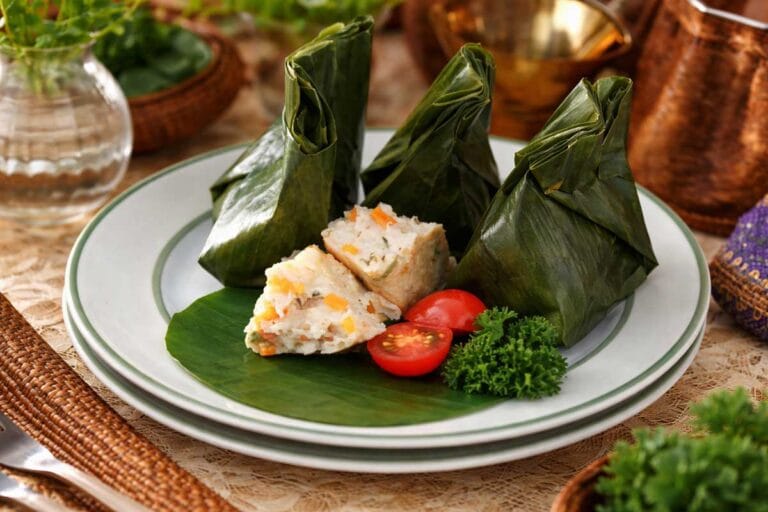
Ketupat, known in some regions as kupat or tipat, is rice cooked in woven coconut palm leaves until it becomes firm and compact. This ingenious method not only makes the rice portable and long-lasting but also transforms it into a food with deep symbolic meaning.
Historians trace ketupat’s popularity to the 15th century, during the rise of Islam in Java under the Demak Sultanate. Sunan Kalijaga, one of the revered Wali Songo (Nine Saints who spread Islam in Java), is said to have introduced ketupat as part of religious rituals. After Ramadan, during the celebration of Eid al-Fitr, communities were encouraged to prepare ketupat as a symbol of gratitude and unity.
But ketupat may have roots even older than Islam. Pre-Islamic Javanese and Balinese traditions associated rice and palm leaves with Dewi Sri, the goddess of fertility and agriculture. Hanging ketupat at the doorway symbolized protection and prosperity. In both Hindu and Islamic traditions, therefore, ketupat became a vessel for more than food—it carried blessings.

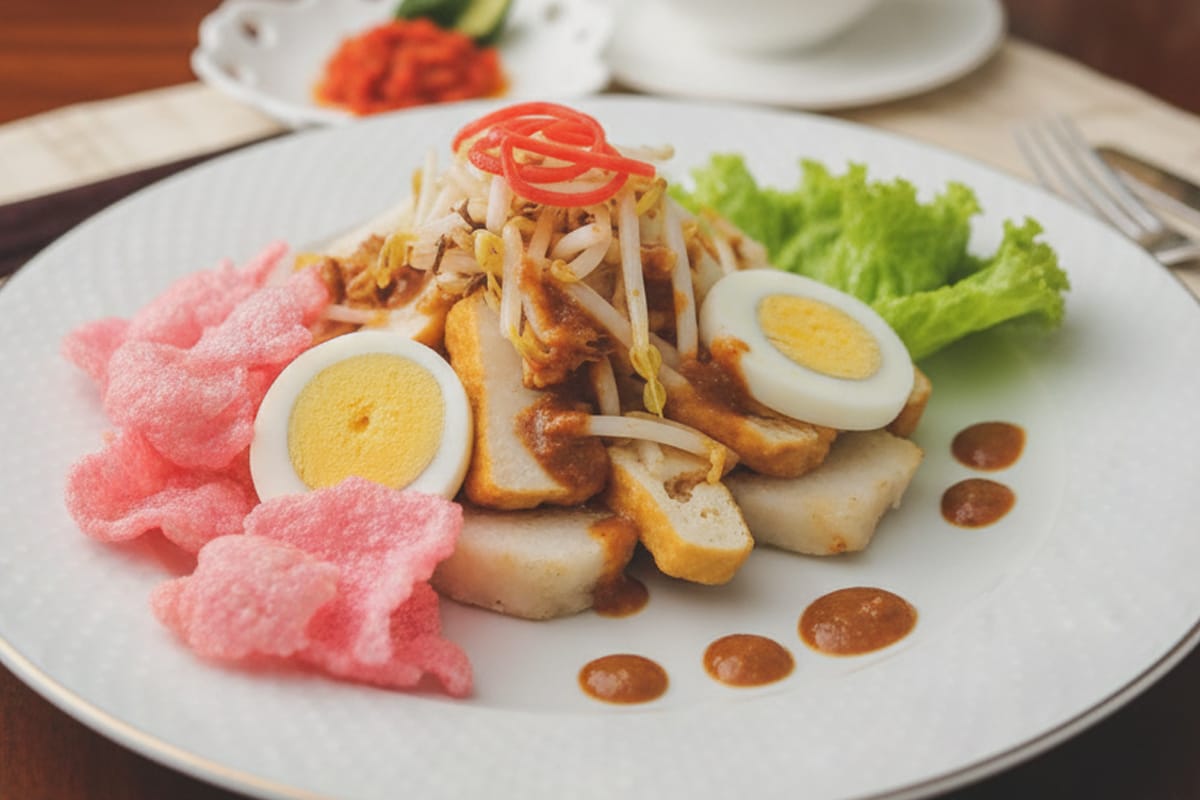
Ketupat Tahu Bandung: Indonesian Tofu with Peanut Sauce
Ingredients
Instruction
- Blend roasted peanuts, palm sugar, galangal/kencur, and garlic until smooth.
- In a saucepan, mix the blended paste with tamarind water and coconut milk. Cook over medium heat until slightly thickened.
- Add sweet soy sauce, salt, and lime juice. Taste and adjust the balance of sweet, savory, and tangy flavors.
- On a serving plate, arrange rice cake pieces, fried tofu, bean sprouts, and slices of boiled egg.
- Generously spoon the peanut sauce over the top.
- Sprinkle with fried shallots and add crackers on the side.
- Serve with chili paste on the side for those who enjoy extra heat.
Notes
- Ketupat (rice cake) is a traditional Indonesian rice dumpling cooked in woven palm leaves. For convenience, you can use compressed rice cakes (sold in Asian markets) or simply cook sushi rice, press it into a baking dish, chill, and cut into cubes.
- Kencur is a type of aromatic ginger used in Sundanese cuisine. If unavailable, use a small pinch of ginger powder for a similar warmth.
- Kecap Manis (sweet soy sauce): This is essential for authentic Indonesian flavor. Look for it in Asian grocery stores. If unavailable, mix regular soy sauce with molasses or maple syrup.
- Palm sugar: Can be replaced with dark brown sugar or coconut sugar for a similar caramel-like sweetness.
- Shrimp crackers (kerupuk): These are Indonesian-style puffed crackers. Sub with prawn chips or omit for a vegetarian version.
- Spice level: Serve chili paste on the side to let diners adjust the heat to their preference.
-
Terasi (Indonesian shrimp paste): Optional. Traditional street vendors in Bandung usually do not add terasi to the peanut sauce. Some home cooks include a small amount (about ½ teaspoon, toasted first) to give extra umami depth.
- When to add: Toast or fry terasi briefly until fragrant, then blend it together with the peanuts, sugar, kencur, and garlic when making the peanut sauce. This ensures the flavor is evenly incorporated.
- Where to get it: Available at Asian supermarkets, Southeast Asian grocery stores, or online (look for “Indonesian shrimp paste” or “terasi udang”). Often sold in small blocks or jars.
- Tip for Western cooks: Try the dish without terasi first—then experiment with a little if you enjoy stronger, more complex flavors.
The Philosophy of Ketupat: Layers of Meaning
The Javanese interpretation of ketupat gives it profound symbolic weight. The word kupat is often linked to ngaku lepat (“admitting one’s mistakes”). During Eid, exchanging ketupat was not just about sharing food, but also about asking for forgiveness and cleansing one’s heart.
Philosophers of Javanese culture also speak of laku papat, or four principles embodied in ketupat.
- Lebaran – the completion of fasting.
- Luberan – the overflowing spirit of generosity and charity.
- Leburan – the melting away of sins and grudges.
- Laburan – the whitening or purification of the soul.
Thus, ketupat symbolizes closure, generosity, reconciliation, and renewal. No wonder it is so central to festive gatherings and communal celebrations.
Serving Ketupat: A Festive Centerpiece
Traditionally, ketupat is prepared in woven coconut palm leaves, boiled for hours until the rice grains expand and firm up. The weaving itself is an art, often passed down through families, with patterns ranging from simple diamonds to intricate star shapes.
During Eid al-Fitr (Lebaran), Indonesian households often prepare large batches of ketupat, served with rich stews such as opor ayam (chicken in coconut milk), rendang, or sayur lodeh (vegetable coconut curry). Ketupat becomes the centerpiece of the feast, symbolizing togetherness and the spirit of sharing.
Outside festive occasions, ketupat is also a staple street food base. Vendors slice it into bite-sized cubes and pair it with peanut sauce, fresh vegetables, or savory broths—giving rise to dishes like ketoprak in Jakarta, lontong sayur in Sumatra, and of course, ketupat tahu in Central and West Java.
The Birth of Ketupat Tahu Bandung
While ketupat is a pan-Indonesian staple, Ketupat Tahu Bandung represents a distinctly Sundanese take on it. At first glance, it seems simple: rice cake, fried tofu, bean sprouts, and peanut sauce. But this simplicity hides layers of regional identity.
Origins and Influences
The dish has its roots in Central Java, particularly Magelang, where kupat tahu is a celebrated specialty. In Magelang, the peanut sauce resembles gado-gado or lotek, with finely ground peanuts mixed with spices, served with tofu, rice cake, noodles, cabbage, and even fritters.
As the dish spread westward, Bandung gave it a twist. The peanut sauce in Bandung is lighter, often blended with tamarind water, palm sugar, and sometimes shrimp paste (terasi), creating a tangier and more refreshing flavor. The Sundanese preference for crisp vegetables shows in the blanched bean sprouts and occasional fresh greens.
Kupat Tahu vs. Tahu Kupat
The names are confusingly similar, but the distinction matters. Kupat tahu (Magelang/West Java) emphasizes ketupat first, then tofu, usually served with peanut sauce. Tahu kupat (Solo/Central Java), on the other hand, highlights tofu fried crisp, combined with ketupat, noodles, and vegetables, then drenched in sweet soy sauce and topped with peanuts.
Bandung’s version borrows from both but remains unique: it relies heavily on tofu (often yellow tahu Bandung), keeps the sauce lighter, and showcases the Sundanese balance of flavors—sweet, savory, tangy, and mildly spicy.
Cultural Character of Sundanese Cuisine
Sundanese food, unlike some richly spiced Javanese or Padang dishes, tends to be fresh and light. It often highlights raw or lightly blanched vegetables (lalapan), mild seasonings, and a balance of sweet and sour. Ketupat Tahu Bandung fits right into this culinary identity: minimal spice blends, natural freshness, and a focus on crisp textures.
Where Central Java might add fried fritters and thick sauces, Bandung strips the dish back to essentials—rice cake, tofu, sprouts, peanut sauce, and kerupuk crackers. This reflects the Sundanese philosophy of harmony with nature, eating closer to the earth, and not overcomplicating flavors.
Nutritional Value and Health Considerations
From a nutritional perspective, Ketupat Tahu Bandung offers a decent balance:
- Carbohydrates: Ketupat provides steady energy as a rice-based staple.
- Protein: Tofu and eggs add plant and animal protein.
- Fiber and vitamins: Bean sprouts and vegetables contribute freshness and nutrients.
- Healthy fats: Peanuts supply unsaturated fats, though the sauce can be calorie-dense.
That said, moderation matters. Peanut sauce is rich in calories and fats; kerupuk crackers are often deep-fried; and coconut milk, if used, adds saturated fat. Eating Ketupat Tahu Bandung occasionally as a treat is fine, but daily indulgence could be heavy on the waistline.
Western Adaptations: Serving and Pairing
For Western kitchens, reproducing Ketupat Tahu Bandung comes with challenges. Finding fresh ketupat is difficult, but substitutes work well:
- Use compressed rice cakes from Asian stores, or
- Cook sushi rice, press it into a dish, chill, and cut into cubes.
For tofu, firm varieties (even extra-firm) replicate Indonesian tahu kuning. Peanut butter (unsweetened) can shortcut the sauce, though whole roasted peanuts give better texture.
As for pairing, Western diners might enjoy it with:

- Crusty bread (baguette or sourdough) to soak up the sauce.
- Light drinks such as sparkling water, iced tea, or even a crisp white wine to balance the richness.
Challenges in Western Cooking
The biggest hurdles are:
- Ketupat itself – the leaf-wrapped version is rare outside Indonesia.
- Kecap manis – sweet soy sauce, essential for the right depth, may need to be homemade (soy sauce + molasses).
Solution: Make a homemade version by simmering regular soy sauce with molasses or dark brown sugar until slightly thickened. Maple syrup or honey can be added for extra gloss and sweetness. Some brands like ABC or Bango can be ordered online. - Kencur – a type of aromatic ginger unique to Indonesia, often substituted with a pinch of regular ginger powder.
Solution: Substitute with a small pinch of dried ginger powder plus a hint of galangal or regular ginger. A squeeze of lime can help mimic kencur’s bright note. Though not identical, these alternatives keep the sauce lively and aromatic. - Terasi (shrimp paste) – available in Asian groceries, but its strong aroma can intimidate new cooks.
Solution: Toast or fry the paste in a little oil to reduce the pungency before blending it in. If the flavor feels too strong, try Thai kapi or Malaysian belacan, which are similar but sometimes milder. For a vegetarian option, add a few drops of soy sauce mixed with miso paste to capture that savory umami kick.
Overcoming these challenges requires a bit of creativity, but the essence of Ketupat Tahu Bandung can still shine through with thoughtful substitutions.
More than Just a Dish
Ketupat Tahu Bandung is not merely food; it is a cultural bridge. It carries the history of ketupat as a spiritual and festive food, the creativity of Javanese and Sundanese kitchens, and the adaptability of Indonesian street food.
For Indonesians, it is comfort food that ties together memories of family gatherings, bustling street corners, and post-prayer feasts. For Western audiences, it is an invitation to taste not only flavors but also traditions—an edible story of Indonesia’s diversity and unity.
So next time you encounter Ketupat Tahu Bandung, whether in a Bandung food stall or recreated in your own kitchen abroad, remember: you’re not just eating rice and tofu—you’re partaking in a centuries-old narrative of faith, gratitude, and community.