Ingredients
Instruction
Peanut Sauce
- Blend roasted peanuts, palm sugar, galangal/kencur, and garlic until smooth.
- In a saucepan, mix the blended paste with tamarind water and coconut milk. Cook over medium heat until slightly thickened.
- Add sweet soy sauce, salt, and lime juice. Taste and adjust the balance of sweet, savory, and tangy flavors.
Assembly
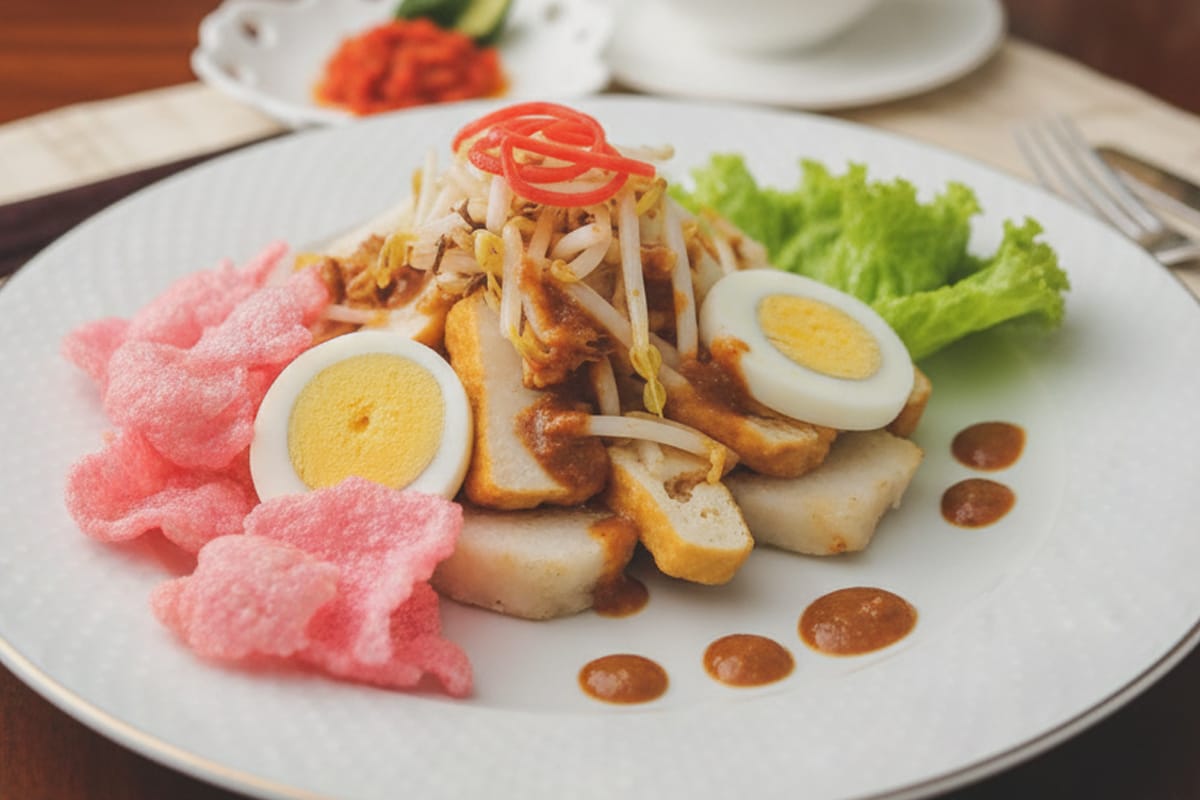
- On a serving plate, arrange rice cake pieces, fried tofu, bean sprouts, and slices of boiled egg.
- Generously spoon the peanut sauce over the top.
- Sprinkle with fried shallots and add crackers on the side.
- Serve with chili paste on the side for those who enjoy extra heat.
Notes
- Ketupat (rice cake) is a traditional Indonesian rice dumpling cooked in woven palm leaves. For convenience, you can use compressed rice cakes (sold in Asian markets) or simply cook sushi rice, press it into a baking dish, chill, and cut into cubes.
- Kencur is a type of aromatic ginger used in Sundanese cuisine. If unavailable, use a small pinch of ginger powder for a similar warmth.
- Kecap Manis (sweet soy sauce): This is essential for authentic Indonesian flavor. Look for it in Asian grocery stores. If unavailable, mix regular soy sauce with molasses or maple syrup.
- Palm sugar: Can be replaced with dark brown sugar or coconut sugar for a similar caramel-like sweetness.
- Shrimp crackers (kerupuk): These are Indonesian-style puffed crackers. Sub with prawn chips or omit for a vegetarian version.
- Spice level: Serve chili paste on the side to let diners adjust the heat to their preference.
-
Terasi (Indonesian shrimp paste): Optional. Traditional street vendors in Bandung usually do not add terasi to the peanut sauce. Some home cooks include a small amount (about ½ teaspoon, toasted first) to give extra umami depth.
- When to add: Toast or fry terasi briefly until fragrant, then blend it together with the peanuts, sugar, kencur, and garlic when making the peanut sauce. This ensures the flavor is evenly incorporated.
- Where to get it: Available at Asian supermarkets, Southeast Asian grocery stores, or online (look for “Indonesian shrimp paste” or “terasi udang”). Often sold in small blocks or jars.
- Tip for Western cooks: Try the dish without terasi first—then experiment with a little if you enjoy stronger, more complex flavors.