Uppsss… this time I missed it. I know fried ice cream (es krim goreng) is originally not from Indonesia. Forgive me, but now I want to share with you an adapted recipe of fried ice cream with a touch of Nusantara Indonesia.
And here’s the story.
A Brief History of Ice Cream Itself
Before we talk about the sizzling magic of fried ice cream, let’s take a step back and understand the fascinating history of ice cream itself.
The roots of frozen desserts stretch far into antiquity. Records suggest that as early as 4000 BC, Mesopotamian nobility stored ice in special “ice houses” along the Euphrates River to enjoy chilled drinks during scorching summers. In ancient China, by the 9th century, people preserved snow and ice in dug-out pits, mixing them with fruit juices and milk to create refreshing frozen treats. A 12th-century Chinese poet, Yang Wanli, even described a crystalline iced drink that closely resembled the early form of ice cream.

One of the most celebrated figures in ice cream’s development was Emperor Tang of the Shang Dynasty in China. He commanded his chefs to mix milk, flour, and aromatic ingredients with snow, churning it into a creamy delight served only in the imperial court. From this point, the idea of ice cream began to spread beyond Asia.
By the time of the Roman Empire, Emperor Nero was reportedly sending runners to the mountains to fetch snow, which was then flavored with fruits and honey for banquets. Later, explorers like Marco Polo introduced ice-based desserts to Europe after traveling through Asia. By the 16th century, Catherine de Medici popularized frozen treats in France, and eventually Thomas Jefferson brought recipes for ice cream to the United States, where it became part of the American culinary identity.
Still, for centuries ice cream remained a luxury. Before refrigeration, only the wealthy and aristocrats could afford the equipment and the labor needed to harvest and store ice. It was not until the late 19th century—when refrigeration technology became widespread—that ice cream truly became a dessert for the masses.
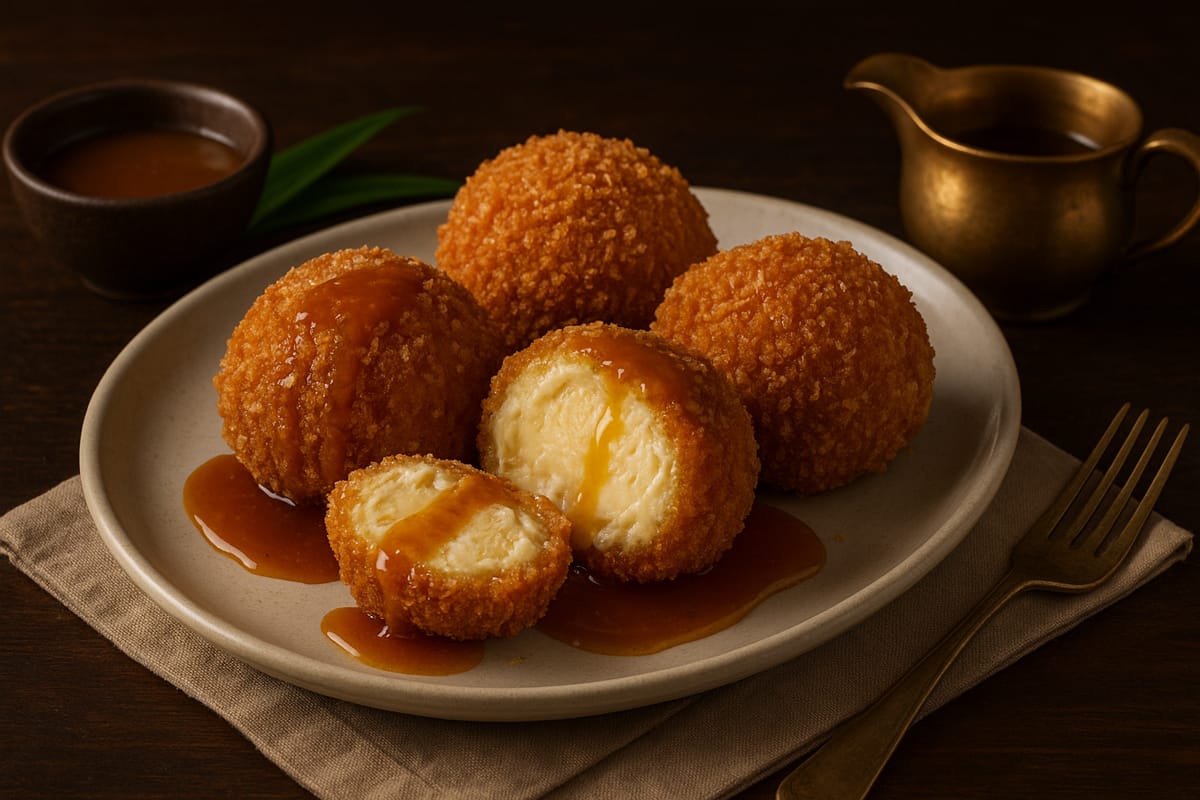
Indonesian-Style Fried Ice Cream
Ingredients
Instruction
- Scoop ice cream into firm balls and place them on a tray lined with parchment paper.
- Freeze for at least 4 hours, or until rock solid.
- Whisk egg whites in a bowl until lightly frothy.
- Place flour in one bowl, and mix breadcrumbs with coconut flakes in another.
- Roll each frozen ice cream ball in flour → dip in egg whites → coat with breadcrumb-coconut mixture.
- Repeat the process once more for a thicker, crunchier layer.
- Return coated balls to the freezer for another 2–3 hours.
- In a small saucepan, combine brown sugar, coconut milk, salt, and pandan leaf.
- Simmer on low heat until slightly thickened, about 5 minutes.
- Remove pandan leaf (if used) before serving.
- Heat oil to 170°C (340°F).
- Fry each coated ice cream ball for 15–20 seconds, just until golden brown.
- Remove and drain quickly on paper towel.
- Place fried ice cream on a plate.
- Drizzle with coconut–brown sugar syrup and serve immediately.
Notes
- Breadcrumbs: You can use crushed cornflakes if you want extra crunch.
- Palm sugar (gula jawa): If you can’t find it, regular brown sugar works fine. Coconut sugar (often available in health food stores) is an excellent substitute.
- Pandan leaf: Optional. If not available, replace with vanilla extract for aroma.
- Ice cream flavors: Coconut or mango gives the most tropical taste, but vanilla works perfectly too.
The Origins of Fried Ice Cream
If ice cream was already a wonder, fried ice cream was a paradox: how could something frozen survive the heat of the fryer?
The exact origins are debated, and several stories compete for recognition:
- Chicago World’s Fair, 1893
Some claim fried ice cream first appeared here, alongside the debut of the ice cream sundae. - Philadelphia, 1894
A company in Philadelphia filed credit for creating “a small ball of ice cream wrapped in thin pie crust and dipped into boiling lard or butter until crisp.” - Japanese Tempura Influence, 1960s
Another theory ties fried ice cream to Japanese tempura techniques, where batter-coated food is quickly deep-fried, allowing the outside to crisp without cooking the inside. - Chinese Culinary Tradition
Some also believe fried ice cream traces its roots back to China, where cooks experimented with deep-frying chilled or frozen desserts in a tempura-like batter, centuries before it gained global fame. - Inspired by Baked Alaska
Food historians also suggest fried ice cream might have been influenced by Baked Alaska (ice cream insulated with meringue, then briefly baked), a dessert popular since the 18th century.
Regardless of its true birthplace, fried ice cream captured imaginations worldwide. In the United States, it became especially popular in Mexican and Tex-Mex restaurants during the 1980s, often served with honey, caramel, or cinnamon sugar. In Asia, particularly in Japan and China, fried ice cream took on its own variations with tempura-like batters.
Cultural Symbolism and Philosophy
Fried ice cream is more than just a culinary trick—it embodies the joy of contrasts.
- Hot vs. Cold: A golden, sizzling crust enveloping ice-cold cream is like life’s paradoxes—opposites coexisting in harmony.
- East Meets West: From Chinese emperors to European royalty to American diners, ice cream connects cultures. Fried ice cream, in particular, represents global culinary fusion.
- Celebration Dessert: Because of its dramatic presentation, fried ice cream is often served at celebrations—birthdays, family gatherings, or cultural festivals.
In Indonesia, where deep-fried snacks (gorengan) are part of daily life, fried ice cream feels both exotic and familiar. The crunch recalls fried bananas (pisang goreng), while the ice cream offers a luxurious surprise.
The Nusantara Twist
While fried ice cream itself may not be originally Indonesian, adapting it with local flavors and ingredients gives it a distinct Nusantara soul. Imagine:
- A coating of breadcrumbs mixed with coconut flakes (kelapa parut) for a tropical aroma.
- A drizzle of brown sugar and coconut milk syrup, inspired by traditional kinca sauce used in Indonesian sweets.
- Ice cream flavors like coconut, mango, or durian instead of just vanilla.
This adaptation blends international curiosity with Indonesian heritage, turning a global dessert into something that resonates with both Western audiences and Southeast Asian palates.
Health, Benefits, and Risks
Like all indulgent desserts, fried ice cream has its bright side and its warnings.
Benefits:
- A source of calcium and protein from dairy.
- Instant mood booster—cold and sweet foods trigger the brain’s reward system.
- The coconut and nuts (if used) provide fiber and healthy fats.
Risks (if over-consumed):
- High in sugar and calories—excess intake can contribute to weight gain or diabetes risk.
- Fried coating adds extra fat, increasing cholesterol if eaten too often.
- Lactose intolerance may cause discomfort for some individuals.
The key is balance: fried ice cream should remain a festive treat, enjoyed occasionally rather than daily.
Bite Into A Crispy…
From ancient Mesopotamian ice pits to the imperial courts of China, from European palaces to American diners, and now to Indonesian kitchens—ice cream has traveled through time and cultures to delight the world. Fried ice cream (es krim goreng) represents that journey of adaptation and innovation.
By adding a touch of Nusantara—coconut, palm sugar, pandan—we not only give this dessert a tropical personality but also tell the story of how global and local can merge beautifully on a plate.
So next time you bite into a crispy shell that hides a frozen heart, remember: you’re tasting history, culture, and creativity all at once.