(Pronounced: “sahm-bahl play-ching”)
When you think of Indonesia’s vast culinary landscape, one of the most vibrant and unforgettable flavors you’ll encounter is Sambal Plecing – a bold, fiery chili sauce from the island of Lombok. For locals, it’s not just a condiment; it’s a cultural signature. For visitors from the United States, Europe, and beyond, it’s a taste of Indonesia’s soul: fresh, spicy, tangy, and full of stories.
This article dives deep into the origins, history, culture, and philosophy behind Sambal Plecing. We’ll explore why it’s called plecing, how it’s traditionally served, the difference between Lombok and Bali styles, and even how to adapt it for Western kitchens without losing its authentic punch.
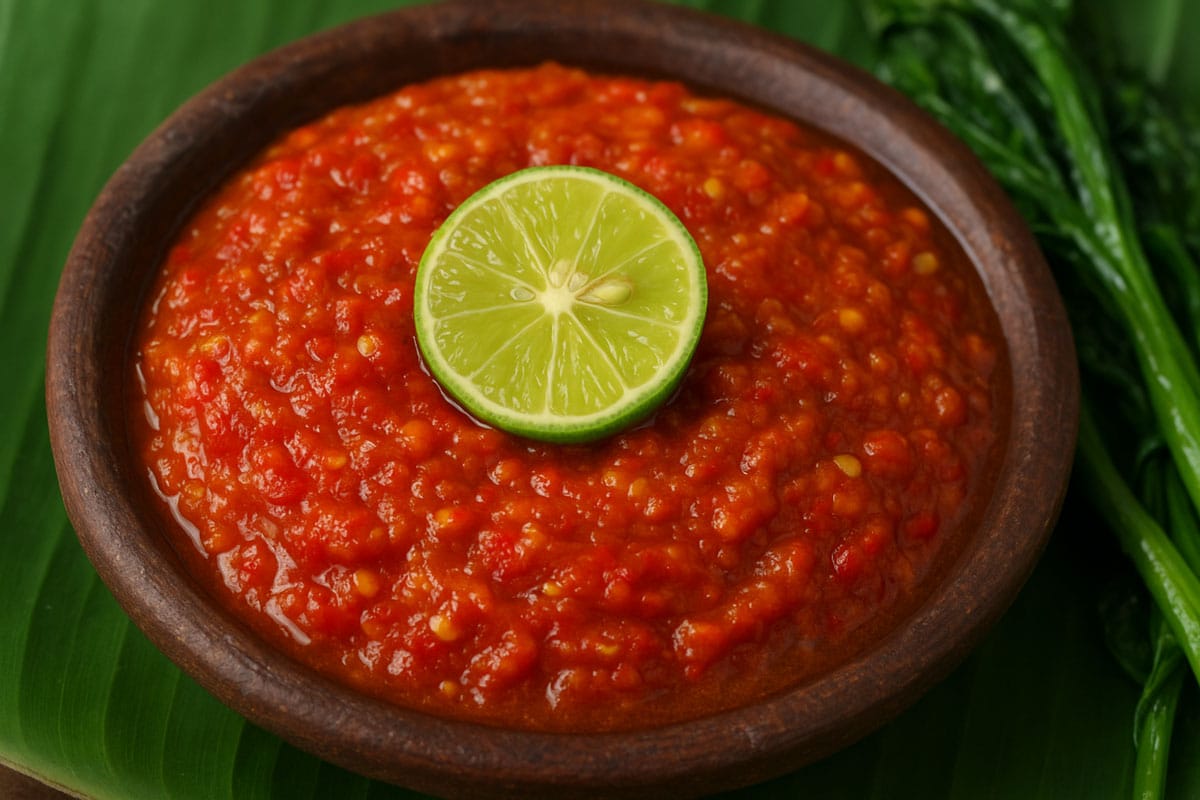
Sambal Plecing – Spicy Lombok Chili Sauce
Ingredients
Instruction
- Place all ingredients in a mortar and pestle or blender.
- Grind until smooth or slightly coarse, depending on preference.
- Adjust seasoning—balance the spicy, sweet, salty, and tangy flavors.
- Serve immediately with vegetables, grilled chicken, or fish.
- Lightly blanch or pan-fry the chilies and tomatoes for 2–3 minutes, or grill over charcoal for a smoky aroma.
- Using a mortar and pestle or blender, grind chilies, tomatoes, roasted shrimp paste, palm sugar, salt, and optional aromatic ginger until smooth or coarse.
- Stir in tamarind water and mix well. Adjust with extra salt, sugar, or tamarind to taste.
- Keep the sambal thick—avoid adding too much water. Serve warm or at room temperature.
Notes
- Heat Level – Bird’s eye chilies are extremely spicy; substitute with red Fresno or cayenne for milder heat.
- Shrimp Paste – Authentic terasi can be found in Asian grocery stores. For a less pungent option, use fish sauce sparingly.
- Palm Sugar – If unavailable, dark brown sugar works well.
- Tamarind – Widely available in jarred paste form in international or Indian markets; lemon juice can be used, though the flavor will be brighter and less earthy.
- Raw vs Cooked Flavor – Raw version is fresher and hotter, while cooked version is deeper and slightly smoky.
-
Extra Flavor Tips
- For a smoky aroma, grill the chilies and tomatoes over charcoal or an open flame before grinding.
- Use fully ripe tomatoes for natural sweetness and a richer flavor.
- Keep sambal thick—avoid adding too much water, as a dense texture gives the best punch.
-
Serving Ideas
- Traditionally served with plecing kangkung (blanched water spinach).
- Also pairs beautifully with steamed green beans, asparagus, or broccoli.
- Complements grilled chicken, grilled fish, roasted shrimp, or even roasted potatoes for a fusion twist.
What Does “Plecing” Mean?
The word plecing has two fascinating interpretations, depending on local tradition:
- From the Sasak language (Lombok) – Plecing means “to pull out” or “to pluck,” referring to the way kangkung (water spinach) is harvested by pulling it directly from the ground or riverbed. This reflects the deep agricultural roots of the dish.
- From Balinese – Plecing means “to pour over” or “to splash,” describing the serving style: blanched water spinach topped (or splashed) with spicy sambal sauce.
Both meanings capture the essence of the dish — fresh-picked greens paired with a lively, poured-over sauce.
Lombok vs. Bali – Two Origins, Two Styles
Sambal Plecing’s story stretches across two islands:

Lombok’s Claim
In Lombok, plecing kangkung (water spinach with chili sauce) is a proud part of Sasak culture. According to local history, the dish evolved from humble beginnings: simple blanched kangkung with sambal terasi (shrimp paste chili sauce). Over centuries, Lombok cooks enriched it with tomatoes, palm sugar, and sometimes bean sprouts or roasted peanuts.
Some stories trace its roots back to the 17th century, when Balinese forces occupied Lombok in 1692. The Balinese brought their own style of plecing, which the Sasak people adapted to local tastes — bolder, spicier, and richer in aroma. Today, Lombok sambal plecing is often served with Ayam Taliwang (grilled spicy chicken) or grilled fish.
Bali’s Version
Balinese sambal plecing is simpler, typically including kangkung, sambal, a light fish broth (kuah pindang), and sometimes peanuts. Bean sprouts are optional, not mandatory as in Lombok. In Bali, it’s often paired with Ayam Betutu, a slow-cooked spiced chicken.
A Dish of Culture and Ceremony
In Lombok, sambal plecing is more than just a side dish — it appears at weddings, harvest celebrations, and religious gatherings. It represents togetherness and hospitality: a dish that invites sharing, conversation, and sometimes even a playful competition over who can handle the most heat.
The flavor philosophy is clear:
- Freshness from the greens
- Bold heat from the chilies
- Savory depth from shrimp paste
- Tangy brightness from tamarind or lime
Two Main Styles of Sambal Plecing
Sambal Plecing comes in two main preparation styles:
- Raw Version (Mentah) – Chilies, tomatoes, and other ingredients are ground without cooking.
- Fresh, sharp flavor with a “sting” of heat.
- Brighter red-orange color.
- Shorter shelf life since the ingredients are raw.
- Popular in home kitchens because it’s quick and requires minimal equipment.
- Cooked Version (Rebus/Bakar) – Chilies and tomatoes are blanched, grilled, or fried before grinding.
- Deeper, smoky flavor with a softer heat.
- Darker, richer color.
- Lasts longer thanks to reduced moisture.
- Common in restaurants and considered the more “premium” traditional style.
💡 For Western audiences, the cooked version is often more approachable: it’s gentler on the stomach, the aroma is more familiar, and the texture is smoother.
What is Kangkung Lombok?
Kangkung (water spinach) is the essential green in plecing. But Kangkung Lombok is special. Grown in flowing freshwater streams using traditional methods, it develops thick, crunchy stems and tender leaves. Its texture holds up perfectly to blanching, staying crisp yet juicy.
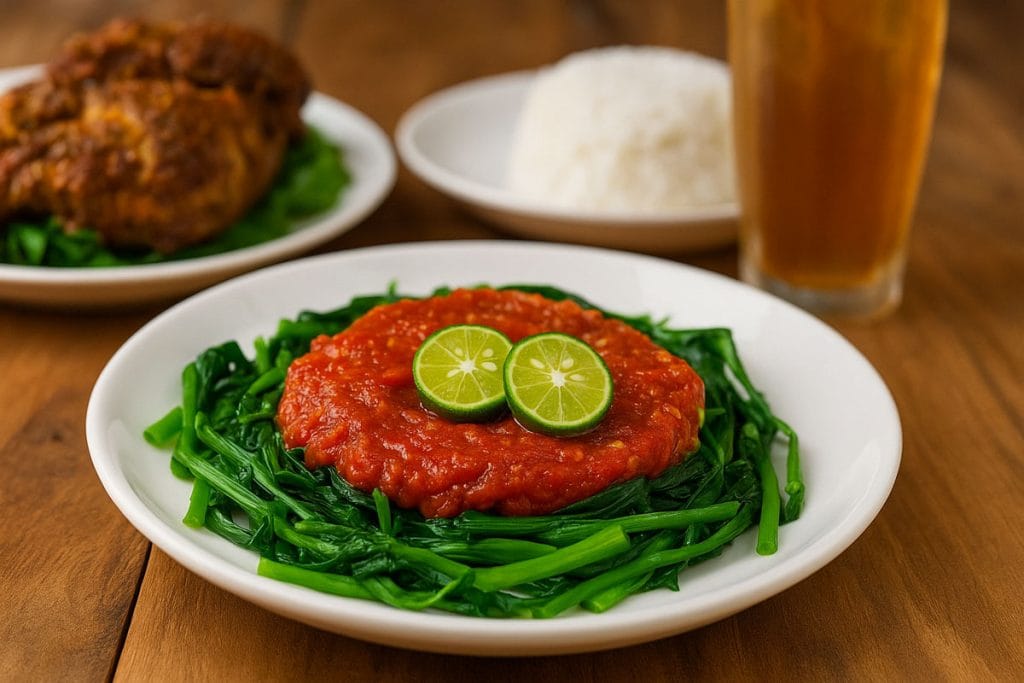
Outside Indonesia, you can find kangkung in Asian grocery stores, often labeled as “ong choy” (Cantonese) or “morning glory” (Thai). If unavailable, you can substitute with spinach, Swiss chard, or even young kale — though the texture and flavor will differ.
A Bite of Folklore
One local Lombok legend tells of a royal cook who wanted to see the face of a princess who always kept her face covered. The cook invented a dish served with long strands of water spinach, requiring the eater to tilt their head back to eat it — revealing their face. The dish? Sambal plecing with kangkung. Whether myth or marketing, the story adds a charming touch to the dish’s cultural heritage.

Does Sambal Plecing Suit Western Tastes?
Absolutely — with some adjustments.
- Heat Level – Reduce bird’s eye chilies or use milder red chilies like Fresno or cayenne.
- Shrimp Paste Aroma – Some Western diners find terasi intense; fish sauce or miso paste can be gentler substitutes.
- Serving Style – Pair with grilled chicken, roast fish, or even barbecued meats to bridge familiar Western flavors with Indonesian spice.
The tangy-spicy balance is similar to salsas and hot sauces loved in the US, while the leafy greens can be compared to sautéed spinach or collard greens in Southern cooking.
Serving Suggestions for International Tables
- Traditional – Serve over blanched kangkung with roasted peanuts and bean sprouts, alongside steamed rice.
- Fusion – Use as a spicy dressing for grilled vegetables, a topping for fish tacos, or a condiment for roasted potatoes.
- Vegetarian – Replace shrimp paste with toasted sesame seeds or mushroom powder for umami depth.
Why Sambal Plecing Matters
Sambal Plecing isn’t just food — it’s a living tradition that connects farming, family, and festivity. It showcases Indonesia’s ability to take humble ingredients and turn them into something unforgettable. Whether you enjoy the raw version’s bright bite or the cooked version’s smoky richness, you’re tasting centuries of adaptation, migration, and local pride.
And like many great dishes, it’s more than the sum of its parts — it’s a story on a plate, ready to be shared around the world.