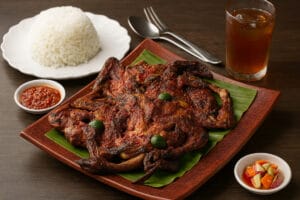
Imagine the aroma of chicken slowly grilling over hot coals, infused with coconut milk, lemongrass, and a blend of chilies, garlic, and kaffir lime leaves. The sauce is rich yet lively — a perfect balance of sweet, spicy, and tangy flavors that linger on your taste buds.
This is Ayam Panggang Bumbu Rujak, a beloved Indonesian dish whose roots reach deep into the culinary history of Java.
For those unfamiliar with Indonesian cuisine, the name “rujak” might bring to mind a fruit salad with a spicy-sweet dressing. That was exactly my first thought when I heard of ayam bumbu rujak — I imagined chicken paired with the same sauce I knew from fruit rujak. In my own childhood, my first encounter with bumbu rujak was through my mother’s fish bumbu rujak, a comforting dish of fish simmered in a sweet, spicy, savory sauce, served with plenty of broth.
But chicken cooked this way is different. Once grilled, the smoky aroma transforms the dish into something irresistible. And the same flavor profile can even be adapted for duck or seafood like crab — with some adjustments in technique.
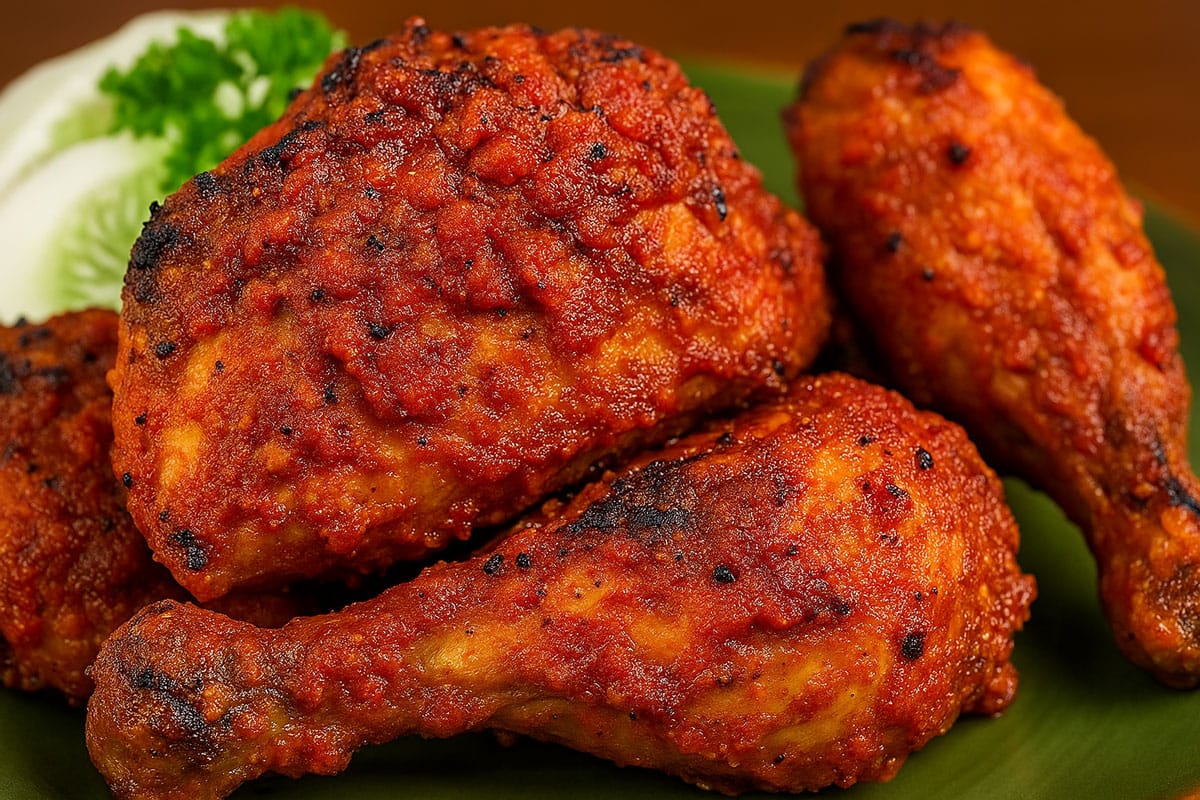
Ayam Bumbu Rujak (Grilled Rujak-Spiced Chicken)
Ingredients
Instruction
- Prepare the ChickenRinse the chicken pieces and pat dry. Rub lightly with a pinch of salt and a squeeze of lime or lemon juice. Let sit for 10 minutes, then rinse again to remove any strong odor.
- Make the Spice PasteBlend the red chili peppers, candlenuts, shallots, garlic, and shrimp paste (if using) into a smooth paste. Add a splash of oil or water if needed to blend.
- Cook the SauceHeat vegetable oil and butter in a large skillet or wok over medium heat. Sauté the spice paste until fragrant and the oil separates, about 5 minutes.
- Simmer the ChickenPour in the coconut milk and stir until evenly mixed. Lower the heat to medium-low and bring to a gentle simmer.Add the chicken pieces and cook uncovered, turning occasionally, until the sauce thickens and the chicken is tender, about 25–30 minutes.
- Grill for Smoky FlavorPreheat a grill (charcoal for authentic flavor, or a broiler/oven at 400°F). Grill the chicken for 5–8 minutes per side, basting with leftover sauce until slightly charred and aromatic.
- ServeArrange the chicken on a serving platter. Spoon over some of the thick coconut sauce and serve hot with steamed rice and fresh vegetables.
Notes
- Candlenuts (kemiri) are often used in Indonesian cooking for creaminess. In the US, macadamia nuts are a great substitute.
- Palm sugar (gula merah) adds a caramel-like sweetness. You can substitute with light brown sugar if palm sugar is unavailable.
- Kaffir lime leaves (daun jeruk) give a citrusy aroma. In Western grocery stores, look in the frozen herbs section of Asian markets, or substitute with lime zest for a different but pleasant fragrance.
- Lemongrass (serai) should be bruised to release its oils. Fresh is best, but frozen lemongrass works too.
- If you prefer less spice, remove the seeds from the chili peppers or replace some with red bell peppers for color without heat.
- For a smokier finish without a grill, use an oven broiler on high for the last 5 minutes of cooking.
A Tale of Two Origins
Like many traditional dishes, the exact origin of ayam bumbu rujak is a subject of debate.
Some culinary traditions claim it comes from Central Java, where the dish is closely associated with Yogyakarta, the cultural heart of Javanese heritage. In this version, ayam panggang bumbu rujak was part of royal banquets in the Mataram Sultanate during the 16th century, served to kings, nobles, and warriors. The dish carried symbolic meaning: chicken represented bravery and loyalty, while the diverse spices symbolized harmony in diversity.
Others point to East Java as its birthplace, tracing its history back to rural villages in the early 20th century. Housewives there combined locally available spices with chicken — an affordable source of protein — to create a dish for community gatherings like weddings or selamatan (communal feasts). Over time, migrants from East Java brought the recipe to larger cities like Jakarta and Surabaya in the 1970s, spreading its fame.
Rather than seeing these two claims as conflicting, it’s likely that ayam bumbu rujak evolved in parallel across Java — each region adapting the spice mix to local tastes, but united by the sweet-spicy-sour essence of bumbu rujak.
Cultural Significance and Philosophy
In Javanese culture, food is rarely just about eating; it carries layers of symbolism. Ayam bumbu rujak reflects several values:
- Bravery and Loyalty – The chicken is a traditional symbol of courage and faithfulness.
- Harmony in Diversity – The spice blend combines ingredients with contrasting characters — fiery chilies, cooling coconut milk, sweet palm sugar, tangy tamarind — in a way that creates balance.
- Communal Spirit – Traditionally served at large gatherings, the dish fosters togetherness, much like the communal grilling seen in American backyard cookouts.
What is Bumbu Rujak?
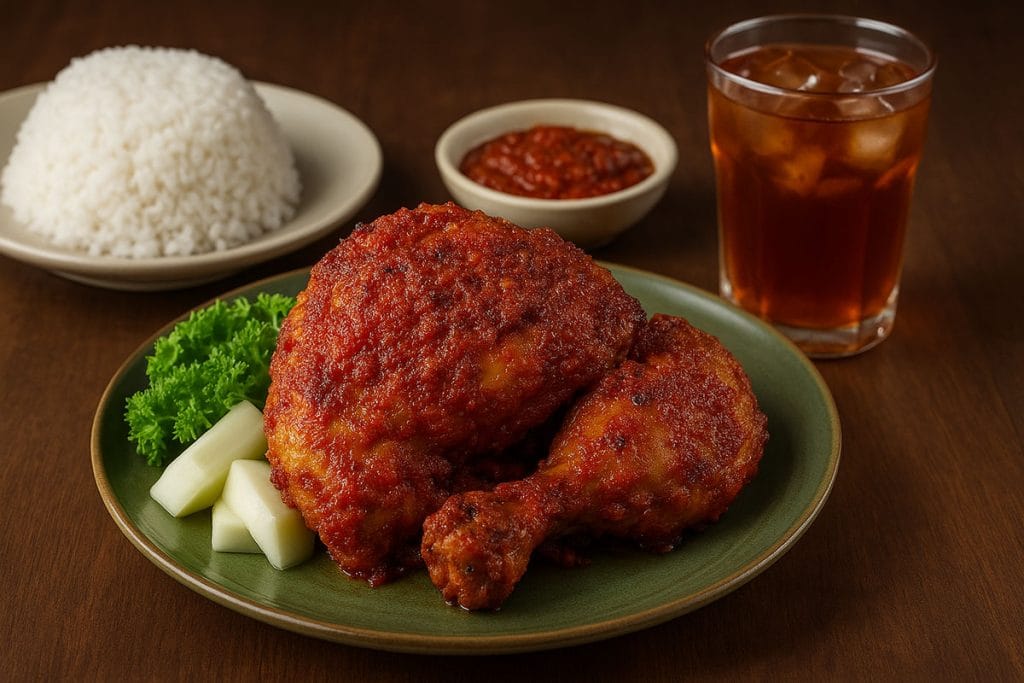
The term “rujak” usually refers to a fruit or vegetable salad with a sauce of palm sugar, chili, and tamarind. Applying it to grilled chicken was a creative leap — an example of Indonesia’s culinary ingenuity.
The bumbu rujak for chicken is thicker and richer than fruit rujak sauce, using additional ingredients like candlenuts for creaminess and kaffir lime leaves for fragrance. Coconut milk turns the sauce silky, while grilling adds depth and smokiness.
Why Both Oil and Butter?
Western cooks might pause when they see both vegetable oil and butter in the recipe. Isn’t one enough? In Indonesian cooking, combining the two is a clever technique:
- Butter for Flavor & Aroma – Butter gives richness and a fragrant, almost nutty undertone.
- Oil to Prevent Burning – Butter alone burns quickly because of its low smoke point. Mixing in oil raises the smoke point, so the spice paste (bumbu halus) can sauté long enough to release its aroma without scorching.
If you want to adapt, you could sauté entirely in oil and add butter at the end for flavor — but you’d be missing a little of the magic.
The Cooking Process
The recipe begins with simmering chicken pieces in coconut milk and spice paste until tender and infused with flavor. This braising stage ensures the meat is juicy. Then comes the final flourish — grilling over charcoal for authenticity (or broiling in an oven), which caramelizes the sauce and adds a subtle char.

The result is chicken with layers of taste: the initial sweetness from palm sugar, the lingering heat from chili, and a background tang from tamarind.
Pairing with Western Palates
One question often asked is whether ayam bumbu rujak suits American and European tastes. The answer is a resounding yes — but with a few tips:
- Heat Level – Western diners who aren’t used to chili heat can reduce the spice by removing chili seeds or substituting part of the chilies with red bell peppers.
- Sweetness – Palm sugar’s caramel note resonates well with BBQ lovers. If unavailable, light brown sugar works.
- Serving Suggestions – In Indonesia, it’s served with steamed rice and fresh vegetables. In a Western setting, it pairs beautifully with grilled corn, roasted potatoes, or a fresh salad.
Think of it as a cousin to American BBQ chicken — but with a tropical twist.
When to Serve It
In Indonesia, ayam bumbu rujak is a festive dish — perfect for birthdays, weddings, and religious celebrations. In the West, it’s ideal for:
- Summer cookouts – Impress guests with exotic flavors.
- Holiday gatherings – A unique alternative to roast chicken.
- Potluck dinners – Easy to prepare ahead and reheat.
My First Encounter
The first time I heard “ayam bumbu rujak,” I imagined chicken covered in the same sauce used for fruit rujak. My only reference point was my mother’s ikan bumbu rujak — sweet, spicy, savory fish in a soupy sauce.
When I finally tried the grilled chicken version, it was a revelation. The charred edges, the smoky aroma mingling with coconut milk and chilies — it was love at first bite. If you’ve never had it, you should. And once you’ve mastered the chicken, try experimenting with duck or crab. The flavor profile is surprisingly adaptable.
Bringing Ayam Bumbu Rujak Abroad
For Western home cooks, the biggest challenge might be sourcing certain ingredients like candlenuts, kaffir lime leaves, or fresh lemongrass. Asian grocery stores (or online shops) usually carry them, but there are workable substitutes:

- Candlenuts → macadamia nuts
- Palm sugar → light brown sugar
- Kaffir lime leaves → lime zest
- Fresh lemongrass → frozen lemongrass or lemon zest + ginger
The technique is flexible too. While charcoal grilling is authentic, an oven broiler or stovetop grill pan works well.
Wrap Up
Ayam Panggang Bumbu Rujak isn’t just another grilled chicken recipe. It’s a story of cultural fusion, evolving from royal courts and rural kitchens to street stalls and now — potentially — your own backyard. It’s a dish that carries history, symbolism, and a warmth that transcends borders.
Whether you serve it with steaming white rice like in Java, or alongside grilled vegetables at a summer BBQ in California, you’re participating in a tradition that values bravery, harmony, and togetherness. And you might just discover, like I did, that “rujak” isn’t always what you think it is — sometimes, it’s something even better.