(Pronounced: Chwee Mee Mah-lahng)
If you ever wander into the cool highland city of Malang in East Java, Indonesia, you’ll soon realize that food here is more than sustenance — it’s a love language. And among its culinary gems, one dish quietly commands the loyalty of locals: Cwi Mi Malang, or Malang-Style Chicken Noodles.
This is not your average chicken noodle soup. It’s a careful composition of springy noodles, finely minced white chicken, crisp lettuce, fried wonton, and a light, fragrant broth served on the side. Cwi Mi has a subtle elegance — a kind of minimalist perfection that comes from over a century of cultural blending, culinary patience, and respect for tradition.
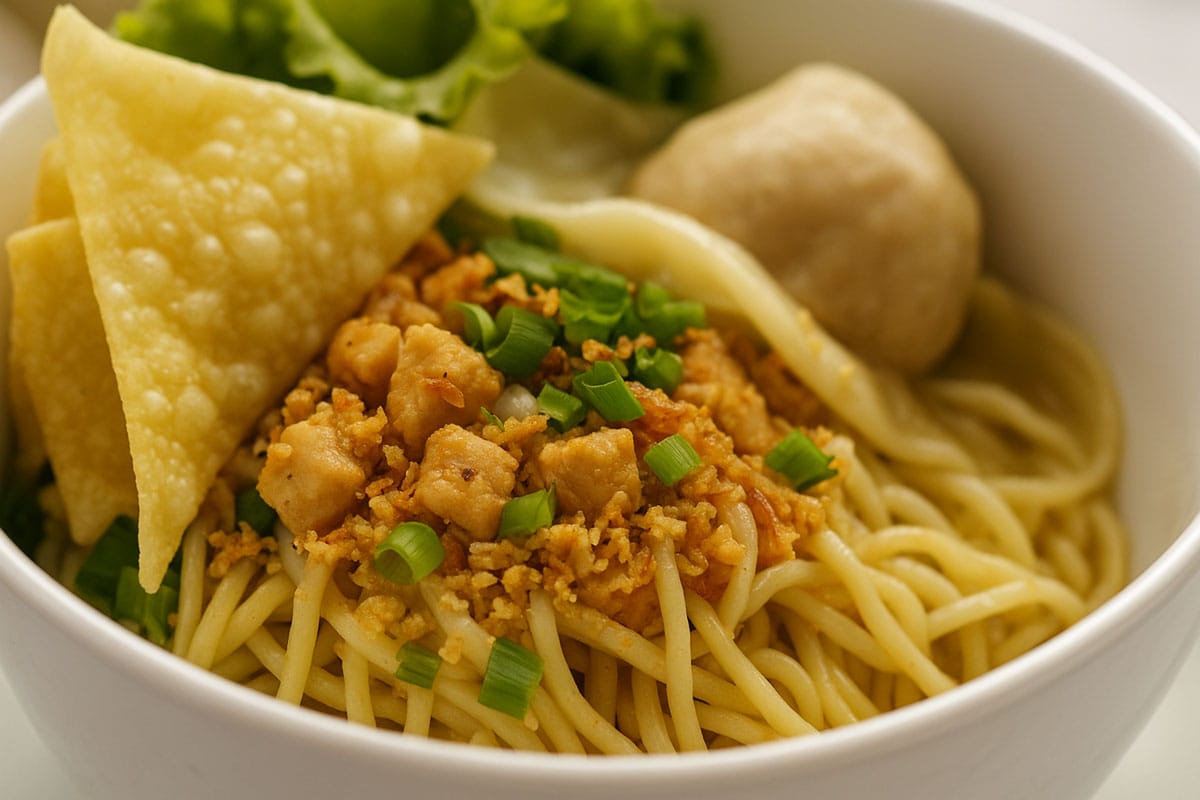
Malang-Style Chicken Noodle Soup (Cwi Mi Malang)
Ingredients
Instruction
- Place the chicken skin in a skillet over low heat without oil.
- Cook slowly until the skin releases its fat.
- Add the neutral oil, continue cooking until the skin turns golden brown and crisp.
- Strain the oil and set aside.
- Heat chicken oil in a pan over medium heat.
- Add garlic and ginger, sauté until fragrant.
- Add diced chicken, stir until it changes color.
- Season with white pepper, sesame oil, soy sauce, and a little salt.
- Cook until the chicken is fully cooked and slightly dry. Set aside.
- Heat chicken oil in a pot over medium heat.
- Add garlic and ginger, sauté until fragrant.
- Pour in chicken stock, bring to a gentle boil.
- Season with white pepper and salt, then add scallions. Keep warm.
- In a serving bowl, place cooked egg noodles.
- Add 1–2 tablespoons of chicken oil, a dash of soy sauce, and a pinch of white pepper. Toss well.
- Arrange lettuce on the side, top noodles with the chicken mixture.
- Garnish with celery leaves, scallions, and crispy fried shallots.
- Serve with the hot broth in a separate bowl and add fried/boiled wontons or fish balls if desired.
Notes
- Noodles: Chinese-style egg noodles work best. If unavailable, use thin ramen noodles or spaghetti cooked al dente.
- Celery leaves (daun seledri): These are common in Indonesia but harder to find in the U.S. or Europe. You can substitute flat-leaf parsley for a similar look and mild flavor.
- White pepper (merica bubuk): Provides a distinct earthy heat different from black pepper. Available in Asian groceries or online.
- Chicken oil (minyak ayam): Essential for authentic flavor, but if you’re short on time, use roasted chicken drippings mixed with neutral oil.
- Fried shallots (bawang goreng): Widely available in Asian markets, or make your own by frying thinly sliced shallots until crispy.
- Fish balls & wontons: Optional, but they add texture and a more complete street-food feel.
- Serving tip: Just like in Malang, the broth is served separately so the noodles stay springy until eaten.
From the Streets of Malang to the World
Cwi Mi Malang traces its origins to the early 20th century when Chinese immigrants — mainly from the Hokkien community — brought their noodle-making craft to Malang. The term cwie in Hokkien means “small” or “fine,” referring to the thin, delicate noodles. Over time, the Chinese recipe merged with local Javanese preferences, resulting in a uniquely Malang-style dish: less sweet than Central Javanese noodle soups, lighter than the heavily seasoned street noodles of Jakarta, and always finished with the fresh crunch of lettuce.
This fusion of Chinese technique and Indonesian soul is what makes Cwi Mi more than just food — it’s a snapshot of cultural harmony. In Malang, eating Cwi Mi isn’t just about taste; it’s about history, family stories, and the pride of a city that has preserved its own version of chicken noodles for generations.

What Makes Cwi Mi Malang Different from Mie Ayam?
At first glance, you might mistake Cwi Mi for Indonesia’s more widely known mie ayam (chicken noodles). But connoisseurs will quickly point out the differences:
- The Chicken Topping – Instead of large chunks of braised chicken, Cwi Mi uses finely minced white chicken meat, gently simmered and seasoned to stay juicy and subtly flavored.
- The Presentation – Cwi Mi is typically served dry (without the broth poured over the noodles) with the soup on the side. This keeps the noodles springy until the last bite.
- The Flavors – Mie ayam often leans toward sweet soy sauce seasoning; Cwi Mi favors a lighter, savory balance with aromatic chicken oil (minyak ayam) and a hint of sesame oil.
- The Signature Garnish – Crisp lettuce leaves, fried shallots, scallions, and a golden fried wonton are non-negotiable in a true Malang-style serving. Some vendors even add pickled cucumber (acar timun) for a refreshing tang.
In short, if mie ayam is a warm hug, Cwi Mi Malang is a perfectly tailored suit — still comforting, but with an understated elegance.
The Cultural Philosophy Behind the Dish
Like many Indonesian foods, Cwi Mi Malang reflects a belief in balance. The tender noodles and soft minced chicken are contrasted with crunchy fried wontons and fresh vegetables. The light broth balances the richer chicken oil coating the noodles.
This balance also extends to its role in daily life. In Malang, Cwi Mi is a go-to meal for breakfast, lunch, or a late afternoon snack. It’s filling without being heavy, making it the perfect fuel for the city’s cool mountain climate.
A Personal Story from the Streets of Malang
My wife, who was born and raised in Malang, once shared a memory that perfectly captures the soul of this dish. As a teenager, she sometimes helped her relative sell Cwi Mi at a small noodle stall.

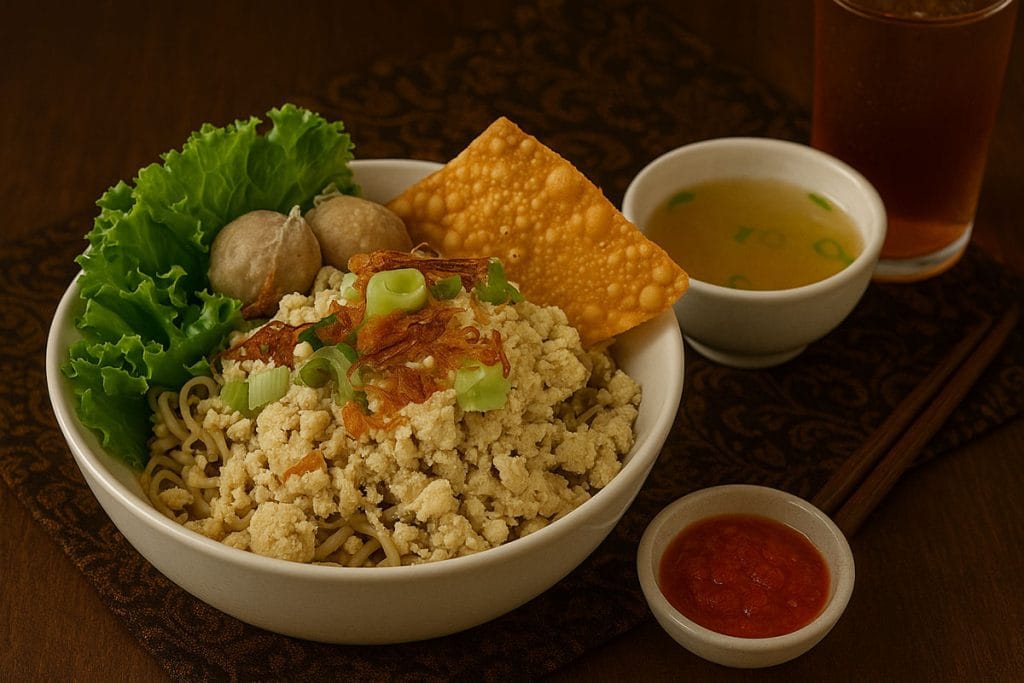
It was her favorite job — not because of the pay, but because, well… she ate more noodles than she served. The aroma of the chicken oil, the crisp bite of fresh lettuce, and that first slurp of perfectly springy noodles were too much to resist.
From her time behind the stall, she learned a clever vendor’s trick for keeping prices affordable: because chicken is one of the pricier ingredients, the minced chicken topping was sometimes mixed with tiny diced tofu. The tofu was pale, just like the chicken, so it blended right in without deceiving customers — the chicken was still there, just in a slightly smaller portion. This not only lowered costs but also made the dish more accessible to everyone.
Would Western Palates Enjoy It?
Absolutely. Cwi Mi Malang’s flavor profile is mild, savory, and aromatic — there’s no overpowering spice or unfamiliar taste to intimidate new eaters. The use of light chicken broth, fresh lettuce, and gentle seasoning makes it appealing to those who enjoy comforting noodle dishes like chicken ramen or Italian pasta with a delicate sauce.
The only adjustment for some Western diners might be the fried shallots or sesame oil aroma, but these are easy to embrace after a first try. In fact, the crispy wonton garnish would probably be an instant hit in the U.S. and Europe.
Tips for Making Cwi Mi in America or Europe
- Noodles – Look for Chinese-style thin egg noodles in Asian groceries. If unavailable, fresh ramen noodles or even angel hair pasta cooked al dente can work.
- Chicken Oil – This is the secret weapon. Render chicken skin slowly with neutral oil until golden; this aromatic oil coats the noodles and gives that authentic Malang flavor.
- Broth – Use homemade chicken stock for best results. Keep it light and clear.
- Garnishes – Don’t skip the lettuce and fried shallots. For a Western twist, you could add thinly sliced cucumber pickles for the acar timun effect.
- Wontons – Fry your own or buy them frozen. In Malang, the crispy pangsit goreng is iconic.
How to Serve It in the West
If you’re serving Cwi Mi Malang in the U.S. or Europe, present it as a plated dish with a small bowl of broth on the side. Arrange the lettuce so it peeks out from under the noodles, top with the white minced chicken, sprinkle with scallions and fried shallots, and place the golden wonton on the side. Serve sambal or chili paste in a small dipping bowl for heat lovers, and maybe a light iced tea for the full Indonesian café experience.
This format also works well for dinner parties, as guests can pour the broth themselves or enjoy the noodles dry.
The Price of Happiness in Malang
One of the charms of Cwi Mi Malang is its affordability back home. A generous bowl costs around Rp 15,000 to 30,000 (roughly $1 to $2 USD), depending on toppings. For that price, you get not only a meal but also a taste of Malang’s history and hospitality.
Why Cwi Mi Malang Deserves a Place on the Global Stage
In a world where food trends come and go, Cwi Mi Malang holds steady. It’s timeless because it doesn’t rely on gimmicks — just quality noodles, balanced flavors, and a touch of local character. The dish is a living piece of culinary heritage, proof that when cultures meet in the kitchen, the results can be extraordinary.
For Western audiences, it’s both familiar and exotic: familiar in its comforting noodle base, exotic in its precise blend of textures and Indonesian charm.
So next time you’re in East Java — or even just in your own kitchen with the right ingredients — give Cwi Mi Malang a try. As my wife would say, once you’ve tasted it, you’ll understand why even the sellers sometimes eat more than they sell.