A Personal Beginning
Whenever I think of salad, my mind drifts back to my teenage years when going out for pizza felt like the height of culinary adventure. Back then in Indonesia, pizza was still a novelty. One of the first international pizza chains had just opened—arriving around the same time as famous burger brands like Wendy’s.
At that age, I couldn’t quite understand why people enjoyed Western-style light dishes. I loved vegetables, but tossing them with creamy mayonnaise-based dressings felt strange. Pizza? That was fine. But salad? I always avoided it.
One day, though, while dining with my family, I was “forced” to try the dish at this pizza restaurant. I resisted at first, convinced it would taste awful. It felt as foreign to me as it might for someone in the West suddenly being asked to drink avocado blended with sugar, or to try durian for the very first time. But to my surprise, after a few bites, I realized it wasn’t so bad. In fact, I began to like it—and before long, I even craved it.
There was also a funny “hack” my friends and I invented. The restaurant offered salad buffet-style: you paid one price for a single bowl, no matter how much you could fit. Naturally, we stacked lettuce leaves around the edges to create a “second bowl inside the bowl,” then piled it high with toppings and dressing. Looking back, it makes me laugh. Not long after, the restaurant changed the system so staff served the dish directly—probably because of kids like us.
That memory stuck with me. And it became the starting point of my fascination with this fresh dish—a dish that feels simple but carries centuries of history, cultural symbolism, and, in my case, a playful story of teenage rebellion. At the end of this article, I’ll share my recipe for an Indonesian Fusion Potato Salad (Salad Kentang Sayuran)—a blend of Western comfort and Indonesian zest that reflects how food travels and transforms across cultures.
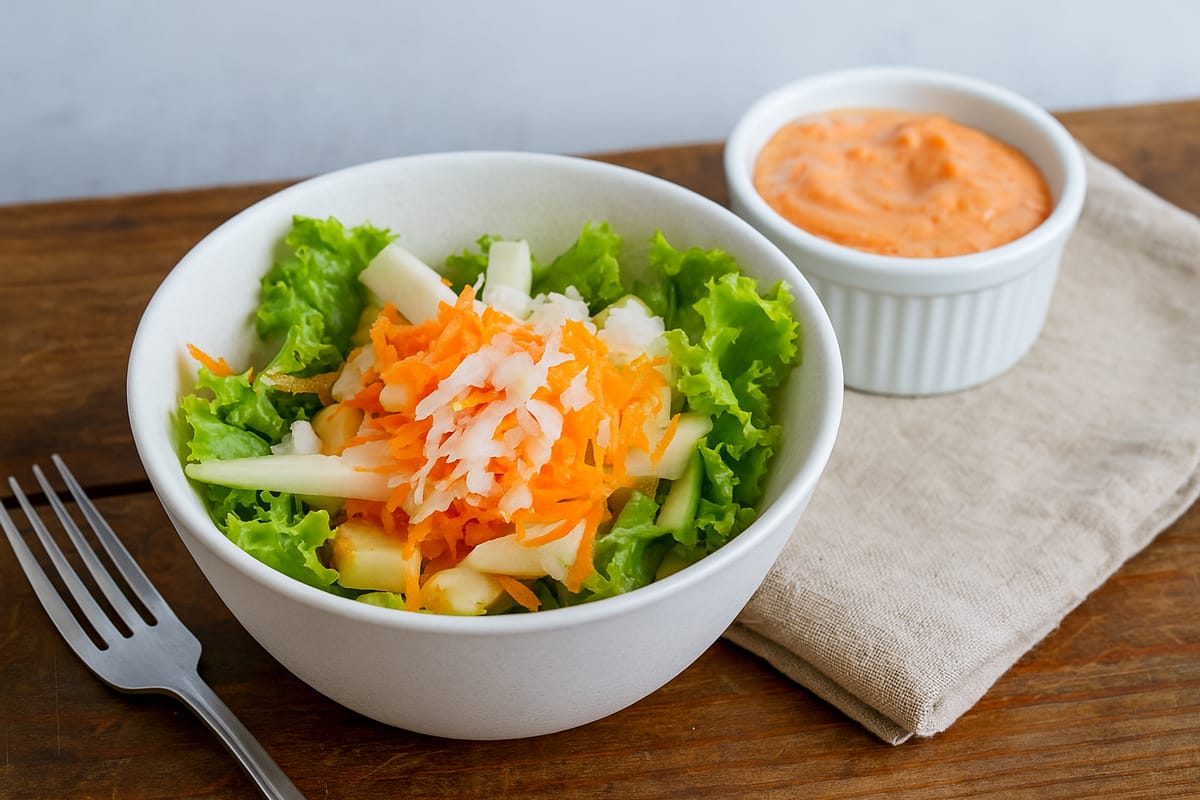
Easy Indonesian Fusion Potato Salad (Salad Kentang Sayuran)
Ingredients
Instruction
- Boil or steam the potatoes until tender. Peel and cut into bite-sized cubes.
- Heat olive oil in a skillet and pan-fry the potato cubes briefly until the surface is slightly golden and dry. Remove and let cool.
- In a bowl, whisk together mayonnaise, ketchup, sambal, parmesan, and lime juice until smooth and creamy. Adjust seasoning to taste.
- Line a salad bowl or platter with lettuce leaves.
- Arrange zucchini, carrot, jicama, and the cooked potatoes on top.
- Drizzle generously with the dressing. Toss gently if desired, or serve with the dressing as a topping.
- Enjoy immediately while the vegetables are fresh and crisp. This salad works well as a light lunch or as a side dish for grilled meats and BBQ.
Notes
- Potatoes (kentang): Use waxy varieties like Yukon Gold or red potatoes for the best texture. If using russet potatoes, make sure not to overcook as they break apart easily.
- Jicama (bengkuang): This tropical root is crunchy and refreshing but not always available in Western grocery stores. Substitute with green apple, pear, or kohlrabi for a similar crisp bite.
- Sambal (saus sambal): If you don’t have Indonesian sambal, use sriracha or your favorite hot sauce. For a non-spicy version, simply omit it.
- Lime (jeruk nipis): Indonesian lime has a fragrant, sharp tang. Regular lime juice or lemon juice works as a great substitute.
- Make ahead tip: The dressing can be prepared up to 2 days in advance and stored in the fridge. Assemble the salad just before serving to keep vegetables crisp.
- Pairing idea: This salad pairs beautifully with grilled chicken, BBQ ribs, or even burgers, making it a versatile side for Western-style meals.
What Is Salad?
In its simplest form, this vegetable dish made of raw or cooked vegetables, often combined with fruits, grains, proteins, or cheeses, then dressed with some form of sauce or seasoning. But the word itself has ancient roots. The term “salad” comes from the Latin word sal (salt), evolving into salata, meaning “salted things.”
In Roman times, people dipped lettuce into salt and oil. Over time, this evolved into vinaigrettes made with olive oil, vinegar, and herbs—flavors that are still at the core of modern fresh bowls.
A Journey Through Salad’s History
Salad is not just a modern health food—it’s one of the oldest culinary traditions in the world.
- Ancient Times: Egyptians, Greeks, and Romans consumed greens dressed with oil and vinegar. For Romans, it was both nourishment and refreshment.
- Middle Ages: vegetable dish became more elaborate, with herbs like mint, parsley, and onions added to the mix. It was often served as a starter or side, not a main course.
- Renaissance to 18th Century: French and English chefs elevated the mixed vegetable tradition, introducing tomatoes, cucumbers, and creamy dressings. In the Netherlands, coleslaw (koolsla) was born in the 1770s, made from shredded cabbage, onions, butter, and vinegar.
- 19th Century: Salad evolved further with dishes like the Waldorf Salad, created at New York’s Waldorf Astoria in 1896—initially a simple mix of apples, celery, and mayonnaise, later enriched with walnuts.
- 20th Century America: These dressed vegetable plates exploded in variety. Thousand Island dressing, with pickles, eggs, and olives, emerged in New York. Caesar Salad, created in California by Italian chef Caesar Cardini, became an icon. Americans turned salad into a versatile canvas—from hearty meal salads with protein to sweet fruit salads.
Today, the tradition is global, ranging from Greek salad with feta to France’s Niçoise, from Japanese seaweed dishes to Middle Eastern tabbouleh.
Salad in Indonesia: A Different Story
In Indonesia, this vegetable dish took a different path. For centuries, we already had dishes that resemble mixed-vegetable plates:
- Pecel – blanched vegetables with spicy peanut sauce.
- Gado-gado – mixed vegetables, tofu, tempeh, boiled eggs, and peanut dressing.
- Urap – steamed vegetables tossed with spiced grated coconut.
These dishes mirror the role of vegetable dishes: fresh, plant-forward, balanced by dressings or sauces. But instead of vinaigrettes, we use peanuts, chilies, coconut, and lime leaves. Were these inspired by Roman salads? Probably not directly. But it shows how every culture finds its own way to combine vegetables with dressings, creating refreshing and symbolic meals.
Western-style mix as we know it today—lettuce, mayonnaise, vinaigrette—only became popular in Indonesia in the late 20th century with the arrival of Western fast-food chains. At first it felt foreign, even unappetizing, but over time it gained a following. Then came salad buah (fruit mix), which exploded in popularity, especially in the 1990s and 2000s, using tropical fruits with yogurt, condensed milk, and shredded cheese.
The Benefits of Eating Salad
For all its cultural variations, healthy mix remains a symbol of freshness and health.
- Nutritional power: Packed with vitamins, minerals, and fiber.
- Weight management: Low calorie density, high satiety.
- Digestive health: Fiber supports gut function.
- Flexibility: Can be vegetarian, vegan, or protein-rich depending on the additions.
But this fresh bowl isn’t just about health—it’s also about identity, lifestyle, and even gender roles.
Salad and Gender Stereotypes
For a long time, lighter fare was unfairly branded as a “women’s food.” Studies in the U.S. and Europe have shown that women are more likely to be associated with salads and lighter meals, while men lean toward “heavier” foods like meat or fast food.
Why? Culturally, women have been pressured to maintain body image, making salad a symbol of dieting and femininity. Men, by contrast, often felt free to eat without restraint. Research even shows men eat significantly more pizza when dining with women—perhaps as a form of showing off.
Yet the irony is clear: many of the world’s iconic salads were created by men—like Caesar Classic or Waldorf Specialty. Today, these stereotypes are fading. This vegetable-based tradition is increasingly seen as a dish for everyone, regardless of gender—especially with the rise of hearty dishes that include meat, grains, and cheese.
Salad Across Cultures: Symbolism and Fusion
Beyond the West, these fressh dishes take on unique cultural meanings.
- Yu Sheng (China/Singapore/Malaysia): Also called yee sang, this prosperity dish features raw fish, shredded vegetables, and symbolic tossing. Families gather to lift the salad high with chopsticks, shouting wishes of prosperity. The higher the toss, the greater the fortune.
- Fusion Examples Worldwide: Japan blends Western vegetable dish with sesame dressing. Mexico has fruit mixes with chili-lime seasoning. Middle Eastern dishes like fattoush mix toasted bread with vegetables. Everywhere, this fresh bowl adapts to local flavors and rituals.
Indonesian Fusion Potato Salad: A Cultural Blend
This brings me back to my own recipe: Indonesian Fusion Potato Salad (Salad Kentang Sayuran).
It takes the Western comfort of potato salad—creamy, filling, and familiar—and gives it a Southeast Asian twist with bengkuang (jicama) for crunch, sambal for heat, and jeruk nipis for tang.
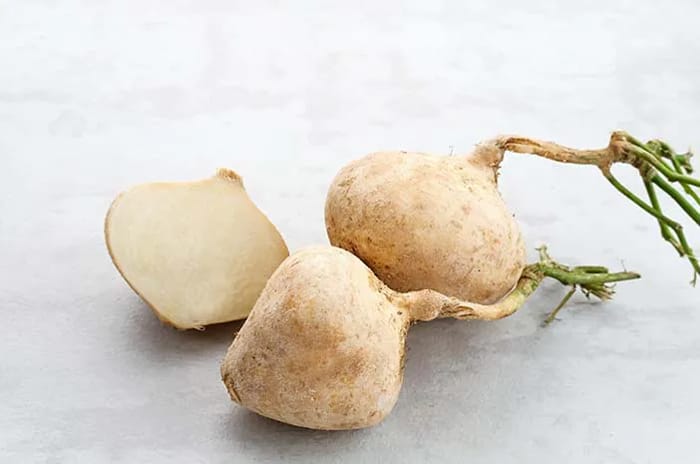
The challenge? Western audiences might find bengkuang unfamiliar, sambal too spicy, or jeruk nipis hard to source.
The solution: Offer substitutions—green apple or kohlrabi for jicama, sriracha for sambal, lime or lemon for jeruk nipis. This keeps the recipe approachable while preserving its Indonesian soul.
This fusion dish is more than a recipe—it’s a metaphor for how food travels, adapts, and unites cultures.
Salad as a Universal Language
From Roman salt-dipped lettuce to Indonesian peanut-dressed pecel, from New York’s Waldorf Specialty to Lunar New Year’s Yu Sheng, salad has always been more than just vegetables on a plate. It’s a reflection of culture, health, identity, and even humor (yes, like my teenage Pizza Hut bowl-stacking tricks).
Today, the dish is a global canvas, endlessly adaptable. And that’s why I love sharing my Indonesian Fusion Potato Salad—because it shows how something as simple as potatoes and lettuce can tell a story that connects East and West, tradition and modernity, personal memory and shared table.