When you hear the phrase “mata sapi” in Indonesia, chances are you’ll think of a fried egg — what Indonesians call telur mata sapi. It’s sunny side up, with the yolk looking like a “bull’s eye.” But in Madura, East Java, the phrase takes on a whole different meaning. There, Soto Mata Sapi is not about eggs at all. It is, quite literally, a beef soup cooked with whole cow eyeballs. Yes, you read that right — the actual eyeballs, complete with the bone structure around them.
This dish is considered one of the most exotic and extreme foods in Indonesia. For some, it’s intimidating. For others, it’s a once-in-a-lifetime culinary adventure that combines deep tradition, local pride, and rich flavors.
A Newcomer with Deep Roots
Unlike many Indonesian dishes that trace their origins back hundreds of years, Soto Mata Sapi is relatively new. The dish first appeared around 21 years ago, in the early 2000s, in Bangkalan, Madura. It began as a family recipe passed down by the mother of Bu Mis, the woman who eventually popularized it. Today, her humble food stall, Soto Mata Sapi Bu Mis in Burneh, has become the go-to destination for locals and curious travelers seeking this unusual delicacy.
What makes it stand out? It’s not just the eyeballs. The soup is cooked for hours with beef, tripe, and intestines, all simmered in a blend of secret Madurese spices. Unlike most Indonesian soto, which often uses turmeric for a golden broth, this version skips turmeric entirely. Instead, it gets its deep red color from ground red chilies and the unique spice mix of Madura. The result is a broth that is thick, fragrant, and strikingly different from the yellow sotos found elsewhere in Java.
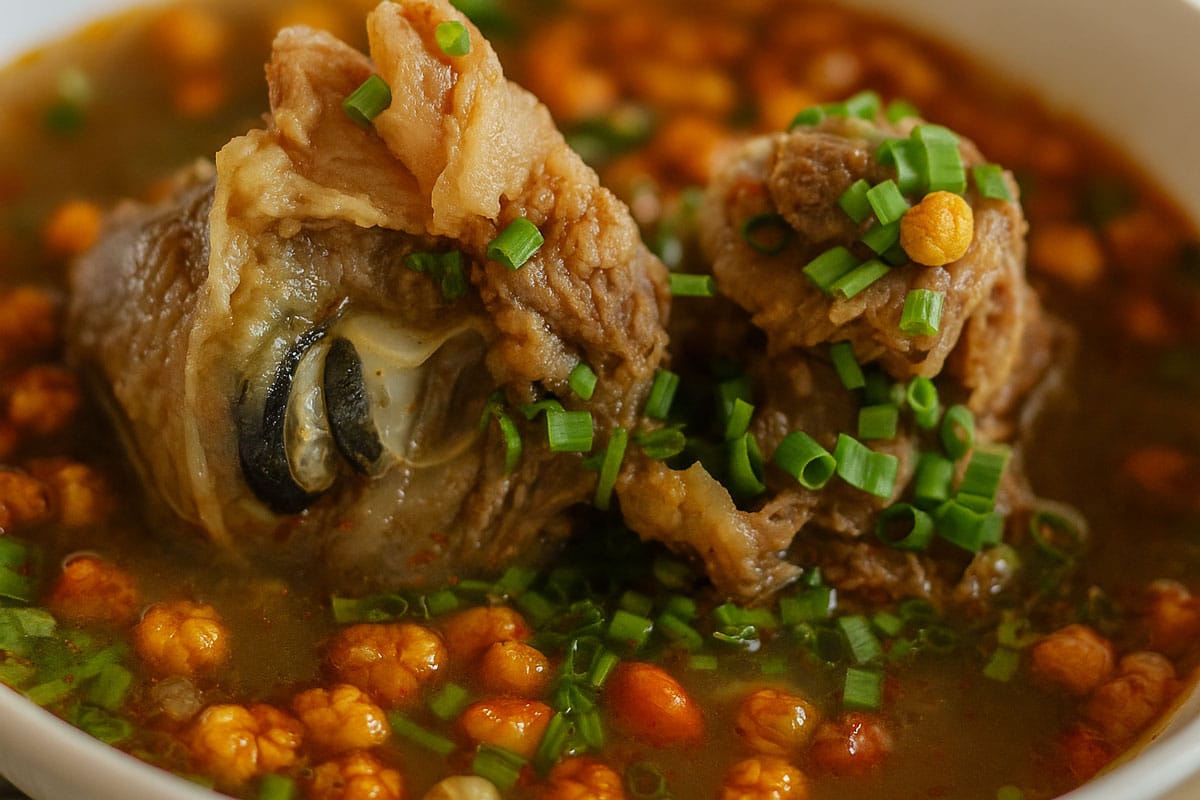
Beef Eyeball Soup – Soto Mata Sapi
Ingredients
Instruction
- Blanch the EyeballsRinse the beef eyeballs thoroughly. Place them in boiling water and blanch for about 5 minutes to remove impurities. Discard the water completely. This step ensures a cleaner flavor and clearer broth.
- Begin the Broth ProperlyBegin with a large pot of water and bring it to a rolling boil. This is important—the proteins must be added only once the water is already boiling, to ensure a clean, clear broth. Gently lower in the blanched eyeballs, tripe (or brisket), and beef chunks. Skim off any foam that rises to the surface.
- Make the Spice PasteIn a blender or mortar and pestle, grind shallots, garlic, chilies, candlenuts, turmeric, ginger, galangal, coriander, and white pepper into a smooth paste.
- Cook the SpicesHeat the oil in a pan. Sauté the spice paste until fragrant and the oil begins to separate, about 5–7 minutes. Add lemongrass, kaffir lime leaves, and bay leaves. Stir briefly to release their aroma.
- Combine and SimmerTransfer the sautéed spice mixture into the boiling pot. Lower the heat and let everything simmer gently for about 3 hours. This slow cooking will soften the eyeballs, tenderize the meat, and deepen the broth into its signature reddish hue.
- Final SeasoningAdd salt and a pinch of sugar to balance the flavors. Adjust seasoning to taste.
- ServeLadle the hot broth, eyeballs, and meat into bowls. Serve with lontong or rice, garnish with fried shallots and celery, and offer lime wedges and sambal on the side.
Notes
- Eyeballs: If beef eyeballs are difficult to source, you may substitute with beef shank, brisket, or marrow bones. The unique gelatinous texture of eyeballs will be missing, but the broth will still be rich and flavorful.
- Candlenuts (kemiri): Not commonly available in Western stores; use macadamia nuts as a good substitute.
- Aromatics: Kaffir lime leaves may be found in Asian or Thai grocery stores; if unavailable, use a little lime zest for a citrus note.
- Spice Level: Indonesian chilies are medium-hot. Adjust by using fewer chilies or swapping with milder varieties like red Fresno peppers.
- Serving: If lontong or ketupat is unavailable, serve with plain steamed rice or even crusty bread for a fusion touch.
The Authentic Experience
In its authentic Madura version, the eyeballs are never sliced or chopped. They are cooked whole, still wrapped in the surrounding bone tissue, and then served directly in the bowl. The effect is striking: imagine looking down at a steaming bowl of soup, with a glistening eyeball staring back at you.
“In the original Madurese version, the beef eyeballs are never cut into pieces. They are usually boiled together with the surrounding bone and served whole in the bowl, appearing completely round. This is exactly what makes the soto feel so “extreme” for many people.”
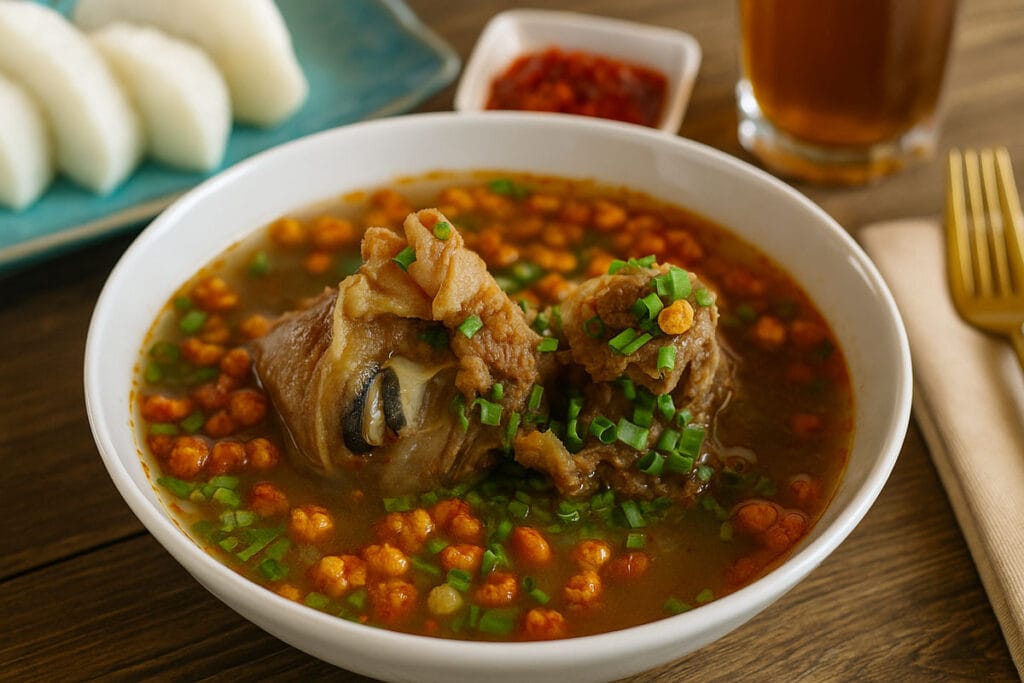
For locals, this isn’t just about shock value. The eyeball has its own unique texture. The outer layer is soft, the inside is chewy, and the experience of biting into it has been described as similar to eating beef tendon or cartilage, but with a “bursting” sensation. It’s not for everyone, but those who try it often say the flavor is surprisingly mild, carried by the richness of the broth.

How It’s Cooked
The cooking method is a ritual of patience. First, the eyeballs and beef offal are blanched to remove impurities. Then they are added to boiling water — and this detail matters. As Madurese cooks insist, the meat must always go into already boiling water to keep the broth clean and clear. From there, everything is simmered slowly for up to three to five hours. The long cooking time ensures the eyeballs soften, the meat becomes tender, and the broth develops that deep, spicy-red character.
The final bowl is typically served with lontong (compressed rice cakes), not plain rice, and topped with glass noodles, fried shallots, and fresh celery. A squeeze of lime and a spoonful of sambal make it complete.
Options for the Brave (and the Less Brave)
For Western audiences, the idea of eating a whole eyeball might feel overwhelming. And that’s okay — food is as much about personal comfort as it is about adventure. If you ever encounter Soto Mata Sapi, you’ll generally have three ways to experience it:
- The Authentic Version: Eyeballs are served whole, sitting proudly in the soup. This is the full experience, just as it’s enjoyed in Madura.
- The Compromise: The eyeballs are cooked whole, but before serving, they can be sliced into smaller pieces. This makes it easier for first-timers to try without the visual challenge of a staring eyeball.
- The Substitution: If eyeballs are out of the question, you can still enjoy the spirit of the dish by using oxtail, beef shank, or marrow bones. These cuts provide similar richness and texture in the broth, while keeping the soup more approachable.
More Than Shock Value
At first glance, Soto Mata Sapi might seem like a dish designed just to shock. But in Madura, it’s far more than that. It’s about creativity, about taking every part of the animal and transforming it into something nourishing. It’s also about local pride: a dish that began as a family recipe has now become a culinary icon of Bangkalan.
And despite its extreme reputation, locals don’t eat it to prove bravery — they eat it because it tastes good. The spicy broth, the chewy tripe, the soft beef, and yes, even the gelatinous eyeballs all come together in a dish that is hearty, warming, and distinctly Madurese.
Would You Dare Try It?
In Indonesia, the phrase “telur mata sapi” refers to something familiar and comforting — a fried egg. But in Madura, Soto Mata Sapi challenges that image completely. Here, “mata sapi” isn’t a metaphor. It’s the real thing.
So the question is: would you dare try it?
If you’re curious, the good news is you don’t have to travel to Madura to experience it. You can make your own version at home, using our step-by-step recipe (provided below). Whether you go all in with eyeballs, take the compromise of cutting them, or choose a Western-friendly substitute like oxtail, you’ll end up with a soup that carries the essence of Madura — bold, spicy, and unforgettable.
We’ve shared the full recipe here — are you brave enough to cook it yourself?