Introduction: A Fruit That Behaves Like Meat
In much of the Western world, jackfruit has only recently been embraced as a trendy plant-based meat substitute. In Indonesia, however, young jackfruit—nangka muda—has been an essential ingredient for centuries. When cooked, its fibers resemble pulled pork or shredded chicken, absorbing spices beautifully while retaining a tender bite.
Across the Indonesian archipelago, jackfruit appears in countless dishes: coconut-based curries, earthy stews, vegetable mixes, and even sweet desserts when ripe. Among its many uses, two of the most culturally significant preparations are Gulai Nangka Minang from West Sumatra and Gulai Nangka Jawa from Java.
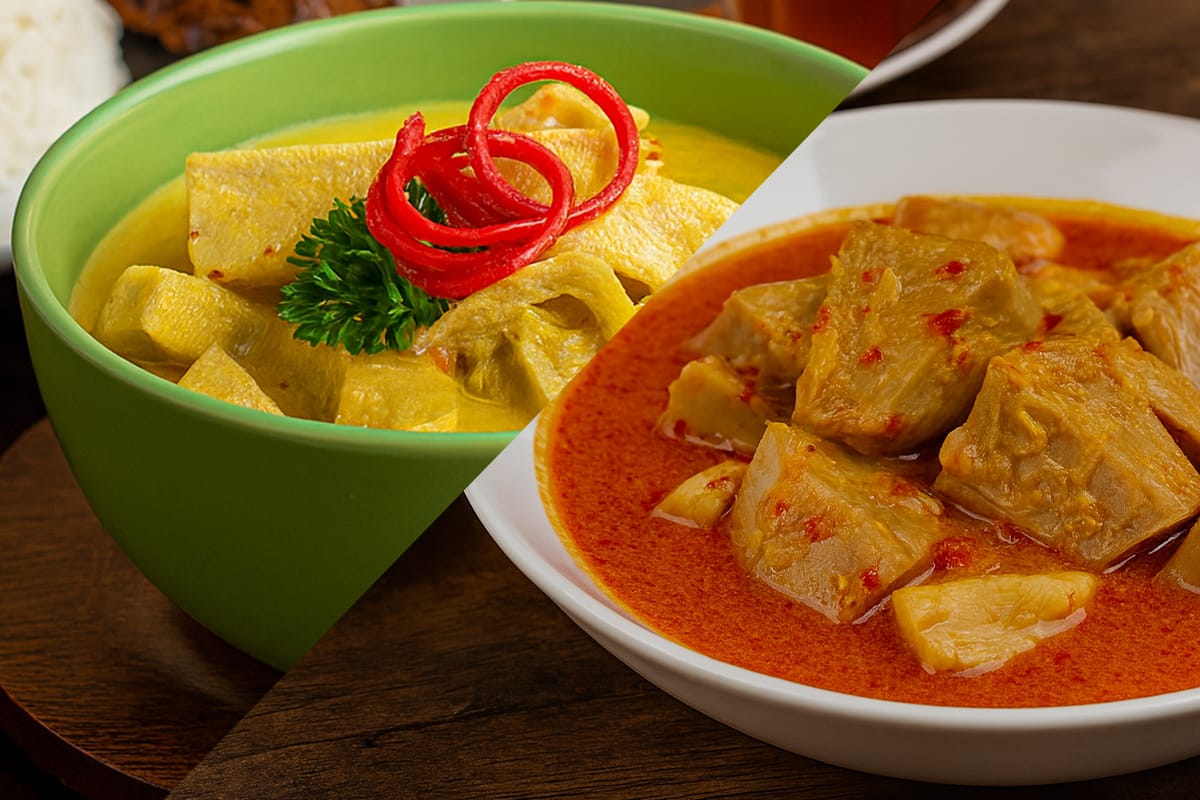
Though both use the same main ingredient, they reflect dramatically different regional identities. Padang cuisine is bold, fiery, and intensely spiced, while Javanese cooking favors gentle aromatics and subtle sweetness. For Western cooks fascinated by how one ingredient can tell multiple stories, these two gulai are perfect examples.
In this article, we’ll explore their flavor profiles, cultural roots, and cooking methods—along with Western-adapted recipes you can confidently make at home.
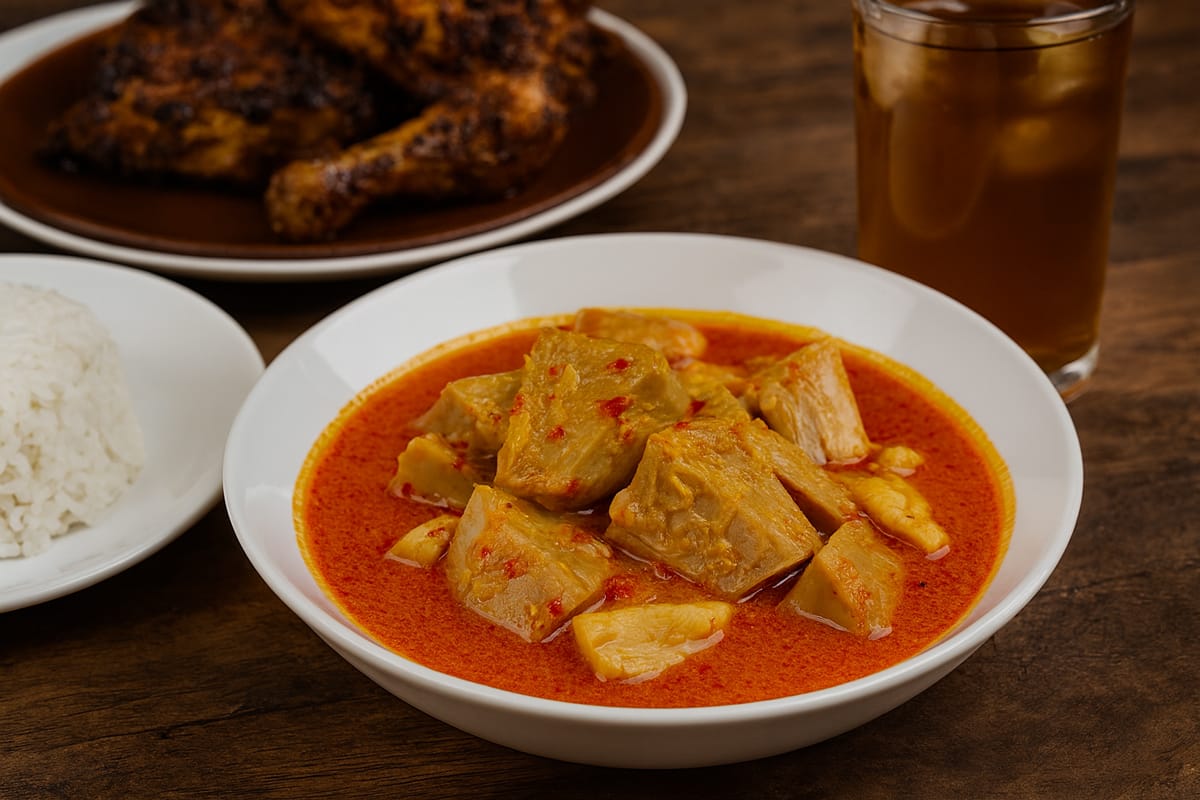
Minang-Style Young Jackfruit Curry (Gulai Nangka Minang)
Ingredients
Instruction
- If using fresh jackfruit, boil in water for 20–30 minutes until tender.
- Drain, rinse, and gently squeeze to remove excess moisture and sap bitterness.
- If using canned young jackfruit, rinse thoroughly and drain.
- In a pot, combine thin coconut milk and the blended spice paste.
- Add bay leaves, kaffir lime leaves, turmeric leaf, galangal, lemongrass, and asam kandis.
- Heat over medium-low.
- Cook while stirring occasionally until it reaches a gentle simmer and becomes fragrant.
- — Minang technique: spices are simmered, not sautéed. —
- Add the jackfruit pieces to the pot.
- Simmer for 10 minutes to allow the flavors to infuse.
- Pour in the thick coconut milk.
- Lower heat and simmer until the sauce thickens and turns a deep golden color.
- Stir occasionally to prevent the coconut milk from curdling.
- Adjust salt to taste.
- Best enjoyed hot with steamed rice.
Notes
Substitutions
-
Young jackfruit (nangka muda):
Use canned young jackfruit in brine, commonly found at Asian stores or Whole Foods. -
Candlenuts (kemiri):
Substitute macadamia nuts or blanched almonds. -
Asam kandis:
Use tamarind paste, kokum, or 1 tsp apple cider vinegar in a pinch. -
Turmeric leaf (daun kunyit):
Skip if unavailable. Add ½ tsp turmeric powder for aroma.
Tips
- Keep heat low after adding thick coconut milk.
- Let the curry rest 30 minutes before serving — flavors deepen like stew.
- This curry tastes amazing the next day.
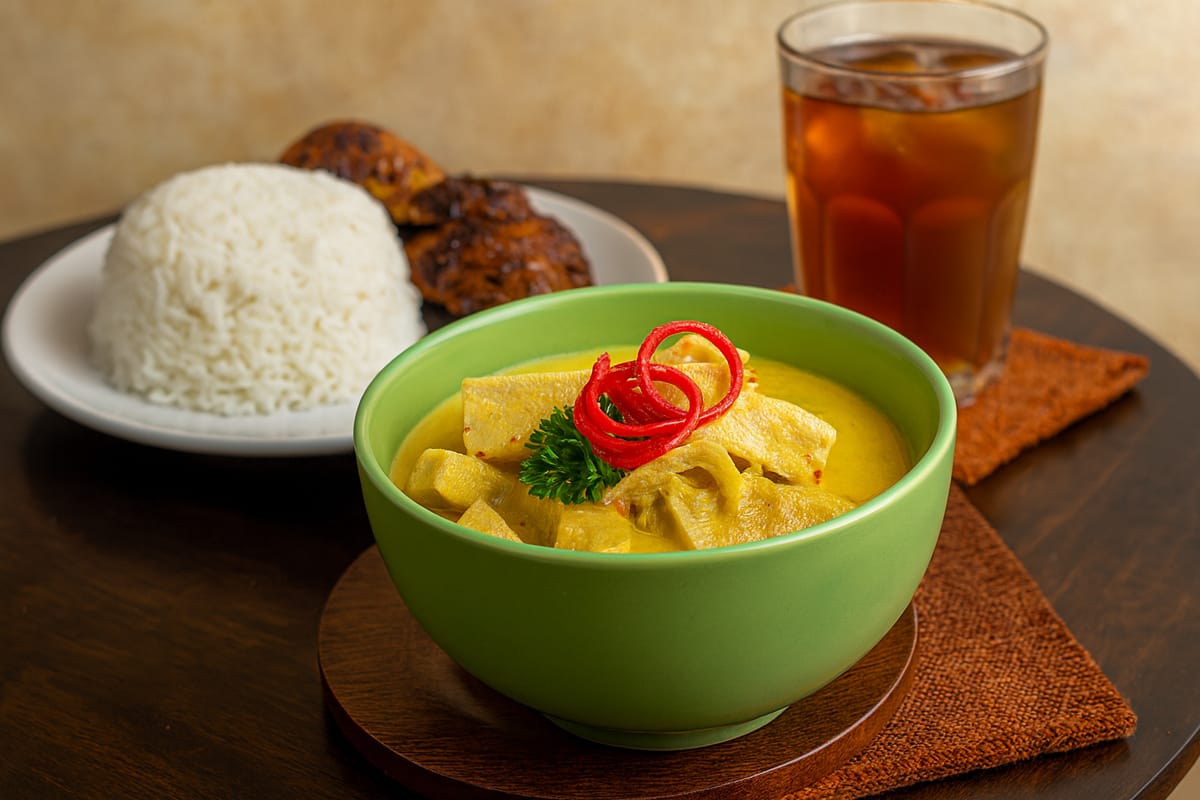
Javanese Young Jackfruit Curry (Gulai Nangka Jawa)
Ingredients
Instruction
- Boil fresh young jackfruit for 20–30 minutes until soft.
- Drain and squeeze gently.
- If using canned jackfruit, simply rinse and drain.
- Heat oil in a pan over medium heat.
- Add the blended spice paste.
- Sauté until fragrant and the oil separates (tumis sampai matang).
- Add bay leaves, kaffir lime leaves, cinnamon, cloves, and lemongrass.
- Pour thin coconut milk into the pot.
- Add the sautéed spice mixture.
- Bring to a gentle simmer.
- Add the jackfruit into the pot.
- Simmer for 10 minutes until flavors deepen.
- Add thick coconut milk and lower the heat.
- Simmer, stirring occasionally, until the curry thickens and becomes aromatic.
- Season with salt and sugar/palm sugar.
- Delicious with steamed rice, sambal, or fried shallots on top.
Notes
Substitutions
-
Young jackfruit:
Canned young jackfruit in brine is perfectly fine — don’t use ripe jackfruit. -
Candlenuts:
Macadamia nuts mimic the creamy texture. -
Galangal:
Use frozen galangal, or substitute with ginger + a squeeze of lime. -
Palm sugar:
Replace with light brown sugar.
Tips
- Javanese gulai is not supposed to be very spicy; adjust chilies to your taste.
- For richer flavor, sauté the spice paste until oil separates — this step is essential.
- The curry thickens as it cools.
What Is “Gulai”?
To understand Gulai Nangka, we must first explore the long history of gulai itself. Centuries ago, traders from South India introduced cooking traditions rooted in spices, coconut milk, and slow-simmering techniques. As these ideas entered the Minangkabau region of Sumatra, they blended with local ingredients such as turmeric, lemongrass, chili, galangal, and coriander.
Over time, the Minangkabau adapted these influences into a golden, aromatic sauce that became one of the defining elements of their cuisine. As gulai spread across Indonesia, regional variations emerged: Sumatra retained the bold, intensely spiced style now linked with Padang food, while Java developed a mellower, slightly sweeter interpretation.

Through migration, trade, and everyday cooking, gulai became a cornerstone of Indonesian food identity.
The Origins of Gulai Nangka (Gulai Cubadak)
Among the many gulai variations, Gulai Nangka—known as Gulai Cubadak in Minang culture—holds a special place. Young jackfruit’s natural fibers and neutral flavor make it ideal for absorbing rich spices.
For generations, Gulai Nangka has been central to Minangkabau ceremonies, especially weddings. Traditionally cooked in clay pots over wood fires, the dish simmers for hours until the coconut milk thickens and the spices deepen in aroma. Some households enrich it with offal or meat, but the classic version remains plant-based, valued for its symbolism of hospitality and unity.
Gulai Nangka Minang: Bold, Fiery, and Intensely Aromatic
Minangkabau cuisine is known for its unapologetically strong flavors—think rendang, dendeng balado, and gulai tunjang. Spices dominate with confidence, and Gulai Nangka Minang follows this tradition with:
- a spicy, fiery broth
- high spice density
- aromatics like turmeric leaf and kaffir lime leaf
- a tangy note from asam kandis or tamarind
This version is savory, fragrant, and richer in spice oils than its Javanese counterpart.
Gulai Nangka Jawa: Softer, Sweeter, and Comforting
Javanese cuisine leans toward gentle flavors and comforting warmth. Palm sugar (gula Jawa) adds mild sweetness, while spices like cinnamon and cloves introduce a nostalgic aroma.
As a result, Gulai Nangka Jawa is:
- less spicy
- slightly sweet
- softly aromatic
- more broth-like
It is a popular dish during family gatherings and religious celebrations.
What Makes Gulai Nangka Special
Despite its humble ingredients, Gulai Nangka delivers a rich, deeply aromatic dish that feels luxurious without being costly. It captures the essence of Indonesian coconut-and-spice cooking while remaining accessible to cooks of any skill level.

The young jackfruit lends a unique texture—tender yet meaty—creating a dish that stands on its own rather than mimicking chicken or meat.
Both versions, Minang and Javanese, offer distinct experiences, each reflecting its region’s culinary spirit.
Personal Preference
If you’re looking for something affordable yet truly rich in flavor, Gulai Nangka is a wonderful choice. It delivers the full essence of gulai without relying on meat, and despite its simplicity, it feels deeply satisfying. Just don’t expect it to taste like chicken gulai—while the spices may be similar, the experience is entirely different because of the jackfruit’s unique texture.
There are two main regional versions: the Minang style, which is spicier, richer in spices, slightly tangy, and thicker; and the Javanese style, which is paler, mildly sweet, less spicy, and more brothy. Both are delicious in their own way, although personally, I find myself drawn to the bold and fiery Minang version.
Gulai Nangka in Indonesian Dining Culture
Across Indonesia, Gulai Nangka appears everywhere—from home kitchens and markets to the iconic Rumah Makan Padang. It often serves as a balancing dish alongside richer foods such as rendang or fried chicken.
During festive events, especially in Sumatra, it is cooked in large batches and served with lontong or ketupat. In everyday meals, it pairs simply and beautifully with steamed rice.
Can Gulai Nangka Be Made in Western Kitchens?
Absolutely. The main challenges lie in sourcing certain ingredients, but accessible substitutions make the dish highly achievable.
Canned young jackfruit in brine works surprisingly well, and tamarind paste substitutes beautifully for asam kandis. Full-fat coconut milk recreates the richness of the Indonesian version. With patience and steady simmering, the flavors meld into an aromatic, authentic-tasting dish.
Tips for Cooking Gulai Nangka at Home
- Keep the heat gentle to prevent the coconut milk from breaking.
- Let the curry simmer slowly for maximum depth.
- Adjust the spice level to your preference.
- Extend the cooking time if you want a thicker sauce, or add liquid for a lighter version.
- Embrace substitutions—gulai is flexible and forgiving.
Nutritional Benefits
Young jackfruit is low in fat and high in fiber, while coconut milk contributes healthy fats. Spices such as turmeric and ginger offer natural anti-inflammatory properties, making Gulai Nangka a nourishing plant-based dish.
Serving Suggestions for Western Tables
Gulai Nangka pairs beautifully with jasmine or basmati rice, but it also works with naan, pita, or crusty sourdough. A bright cucumber salad or pickled vegetables adds contrast. For extra protein, add grilled tofu or roasted chicken. A squeeze of lime provides a modern, zesty finish.
A Friendly Invitation to Try It Yourself
Gulai Nangka is more than a recipe—it is a story of heritage and culinary evolution. Whether you’re new to Indonesian cuisine or already love Southeast Asian flavors, this dish offers a meaningful way to explore something authentic.
Let the aroma of coconut milk and spices fill your home, and enjoy the experience of cooking a dish that has warmed Indonesian households for generations.