When you hear the word “soto” (pronounced soh-toh), you are entering one of Indonesia’s most beloved culinary worlds. Soto is not just soup—it is a genre of Indonesian comfort food, a fragrant broth-based dish found in almost every region of the archipelago. Each area has its own interpretation: Soto Betawi with creamy coconut milk in Jakarta, Soto Lamongan with its iconic yellow broth and koya topping in East Java, or Soto Kudus served with shredded chicken and tiny rice bowls in Central Java.
Among this vast diversity, one name stands out as both familiar and mysterious: Soto Madura. While it bears the name of Madura, an island off the coast of East Java known for its bold flavors and resilient people, the history of Soto Madura is more complex than it first appears.
A Short History: Surabaya, Madura, and the Rise of a Name
Surprisingly, Soto Madura did not originate directly from Madura itself. According to culinary researcher Nuda Rini and supported by studies from Universitas Airlangga, Soto Madura as we know it today began in Surabaya in the 1970s. A Madurese migrant named Haji Sulung opened a small eatery called Soto Sulung in Jalan Kusuma Bangsa, Surabaya.
His specialty? A rich beef soup served with boiled eggs, fried potatoes, and bean sprouts in a golden broth infused with turmeric (kunyit), lemongrass (serai), galangal (lengkuas), nutmeg (pala), and clove (cengkeh). Customers began to associate this delicious dish with its creator’s Madurese roots, and soon, “Soto Madura” became the popular label.

From there, Soto Madura spread across East Java and beyond. By the late 1980s, versions of Soto Madura were sold in Madura itself. But interestingly, within the island of Madura, people already had their own distinct local soto traditions: Soto Keppo from Pamekasan, Soto Rubaru and Soto Dalem from Sumenep, or Soto Bangkalan, each with their own twists—ranging from clear broths to rich coconut-based versions.
Thus, Soto Madura became an example of culinary adaptation and migration: a dish born in Surabaya, inspired by Madurese cooking philosophy, then reabsorbed and reinterpreted in Madura and beyond.
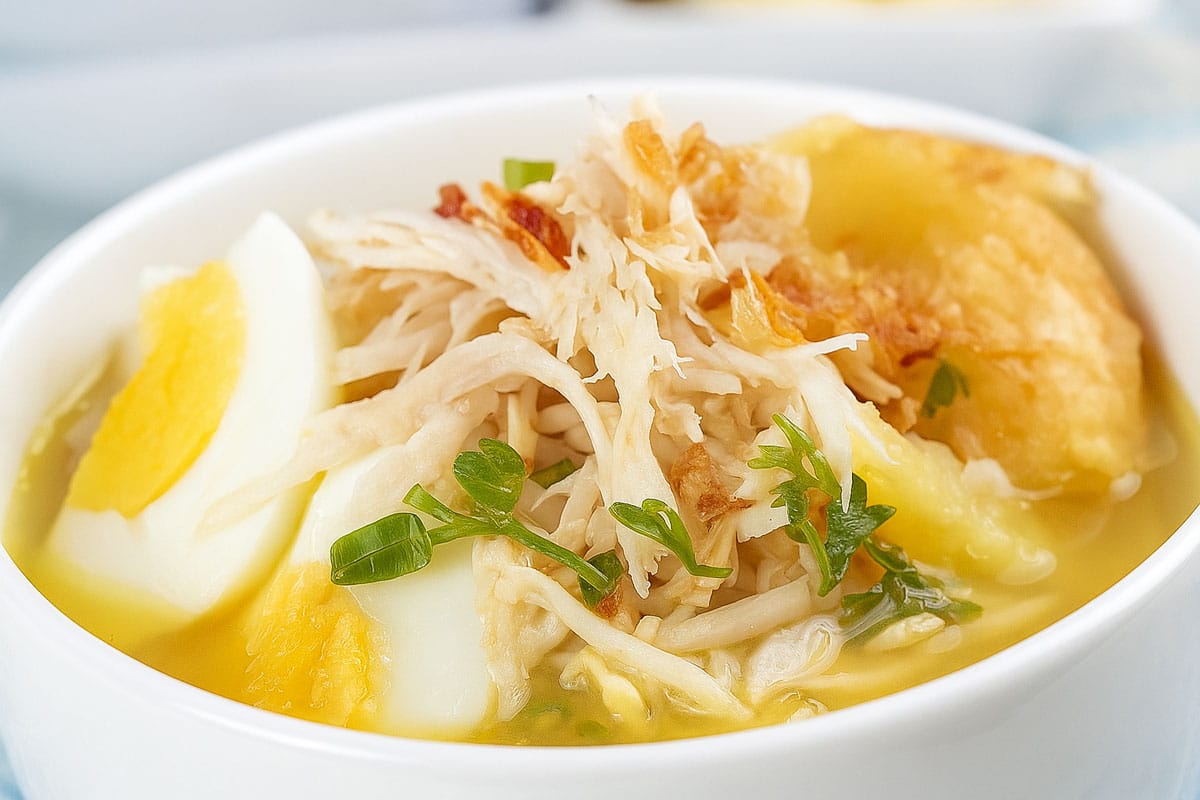
Soto Madura (Chicken Soto from Madura)
Ingredients
Instruction
- Cook the chickenPlace the chicken in a large pot with water and salt. Simmer until fully cooked and tender, about 30–40 minutes. Remove the chicken, let it cool slightly, then shred the meat. Strain the broth and set aside.
- Prepare the spice pasteBlend or process shallots, garlic, pepper, ginger, galangal, candlenuts, turmeric, sugar, and bouillon powder (if using) into a smooth paste. Add a splash of water if needed.
- Sauté the spices Heat 2 Tbsp oil in a pan. Sauté the spice paste until fragrant and the oil separates. Add lemongrass, kaffir lime leaves, clove, and nutmeg. Stir until aromatic.
- Combine with brothAdd the sautéed spice mixture into the chicken broth. Simmer for another 15 minutes, adjusting salt and sugar to taste.
- Assemble the bowlsIn serving bowls, arrange bean sprouts, fried potato slices, shredded chicken, and boiled egg quarters.
- Finish and serveLadle the hot soup over the toppings. Garnish with scallions, celery leaves, and fried shallots. Serve immediately with a squeeze of lime juice.
Notes
- Chicken: Free-range chicken (ayam kampung) is traditional, but you can use a whole organic chicken or Cornish hen for a similar result.
- Candlenuts (kemiri): Hard to find outside Southeast Asia; macadamia nuts are the closest substitute.
- Galangal (lengkuas): Found in Asian grocery stores; if unavailable, increase the ginger slightly for a similar warmth.
- Kaffir lime leaves (daun jeruk): Can be skipped if not available, but if you find them (often frozen), they add a lovely citrus fragrance.
- Fried shallots: Available in Asian groceries in jars or bags; crispy fried onions can be used as a substitute.
- Jeruk nipis: Use regular limes if Indonesian lime is unavailable.
- For a spicier touch, serve with sambal (Indonesian chili paste) on the side.
The Philosophy Behind the Bowl
Food in Indonesia often carries symbolism, and Soto Madura is no exception. According to food historians and local sellers
- Strength and Resilience: Beef, a common protein in Soto Madura, symbolizes power and endurance. Sellers say it reflects the character of Madurese people, known for their toughness and strong will.
- Harmony and Diversity: Each spice plays a role—turmeric gives warmth and golden color, lemongrass and kaffir lime leaves add freshness, candlenuts lend creaminess, while clove and nutmeg provide depth. Together, they mirror the values of balance and togetherness in Madurese culture.
- Adaptation: The many regional variations of soto within Madura itself show flexibility and creativity—an acknowledgment that tradition lives not in rigid recipes but in the way communities adapt flavors to their environment.
My Personal Story: Soto Madura in Bogor
Let me pause the history for a moment and share something more personal. Near my parents’ home in Bogor, there is a Soto Madura stall that my family often visits. Their version is chicken-based Soto Madura, a lighter alternative to beef but equally satisfying.
When you order it “complete,” the bowl comes brimming with bihun (rice vermicelli noodles), shredded chicken, cabbage, scallions, celery, half a boiled egg, and even chicken feet (ceker) if you dare—yes, it may sound extreme, but believe me, it’s delicious!
And then comes the secret weapon: koya.
Koya is a special topping made from ground prawn crackers mixed with fried garlic. Sprinkled generously over the hot broth, it thickens the soup slightly and infuses it with a deep umami punch. Add a squeeze of jeruk nipis (Indonesian lime), and the whole bowl becomes bright, savory, and refreshing all at once.
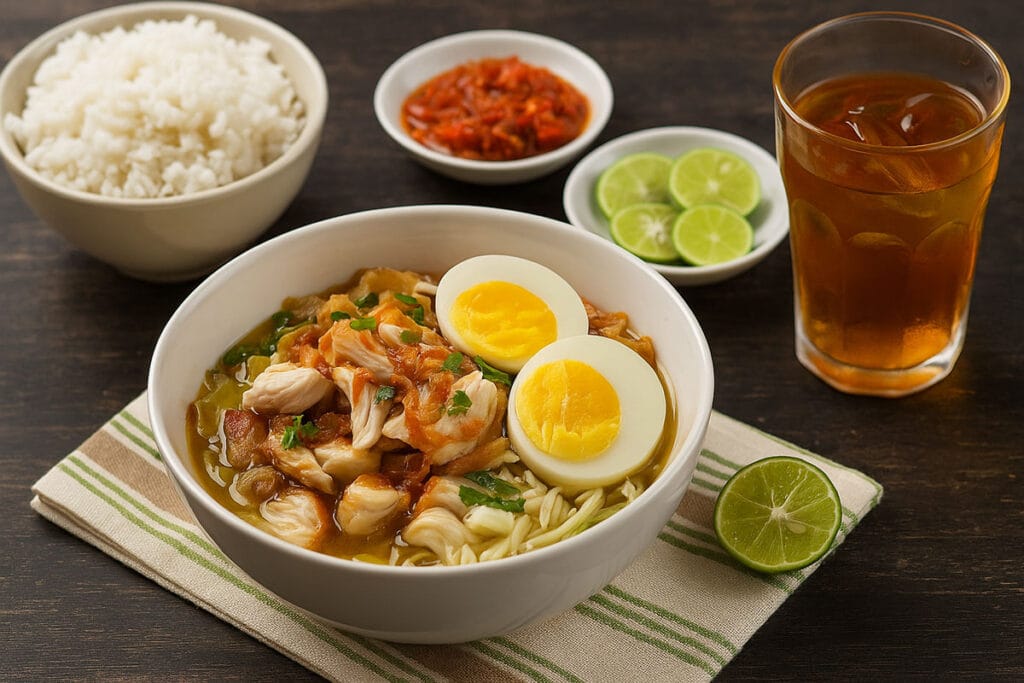
My mother is absolutely in love with this Soto Madura. If she could, she would eat it every single day without ever getting bored. Whenever I visit my parents, it’s almost guaranteed that Soto Madura is on the menu—sometimes out of convenience, often out of craving.
Me? Well, I admit I might get tired of it if I had it daily. But for anyone trying it for the first time, I’m almost certain: you won’t get bored. The flavors are so layered and unique that each spoonful feels exciting. And because I don’t want to just tell you about it, I’ve also brought along a recipe so you can try making Soto Madura at home.
The Signature Features of Soto Madura
What makes Soto Madura stand out among Indonesia’s many soto varieties?
- Golden Broth: Bright yellow from turmeric, simmered with chicken or beef stock.
- Toppings: Potato slices, boiled egg, bean sprouts, shredded meat, scallions, celery, fried shallots.
- Condiments: Fresh lime juice, sambal chili paste, and of course koya, which is particularly popular in East Java styles.
- Flexibility: Served with rice or on its own as a hearty soup.
Compared to other sotos, Soto Madura is often described as fresh yet robust—light enough to enjoy anytime, but flavorful enough to satisfy.
Variations: Chicken and Beef
As mentioned, Soto Madura comes in two main protein choices:
- Soto Ayam Madura (Chicken Soto): Lighter, cleaner broth. Often paired with vermicelli noodles, cabbage, and chicken feet. It’s refreshing, perfect for those who prefer leaner meat.
- Soto Daging Madura (Beef Soto): Heartier, with a deeper broth from long-simmered beef shank or brisket. This version pairs wonderfully with chili sambal, as the stronger beef flavor balances spice beautifully. Some versions even add marrow bones for extra richness.
Both variations carry the same spice blend, but the difference in meat creates distinct personalities: one soothing and gentle, the other bold and powerful.
Serving Suggestions for a Western Table
In Indonesia, Soto Madura is almost always eaten with steamed rice. But for an international kitchen, here are ways to enjoy it:
- Traditional: With warm steamed rice (nasi putih) on the side, spooned directly into the soup.
- With Bread: A slice of crusty bread or baguette makes an excellent companion, perfect for soaking up the fragrant broth.
- Light Meal: Skip the rice and enjoy Soto Madura with just the toppings for a low-carb option.
- Spicy Boost: Add sambal (Indonesian chili paste) on the side if you like heat.
- Drink Pairing: In Indonesia, it’s common with iced sweet tea (es teh manis). Internationally, try pairing it with unsweetened iced tea, a crisp lager, or sparkling water with lime.
Why Soto Madura Matters
Beyond taste, Soto Madura carries stories of migration, adaptation, and cultural identity. It’s a dish that traveled with people, changed with places, and yet remained true to its essence: a nourishing soup that brings people together.
For me personally, it also means family moments in Bogor—sitting down with my mother, slurping warm broth, and sharing conversation over a dish that feels both everyday and special.
And that’s the beauty of Soto Madura: whether you’re in Surabaya, Madura, Bogor, or halfway across the world, a bowl of this golden soup can make you feel at home.