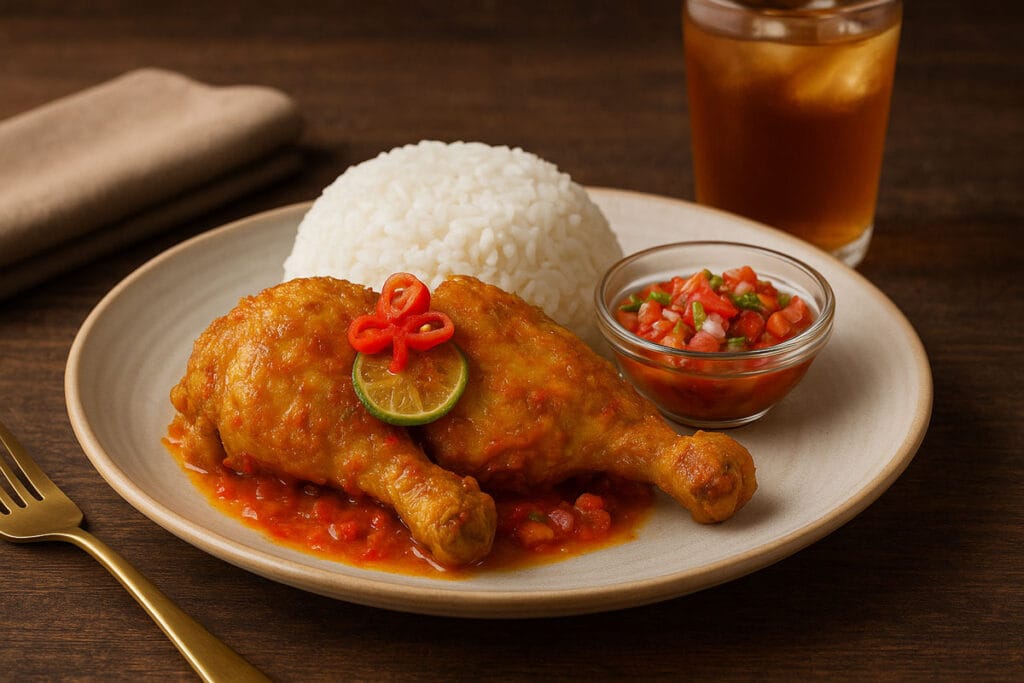
A steaming bowl is set before you—golden, spicy, and rich. It looks a bit like curry, but it’s not curry. This is Ayam Paniki, one of the most iconic dishes of the Minahasa people.
But here’s the twist: the word paniki doesn’t originally mean chicken at all. In the language of North Sulawesi, paniki actually refers to fruit bats—yes, real bats that fly through the tropical forests of the region. For centuries, these creatures were cooked in a spicy coconut milk sauce that came to symbolize both the abundance of nature and the daring spirit of the people. Over time, though, chicken became a popular substitute. Today, if you order Ayam Paniki in most restaurants, what you’ll get is tender chicken infused with coconut, chili, ginger, and turmeric—a dish that’s fiery, fragrant, and absolutely unforgettable.
From Bats to Chicken: The Evolution of Paniki
Let’s rewind a little. Why bats? For the Minahasa people, bats were not just a source of protein but also a part of cultural identity. The meat was considered special, served in family feasts and ceremonies. Preparing bat meat wasn’t simple—you had to singe the fine hairs off the animal with fire, then marinate it in citrus or vinegar to tenderize it before cooking. The result was a smoky, spicy stew unlike anything else.
But bats, as you might imagine, aren’t exactly the most “approachable” food for outsiders. As global connections grew and more visitors came to Sulawesi, locals began substituting chicken. The flavors stayed the same—hot, creamy, and complex—but the dish became more accessible. And so, Ayam Paniki was born: a meal that keeps the heart of tradition but opens its doors to the world.
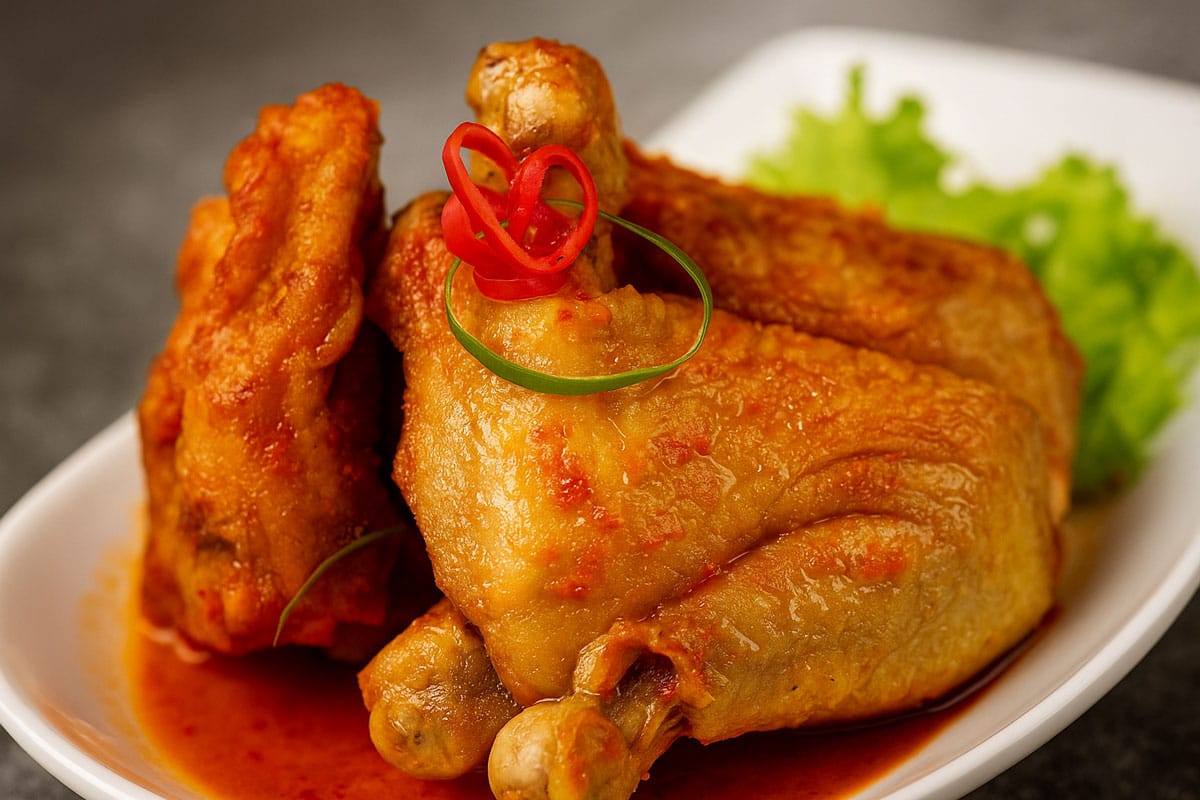
Spicy Coconut Chicken – Ayam Paniki
Ingredients
Instruction
- Marinate the chickenRub chicken with salt, pepper, and half of the lime juice. Let it rest for 30 minutes.
- Make the spice pasteBlend garlic, shallots, red chili peppers, bird’s eye chilies, turmeric, and ginger into a smooth paste.
- Cook the spice pasteHeat oil in a pan, sauté the spice paste until fragrant.
- Simmer with coconut milkAdd lemongrass, kaffir lime leaves, and coconut milk. Bring to a gentle boil.
- Add chickenPlace the marinated chicken into the coconut mixture. Lower heat and simmer until the chicken is tender and the coconut sauce thickens (about 40–50 minutes). Stir occasionally to prevent the coconut milk from separating.
- Optional grilling stepRemove the chicken pieces and grill or broil them until lightly charred for a smoky flavor. Return to the sauce or serve separately.
- ServeArrange the chicken on a serving plate, pour the spicy coconut sauce over the top, and enjoy with steamed rice.
Notes
- Coconut milk: Use full-fat canned coconut milk for the best flavor. Light coconut milk will make the dish thinner and less rich.
- Chilies: Adjust heat to taste. For authentic heat, use Thai bird’s eye chilies. For a milder dish, use red jalapeños or even red bell peppers (though flavor will differ).
- Shallots: If Indonesian shallots are unavailable, red onion works, but use about half the amount since onions are larger.
- Kaffir lime leaves: Hard to find outside Asian stores. Substitute with a mix of lime zest and a bay leaf for aroma.
- Serving suggestion: This dish is traditionally enjoyed with plain steamed rice, but it also pairs well with jasmine rice, coconut rice, or even flatbreads for a fusion touch.
- Make ahead: The flavor develops even more after resting overnight in the fridge – a great make-ahead dish.
Manado vs. North Maluku: Two Versions of Paniki
Interestingly, Ayam Paniki isn’t only found in North Sulawesi. A variation also exists in North Maluku, just across the sea. Both regions share a long history of cultural exchange, migration, and spice trade, so it’s not surprising their kitchens have overlapping flavors.
Here’s how they differ:
- Manado (North Sulawesi): Chicken is usually grilled over charcoal first, giving it a smoky aroma before being simmered in coconut milk. Some believe this tradition comes from the days of bat preparation, where burning the fine hairs was essential. In Manado, herbs like pandan leaves and kemangi (lemon basil) often join the mix, creating a fragrant, layered flavor.
- North Maluku: The dish is often simpler, but spicier. The chicken goes straight into the coconut milk without grilling. The seasoning is stripped down but fiery, with chili heat dominating the bowl.
Both versions share the same foundation—coconut milk, lemongrass, ginger, turmeric, and lots of chili. But one leans smoky and complex, the other sharp and fiery.
The Philosophy Behind the Dish
In Minahasa culture, food is never just food. Ayam Paniki, whether with bat or chicken, carries layers of meaning.
- Identity: For the Minahasa, eating paniki is a way of affirming who they are. It’s a dish that says, “We are not afraid to embrace what nature gives us.”
- Tradition: Served at weddings, religious celebrations, or big family gatherings, it’s a meal of togetherness. Sharing a spicy, steaming bowl brings people closer.
- Bravery: For many outsiders, eating bat might feel extreme. But for locals, it’s a symbol of courage and openness to life’s adventures. Even when prepared with chicken, the dish still carries that daring spirit.
How It Looks and Tastes
At first glance, Ayam Paniki might remind you of a South Asian curry. But once you taste it, you’ll realize it has its own identity. Coconut milk gives it a rich, creamy base. Lemongrass, ginger, and turmeric cut through with freshness. Chilies—lots of them—bring heat that lingers. In the Manado version, the grilled chicken adds smokiness, while in Maluku you’ll feel the chili fire more directly.
Unlike some curries, Ayam Paniki requires patience. The chicken is marinated first (traditionally in lime juice or vinegar), so the flavors penetrate deeply. Then it’s slowly cooked until the sauce thickens, clings to the meat, and fills the room with a mouthwatering aroma.

Will Western Palates Enjoy It?
The short answer: absolutely, yes—if you love bold flavors. Ayam Paniki is a dish that balances richness and heat, making it appealing to adventurous food lovers around the world.
That said, you might want to tweak a few things if you’re cooking it outside Indonesia:
- Chili: The original uses bird’s eye chilies, which are extremely hot. For Western kitchens, you might start with jalapeños, serranos, or even red chili flakes. Adjust the level until it’s enjoyable but still gives a kick.
- Coconut Milk: Canned coconut milk works fine. Just choose full-fat for the best flavor.
- Herbs: Pandan leaves and kemangi (Indonesian lemon basil) might be hard to find abroad. You can substitute with regular basil and a touch of lime zest for freshness.
- Cooking Method: If you don’t have access to charcoal grilling, roasting chicken in the oven before simmering works surprisingly well to create that smoky depth.
Extreme Eats: The Original Bat Paniki
Of course, if you want to experience Ayam Paniki in its original form, you’ll need to travel to Manado itself. There, in traditional markets or small eateries, you may still find paniki made with actual fruit bats. It’s considered an exotic delicacy, not for the faint-hearted.
Would you dare to try it? For locals, it’s not just about eating something unusual—it’s about connecting with tradition, showing respect for nature, and embracing a cultural legacy that outsiders may find shocking. For visitors, tasting it is a way to step outside your comfort zone and understand food as part of identity.
A Dish Shaped by Geography and History
Why do both North Sulawesi and North Maluku share similar dishes? Geography and history hold the answer. These regions were part of the legendary spice trade routes. Traders, migrants, and explorers carried not only cloves and nutmeg but also recipes, techniques, and cultural practices. Over centuries, coconut milk, chili peppers, and aromatic spices became staples in both regions’ kitchens.
That’s why Ayam Paniki feels like a culinary bridge—a dish born of local resources but shaped by global currents of trade and culture.

Cooking Ayam Paniki at Home
If you’re inspired to try it yourself, here’s the good news: chicken paniki is very doable in a Western kitchen. You’ll need coconut milk, chicken, and a handful of spices you can likely find in your nearest Asian grocery or online. The key is balance: heat from the chilies, richness from the coconut, and brightness from the lime or vinegar marinade.
It’s a dish best enjoyed family-style, with plenty of steamed rice to soak up the sauce. Invite friends over, serve it with a side of vegetables, and you’ll recreate a little slice of North Sulawesi in your own home.
Final Thoughts: More Than Just Food
Ayam Paniki is more than a recipe—it’s a story. It’s about how traditions evolve, how cultures adapt, and how flavors travel across seas. Whether you try the daring original with bat in Manado, or the more familiar chicken version in your own kitchen, you’re tasting centuries of history and identity in every bite.
So, would you try it? Maybe you’ll stick with chicken. Maybe you’ll be brave enough to taste the original. Either way, Ayam Paniki invites you to experience food not just with your tongue, but with your heart and curiosity.