In Indonesia, nothing feels more familiar in the late afternoon of Ramadan than the call of street vendors shouting, “Kolak pisang, kolak ubi, kolak labu!”—banana, sweet potato, and pumpkin desserts simmering in coconut milk. The aroma of this dish, rich with coconut cream, caramel-like palm sugar, and fragrant pandan leaves, is more than just a sign that evening is near. For many Indonesians, it is the taste of togetherness, nostalgia, and faith. Kolak isn’t just a dessert—it’s a piece of history, a medium of spiritual reflection, and a cultural treasure that has endured through centuries.
What is Kolak?
According to the Indonesian dictionary, kolak is a sweet dish made from bananas, sweet potatoes, or other ingredients simmered in coconut milk and palm sugar. At its heart, kolak is simple: coconut milk, sweetener, and fruit. But within that simplicity lies an incredible versatility.
Kolak Pisang, the banana version, is the most iconic, usually prepared with pisang raja or pisang kepok. Other variations often include pumpkin, cassava, or palm fruit. The result is a warm, comforting bowl that is sweet, creamy, and infused with the aroma of pandan and cinnamon.
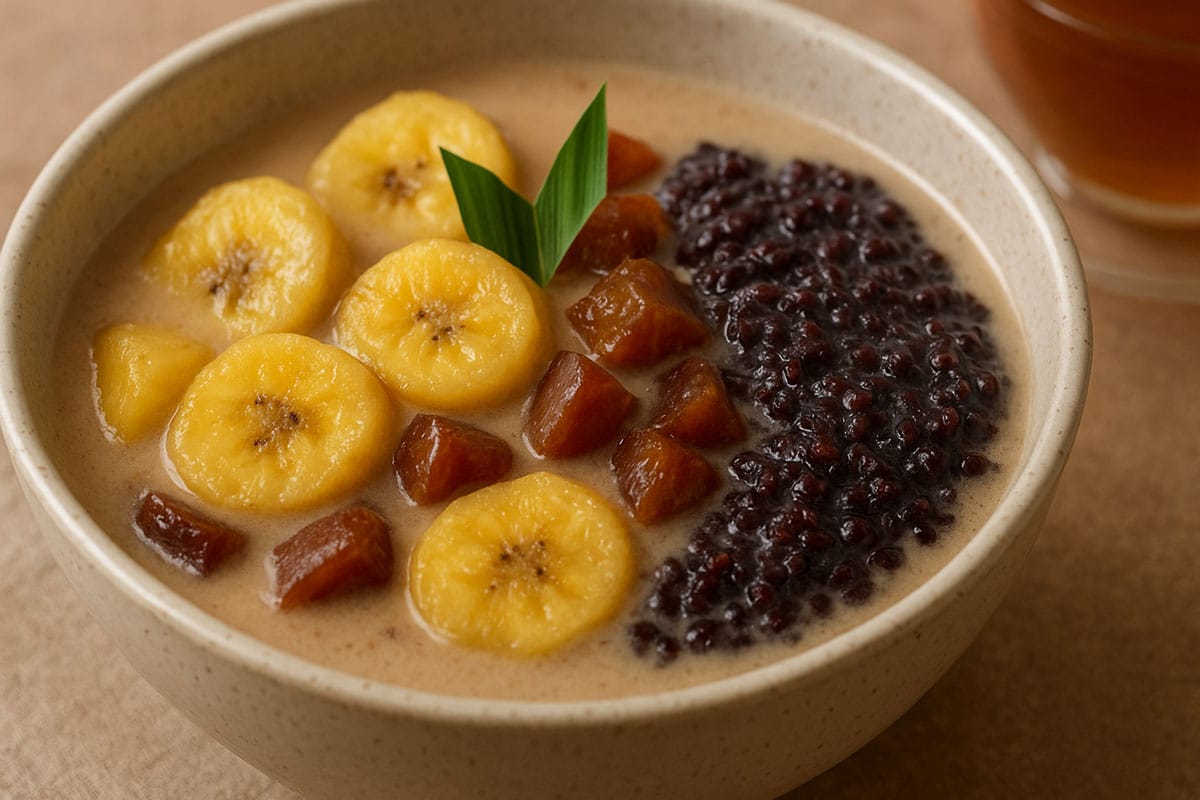
Kolak Pisang Recipe: Indonesian Banana in Coconut Milk
Ingredients
Instruction
- Cook the black sticky rice (ketan hitam)Rinse the rice, then soak for at least 3 hours (or overnight). Drain, place in a pot with about 3 cups water, and simmer until the grains break down into a thick porridge-like texture (about 45–60 minutes). Stir occasionally to prevent sticking. Set aside.
- Prepare the coconut baseIn a large saucepan, combine coconut milk, palm sugar, granulated sugar (if using), pandan leaf, cinnamon stick, vanilla, and salt. Cook gently over low heat, stirring often, until the sugar dissolves. Do not let the coconut milk boil vigorously to avoid curdling.
- Combine with black sticky riceAdd the cooked black sticky rice into the coconut mixture and stir until well combined.
- Add bananas and datesStir in sliced bananas and diced dates. Simmer on low heat for 8–10 minutes, or until the bananas are tender but not falling apart.
- ServeLadle into bowls and enjoy warm, or chill in the refrigerator and serve cold for a refreshing summer dessert.
Notes
- Bananas (Pisang kepok): These Indonesian cooking bananas are starchier than regular bananas. In the U.S. or Europe, substitute with ripe plantains. Regular dessert bananas will work, but the texture will be softer.
- Palm sugar (Gula merah): Palm sugar gives the authentic caramel-like flavor. If unavailable, use coconut sugar or dark brown sugar as the closest substitute.
- Pandan leaf (Daun pandan): Often sold frozen in Asian stores. If unavailable, you can skip it or add a tiny splash of vanilla extract, though the flavor will not be the same.
- Black sticky rice (Ketan hitam): This is glutinous black rice used in Southeast Asian desserts. If you cannot find it, substitute with black rice, but the texture may be less chewy.
- Serving style: In Indonesia, kolak is usually served warm during Ramadan evenings. In the West, it can also be enjoyed chilled in glasses like a tropical parfait or pudding.
- Dietary notes: This dish is naturally vegan and gluten-free.
The Origins of Kolak
The history of kolak is layered, much like the flavors in the dish.
- Kolak as a Medium of Islamic Teaching
One of the most widely shared stories says that kolak was used by Muslim saints (wali) in Java as a way to introduce Islam. Food, being universal and comforting, became a natural tool for teaching. Just as ketupat (rice dumplings) symbolize confession of mistakes, kolak came to embody spiritual lessons through flavor. - Etymology from Arabic
- Some scholars trace the word kolak to the Arabic kul laka, meaning “eat, it is for you.”
- Others connect it to khaliq (The Creator) or khalaqa (to create), reinforcing the dish as a reminder of God.
- Another interpretation links it to khala, which means empty. In this view, kolak teaches people to “empty” themselves of sin and fill life with kindness.
- Javanese Philosophy in Its Ingredients
In Javanese culture, each ingredient carries meaning:- Pisang kepok (banana) → linked to kapok (to repent), urging people to turn away from sin.
- Sweet potatoes or cassava → called telo pendem, symbolizing burial, a reminder of life’s impermanence.
- Coconut milk (santen) → associated with pangapunten (forgiveness), symbolizing the importance of seeking and granting pardon.
- From Colonial Times to Ritual Celebrations
Another version claims that kolak was already popular during Dutch colonial times as a sweet served in Javanese ceremonies. Over the years, it spread across the archipelago, becoming both an everyday dessert and a sacred dish of Ramadan.
Kolak and the Spirit of Ramadan
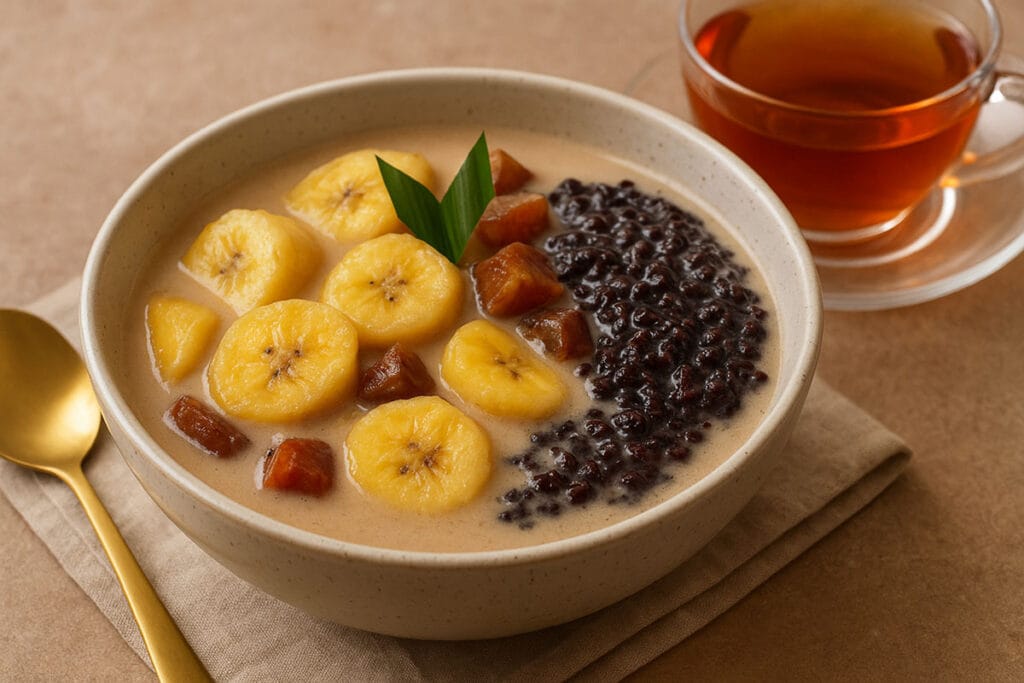
For Indonesian Muslims, kolak is inseparable from takjil, the term for foods eaten to break the fast. Sweet dishes are believed to quickly restore energy after hours of fasting, and kolak fits this role perfectly: bananas provide natural sugars, palm sugar gives a deep caramel sweetness, and coconut milk offers a comforting richness.
Kolak sits in a unique place—it is neither a main dish nor just a drink, but something in between: a sweet bridge from hunger to the evening meal, offering comfort with every spoonful.

The Philosophy of Kolak: Sweet Introspection
Every ingredient is a reminder:
- Bananas urge repentance.
- Root vegetables remind us of mortality.
- Coconut milk symbolizes forgiveness.
- Sweetness represents the hope of a good and meaningful life.
Kolak is, in many ways, an edible lesson: a dessert that feeds both the body and the soul.
Variations and Modern Innovations
Kolak has evolved into many forms:
- Kolak ubi (sweet potato)
- Kolak labu kuning (pumpkin)
- Kolak biji salak (sweet potato dumplings with chewy texture)
- Kolak with palm fruit (kolang-kaling)
One particularly well-known variant is Kolak Labu Kuning, which gained international attention when featured on Global Kitchen Travels in 2017. Described as Vegan Indonesian Sweet Pumpkin Soup, it was celebrated as a vegan, gluten-free dessert bursting with tropical flavors of coconut milk, palm sugar, and pandan leaves. This global recognition showed how adaptable and elegant kolak can be on the world stage.
Are There Similar Dishes in Other Countries?
Kolak shares similarities with other Southeast Asian sweets:

- In the Philippines, ginataang halo-halo mixes bananas, sweet potatoes, and sticky rice balls in coconut milk.
- In Malaysia, bubur cha-cha blends taro, sweet potatoes, and tapioca pearls in a sweet coconut broth.
- In Thailand, khao tom mad—sticky rice with banana wrapped in leaves—offers echoes of kolak’s comforting flavors.
Yet, kolak remains uniquely Indonesian, rooted in philosophy and cultural meaning.
A Dessert for the Global Palate
To Western palates, kolak can be described as a cross between tropical custard and caramel pudding. The bananas soften into a custardy texture, palm sugar delivers molasses-like depth, coconut milk adds creaminess, and pandan contributes a floral, vanilla-like fragrance.
For Americans and Europeans familiar with rice pudding or bread pudding, kolak feels both familiar and exotic. It’s tropical comfort food that’s easy to love.
The Flavor Experience
Imagine a creamy coconut base, silky and rich, sweetened with palm sugar that tastes like tropical caramel. Tender slices of banana melt in the mouth, while pandan leaves infuse a gentle, floral aroma. If black sticky rice is added, it brings a chewy, nutty texture. Dates provide honey-like sweetness, and cinnamon adds warmth. The overall taste is comforting, layered, and deeply satisfying—a dessert that feels like a hug in a bowl.
Serving Kolak for International Audiences
To present kolak in a way that resonates globally:

- Serve it in individual dessert bowls like a pudding or custard.
- Add toppings such as toasted nuts, granola, or dried fruits for texture.
- Serve it chilled in glass cups during summer, resembling parfaits.
- Highlight it as vegan and gluten-free, a key selling point for modern diners.
These adaptations preserve authenticity while making kolak more approachable to global audiences.
Conclusion
Kolak Pisang is proof that food is never just food—it is history, identity, and philosophy in a bowl. From its role as a medium of Islamic teaching in Java, to its deep symbolic meanings in Javanese culture, to its rise as a Ramadan staple and international vegan dessert, kolak has traveled far across time and geography.
Today, whether enjoyed at a street stall in Yogyakarta, a family’s Ramadan table in Jakarta, or a modern café in New York, kolak continues to share the same message: sweetness, reflection, and togetherness. And perhaps, when the world tastes this Indonesian dessert, it will also taste the warmth of a tradition that deserves to be celebrated everywhere.