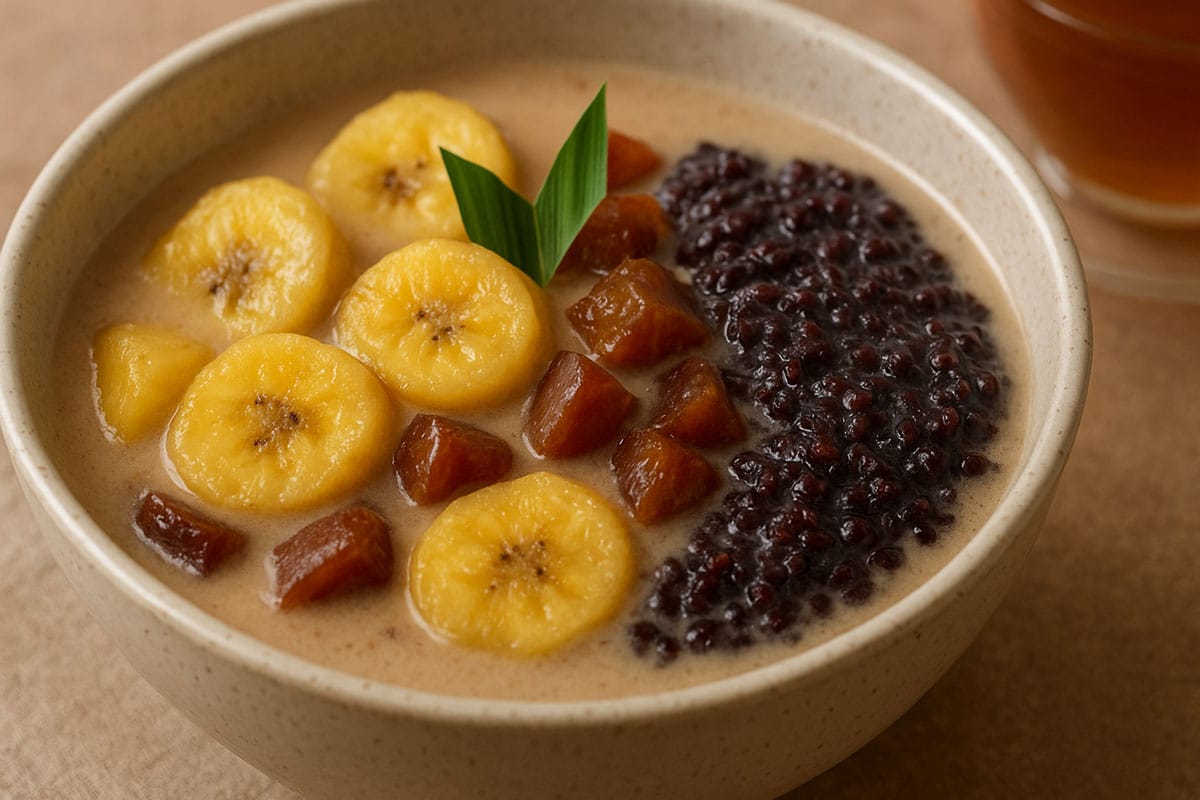
- 1 cup black sticky rice beras ketan hitam – available at Asian or international groceries
- 10 bananas pisang kepok – plantain-style bananas; substitute with ripe plantains or cooking bananas
- 1 cup pitted dates kurma, diced
- 1 cup palm sugar gula merah, shaved or chopped; substitute with coconut sugar or dark brown sugar
- 1/4 cup granulated sugar gula pasir – optional, to adjust sweetness
- 4 cups coconut milk santan – from 1 mature coconut or canned coconut milk
- 1 pandan leaf daun pandan, tied into a knot (optional but highly recommended)
- 1 small cinnamon stick kayu manis, about 1 inch
- 1/2 teaspoon vanilla extract vanili – optional
- 1/4 teaspoon salt garam
Cook the black sticky rice (ketan hitam)Rinse the rice, then soak for at least 3 hours (or overnight). Drain, place in a pot with about 3 cups water, and simmer until the grains break down into a thick porridge-like texture (about 45–60 minutes). Stir occasionally to prevent sticking. Set aside. Prepare the coconut baseIn a large saucepan, combine coconut milk, palm sugar, granulated sugar (if using), pandan leaf, cinnamon stick, vanilla, and salt. Cook gently over low heat, stirring often, until the sugar dissolves. Do not let the coconut milk boil vigorously to avoid curdling. Combine with black sticky riceAdd the cooked black sticky rice into the coconut mixture and stir until well combined. Add bananas and datesStir in sliced bananas and diced dates. Simmer on low heat for 8–10 minutes, or until the bananas are tender but not falling apart. ServeLadle into bowls and enjoy warm, or chill in the refrigerator and serve cold for a refreshing summer dessert.
-
Bananas (Pisang kepok): These Indonesian cooking bananas are starchier than regular bananas. In the U.S. or Europe, substitute with ripe plantains. Regular dessert bananas will work, but the texture will be softer.
-
Palm sugar (Gula merah): Palm sugar gives the authentic caramel-like flavor. If unavailable, use coconut sugar or dark brown sugar as the closest substitute.
-
Pandan leaf (Daun pandan): Often sold frozen in Asian stores. If unavailable, you can skip it or add a tiny splash of vanilla extract, though the flavor will not be the same.
-
Black sticky rice (Ketan hitam): This is glutinous black rice used in Southeast Asian desserts. If you cannot find it, substitute with black rice, but the texture may be less chewy.
-
Serving style: In Indonesia, kolak is usually served warm during Ramadan evenings. In the West, it can also be enjoyed chilled in glasses like a tropical parfait or pudding.
-
Dietary notes: This dish is naturally vegan and gluten-free.