When you first encounter Kue Mangkok—an Indonesian steamed rice cupcake—you might notice its cheerful “smile.” The top of the cake splits into four petal-like sections, almost like a flower in bloom. For Indonesians, this isn’t just a charming appearance; it carries cultural symbolism of prosperity, joy, and good fortune. But behind this little cake lies a story that connects centuries of migration, culinary adaptation, and local tradition.
Origins: From Southern China to the Indonesian Archipelago
The roots of Kue Mangkok trace back to Southern China, where a similar cake called Fa Gao (發糕) has been a central part of Lunar New Year celebrations for centuries. The word fa can mean “rise” or “prosper,” while gao means “cake.” Together, the name signifies both the physical rising of the cake during steaming and the symbolic rising of fortune.
When Chinese merchants and settlers from Fujian and Guangdong came to the Indonesian archipelago around the 17th century, they brought this cake with them. Over time, it was adopted into local traditions. In Hokkien dialect, it is sometimes called fak kaw. Both names are correct, but in Indonesia, the name Kue Mangkok—literally “bowl cake”—became dominant, referring to its round, bowl-like shape.
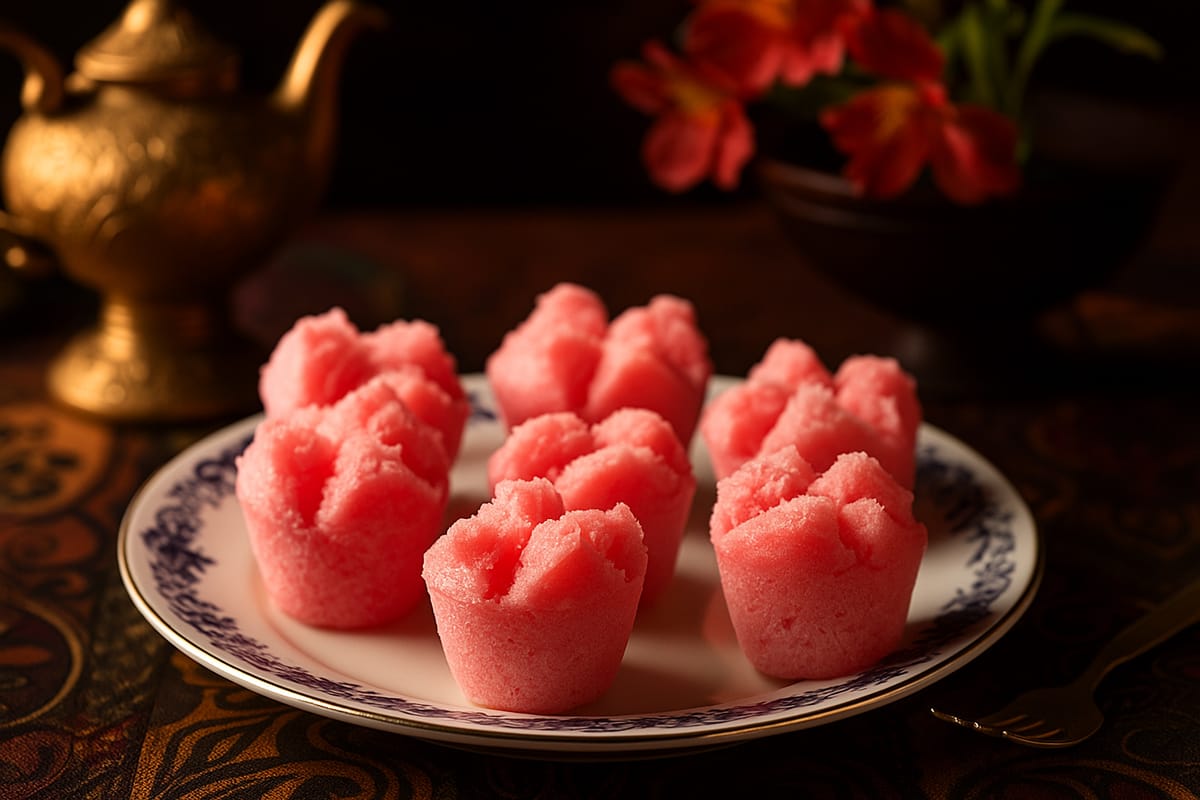
Kue Mangkok (Indonesian Steamed Rice Cupcakes)
Ingredients
Instruction
- Mash the tapai nasi (fermented rice) until smooth. Mix it with the rice flour in a large bowl.
- Add half of the coconut water and the sugar. Stir until the sugar is dissolved.
- Add tapioca starch, wheat flour, baking powder, instant yeast, and the remaining coconut water. Mix until smooth, then strain the batter to remove lumps.
- Cover and let the batter ferment for about 1–2 hours, or until bubbly and slightly expanded.
- Preheat a steamer with plenty of boiling water. Wrap the steamer lid with a kitchen towel to catch condensation.
- Place small heatproof cups or molds inside the steamer to preheat.
- Fill the hot molds about ¾ full with the batter.
- Steam over high heat for about 30 minutes without opening the lid.
- Remove from heat, let cool slightly, and serve warm.
Notes
- Fermented rice (tapai nasi) can be hard to find outside Southeast Asia. Substitute with tapai singkong (fermented cassava), which is sometimes available at Asian stores. If neither is available, a mix of cooked rice with a small amount of instant yeast and sugar left overnight can give a similar effect, though not identical.
- Coconut water provides a subtle sweetness and aroma. Unsweetened bottled coconut water works fine if fresh is unavailable.
- Steaming method is crucial. Use a strong rolling boil and keep the lid closed for the full 30 minutes. The kitchen towel around the lid prevents water from dripping and spoiling the top.
- Molds: If you don’t have traditional small molds, use silicone muffin cups or ramekins.
Troubleshooting
- Cupcakes are dense (bantat) → Batter wasn’t fermented long enough, or the steamer wasn’t hot enough. Make sure the batter is bubbly before steaming, and use strong steam.
- Cupcakes taste too sour → Fermentation went too long, or the fermented rice was overly sour. Reduce fermentation time to about 1 hour in warm climates.
- Cakes didn’t split on top (“no smile”) → Usually caused by weak steam, lid opened during cooking, or not enough leavening. Ensure strong heat, don’t open the lid, and double-check your baking powder and yeast freshness.
- Surface is wet or sticky → Caused by condensation dripping. Always wrap the steamer lid with a towel.
Indigenization: How Indonesia Made It Its Own
In Indonesia, Fa Gao underwent what scholars call indigenization—the adaptation of foreign traditions to local ingredients and tastes. Instead of using only wheat flour or rice flour as in China, Indonesians began mixing in local staples:
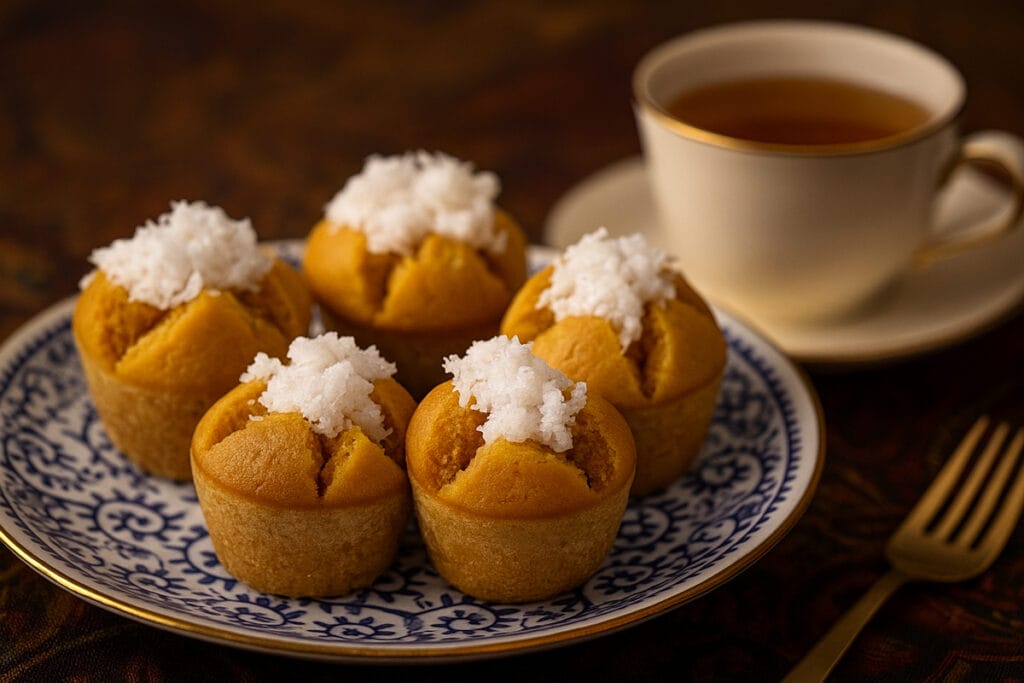
- Tapai nasi (fermented rice) or tapai singkong (fermented cassava) for leavening and flavor.
- Gula jawa (palm sugar) for a deeper, caramel-like sweetness.
- Fresh air kelapa (coconut water), readily available in tropical Indonesia, to add aroma and subtle sweetness.
Another uniquely Indonesian touch is the serving of Kue Mangkok with a sprinkle of grated coconut, something not found in the Chinese version. This adaptation created a cake with a softer chew, a faint tang from fermentation, and a more complex sweetness that appeals to local palates.
Cultural Symbolism and Ritual Use
Whether in China or Indonesia, the symbolism of the “smile” remains central. A perfectly bloomed Kue Mangkok represents good luck, prosperity, and happiness. In Chinese belief, the more petals (or cracks) appear on top, the more wealth and blessings are expected in the coming year.
In Indonesia, Kue Mangkok became a fixture not only during Lunar New Year but also in weddings, community gatherings, and religious ceremonies. In Bali, a variant known as kue kuskus is even used as part of temple offerings. Numbers also matter: cakes are often presented in odd quantities—three, five, seven, or nine—as odd numbers are associated with continuity and spiritual balance.
Kue Mangkok vs. Apem: Similar, but Not the Same
Another Indonesian steamed cake, Apem, is sometimes confused with Kue Mangkok. Both are fermented rice-based cakes, but their differences are clear:
- Texture: Apem is soft, spongy, and flat-topped, while Kue Mangkok is denser at the base and splits open on top.
- Flavor: Apem often has a stronger tang from longer fermentation, while Kue Mangkok balances sweetness with mild sourness.
- Appearance: Apem is usually round and smooth, whereas Kue Mangkok is defined by its blooming “flower.”
So while they share common roots in fermentation, each carries its own role in Indonesian culinary tradition.
The Taste Experience
For Western readers unfamiliar with fermented cakes, Kue Mangkok might be best described as a cross between a cupcake, a mochi muffin, and a steamed bun. The texture is chewy yet fluffy, with a mild tang from fermentation. If palm sugar is used, the flavor deepens into caramel-like notes; if white sugar is used, the taste is lighter and cleaner. Unlike Western cupcakes, it contains no butter or frosting—the joy is in the simplicity and the symbolism.

Serving in Indonesia and Beyond
In traditional Indonesian settings, Kue Mangkok is served at room temperature, often on colorful platters during festive events. They may be dyed pink, green, or brown (from palm sugar) to create a vibrant display. In some communities, they are given as offerings, symbolizing prayers for abundance.
For Western kitchens, serving can be adapted:
- Enjoy warm with unsweetened tea or black coffee, which balances the sweetness.
- Pair with sparkling water or even a dry white wine, which cuts through the chewy texture and resets the palate.
- For brunch, serve alongside tropical fruit (mango, pineapple, papaya) for a Southeast Asian-inspired spread.
Challenges for Western Cooks
- Sourcing Fermented Rice (tapai nasi)
Tapai nasi is the traditional ferment that gives Kue Mangkok its unique aroma and natural rise. However, it is almost impossible to find in mainstream supermarkets in the U.S. or Europe. Even tapai singkong (fermented cassava), the usual substitute, is rarely stocked outside Asian specialty stores. A practical alternative is to make a quick ferment at home with cooked rice, sugar, and instant yeast. While this won’t perfectly replicate the flavor, it offers a workable solution for international kitchens. - Steaming vs. Baking
Steaming is a standard cooking method in Indonesian households but less familiar in the West, where ovens dominate. Many home cooks may not own a large steamer capable of generating strong, continuous steam. Weak steam can lead to dense cakes that fail to split open. The workaround is to improvise: use a large stockpot with a wire rack, a bamboo steamer placed over a pot, or silicone muffin cups set in a steaming setup. The key is steady, vigorous steam throughout the cooking process. - Fermentation in Cooler Climates
Indonesia’s tropical climate naturally accelerates fermentation, producing bubbly, active batter in just 1–2 hours. In Western kitchens, especially in colder seasons, fermentation may slow down or behave unpredictably. If the batter doesn’t ferment enough, the cakes will be heavy; if left too long, the flavor can turn overly sour. To mimic tropical conditions, let the batter rest in a warm oven with only the light on, or place it near a radiator until it looks airy and bubbly. - Texture and Flavor Expectations
Western palates often expect cupcakes to be buttery, fluffy, and sweet. Kue Mangkok, however, has a chewy texture, a mild tang from fermentation, and no butter. Without context, this difference may be mistaken for a mistake. Setting the right expectation is essential: the chewy bite and subtle flavor are intentional and authentic. Think of it as closer to a cross between a mochi muffin and a steamed bun rather than a frosted cupcake. - Cultural Context
Beyond its flavor, Kue Mangkok carries symbolic meaning in Indonesian culture. The cake’s “smiling” top is a metaphor for prosperity, joy, and blessings, often served during weddings, Chinese New Year, or community gatherings. Sharing this cultural background with Western cooks adds depth to the experience and helps them appreciate why achieving the perfect “smile” is about more than just looks—it’s about tradition and celebration. - Mold Availability and Shape
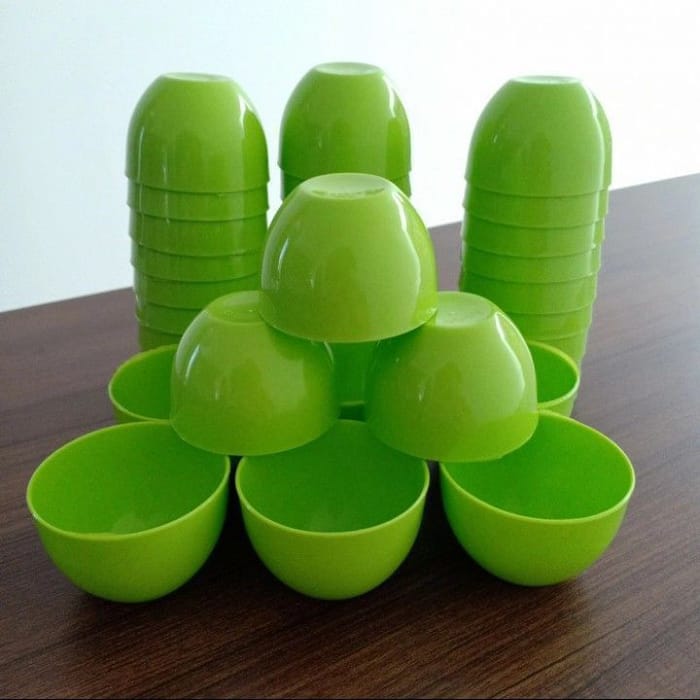
Traditional Indonesian Kue Mangkok molds are small, flared, and often made of aluminum. Their shape encourages the cake to split open at the top. In Western kitchens, these molds are not common. Instead, home cooks usually have muffin tins, ramekins, or silicone cupcake molds. While these work as substitutes, the final “smile” may not open as dramatically. For best results, avoid paper liners, lightly grease the mold, and preheat the molds inside the steamer so the batter immediately reacts to the heat and bursts upward. If authenticity matters, specialty Asian stores or online shops often carry aluminum kue mangkok molds at low cost. - Scientific Note: Why Mold Shape Matters
The signature “smile” of Kue Mangkok is the result of rapid steam expansion combined with fermentation gases (CO₂ from yeast in tapai or instant yeast). A flared, open-top aluminum mold allows heat to penetrate quickly and evenly, forcing the batter to burst upward. If the mold is too narrow (like a deep muffin tin), the steam expansion is restricted and the cake may rise smoothly without splitting. Using a wider, shallower mold increases surface area, speeds gelatinization of the starches, and maximizes the “smile” effect. This is why mold design is almost as important as the batter itself.
Quick Fix Tips
- No fermented rice available? → Use cooked white rice, 1 tsp sugar, and ½ tsp yeast. Let it sit overnight in a warm place. It won’t taste identical, but it will provide the leavening effect.
- No steamer at home? → Use a large pot with a metal trivet or colander inside. Make sure the lid is tight and wrap it in a towel to trap steam.
- Cold kitchen slowing fermentation? → Place the batter in a slightly warm oven (with the light on but heat off) or near a radiator to mimic tropical fermentation speed.
- Afraid of chewy texture? → Expect it! The chewiness is part of the charm. Think of it like Asian rice cakes, not Western cupcakes.
- Want to add variety? → Natural food coloring like pandan, ube, or matcha can add both visual appeal and a subtle twist in flavor without changing the authenticity.
A Cake of Many Names: Fa Gao, Fak Kaw, or Kue Mangkok?
In its homeland of China, the cake is most commonly called Fa Gao, sometimes pronounced fak kaw in Hokkien dialect. Both refer to the same cake: fa meaning “prosper” or “rise,” gao meaning “cake.” In Indonesia, however, the cake became widely known as Kue Mangkok, literally “bowl cake.” Over time, Indonesian cooks indigenized the recipe, creating a dessert distinct enough in flavor and context to stand on its own. Thus, while Kue Mangkok shares lineage with Fa Gao, it has evolved into a uniquely Indonesian treat.
The Joy in Every Smile
Kue Mangkok is more than a steamed rice cupcake—it is a bridge between cultures, carrying the prosperity symbolism of Chinese traditions while reflecting the creativity of Indonesian adaptation. For Western kitchens, it may require unfamiliar techniques and ingredients, but the reward is a dessert that offers not just flavor, but history and meaning. Each blooming top is a reminder of joy, abundance, and the beauty of cultural exchange.