A Slice of Indonesia’s Sweet Soul
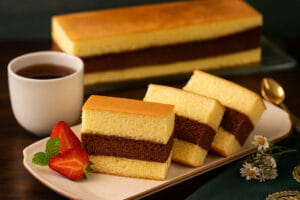
To the Indonesian palate, Kue Karamel (Caramel Cake) represents nostalgia, warmth, and patience. It’s not your typical Western caramel cake layered with frosting — it’s a dense, springy, amber-colored dessert with beautiful honeycomb holes running through its interior, hence the name “sarang semut”, which literally means ant’s nest.
To a Western audience, imagine a cross between a flan, a toffee sponge, and a molasses cake, yet entirely its own. Sweet, aromatic, and slightly chewy, this cake bridges two culinary worlds — Europe’s love for caramel and Indonesia’s flair for texture and balance.
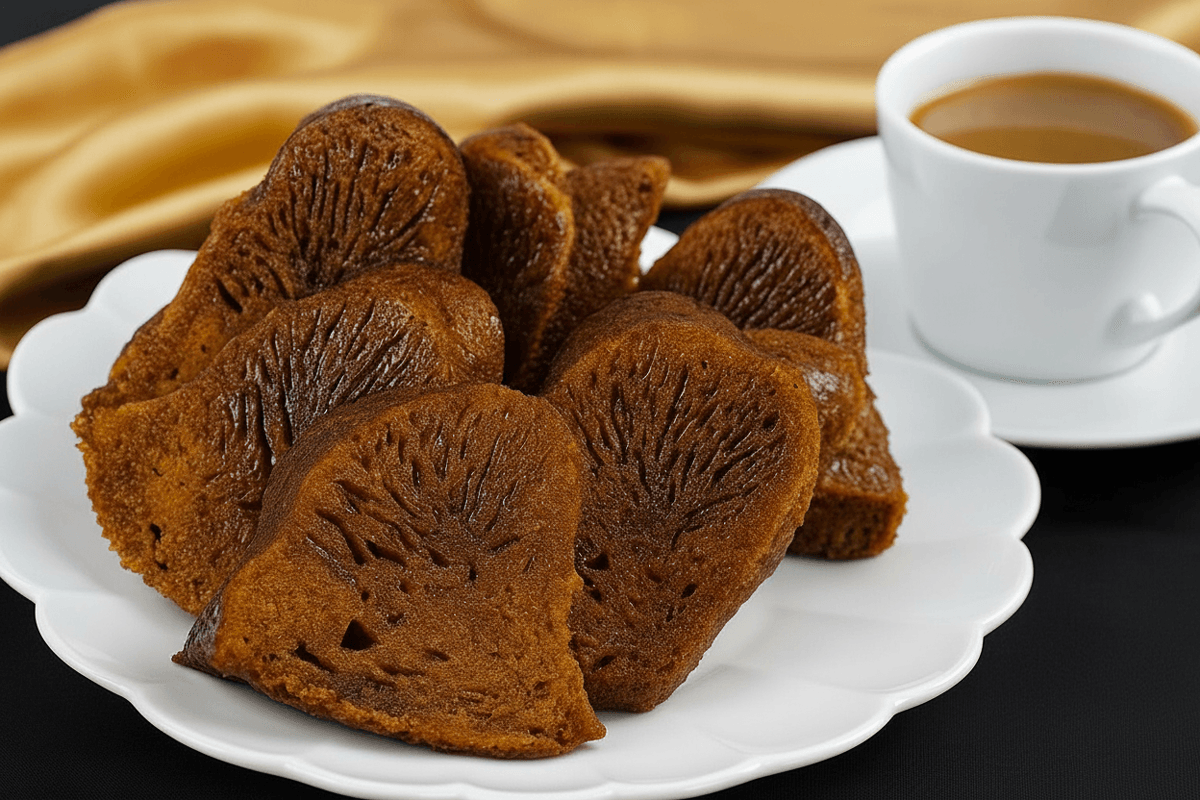
Indonesian Caramel Honeycomb Cake (Kue Karamel / Kue Sarang Semut)
Ingredients
Instruction
- Make the caramel syrup:Place the granulated sugar (gula pasir) in a heavy-bottomed saucepan over medium heat. Let it melt undisturbed until it turns a deep amber color.Carefully pour in hot water (air panas) a little at a time — it will bubble vigorously — then stir gently until smooth.Remove from heat and let it cool completely to room temperature.
- Prepare the wet mixture:In a large mixing bowl, whisk together melted margarine (margarin), sweetened condensed milk (susu kental manis), and eggs until well combined.You don’t need to whip it — just mix until smooth and uniform.
- Combine the dry ingredients:In a separate bowl, sift together all-purpose flour (tepung terigu), cornstarch (tepung maizena), and baking soda (soda kue).
- Mix the batter:Gradually add the dry ingredients into the wet mixture, stirring gently with a whisk or spatula until just combined.Then pour in the cooled caramel syrup, stirring slowly until smooth. Avoid overmixing to preserve the honeycomb texture.
- Bake the cake:Grease and flour a 9-inch (22 cm) Bundt or tube pan.Pour in the batter and bake at 350°F (180°C) for 60 minutes, using the lower oven rack for the first 45 minutes, then switch to top-and-bottom heat for the final 15 minutes.The cake should be golden brown and springy to the touch.
- Cool and serve:Let the cake rest in the pan for 10 minutes before unmolding.Cool completely before slicing — the signature honeycomb pattern (“sarang semut”) will appear once fully set.
Notes
- Margarine (margarin): Commonly used in Indonesia for its moisture and aroma. You can replace it with unsalted butter for a richer Western-style taste.
- Sweetened condensed milk (susu kental manis): Available in most grocery stores (look for brands like Eagle Brand or Nestlé). Avoid evaporated milk — it’s not sweet enough.
- Caramel syrup: Make sure it’s completely cool before adding to the batter; otherwise, the eggs will curdle.
- Texture tip: Don’t overmix after adding the caramel. The tiny air bubbles create that classic honeycomb structure inside.
- Storage: Keeps well at room temperature for 2–3 days or in the fridge up to 5 days. Best served slightly warm or at room temp with a cup of tea or coffee.
A Colonial Connection: When Europe Met the Tropics
The story of caramel cake in Indonesia began during the Dutch colonial era.
Like many other Indonesian baked goods — lapis legit, spekkoek, or bolu kukus — it was inspired by European baking traditions brought to the archipelago in the 19th century.
The earliest versions were likely European-style caramel sponge cakes, popular in Dutch and German households. But when these recipes arrived in the tropics, they evolved dramatically.
Indonesian home cooks, lacking butter and electric mixers, adapted the recipe using margarine (which withstands the heat better than butter) and hand-mixing techniques. Instead of airy sponge layers, they created something denser, richer, and more aromatic — the caramel flavor intensified, and the cake’s structure transformed into a mesmerizing honeycomb pattern.
What began as a European dessert soon became a proudly Indonesian identity, a symbol of how local creativity reshapes foreign influence.
The Indonesian Reinvention
Let’s see what makes the Indonesian version truly unique:
- Margarine over butter
In Europe, butter is the star of any cake. In Indonesia’s humid climate, margarine lasts longer and gives the cake a moist texture — a practical and flavorful choice. - The “sarang semut” texture
This is the hallmark. Instead of a fluffy sponge, the Indonesian version develops natural honeycomb-like holes from the reaction between caramel syrup and baking soda. It’s not a flaw — it’s the goal! - No electric mixer
Traditional home bakers used only a whisk or spoon. The slower mixing gives the cake a chewy, elastic feel rather than a light crumb, resulting in a texture that’s comforting and satisfying. - Local flavor twists
Indonesians love adding a touch of sweetened condensed milk, vanilla, or even a bit of coffee to enhance the caramel aroma. It’s simple, yet deeply aromatic — a true expression of local taste.
So while the concept of caramel cake came from Europe, the soul of Kue Karamel is purely Indonesian.
The Broader Story of Caramel Itself
Caramel, as an ingredient, has a history as rich as its flavor.
Historians trace its earliest appearance to Arab confectioners around 1000 AD, who boiled sugar and water into hard, glassy candies. At first, these mixtures were even used in beauty treatments, not food!
As sugar trade spread through the Mediterranean into Europe, caramel evolved into a luxurious treat, reserved for the wealthy during the Middle Ages. It wasn’t until the 19th century — when sugar became widely accessible — that caramel became a universal flavor, appearing in sauces, candies, and pastries.
The word “caramel” itself comes from the Spanish caramelo, derived from the Latin canna mellis — “sugar cane honey.”
And just like that, caramel found its way into kitchens from France to the Far East.
The Art of Making Perfect Caramel
Caramel is deceptively simple — just sugar and heat — yet tricky to master. A few degrees can make or break it.
Tips to prevent caramel failure:
- Start with a clean, dry pan. Any impurities can cause crystallization.
- Melt sugar slowly over medium heat. Rushing will burn it.
- Avoid stirring until the sugar starts to melt. Swirl the pan gently instead.
- When adding water or cream, pour slowly and carefully — the mixture will bubble vigorously.
- Cool completely before mixing into your batter, or you’ll cook your eggs prematurely.
That gentle amber transformation — when white sugar turns deep golden and aromatic — is a small act of alchemy in every kitchen.
Brownie Look, But Not a Brownie
At first glance, Kue Karamel may remind Western bakers of a brownie — dark brown, rich, and slightly dense. But here’s the difference:
| Feature | Brownie | Kue Karamel |
|---|---|---|
| Main flavor | Chocolate & cocoa | Caramelized sugar |
| Texture | Fudgy or cakey | Elastic, honeycomb-like |
| Fat source | Butter | Margarine or butter |
| Sweetness | Rich, chocolate-heavy | Deep, toffee-sweet |
| Aroma | Cocoa | Burnt sugar & condensed milk |
In essence, brownies are indulgent, while Kue Karamel is nostalgic.
One comforts the soul, the other stimulates the senses.
Cultural Context — The Indonesian Touch
For Indonesians, Kue Karamel isn’t just dessert. It’s a communal experience.
It’s the cake you bring to family gatherings, weddings, or “arisan” — those cozy social get-togethers where food speaks louder than words.
The cake’s simplicity and long shelf life make it a symbol of humble abundance — a treat made with minimal ingredients but deep care. Even today, traditional bakeries across Java and Sumatra sell it fresh daily, proving its timeless charm.
Flavor Philosophy — Why It Works
Why does this cake appeal to both Indonesian and Western palates?
Because it’s built on universal sensory pleasure:
- Sweetness balanced by a slight bitterness from caramelization.
- Buttery richness paired with airy lightness.
- A moist interior that contrasts with the crisp outer crust.
It’s the kind of dessert that feels familiar yet new — caramel bridges the cultural gap beautifully.
Modern Variations
In today’s kitchens, Kue Karamel continues to evolve. Bakers experiment with:
- Salted caramel versions — blending sea salt with the sweetness for a modern twist.
- Coffee caramel cake — adding espresso powder to deepen the aroma.
- Coconut caramel cake — replacing part of the milk with coconut milk for a tropical flair.
- Gluten-free versions — substituting flour with rice flour or almond meal for lighter textures.
The secret remains the same: perfect caramelization and slow, gentle mixing.
Making Kue Karamel Abroad: Challenges & Tips
If you’re in the U.S. or Europe and want to try making this cake, a few adjustments will help:
- Sugar types: Use regular white granulated sugar, not brown sugar — you’ll create your own caramel color.
- Baking soda: Ensure it’s fresh; it’s the key to those signature holes.
- Margarine substitute: You can use unsalted butter for a richer Western flavor.
- Ovens differ: Many Western ovens run hotter — bake at 340°F (170°C) and test after 50 minutes.
- Patience: The caramel syrup must be completely cooled before mixing.
Nutrition and Enjoyment Tips
A slice of Kue Karamel contains roughly 280–300 calories, depending on the ingredients. It’s a treat — not an everyday indulgence — but here’s how to enjoy it wisely:
- Pair it with unsweetened tea or black coffee to balance the sweetness.
- Enjoy smaller slices; it’s rich and satisfying.
- Avoid pairing with other sugary desserts in one sitting.
- For a lighter version, reduce condensed milk or swap part of it with low-fat milk.
Fun fact: the honeycomb texture actually allows the cake to “breathe,” making it feel lighter on the palate than most caramel desserts.
A Sweet Invitation
Whether you’re a home baker in California or a coffee lover in Berlin, Kue Karamel offers a window into Indonesia’s heart — a reminder that culinary traditions are living stories.
It’s proof that when East meets West in the kitchen, something magical happens — flavors blend, textures transform, and history finds a new home in every bite.
So, why not try baking it yourself? Let the smell of caramel fill your kitchen, slice it warm, and share it with someone you love. Then tell us:
did the honeycomb form beautifully, or did you invent your own new version of sweetness?
Because that’s the spirit of Indonesian cooking — creative, communal, and endlessly comforting.