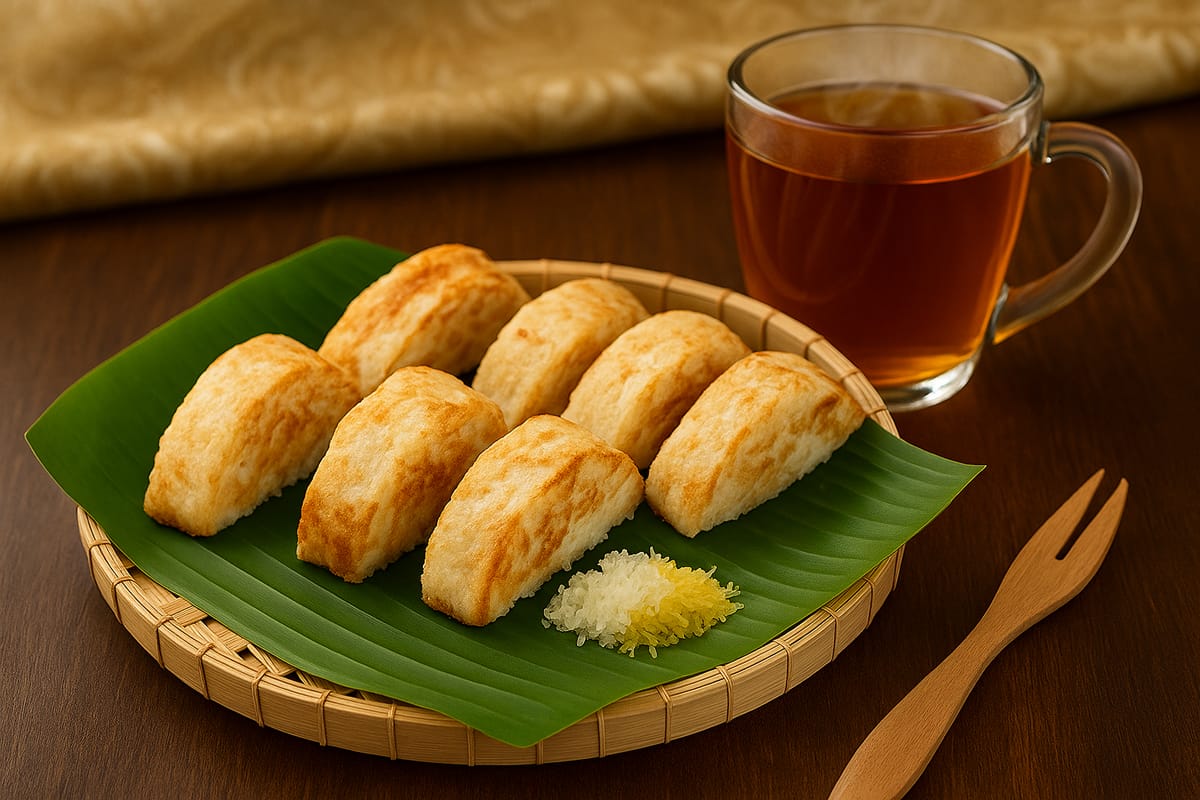
A Warm Introduction
At first glance, Kue Pancong might remind you of another Indonesian favorite called kue pukis — both share the same curved, half-moon shape. But take one bite, and you’ll instantly notice the difference. Kue Pancong leans savory rather than sweet, filled with the rich aroma of coconut and the creamy depth of santan (coconut milk).
In Indonesia, this humble cake is a street-side comfort. Vendors often sell it from small carts, cooking each batch right before your eyes so that it’s still steaming hot when served. Traditionally, it comes with a sprinkle of sugar on top — just enough sweetness to highlight its naturally rich, coconutty flavor.
While it’s rarely grouped with kue pasar (traditional market cakes) like kue talam, apem, or kue cucur, Kue Pancong shares the same nostalgic soul — an edible memory of Indonesian afternoons, laughter, and the scent of toasted coconut wafting through the air.
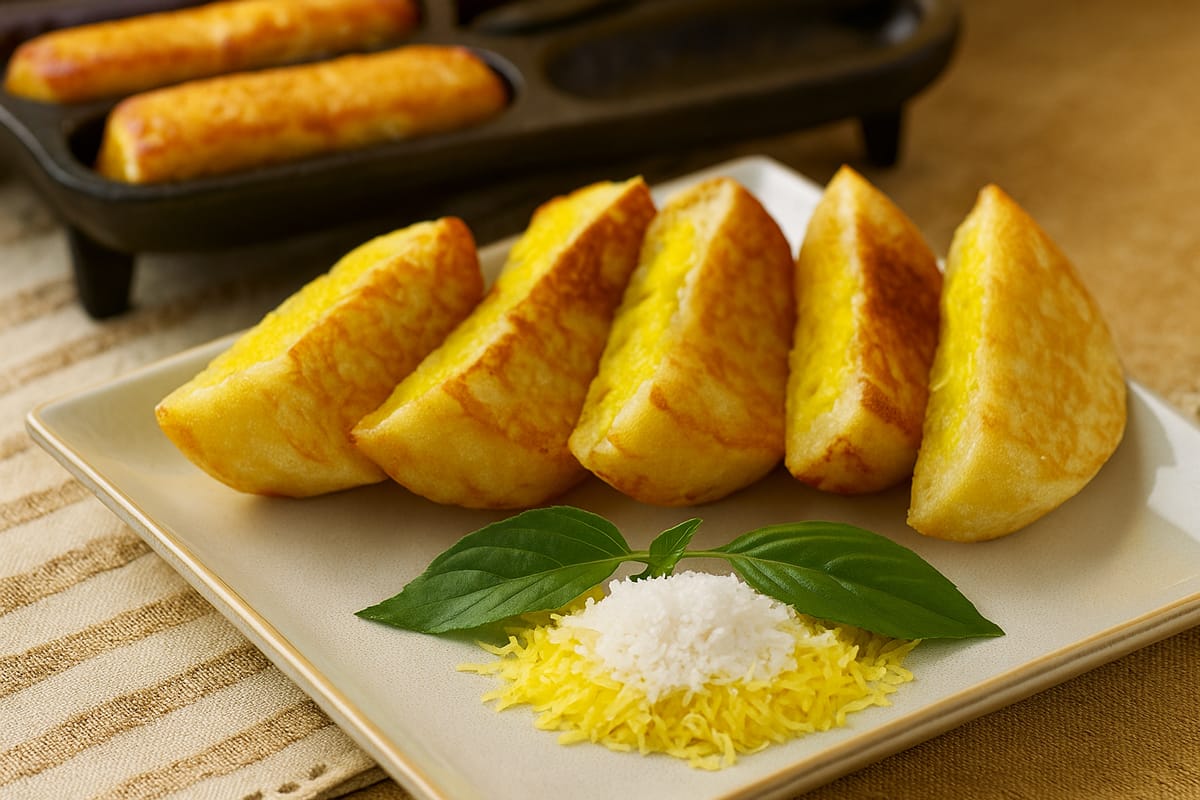
Kue Pancong – Indonesian Coconut Rice Cake
Ingredients
Instruction
- Combine dry ingredients.In a mixing bowl, stir together the rice flour (tepung beras), grated coconut (kelapa parut), and salt (garam) until evenly mixed.
- Add warm coconut milk.Gradually pour in the warm thick coconut milk (santan kental), stirring gently until you get a smooth, thick, pourable batter — about the consistency of pancake batter.
- Preheat the pan.Heat a Kue Pancong mold (or pukis pan, aebleskiver pan, or even a small cast-iron pan) over low to medium heat. Lightly grease with butter or neutral oil.
- Cook until golden.Pour the batter into each mold until almost full. Cover with a lid and cook for 5–7 minutes, or until the edges are golden and the top is firm.
- Finish and serve.Remove from the mold. While still warm, sprinkle granulated sugar (gula pasir) on top — or top with grated cheese (keju parut) for a modern flavor. Serve immediately.
Notes
-
Substitute for fresh coconut (kelapa parut):
If fresh coconut isn’t available, use unsweetened shredded coconut. To mimic the moisture of fresh coconut, soak it in warm water (1:1 ratio) for 10 minutes, drain, and gently squeeze before mixing. -
Coconut milk (santan):
Choose full-fat canned coconut milk such as Thai or Indonesian brands. Shake well before use. Avoid “lite” versions — the fat content is what gives Kue Pancong its creamy texture. -
Temperature control:
Keep the heat low to medium to prevent burning the bottom before the center cooks through. -
Sweetness level:
Traditional Kue Pancong is mildly sweet. For a sweeter version (more Western-friendly), add 1 tablespoon sugar directly into the batter in addition to the topping. -
Mold alternative:
You can use a pukis pan, mini muffin tin, or cast-iron skillet. Just ensure the cavities are shallow so the batter cooks evenly. -
Modern twist:
Try sprinkling cinnamon sugar or drizzling honey on top — it pairs beautifully with the coconut aroma while keeping its Indonesian soul.
The Story Behind the Cake
From Colonial Streets to Modern Cafés
Kue Pancong traces its roots back to 17th-century Batavia — modern-day Jakarta — during the Dutch colonial era. Back then, it was a popular street snack sold by vendors who used simple ingredients readily available in local markets: rice flour (tepung beras), grated coconut (kelapa parut), and coconut milk (santan).
The combination of these natural, tropical ingredients produced something magical — a treat that was crispy on the outside, soft on the inside, and comforting all around. Over time, Kue Pancong became a cherished part of Betawi (Jakarta’s native ethnic group) food culture.
In those early days, vendors cooked the batter in a clay mold with small curved cavities. As technology evolved, cast-iron molds replaced the clay, helping the cake achieve its signature browned crust and tender interior.

What’s in a Name?
The word pancong itself has fascinating origins. Some say it comes from the Javanese word cong, meaning “cup” or “small dish,” referring to the mold’s shape. Others believe it comes from the Betawi expression pantatnya dicongkel, meaning “scooped from the bottom,” describing how vendors lift each piece from the mold using a small metal hook.
Regardless of its etymology, Kue Pancong has evolved to represent more than a snack — it’s a symbol of Indonesian resilience and creativity, a treat born from resourcefulness and simplicity.
Names Across the Archipelago
As Kue Pancong spread beyond Jakarta, it took on different names and slight variations:
- Bandung (West Java): Bandros
- Yogyakarta & Central Java: Serabi Rangin
- Bali: Haluman or Daluman
- Sumatra: sometimes called Pancung or Gunjing
Though the names differ, the essence remains the same — a coconut-based rice cake that balances sweet, savory, and aromatic notes beautifully.
Cultural Context – The Indonesian Touch
In Indonesian life, Kue Pancong isn’t just food — it’s part of the rhythm of daily living. It’s what people eat during late afternoon tea, after work, or while chatting with neighbors.
In Betawi households, it often appears at family gatherings, weddings, and religious celebrations. During Ramadan, you’ll find it as a favorite takjil — a snack to break the fast — thanks to its rich yet soothing taste.
What makes this cake special is not extravagance, but modesty. Kue Pancong reflects the Indonesian culinary philosophy of balance — between sweetness and saltiness, softness and crispness, simplicity and satisfaction.
Flavor Philosophy – Why It Works
Why does Kue Pancong taste so irresistible despite its short ingredient list?
Because it’s built on contrast and harmony:

- 🥥 Kelapa Parut (Grated Coconut) gives a chewy texture and deep aroma.
- 🍚 Tepung Beras (Rice Flour) creates a firm but tender crumb.
- 🥛 Santan (Coconut Milk) adds creaminess and binds everything together.
- 🧂 Garam (Salt) enhances the natural sweetness of the coconut.
- 🍬 Gula Pasir (Sugar), sprinkled at the end, melts slightly — creating a thin, caramel-like crust.
This delicate balance mirrors Indonesian cooking as a whole: always finding the sweet spot where flavor and feeling meet.
Kue Pancong vs. Kue Pukis – The Twin You Can Taste
To the untrained eye, Kue Pancong looks almost identical to Kue Pukis, but here’s what sets them apart:
| Feature | Kue Pancong | Kue Pukis |
|---|---|---|
| Main flour | Rice flour (tepung beras) | Wheat flour (tepung terigu) |
| Texture | Crisp outside, firm and moist inside | Soft, spongy, cake-like |
| Flavor | Savory-sweet with coconut aroma | Sweet and buttery |
| Topping | Sugar (traditional) | Chocolate sprinkles, cheese |
| Color | Pale white with golden edges | Yellow and fluffy |
In short, Kue Pancong is the calm, grounded cousin — subtle yet soulful — while Kue Pukis is the cheerful one with extra sweetness.
Making Kue Pancong Abroad – The Challenges
If you live outside Indonesia, making Kue Pancong can feel like a small culinary adventure.
Here are the most common challenges — and how to solve them:
- 🔲 The Mold:
Traditional pancong molds are hard to find in the West. Substitute with a pukis mold, aebleskiver pan, or even a mini loaf pan. - 🥥 The Coconut:
Fresh kelapa parut gives the best texture, but if you can’t find it, use unsweetened shredded coconut and soak it briefly in warm water. - 🥛 Coconut Milk:
Use full-fat canned coconut milk for richness. “Lite” coconut milk won’t produce the same luscious texture. - 🔥 Heat Control:
Keep the flame low and steady. Kue Pancong burns easily but needs gentle heat to cook evenly.
Modern Variations – The New Pancong Era
Like many traditional treats, Kue Pancong has reinvented itself in the modern culinary scene. Today, you can find “Pancong Zaman Now” cafés in Jakarta and Bali offering creative versions with:
- Chocolate or Nutella drizzle
- Melted cheese and condensed milk
- Matcha, taro, or red velvet batter
- Rainbow-colored doughs
Some even serve it half-cooked — crispy on the bottom, gooey on top — creating a nostalgic yet trendy experience for younger generations. It’s proof that tradition and innovation can happily coexist.
Similar Cakes Around the World
For Western readers, Kue Pancong might feel familiar.
Here are a few global cousins that share similar textures or techniques:
- 🇹🇭 Khanom Krok (Thailand): A coconut rice pancake cooked in small round molds.
- 🇮🇳 Appam (India): Fermented rice and coconut milk pancake with crispy edges.
- 🇵🇭 Bibingka (Philippines): Coconut rice cake baked in banana leaves.
All these treats, like Kue Pancong, celebrate the beauty of coconut and rice — staples of tropical cuisines.
Tips for Perfect Kue Pancong
For readers ready to try making this cake at home, here are key takeaways:
- Use warm, not hot, coconut milk when mixing the batter.
- Stir just until smooth — overmixing makes it dense.
- Always preheat and lightly grease your mold.
- Sprinkle sugar right after removing from heat so it melts slightly.
- Eat while still warm — that’s when the outside crunch and inside creaminess are perfect.
Nutrition & Enjoyment
A piece of Kue Pancong (about 50g) contains roughly:
- 150 calories
- 2g protein
- 7g fat (mostly from coconut)
- 18g carbohydrates
It’s naturally gluten-free, making it a great option for those with gluten sensitivity. Pair it with black coffee, green tea, or iced milk tea for a balanced experience — the warmth of the cake complements the coolness or bitterness of the drink beautifully.
Fun fact: In Indonesia, locals say “Pancong enak dimakan panas” — “Pancong tastes best when it’s hot.” They’re absolutely right.

A Call to Taste Tradition
Kue Pancong isn’t just a dessert — it’s a story of survival, simplicity, and sweetness.
It’s a humble cake that connects generations, and now, it’s crossing oceans to meet curious palates around the world.
So, if you’ve never tried making Kue Pancong, this is your sign. Get your rice flour, coconut milk, and a bit of patience — and bring a piece of Jakarta’s street charm into your own kitchen.
And when you do, share your experience. Tag your creation, tell your story, and let the world see how this little Indonesian coconut cake continues to win hearts — one bite at a time.