Jakarta, known locally as Betawi and internationally as the bustling capital of Indonesia, has always been a melting pot of cultures. For centuries, it was the heart of maritime trade, attracting influences from Chinese, Indian, Arab, and European merchants. These cultural exchanges did not just shape the city’s architecture, language, and traditions—they also left a lasting imprint on its food.
Among the many Betawi dishes that embody this cultural fusion, one stands out for its humble ingredients yet memorable taste: Putu Mayang. It may look like a colorful bundle of noodles at first glance, but behind its whimsical shape lies a story of history, symbolism, and comfort. And if you are from America, Europe, or anywhere in the Western world, you might be surprised how easily this traditional Indonesian dessert can find a place at your table.
What is Putu Mayang?
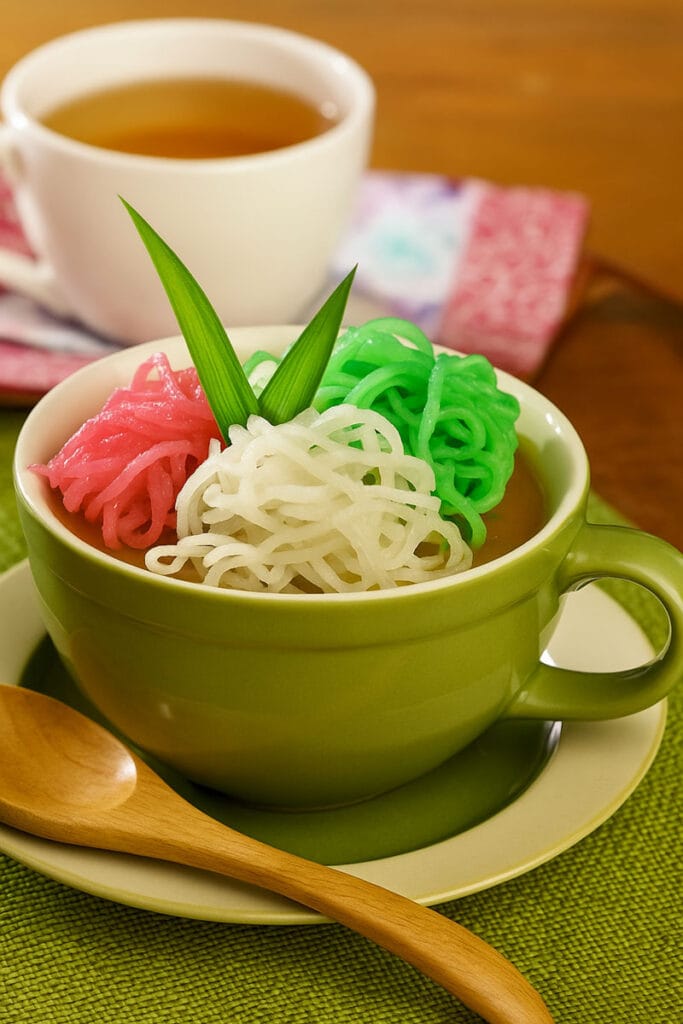
Putu Mayang is a traditional Betawi dessert made from rice flour (tepung beras) and tapioca starch (tepung kanji). The dough is shaped into strands resembling noodles, steamed, and then served with a sweet, creamy syrup made from coconut milk (santan) and palm sugar (gula merah). Traditionally, the dough is dyed in three colors—red, green, and white—making it visually festive as well as delicious.
Its texture is soft and slightly chewy, almost like fresh rice noodles, while the coconut syrup brings a deep caramel sweetness balanced with a hint of salt and pandan aroma. The result is a dessert that is both comforting and intriguing, striking a balance between simplicity and elegance.
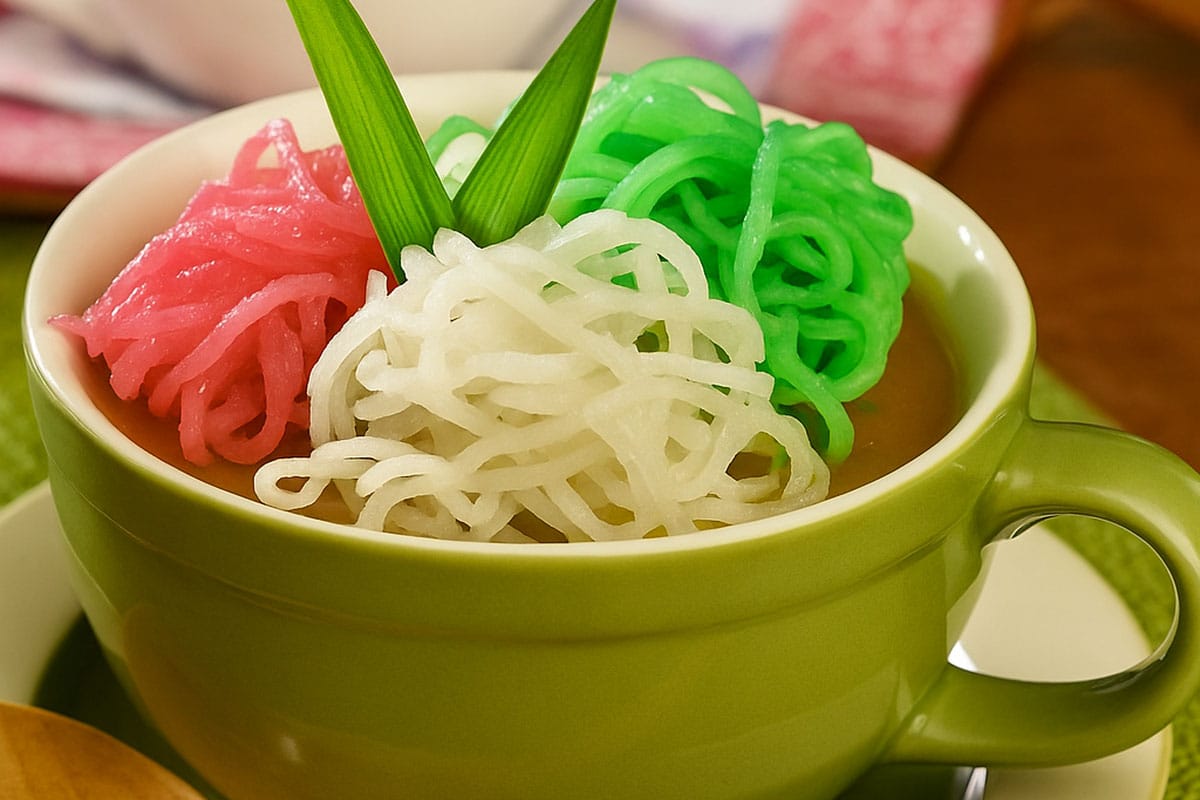
Indonesian Putu Mayang with Coconut Syrup
Ingredients
Instruction
- Mix rice flour and salt in a bowl. Gradually pour in the boiling water while stirring until the mixture forms a thick paste.
- When warm to the touch, add tapioca starch and oil. Knead until smooth and pliable.
- Divide the dough into 3 portions. Tint one red, one green, and leave the last portion white.
- Grease a sheet of plastic wrap or banana leaves with a little oil.
- Place dough portions into a potato ricer, spaetzle maker, or sturdy piping bag. Press out noodle-like strands onto the greased surface.
- Steam the shaped dough for 10–15 minutes until cooked through.
- Combine coconut milk, palm sugar, white sugar, salt, pandan leaves, and vanilla (if using) in a saucepan.
- Cook over medium heat, stirring constantly to prevent curdling, until the sugar dissolves and the syrup comes to a gentle boil.
- Strain the syrup to remove pandan leaf fibers or impurities. Let it cool slightly.
- Arrange the steamed putu mayang strands on a serving plate.
- Pour coconut syrup over them and serve warm or at room temperature.
Notes
- Rice flour (tepung beras): Not the same as glutinous rice flour. Look for “Rice Flour” (white, fine) at Asian grocery stores or online (brands like Erawan/Thai).
- Tapioca starch (tepung kanji): Labeled as “tapioca flour” in the U.S. (Bob’s Red Mill is a common brand). Adds chewiness.
- Palm sugar (gula merah): Sold as blocks or discs. Coconut sugar (granulated) can be used as a substitute. Brown sugar works in a pinch but gives a slightly different taste.
- Pandan leaves (daun pandan): Adds a floral, vanilla-like aroma. Frozen pandan is often sold at Southeast Asian markets. If unavailable, use vanilla extract for a similar note.
- Shaping tool: Traditional molds are rare outside Indonesia. A potato ricer, spaetzle maker, or heavy-duty piping bag makes an excellent substitute.
The History of Putu Mayang
The origins of Putu Mayang are not straightforward. Like many traditional foods, it carries multiple layers of stories and cultural influences.
1. The Betawi Folklore Connection
One of the most popular stories ties Putu Mayang to a Betawi folktale about Jampang Mayangsari, a beautiful woman desired by many. The term mayang is described as something wavy, curly, and beautiful—much like the dessert’s noodle-like strands. According to certain interpretations, the curly form of Putu Mayang reflects the grace and beauty of Mayangsari..

2. Indian Influence: Putu Mayam
Another version suggests a connection to Putu Mayam, a dessert from South India and Sri Lanka that also spread to Malaysia and Singapore. Both dishes share a similar form: rice flour pressed into noodle-like strands and steamed. However, the Indonesian Putu Mayang tends to be thicker and more compact, while the South Indian version is finer, like thin vermicelli. Given Batavia’s (Jakarta’s old name) role as a major trading hub, it is very possible that cultural exchanges brought this culinary cousin across the seas.
3. Chinese Influence: Noodles and Rituals
A third version attributes the inspiration to Chinese food culture, particularly the tradition of long noodles symbolizing longevity. The noodle-like shape of Putu Mayang may have been adapted from this concept but given a uniquely Betawi flavor profile with coconut and palm sugar.
The Name “Putu” and Its Meanings
The word putu itself is layered with interpretations:
- Some say it is derived from an old Javanese word meaning “round” or “circular”, as seen in other variations like putu bambu (a steamed rice cake in bamboo tubes).
- Another playful folk explanation expands putu as an acronym: Pencari Uang Tenaga Uap (“money earned by steam power”), highlighting the traditional steaming method.
- Regardless of the theory, the name putu across Indonesia usually refers to steamed rice flour cakes, and mayang refers to its signature curly shape.
Symbolism and Philosophy
Like many Indonesian dishes, Putu Mayang is not only food—it is also a symbol. The three colors (red, green, and white) represent diversity and togetherness, reflecting Indonesia’s identity as a nation of many islands, ethnicities, and languages bound into one. Its curly, intertwined strands resemble unity in diversity—a philosophy deeply cherished in Indonesian culture.
Cultural Role and Serving Traditions in Indonesia
In Betawi households, Putu Mayang is often served during special occasions, religious celebrations, or simply as a sweet afternoon snack. In the Riau Islands and Malay communities, it also appears during Ramadan, weddings, or communal gatherings.
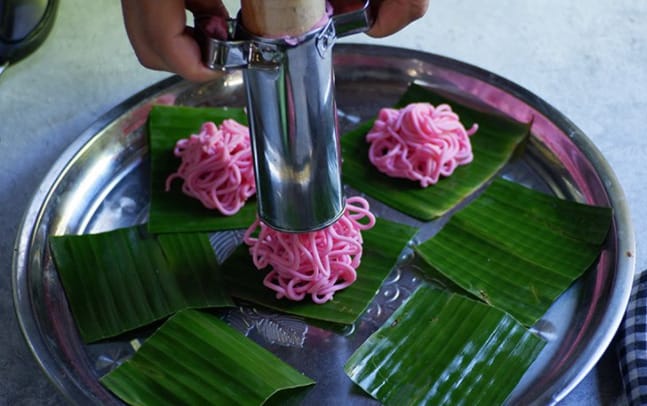
Traditionally, Putu Mayang is steamed on banana leaves, which not only prevent sticking but also impart a subtle fragrance. Once cooled, the bundles are covered with banana leaves to keep them moist. The coconut syrup is usually served separately or poured generously over the top before eating.
Tools and Equipment: From Traditional to Modern
Traditionally in Indonesia, Putu Mayang is made using a special mold (cetakan putu mayang)—a metal press with holes at the bottom, pressed down with a wooden handle to shape the dough into curly strands.

For Western kitchens, this tool may be hard to find, but substitutes are widely available:
- Spaetzle maker (popular in Germany and Austria)
- Potato ricer (common in American kitchens)
- Manual noodle press
- Piping bag with a cut tip (a simple DIY option)
If using parchment instead of banana leaves, lightly grease it with oil to prevent sticking.

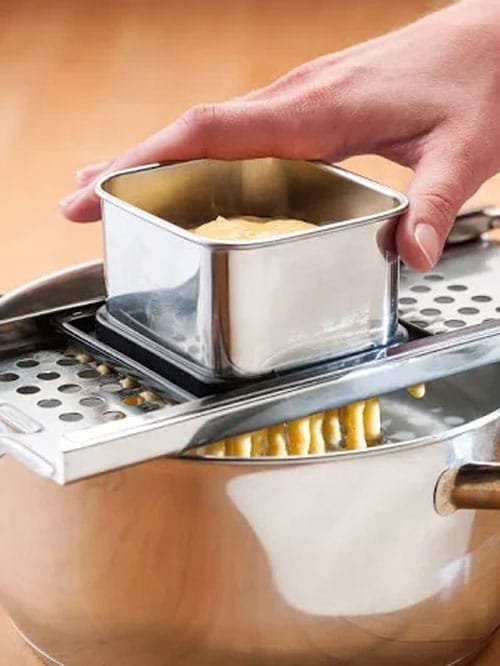
Manual Noodles Maker
Spaetzle Maker
Health and Nutritional Perspective
While Putu Mayang is a dessert and not a health food, it does offer some natural benefits:
- Rice flour and tapioca starch provide gluten-free carbohydrates, making it suitable for those with gluten intolerance.
- Coconut milk contains healthy fats in moderation.
- Palm sugar has a lower glycemic index than refined sugar, though it should still be consumed responsibly.
On the flip side, Putu Mayang is high in calories due to coconut milk and sugar, so it is best enjoyed as an occasional treat rather than a daily indulgence.
Can Western Palates Enjoy Putu Mayang?
The answer is yes. Its flavor profile—creamy, sweet, slightly salty, and aromatic—is very approachable for Western tastes. The texture, similar to soft rice noodles with syrup, may feel unusual at first but is no stranger than trying tapioca pearls in bubble tea or rice pudding.

For Western presentation, you can:
- Serve it in small dessert cups or glasses with syrup layered on top.
- Garnish with fresh fruit like mango or strawberries for a tropical twist.
- Use maple syrup as an alternative if palm sugar is unavailable.
Suggested Serving in the West
Imagine a brunch table with pancakes, waffles, and alongside them a small dish of colorful Putu Mayang topped with coconut caramel syrup. It brings a vibrant Indonesian touch without being too exotic. For dinner parties, plating Putu Mayang in individual ramekins with coconut syrup drizzled artfully can make it look modern and elegant.
Conclusion
Putu Mayang is more than just a dessert—it is a story of Jakarta’s history, a reflection of Indonesia’s cultural diversity, and a reminder of how food travels, adapts, and unites people. Whether influenced by Indian Putu Mayam, Chinese noodle traditions, or born purely from Betawi creativity, it remains an authentic culinary gem.
For Western readers, trying Putu Mayang at home is a way of connecting with Indonesia’s rich food culture. With simple ingredients, a bit of creativity in tools, and an open mind to new textures, this colorful sweet can easily become a conversation piece at your table.
So next time you think of desserts beyond cakes and cookies, consider the curly, colorful bundles of Putu Mayang—an Indonesian classic ready to delight the world.