(Pronounced: “Suh-rah-bee Soh-loh”)
If you’ve ever wandered through the bustling streets of Solo, a city in Central Java, Indonesia, there’s a good chance the sweet aroma of coconut milk and pandan has drifted your way. That scent is the calling card of Serabi Solo, a traditional Indonesian pancake made from rice flour (tepung beras), coconut milk (santan kelapa), and sugar (gula pasir), cooked in small clay pans over hot coals.
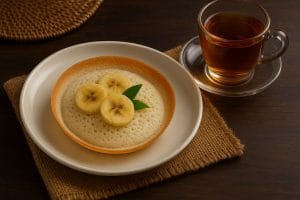
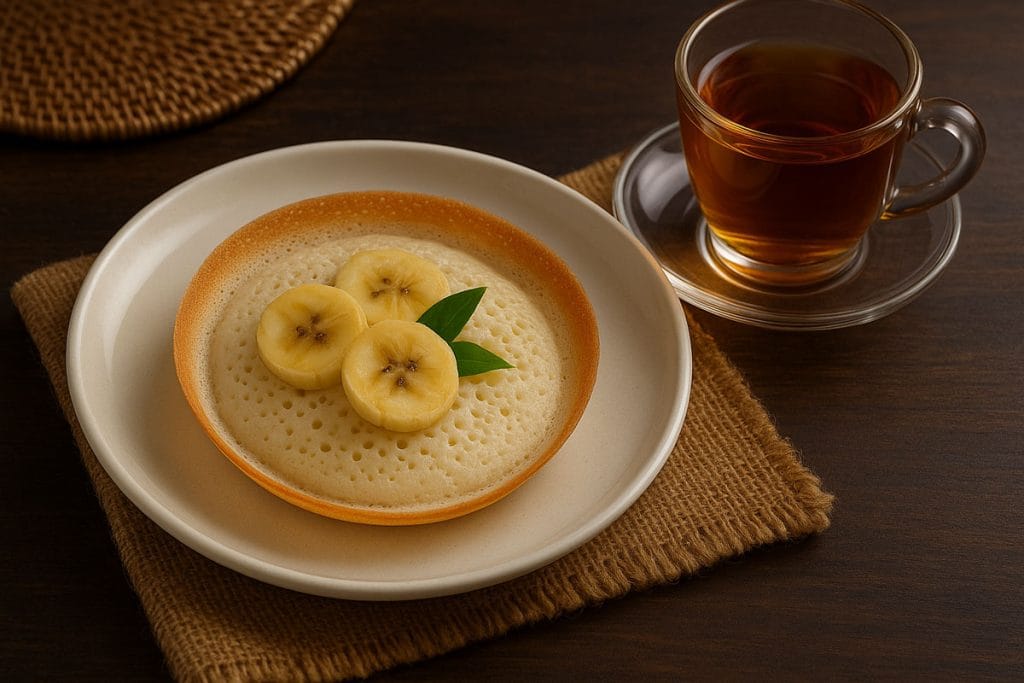
Unlike the fluffy breakfast pancakes of America, Serabi Solo has a delicate crispy rim and a soft, custard-like center, topped with rich, thick coconut cream. It’s a snack that’s been loved for centuries — and it comes with a history as rich as its flavor.
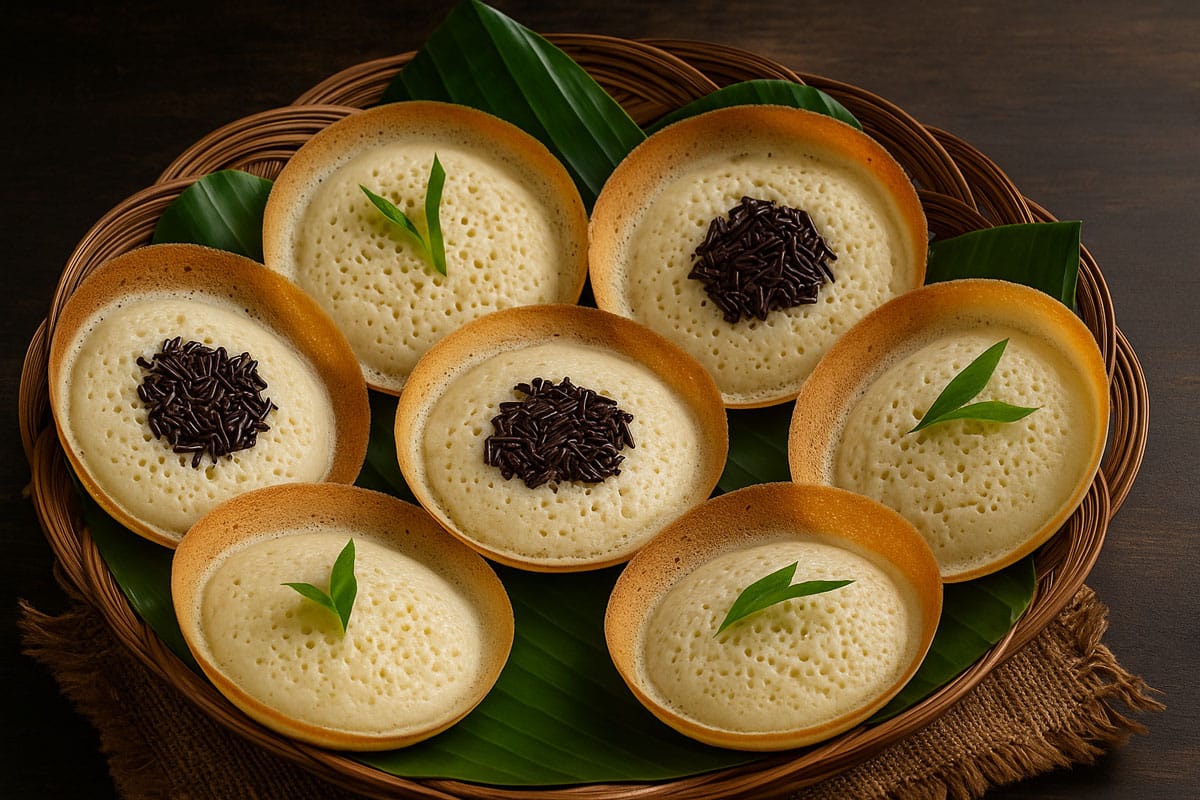
Serabi Solo – Indonesian Coconut Rice Pancakes
Ingredients
Instruction
- In a small saucepan, combine thick coconut milk, pandan leaf, and a pinch of salt.
- Heat over low flame, stirring gently until warm and fragrant (do not boil to avoid curdling).
- Set aside.
- In a large mixing bowl, combine rice flour, all-purpose flour, vanilla powder, instant yeast, baking soda, and salt. Mix well.
- In another bowl, dissolve sugar in warm water.
- Gradually pour the sugar water into the flour mixture, stirring until smooth.
- Add the egg, mix until combined.
- Pour in thin coconut milk gradually, stirring until the batter is smooth and slightly runny (similar to thin pancake batter).
- Cover the batter with a clean kitchen towel.
- Let rest at room temperature for 30–45 minutes, until small bubbles form on the surface.
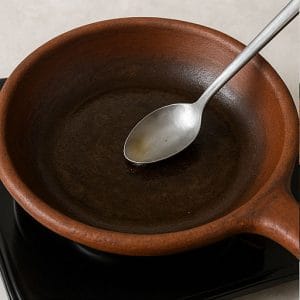
- Heat a small non-stick skillet or traditional clay pan over medium-low heat.
- Lightly grease the surface with coconut oil or butter.

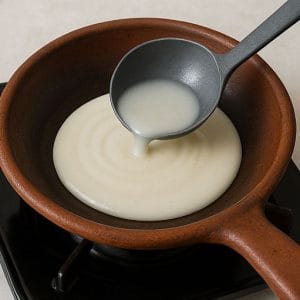
- Pour a small ladle of batter into the center and tilt the pan to create a thin edge.
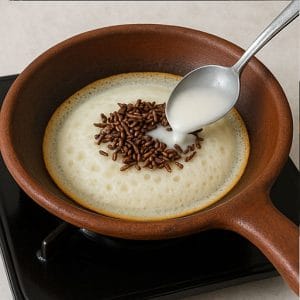
- Add your chosen toppings in the center.
- Spoon a little of the prepared coconut cream topping over the middle.
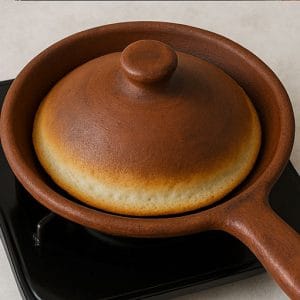
- Cover with a lid and cook for about 5 minutes, or until the edges are golden and the center is set.
- Remove with a spatula and serve warm for the best taste and texture.

Notes
- Rice Flour (Tepung Beras): Use pure rice flour, not glutinous rice flour. Brands like Erawan or Thai Elephant are common in Asian groceries and online.
- Coconut Milk & Cream: For authentic flavor, use fresh grated coconut if available. Otherwise, canned coconut milk/cream works well; just shake or stir before using.
- Pandan Leaf: Optional, but it adds a unique aroma. Frozen pandan leaves are available in most Asian markets; if unavailable, omit or use ½ tsp pandan extract.
- Cooking Pan: A small cast-iron skillet can substitute for the clay pan. The key is slow, even cooking to achieve crispy edges.
- Sweetness Level: The original Indonesian recipe is fairly sweet. Reduce sugar slightly (to about 180–200 g) if you prefer a less sweet version.
- Fermentation Tip: The yeast adds a slight tang and airy texture. If your kitchen is cold, let the batter rest in a warm spot.
A Personal Memory: My First Encounter with a Serabi Pan
When I was a child growing up in Cirebon, a border city between West and Central Java, I often passed street vendors selling all kinds of snacks. One day, right outside my school, I spotted a small clay pan for sale — the kind with a single round mold. It looked so cute and unique that I decided to buy it.
At the time, I had no idea this was a traditional serabi pan. My older brother, always ready with “expert” advice, told me it was for making coconut pancakes and insisted we try making them ourselves. Since we had leftover coconut milk in the fridge from my mother’s cooking, we mixed it with some flour and sugar and poured it into the pan.
Well… let’s just say it was a total disaster. The “serabi” didn’t cook properly and tasted nothing like what we imagined. Only later did I taste the real deal — soft, aromatic, and infused with the rich flavor of coconut milk. That’s when I realized the difference between guessing a recipe and following a tradition perfected over generations.
And no, it wasn’t anything like the Serabi Bandung (another popular variety from West Java), which is usually topped with sweet sauces like durian or chocolate. Serabi Solo is a whole different experience.
A Sweet Taste from the Past
Serabi Solo’s story is woven deep into Javanese culture. Historians and food experts trace it back to the Mataram Kingdom in the 16th century. It’s even mentioned multiple times in the Serat Centhini, an important 19th-century Javanese literary work commissioned by Pakubuwana V of Surakarta.
In those days, serabi wasn’t just a snack — it was a symbolic offering. It often appeared in traditional ceremonies: weddings (ijab), pre-Ramadan rituals (ruwahan), and various community celebrations. The round shape was seen as a symbol of harmony and unity, while the sweetness was a wish for a good life.
From Apem to Serabi: The Evolution
The origin of Serabi Solo is still debated. The late Bondan Winarno, one of Indonesia’s most famous culinary experts, believed it was a modification of the Indian “appam” (or apem in Indonesia) — a fermented rice pancake.
While apem is denser and often served with syrup or as part of a ceremonial tray, serabi became lighter and more tender by incorporating more coconut milk, giving it the creamy richness we know today. The word apem itself is thought to come from the Arabic afuum, meaning “forgiveness” — reflecting its role in rituals seeking blessings and protection.
Serabi Notosuman – The Legendary Name
Ask any local in Solo where to get the best serabi, and they’ll likely say Notosuman. This isn’t a brand name at first — it’s the name of the street (now Jalan Muhammad Yamin) where the most famous serabi stalls began.

The story goes that in 1923, a husband-and-wife team, Hoo Gek Hok and Tan Giok Lan, sold apem in Solo. One day, a customer requested a thinner, flatter version. They tried it, and the result was such a hit that it became its own product: serabi. Over time, their serabi became so well-loved that “Serabi Notosuman” became synonymous with quality.
Their secret? They milled their own rice from premium beras cendani (a high-quality variety from Cianjur), used fresh coconut milk, and avoided preservatives. That’s why the authentic product only lasts about 24 hours — it’s meant to be eaten fresh, ideally still warm.
How It’s Different from Serabi Bandung
While both are Indonesian rice pancakes, Serabi Solo and Serabi Bandung differ in several key ways:
| Feature | Serabi Solo | Serabi Bandung |
|---|---|---|
| Base Flour | Rice flour (tepung beras) | Often a mix of rice and wheat flour |
| Texture | Thin crispy edge, thick custard-like center | Thicker overall, breadier |
| Serving Style | Topped with thick coconut cream | Often served with sweet syrup (palm sugar, chocolate, durian sauce) |
| Cooking Pan | Small clay pan over charcoal | Metal molds over gas or charcoal |
| Flavor Profile | Sweet-gourmet with rich coconut | Sweet-savory with more varied toppings |
If you’re used to pancakes with syrup, Serabi Bandung might feel more familiar, while Serabi Solo offers a unique, almost dessert-like richness without needing extra sauce.
A Dish That Travels Well to the Western Palate
Western food lovers, especially in the U.S. and Europe, tend to enjoy creamy textures and rich flavors — think custards, crème brûlée, or thick crepes with cream. That makes Serabi Solo surprisingly approachable.
However, a few adaptations might help if you’re making it abroad:
- Rice Flour: Use pure rice flour, not glutinous rice flour. Brands like Erawan are widely available in Asian stores.
- Coconut Milk: If fresh coconut milk isn’t accessible, canned coconut milk works fine. Look for brands without added stabilizers for a more natural flavor.
- Pandan Leaf: This aromatic leaf is available frozen in many Asian supermarkets. If unavailable, use pandan extract or a mix of vanilla and a few drops of almond extract for complexity.
- Cooking Pan: A small cast-iron skillet or even a mini pancake pan can substitute for the clay pan.
Similar Dishes Around the World
If you’ve traveled, you might see echoes of Serabi Solo in other cuisines:
- Appam (India/Sri Lanka) – Thin, lacy-edged rice pancakes, sometimes with coconut milk.
- Bibingka (Philippines) – A rice cake baked with coconut milk, though thicker and spongier.
- Dutch Poffertjes – Tiny, fluffy pancakes, similar in size but made from wheat flour and butter.
The Modern Serabi Solo Experience
Today, you can find Serabi Solo all over the city, from street stalls to upscale cafes. Some vendors still wrap them in banana leaves for a subtle, earthy fragrance. Popular toppings now include chocolate sprinkles (meses), sliced banana, and jackfruit.
But no matter the topping, the essence remains: a bite that is crispy, creamy, sweet, and fragrant all at once. It’s a perfect companion to a cup of tea or coffee — whether you’re in Solo, Amsterdam, or New York.

Closing Words
For me, Serabi Solo is more than just a snack — it’s a reminder of childhood curiosity, culinary discovery, and the deep traditions behind seemingly simple foods. From its royal-era roots to its modern street food fame, it’s a dish that carries history in every bite.
If you ever visit Solo, make sure to seek out Serabi Notosuman. And if you’re at home abroad, try making it yourself. Just remember — unlike my childhood “experiment,” a real serabi needs the right ingredients, a bit of patience, and a lot of coconut milk.