I chose to write about beef perkedel because this variation is the one closest to the dish’s original roots. Before it was adapted into a potato-based fritter, perkedel was originally a European meat dish known as frikadel or frikadeller. By highlighting beef perkedel, we are not only talking about an Indonesian comfort food, but also retracing a journey through history, culture, and culinary acculturation that turned it into a symbol of Indonesia’s food identity.
From Frikadel to Perkedel
Perkedel’s story begins in Europe. The frikadel was a popular dish across the Netherlands, Germany, Denmark, and Scandinavia. Typically, it was made from minced meat shaped into patties or balls, then fried. When the Dutch colonized Indonesia for nearly 350 years, they brought along this food tradition.
But in the Indonesian archipelago, two factors changed the frikadel forever:
- Meat was expensive and rare for local people.
- Potatoes were cheaper, abundant, and versatile.
Local cooks began substituting or mixing potatoes into the recipe, creating something new yet familiar. Over time, the word frikadel—difficult to pronounce for many Indonesians—shifted into perkedel. In Central and East Java, it even evolved into bergedel. What started as a European meat dish was reborn as an Indonesian staple, often dominated by potatoes rather than beef.
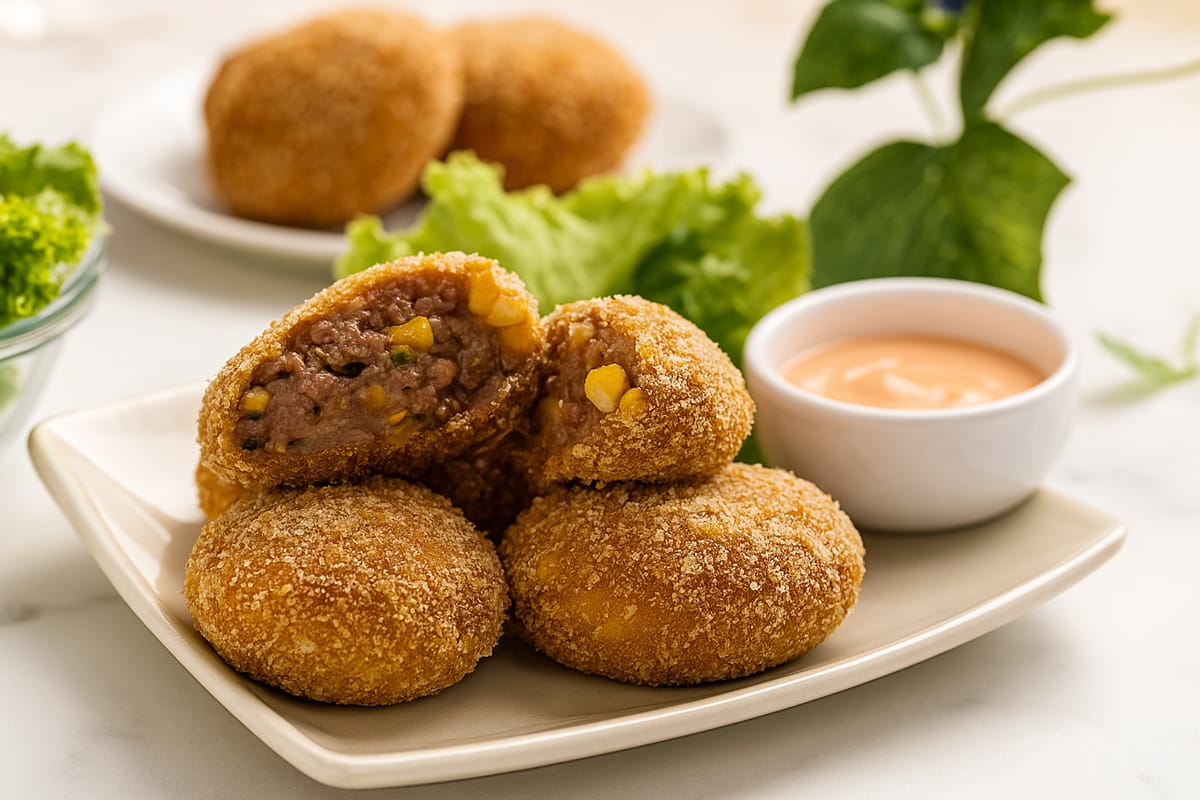
Indonesian Beef Fritters (Perkedel Daging)
Ingredients
Instruction
- Make the mixture: In a large bowl, combine ground beef, mashed potatoes, corn, cashews, fried shallots, garlic, parsley, pepper, nutmeg, salt, and 1 egg. Mix well until evenly combined.
- Shape the fritters: Take a spoonful of the mixture and shape into round, flat patties (about 2–3 inches wide).
- Coat with egg: Dip each patty into the beaten egg to coat lightly.
- Fry: Heat enough oil in a pan for shallow frying. Fry patties over medium heat until golden brown on both sides, about 3–4 minutes per side. Drain on paper towels.
- Serve: Enjoy warm with rice, soup, or simply with chili sauce.
Notes
- Cashew nuts (kacang mente): Widely available but can be expensive in the US/EU. You may substitute with peanuts or almonds for similar crunch.
- Fried shallots (bawang merah goreng): If unavailable, use store-bought crispy fried onions as a substitute.
- Parsley vs. seledri: Indonesian recipes traditionally use seledri (celery leaves). Since celery leaves are harder to find in the US/EU, parsley makes a good substitute.
- Oil: In Indonesia, palm oil is common. For a Western kitchen, vegetable oil, canola, or sunflower oil works well.
- Serving idea: These fritters pair wonderfully with plain rice, chicken soup, or even as a burger filling for a fun fusion twist.
- Unlike Western patties, Indonesian perkedel are usually small side dishes served with rice or soup. For a main dish portion, double the recipe and shape into larger patties (burger size).
Perkedel’s Role in Dutch and Indonesian Tables
In Europe, frikadel was a main dish or a snack. But in colonial Indonesia, its role transformed. Through the concept of the rijsttafel (“rice table”), perkedel became one of many side dishes accompanying rice, alongside semur (stew), sate, bistik, and gulai.
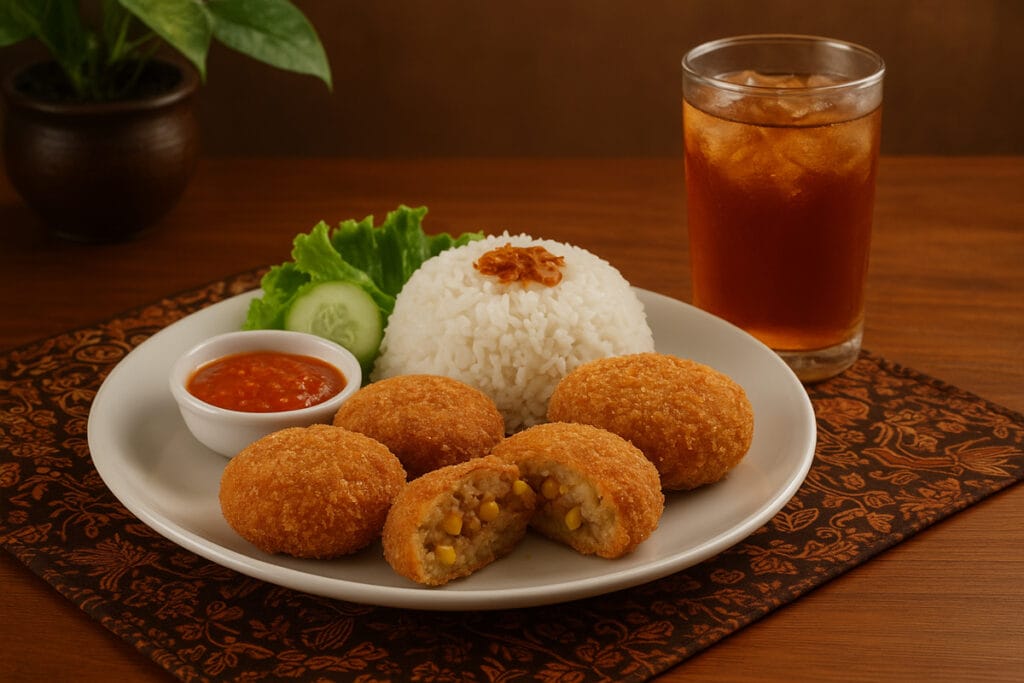
This transformation was possible thanks to the Javanese household cooks—often women employed in Dutch homes. These cooks not only replicated European recipes but adapted them with local ingredients and spices, adjusting flavors to suit both Dutch and Indonesian palates. Out of this fusion, perkedel emerged as one of the most enduring legacies of Indo-Dutch culinary exchange.

Beef Perkedel: Returning to the Original Roots
Today, most Indonesians are familiar with potato perkedel, which has become the nation’s standard. Yet, beef perkedel is the closest to its European ancestor. It blends minced beef with mashed potatoes, garlic, fried shallots, nutmeg, pepper, and herbs—then dipped in egg and fried until golden.
This variation is not as commonly sold in street stalls or catering because beef is pricier than potatoes. However, that exclusivity gives beef perkedel its charm. It feels like a bridge between the original European frikadel and its Indonesian reinterpretation, reminding us of how culinary traditions evolve with time and circumstance.
Indonesian Variations Beyond Beef
One of the reasons perkedel remains beloved in Indonesia is its adaptability. Over generations, households and regions created their own twists:
- Potato perkedel – the most widespread and now considered quintessentially Indonesian.
- Corn perkedel (paragede jaguang) – a specialty of Padang Panjang in West Sumatra.
- Tofu perkedel (perkedel tahu) – popular across Java.
- Cassava or sweet potato perkedel – a creative alternative to potatoes, using local crops.
- Fish perkedel – combining minced fish with local spices.
Each variety represents resourcefulness and regional identity, showing how one culinary concept can take many forms in different corners of the archipelago.
Cultural Meaning of Perkedel
In Minangkabau culture, perkedel—called paragede—is often mandatory at traditional weddings or baralek celebrations. Its presence signals hospitality and festivity.
In West Java, the famous Perkedel Bondon has become a late-night food icon in Bandung. Sold only from 11 p.m. onward and cooked traditionally over charcoal, it draws long lines of students and night workers. Its name, “Bondon,” is said to have come from its early customers—night workers and entertainers—who made it their go-to snack after work.
These examples show how perkedel is not just food but part of social and cultural narratives in Indonesia.
From Acculturation to Culinary Identity
The story of perkedel demonstrates how culinary acculturation works. A European meat dish arrived in Indonesia, was modified with potatoes due to cost and availability, and gradually became an Indonesian classic.
Interestingly, while the frikadel was originally meat-based, Indonesians embraced the potato version so thoroughly that most people today associate perkedel with potatoes, not beef. This paradox reflects how Indonesia absorbs outside influences but reshapes them into something uniquely its own.
Will Beef Perkedel Suit Western Palates?
For Western audiences, beef perkedel may feel more familiar than potato perkedel. Its patty-like form resembles burgers or meatballs, though its flavor profile is distinctly Indonesian thanks to fried shallots, nutmeg, and local cooking techniques.
With slight adaptations—such as pairing it with yogurt-mayo dipping sauce or serving it on a bun—beef perkedel can easily cross over into Western dining. Yet at its core, it remains authentically Indonesian, making it the perfect gateway dish for introducing Indonesia’s rich food culture abroad.
Nutrition and Significance
Beef perkedel is nutritionally balanced, offering protein from beef and eggs, carbohydrates from potatoes, and healthy fats when nuts or corn are added. Beyond nutrition, it represents resilience and creativity: Indonesians found ways to make an expensive European meat dish accessible and relevant by incorporating local ingredients.
Final Words
Beef perkedel is more than a side dish. It is a living story of colonial encounters, cultural adaptation, and Indonesia’s culinary identity. From the Dutch frikadel to the Minangkabau paragede, from rijsttafel banquets to street stalls in Bandung, perkedel has traveled a long journey.
By celebrating beef perkedel, we not only reconnect with the dish’s original European roots but also honor Indonesia’s creativity in shaping it into something uniquely Nusantara. And with its patty-like familiarity, this variation might just be the easiest way for Western palates to fall in love with Indonesian cuisine.