To me, Pecel Lele has always been a dish of beautiful simplicity — nothing fancy, nothing forced. Just fried catfish, spicy chili sambal, a scoop of warm rice (often nasi uduk, or coconut rice), and fresh vegetables on the side. Yet within this humble combination lies a depth of flavor that defines Indonesian comfort food. The secret isn’t the fish — it’s the sambal, the fiery chili paste that brings every component to life. Fresh, tangy from tomatoes, hot from chilies, savory with shrimp paste, and rounded by the sweetness of palm sugar — when the sambal sings, the whole plate comes alive. If the sambal fails, so does the dish. That’s why for most Indonesians, the soul of Pecel Lele lies not in the fish, but in the sambal itself.
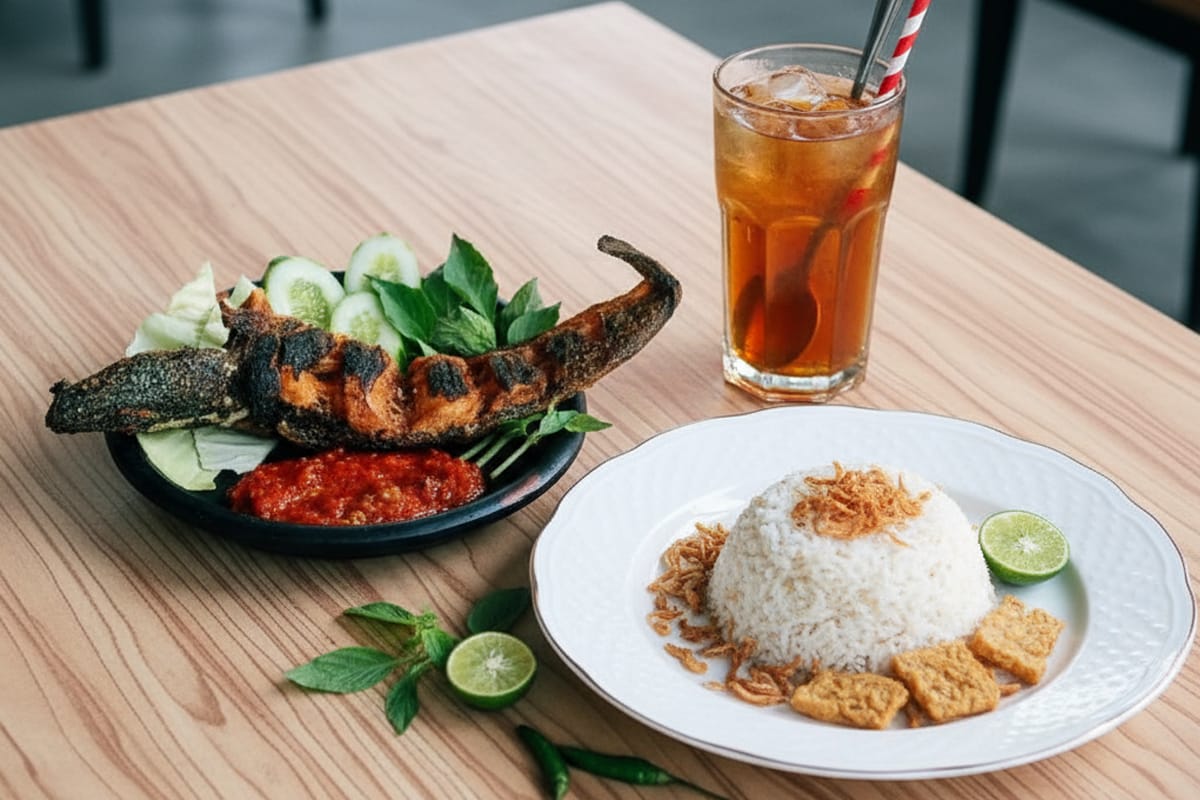
Pecel Lele – Indonesian Crispy Catfish with Chili Peanut Sambal
Ingredients
Instruction
- Prepare the CatfishRinse catfish fillets under cold water, then pat dry with paper towels.Rub with lime juice and a little salt, let sit for 5–10 minutes to remove any fishy odor.
- Season the CatfishMix ground coriander, turmeric, minced garlic, and salt into a paste.Coat the catfish fillets evenly and let marinate for 20–30 minutes.
- Cook the Catfish– Deep-fry method (authentic): Heat oil (about 350°F / 175°C). Fry the fish until golden and crispy, about 3–4 minutes per side.– Pan-sear / Air-fryer method (Western-friendly): Lightly coat the fish with oil and cook in a pan or air fryer until crispy outside and flaky inside.
- Make the SambalHeat 1 tablespoon of oil in a small pan.Sauté chili, garlic, shallot, and tomato until soft and slightly charred.Transfer to a mortar & pestle or food processor. Add roasted peanuts, shrimp paste, brown sugar, and salt.Grind or pulse until smooth but slightly coarse. Adjust salt or sugar to taste.
- ServePlace the crispy catfish on a plate, spoon the sambal on top or serve on the side.Add fresh cucumber, lettuce, and herbs for a cooling contrast.
Notes
- Fish Substitute: If whole catfish isn’t available, farmed catfish fillets, tilapia, or trout work well. Make sure to keep the skin on for extra crispiness.
- Shrimp Paste Alternatives: Indonesian terasi has a strong aroma; for a milder umami flavor, use Thai shrimp paste (belacan) or anchovy paste.
- Chili Heat: Traditional pecel lele can be quite spicy. If you prefer a gentler version, reduce bird’s eye chilies or replace part of them with roasted red bell peppers for sweetness and color.
- Palm Sugar Swap: Brown sugar or coconut sugar can be used as an alternative without losing the caramel depth.
- Peanut Tip: Use unsalted roasted peanuts or even creamy peanut butter for a smoother sambal texture.
- Cooking Method: Deep-frying gives the most authentic texture, but pan-searing or air-frying with a thin oil layer works beautifully and keeps it lighter.
- Serving Style: In Indonesia, pecel lele is served directly over the sambal on a stone mortar (cobek). For a Western-style presentation, serve sambal on the side in a small bowl — elegant yet authentic.
A Simple Dish with Deep Roots
Despite its name, Pecel Lele has nothing to do with pecel sayur — a Javanese vegetable salad with peanut sauce. Instead, the word pecel here is a linguistic cousin of penyet or pecek, meaning “to press” or “to mash.” Traditionally, the fried catfish (lele) is placed directly on a stone mortar (cobek) where the sambal has just been freshly ground. The fish is gently pressed into the sambal, coating its crispy skin with that bright red, fragrant paste — a raw, tactile, and deeply satisfying experience.
Historically, the dish originated in Lamongan, East Java, sometime in the late 1970s. It emerged as part of Indonesia’s great urban migration story. Migrants from Lamongan and nearby districts like Sekaran and Maduran moved to Jakarta in search of better lives. There, they encountered pecak lele, a Betawi-style fried catfish with spicy broth, and began to adapt it to their own taste. When they returned home, they recreated the dish but made the sambal thicker, bolder, and dry — thus pecel lele was born.
By the 1980s, pecel lele stalls began spreading across Jakarta. Their bright green tents and kerosene lamps became familiar sights along busy roadsides. By the 1990s, it had evolved into what historian JJ Rizal calls “Indonesia’s urban fast food.” Affordable, flavorful, and cooked to order, pecel lele joined the ranks of nasi goreng, bakso, and soto — comfort foods that defined Indonesian street dining. Its success symbolized both the resilience and creativity of the working class. What began as a migrant’s meal became a national icon.
How It’s Traditionally Served in Indonesia
At night across Java or Jakarta, you’ll find small roadside stalls glowing under neon lights, with menus painted in bright red and yellow. The scent of frying oil fills the air. There’s always the sizzling sound of fish meeting hot oil, and the rhythmic pounding of chilies in a mortar. A plate of Pecel Lele usually arrives with:
- One whole fried catfish, crispy on the outside, tender inside
- A dollop of sambal (tomato-based chili paste) on the side or underneath the fish
- A scoop of steaming rice — often nasi uduk, rice cooked with coconut milk, lemongrass, and pandan
- A handful of lalapan (fresh vegetables) such as cucumber, cabbage, and lemon basil (kemangi)
It’s a meal that perfectly balances texture and temperature — hot, crispy fish meets cool, refreshing greens. Eaten with hands, it’s informal, communal, and deeply satisfying.
Addressing Western Misconceptions About Catfish
Some Western readers may hesitate when they hear “catfish,” perhaps recalling myths that these fish live in dirty waters and feed on waste. That image couldn’t be further from reality. In modern Indonesia, catfish (lele) is professionally farmed under strict aquaculture standards. Farmers now follow “Good Fish Farming Practices” (CBIB), feeding fish with clean, protein-rich pellets rather than waste material. The result is a mild, clean-tasting fish — nutritious, safe, and sustainable.
In fact, catfish is one of the healthiest sources of protein available today. According to the National Academies Press (2011), 100 grams of catfish provides about 30% of the daily protein requirement, with a complete amino acid profile comparable to eggs. It’s also rich in vitamin B12, omega-3, and omega-6 fatty acids, essential for heart and brain health — all while being low in calories.
The Challenge of Bringing Pecel Lele to Western Kitchens
While the essence of Pecel Lele is universal — crispy fish, spicy sauce, comforting rice — its preparation poses some challenges in Western kitchens.
Here’s how to adapt it without losing its soul:
- Deep-Frying: Traditionally, the fish is fried in plenty of hot oil until golden brown. In the West, deep-frying at home isn’t common due to health or practicality. A great alternative is to use an air fryer or shallow pan-sear with minimal oil.
- Whole Fish vs. Fillet: Indonesian lele is served whole — head, tail, and all. For American or European diners, fillets work better for presentation and comfort.
- Shrimp Paste: The iconic terasi gives sambal its deep umami note but has a strong aroma. Replace it with anchovy paste or Thai shrimp paste (belacan) for a milder but authentic flavor.
- Spice Level: The original sambal can be intense. Swap half the chilies for roasted red bell peppers for a softer, slightly sweet heat.
- Rice: Pair with plain jasmine rice or make nasi uduk — coconut rice cooked with lemongrass and bay leaves — for the full experience.
Tips for Perfect Pecel Lele at Home
To truly master this dish, remember: the sambal makes or breaks it.
Here are a few pointers:
- Fry Before You Grind: Always fry your chilies, tomatoes, garlic, and shallots before pounding or blending. This enhances flavor and removes bitterness.
- Balance Is Key: Sambal should taste spicy first, then reveal layers of salt, sweetness, and acidity.
- Marinate the Fish: Rub the fish with lime juice, salt, turmeric, coriander, and garlic for at least 15 minutes to eliminate odor and deepen flavor.
- Don’t Rush the Fry: Cook the fish at medium heat (about 350°F / 175°C). Too hot, and it burns; too cool, and it turns oily.
- Serve Fresh: Combine with crisp cucumber, cabbage, and basil to balance the richness.
Flavor and Texture: What to Expect
When you take the first bite, Pecel Lele surprises you with contrast. The skin crackles audibly, giving way to tender, moist fish within. Then the sambal hits — spicy, smoky, slightly tangy from tomatoes, with a trace of sweetness from palm sugar. The freshness of the vegetables cools the heat, and a spoonful of coconut rice ties everything together in creamy harmony. It’s rustic and bold, but also balanced — a true expression of Indonesian street cuisine elevated by simplicity.
Why Pecel Lele Matters
Beyond taste, Pecel Lele represents something deeper — the spirit of adaptation and perseverance in Indonesian culture. Born from migration and shaped by urban life, it’s a dish that traveled from small villages in East Java to the bustling streets of Jakarta, and now to kitchens around the world. It’s proof that great food doesn’t need luxury — only honesty, balance, and heart.
As food historian JJ Rizal once said, Pecel Lele stands shoulder-to-shoulder with nasi goreng and soto as “Indonesia’s true fast food — urban, affordable, and full of character.”
Nutritional Highlights
- High-quality protein that’s easy to digest
- Rich in vitamin B12, selenium, and omega-3 fatty acids
- Low in calories — ideal for balanced diets
- Catfish bones are easily separated, making it kid-friendly
- Affordable and sustainable to produce
Final Thoughts — Bring Indonesia to Your Kitchen
Cooking Pecel Lele at home isn’t just about frying fish — it’s about experiencing a piece of Indonesia’s everyday life. It’s the sound of sizzling oil at a night stall, the tang of lime and chili, the warmth of freshly cooked rice.
So, give it a try. Experiment with the sambal, pair it with chicken or tofu, and discover your own version.
If you do, share your experience — because Pecel Lele isn’t just a dish; it’s a conversation across cultures, one crispy bite at a time.