Ingredients
Instruction
- Prepare the CatfishRinse catfish fillets under cold water, then pat dry with paper towels.Rub with lime juice and a little salt, let sit for 5–10 minutes to remove any fishy odor.
- Season the CatfishMix ground coriander, turmeric, minced garlic, and salt into a paste.Coat the catfish fillets evenly and let marinate for 20–30 minutes.
- Cook the Catfish- Deep-fry method (authentic): Heat oil (about 350°F / 175°C). Fry the fish until golden and crispy, about 3–4 minutes per side.- Pan-sear / Air-fryer method (Western-friendly): Lightly coat the fish with oil and cook in a pan or air fryer until crispy outside and flaky inside.
- Make the SambalHeat 1 tablespoon of oil in a small pan.Sauté chili, garlic, shallot, and tomato until soft and slightly charred.Transfer to a mortar & pestle or food processor. Add roasted peanuts, shrimp paste, brown sugar, and salt.Grind or pulse until smooth but slightly coarse. Adjust salt or sugar to taste.
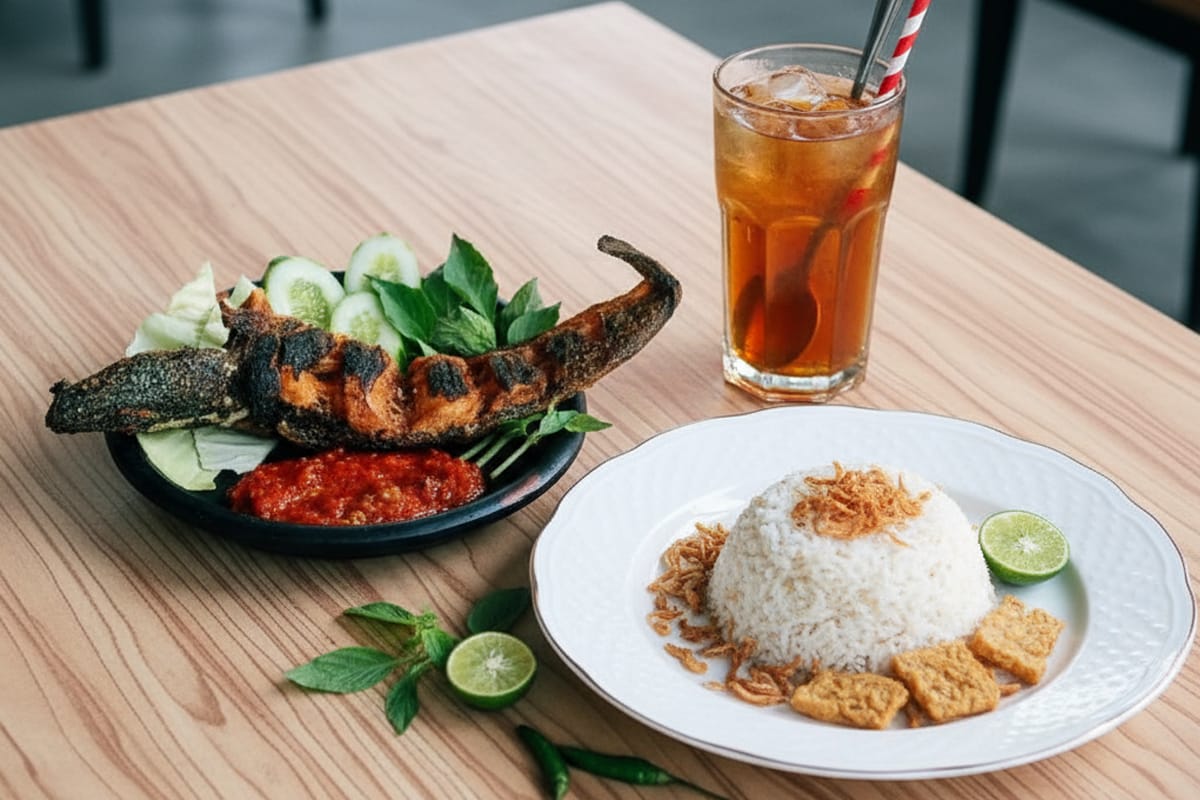
- ServePlace the crispy catfish on a plate, spoon the sambal on top or serve on the side.Add fresh cucumber, lettuce, and herbs for a cooling contrast.
Notes
- Fish Substitute: If whole catfish isn’t available, farmed catfish fillets, tilapia, or trout work well. Make sure to keep the skin on for extra crispiness.
- Shrimp Paste Alternatives: Indonesian terasi has a strong aroma; for a milder umami flavor, use Thai shrimp paste (belacan) or anchovy paste.
- Chili Heat: Traditional pecel lele can be quite spicy. If you prefer a gentler version, reduce bird’s eye chilies or replace part of them with roasted red bell peppers for sweetness and color.
- Palm Sugar Swap: Brown sugar or coconut sugar can be used as an alternative without losing the caramel depth.
- Peanut Tip: Use unsalted roasted peanuts or even creamy peanut butter for a smoother sambal texture.
- Cooking Method: Deep-frying gives the most authentic texture, but pan-searing or air-frying with a thin oil layer works beautifully and keeps it lighter.
- Serving Style: In Indonesia, pecel lele is served directly over the sambal on a stone mortar (cobek). For a Western-style presentation, serve sambal on the side in a small bowl — elegant yet authentic.