More than just a snack, banana fritters are part of the nation’s heritage, evolving from a Portuguese-influenced delicacy for royals into a beloved street food now celebrated worldwide.
In this article, we’ll explore the history, culture, and philosophy of pisang goreng, the way Indonesians enjoy it across regions, and introduce you to one of its most beloved modern variations: Pisang Goreng Ijo, banana fritters with a vibrant green pandan coconut sauce.
The Origins of Pisang Goreng – A Blend of Cultures
The story of pisang goreng stretches back centuries. Historians note that in the 16th century, Portuguese traders brought the practice of deep-frying bananas in flour to the Indonesian archipelago. In those days, fried bananas were considered a luxury dish, enjoyed mainly by the noble class. Imagine royal banquets where golden fritters were served as dessert, a symbol of refinement and exotic European flair.
Over time, this culinary practice blended with local traditions. Indonesians already cherished bananas in countless forms—boiled, steamed, grilled. Adding frying into the repertoire was natural. Some historians even argue that fried bananas may have existed before the Portuguese arrived, though evidence is scarce. Most likely, pisang goreng is a product of cultural fusion, a marriage of European frying techniques and local tropical abundance.
Interestingly, the very word terigu (wheat flour) used in Indonesia comes from the Portuguese word trigo. This linguistic trace is a reminder of how foreign influence seeped into local kitchens, eventually becoming an inseparable part of daily life.
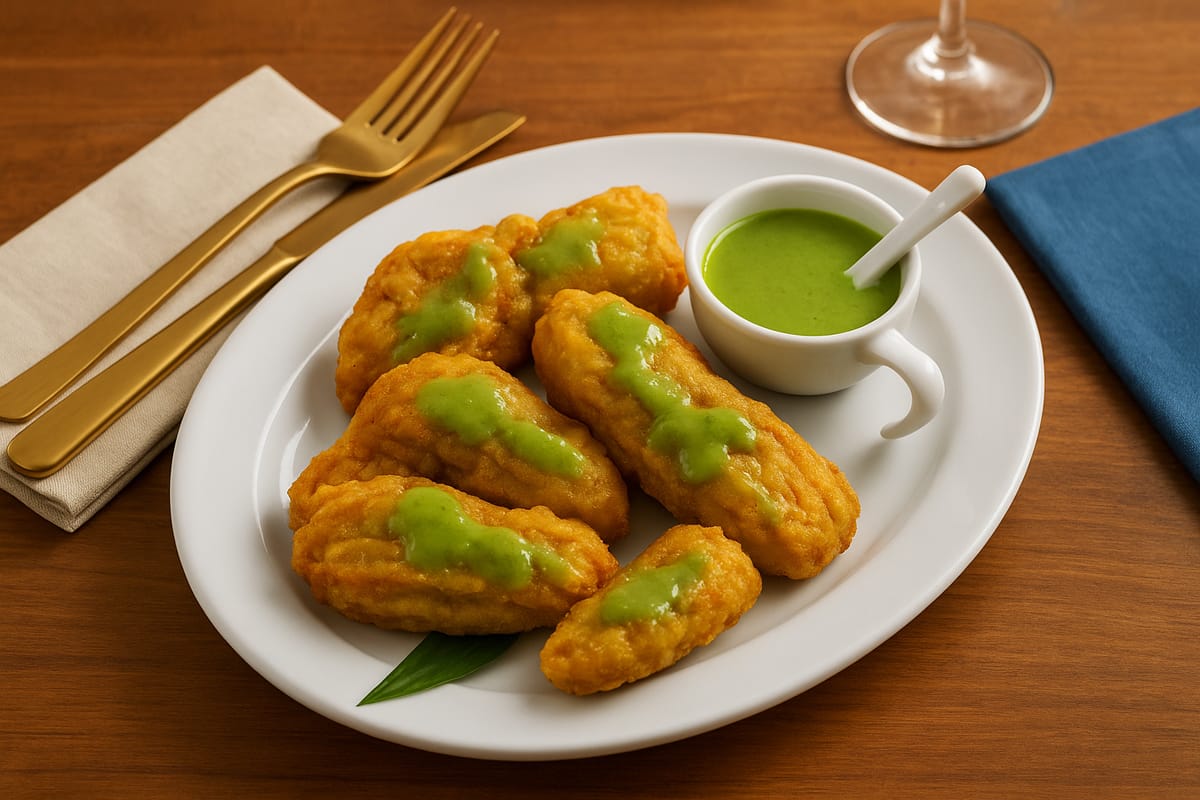
Indonesian Green Banana Fritters (Pisang Goreng Ijo)
Ingredients
Instruction
- Prepare the plantains Slice each plantain lengthwise into 3 sections, but keep the bottom intact so the pieces stay connected. This creates a “fan” effect when fried. Set aside.
- Make the batterIn a mixing bowl, whisk together all-purpose flour, rice flour, sugar, and salt. Add the egg, melted margarine, and water. Whisk until the batter is smooth and lump-free. It should be slightly thick but pourable.
- Fry the plantainsHeat oil in a deep frying pan (about 2 inches deep) over medium heat. Dip each sliced plantain into the batter until fully coated, then carefully place into the hot oil. Fry until golden brown and crisp, about 3–4 minutes per side. Remove and drain on a wire rack or paper towel.
- Make the pandan sauceIn a saucepan, combine pandan extract (or pandan juice), water, coconut milk, sugar, and salt. Cook over low heat until it begins to simmer. Stir in the cornstarch slurry and cook, stirring constantly, until the sauce thickens to a custard-like consistency. Remove from heat.
- ServePlace the fried bananas on a serving plate and drizzle generously with the warm pandan coconut sauce.
Notes
- Bananas: Use plantains (widely available in Latin or African markets in the US/EU). Regular Cavendish bananas will become mushy when fried.
- Choose half-ripe bananas – firm but not too sweet – so they don’t turn mushy when fried. Very ripe bananas (like those used for banana bread) are not recommended.
- If coconut milk is unavailable, use whole milk mixed with a little vanilla extract, though the flavor will be less authentic.
- The batter should be thick enough to coat the banana but not too runny. Add a bit more flour or water as needed to balance the texture.
- Pandan: If you cannot find pandan extract or frozen pandan leaves at Asian groceries, substitute with vanilla extract + a drop of green food coloring. It won’t taste exactly the same, but will still give a fragrant sweet sauce.
- Oil: Use a neutral frying oil (vegetable, canola, sunflower).
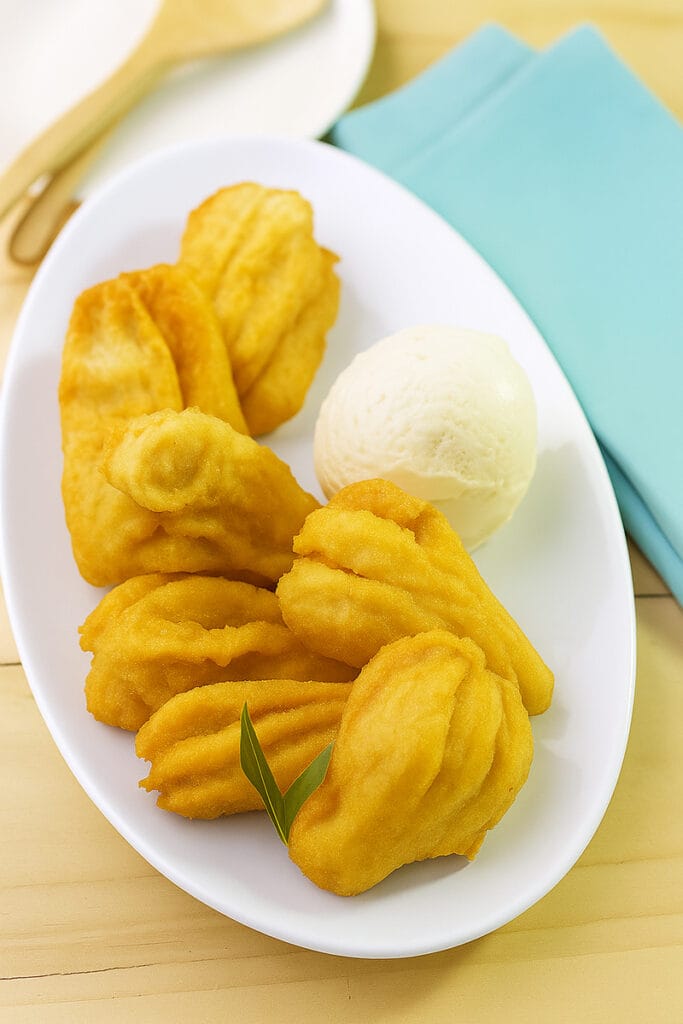
- Serving idea: For an elegant Western-style plating, serve the fritters with a scoop of vanilla ice cream and drizzle of pandan sauce.
From Royal Tables to Street Corners
What began as a noble treat gradually trickled down to the masses. Today, pisang goreng is everywhere—from humble roadside vendors to upscale restaurants. It’s one of Indonesia’s most democratic foods: affordable, simple, yet deeply satisfying.
In 2023, TasteAtlas ranked Indonesian pisang goreng among the world’s best desserts, putting it in the same league as crème brûlée and tiramisu. This recognition proves how a humble snack born from bananas, flour, and hot oil can capture global admiration.
The Philosophy of Pisang Goreng
At its heart, pisang goreng reflects Indonesian values of simplicity and togetherness. Made from basic ingredients—bananas, flour, sugar, oil—it shows how ordinary foods can become extraordinary through care and creativity.
Eating pisang goreng is rarely a solo activity. Families share it at tea time, neighbors serve it to guests, and friends enjoy it while chatting at roadside stalls. This ritual highlights Indonesia’s communal culture—food as a bond, not just sustenance.
How Indonesians Enjoy Pisang Goreng Across Regions
One of the most fascinating aspects of pisang goreng is how it’s eaten differently across Indonesia:
- Eastern Indonesia (Sulawesi, Maluku, Papua): Pisang goreng is often paired with spicy sambal chili sauce. The contrast of sweet banana and fiery sambal creates what locals call an “unexpected delight.”
- Western Indonesia (Sumatra, Java, parts of Kalimantan): People prefer it sweeter, topped with melted palm sugar, grated cheese, or chocolate sprinkles.
- Urban variations: In cities, creative vendors experiment with toppings like caramel, condensed milk, or even matcha powder, making it Instagram-worthy.
Despite the regional differences, one thing unites them all: the joy of biting into a crispy fritter that reveals soft, warm banana inside.
Pisang Goreng vs Pisang Molen – A Vendor’s Trick
Here’s a fun insider’s note: nowadays, traditional pisang goreng is becoming less common at roadside gorengan (fried snack) stalls. Instead, you’ll often find pisang molen, a different style of fried banana.

In pisang molen, the banana (often pisang uli) is wrapped in layers of wheat flour dough before frying. This makes the fritter look larger than it really is—a clever trick by street vendors! Pisang uli itself is smaller and cheaper than the pisang kepok usually used for pisang goreng. Unlike the firm, half-ripe kepok bananas recommended for frying (to avoid mushiness), uli bananas are typically used when fully ripe, giving molen a sweeter and softer profile.
For Western readers, pisang uli resembles the common Cavendish banana, but slightly smaller and stubbier. If unavailable, it’s best to use plantains for frying, as they hold up better under heat.
So yes, pisang molen might be a vendor’s cost-saving tactic—but it has earned its place as a beloved snack in its own right.
Pisang Goreng Ijo – A Colorful Twist
Among the many variations, Pisang Goreng Ijo stands out. The bananas are fried until crisp and served with a green pandan-coconut sauce (saus ijo). The sauce, made by blending pandan leaves with coconut milk, sugar, and thickened with cornstarch, creates a custard-like topping that’s fragrant, creamy, and visually striking.
The name ijo means “green” in Indonesian, and it symbolizes freshness and vibrancy. This version elevates the simple fritter into something elegant, perfect for both casual enjoyment and upscale dessert presentations.
Nutritional Benefits of Fried Bananas
While pisang goreng is an indulgence, it does offer some benefits:
- Bananas provide potassium, vitamin C, and dietary fiber.
- Coconut milk and pandan in Pisang Goreng Ijo add antioxidants and tropical aroma compounds.
- The key, of course, is moderation—enjoying fried foods as part of a balanced diet.
Serving Pisang Goreng in the West
For readers in the US or Europe, recreating pisang goreng at home is possible with a few adaptations:
- Bananas: Use plantains, which resemble Indonesian cooking bananas. Cavendish bananas are too soft when fried.
- Batter: Combine all-purpose flour with rice flour and a little sugar for the crisp texture.
- Pandan: If fresh leaves are unavailable, use pandan extract (sold in Asian markets) or substitute with vanilla and green food coloring.
- Pairings: For an international twist, serve banana fritters with vanilla ice cream, caramel drizzle, or honey.
In this way, pisang goreng can easily enter the global dessert scene, fitting into menus from casual brunch to fine dining.
A Sweet Ending
Pisang goreng is more than just fried bananas—it’s a story of cultural exchange, adaptation, and community. Born from Portuguese influence and Indonesian ingenuity, it has become a beloved national snack, recognized globally for its simple yet irresistible charm.

From spicy sambal pairings in Sulawesi to sweet chocolate toppings in Java, from cost-saving molen tricks to the elegant pandan-sauced Pisang Goreng Ijo, this humble fritter continues to evolve while staying true to its roots.
For Western kitchens, pisang goreng offers a gateway into Indonesia’s rich culinary tapestry: easy to make, delightfully exotic, and endlessly versatile.
So next time you crave a dessert that’s both comforting and adventurous, try making Indonesian Banana Fritters (Pisang Goreng, Pisang Goreng Ijo)—and taste a piece of Indonesia’s culinary history.