Es Cantik Manis, literally “Beautiful Sweet Ice.” True to its name, this traditional dessert drink is as delightful to the eyes as it is refreshing to the palate.
In this article, we’ll explore the origins, flavors, and cultural significance of Es Cantik Manis. We’ll also show how it has evolved into modern versions—including one that adds a premium touch with ice cream and tropical fruits—while still retaining its authentic Indonesian soul.
A Jewel in a Glass: What is Es Cantik Manis?
Es Cantik Manis is a traditional iced dessert drink popular across the Indonesian archipelago, especially on the island of Java. At its core, it is a mixture of:
- Sago pearls (sagu mutiara) – tiny tapioca-like pearls, usually pink, red, or green, which give the drink its “bejeweled” look.
- Coconut milk (santan) – creamy and slightly savory, balancing the sweetness.
- Sweet syrup (sirup merah, often coco pandan or frambozen) – vibrant red and fragrant, tying the drink together.
- Sweeteners like condensed milk (susu kental manis) – depending on the regional variation.
- Optional add-ins – such as rice flour pudding (bubur sumsum), agar-agar jelly, or palm fruit (kolang-kaling).
- Lots of ice cubes or crushed ice – because no Indonesian dessert drink is complete without it.
The result? A refreshing beverage that is sweet, creamy, slightly savory, and utterly satisfying, especially on a hot tropical day. Its bright colors and playful textures are part of its charm—perhaps why it is called cantik manis (beautiful and sweet).
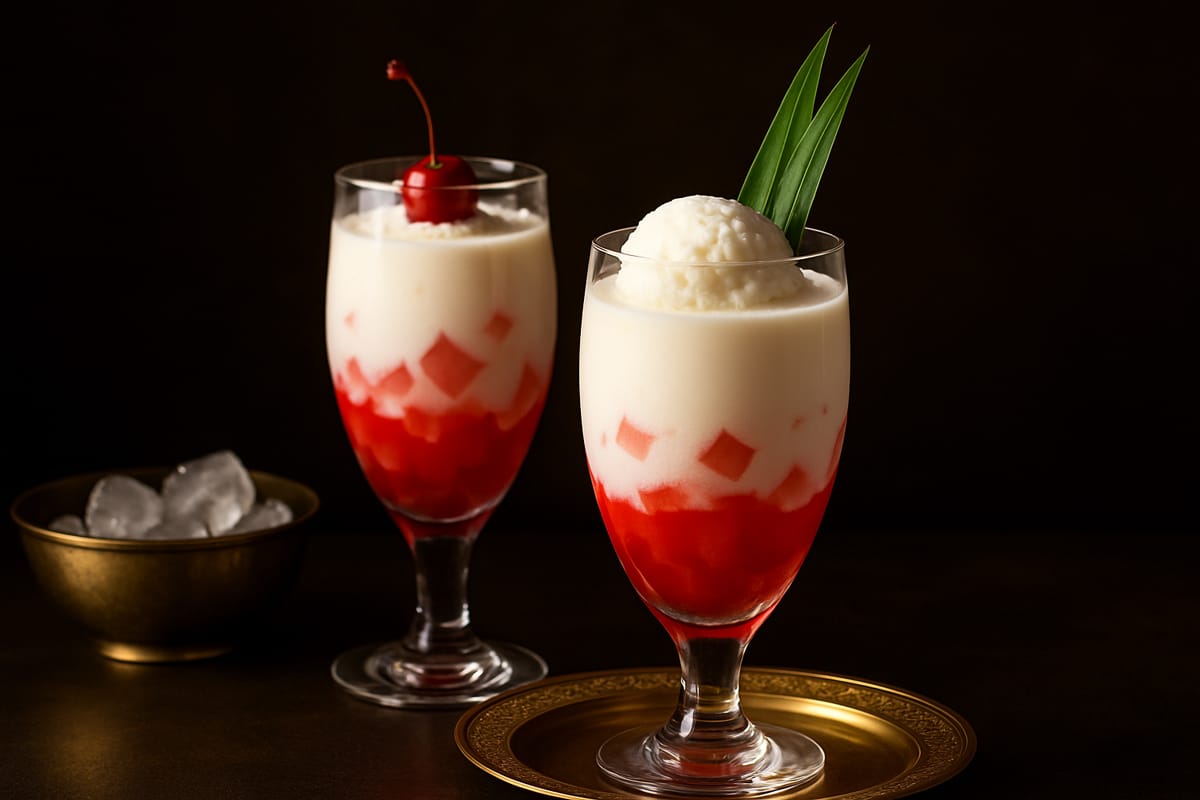
Sweet Cantik Ice (Es Cantik Manis)
Ingredients
Instruction
- Prepare six tall serving glasses.
- Divide the coconut flesh, coconut pulp (nata de coco), and diced fermented cassava evenly into each glass.
- Pour about 80–100 ml of warm-simmered coconut milk (cooled) into each glass.
- Add crushed ice or ice cubes if desired for extra chill.
- Place one generous scoop of coconut ice cream on top of each glass.
- Drizzle 2 tablespoons of coco pandan syrup over the ice cream.
- Garnish with a pandan leaf and a maraschino cherry.
- Serve immediately with a long spoon and straw.
Notes
-
Fermented Cassava (Tape Singkong):
- Fermented rice (sake lees or amazake, Japan): Similar sweet-fermented taste, though with a different texture.
- Sweet fermented drinks (kefir, kombucha, amazake): These can inspire the same “sweet-ferment” flavor profile, although they are not cassava-based.
- Candied yam / sweet potato chunks: A non-fermented substitute to mimic the soft-sweet texture of tape.
- DIY option (for adventurous cooks): If you can find frozen cassava (sold in many Asian/African stores in the West), you can try making your own tape at home by buying a starter culture online (Indonesian or Asian suppliers often sell “ragi tape” or “tape yeast”).
- You can also substitute with ripe diced sweet plantains or canned lychee for a similar texture and sweetness.
- Coco Pandan Syrup: Can be found in Asian grocery stores (brands like Rose Brand or Kokindo). If you can’t find it, use grenadine syrup + a few drops of pandan extract as a quick replacement.
- Kopyor Ice Cream: This is a special coconut ice cream. Substitutes: regular coconut ice cream or even vanilla ice cream + coconut flakes.
- Coconut Pulp (Sari Kelapa / Nata de Coco): Commonly sold in Asian supermarkets in jars or cans. If unavailable, use coconut jelly or canned tropical fruit cocktail.
- Coconut Milk: Western canned coconut milk is usually thicker. For a lighter version (closer to Indonesian style), mix 1 can coconut milk with 1 can of water, then simmer with a pinch of salt.
- Serving Tip: Western guests may prefer it less sweet—start with 1 tablespoon syrup and adjust to taste.
A Ramadan Favorite and Everyday Treat
Es Cantik Manis holds a special place in Indonesian food culture. It is particularly popular during the month of Ramadan, served as takjil (the light meal to break the fast at sunset). Just like Middle Eastern cultures have dates and rosewater drinks, Indonesians look forward to colorful iced desserts like es campur, es doger, and es cantik manis.
Outside Ramadan, you can still find Es Cantik Manis in traditional markets (pasar), food stalls, and even as part of catering for family gatherings, weddings, or community celebrations. Its versatility and affordability make it a beloved comfort food for many Indonesians.
From Cake to Drink: The Curious Story Behind the Name
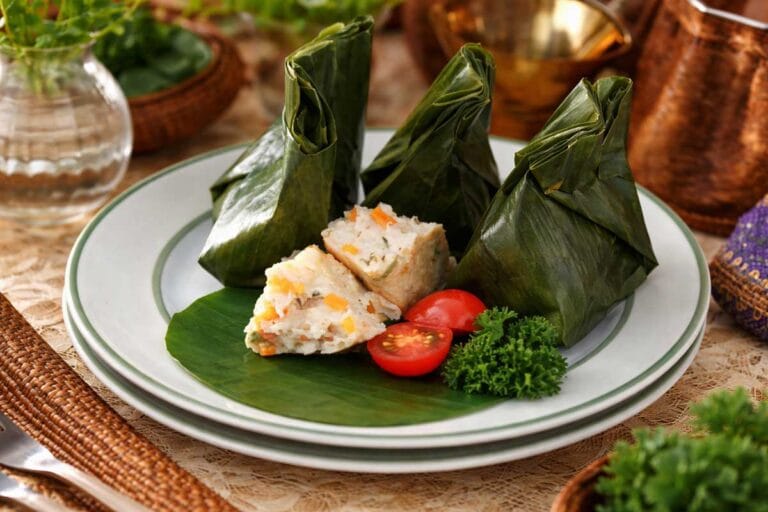
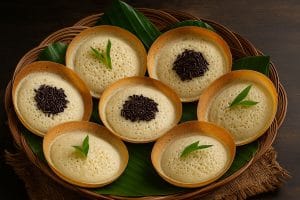
Interestingly, Es Cantik Manis shares its name with a traditional Indonesian cake: Kue Cantik Manis (also known as kue cente manis). This cake is made with sago pearls, coconut milk, sugar, and mung bean flour, then steamed into little pastel-colored squares wrapped in banana leaves.
The cake itself has layered cultural influences. One theory suggests it was introduced by Chinese traders who brought similar pudding-like desserts, later adapted by the Betawi people (natives of Jakarta) into a beloved market snack. Another version claims it originated locally, crafted from readily available ingredients like hunkwe flour (mung bean starch), coconut milk, and sago pearls.
Regardless of its precise origin, both the cake and the drink share key elements: sago pearls, coconut milk, and sweetness. The name “cantik manis” likely reflects not just the visual beauty of these little pearls but also a symbolic meaning: beauty, gentleness, and the sweetness of life.
The transformation from cake to drink is a testament to the creativity of Indonesian cuisine—constantly reinventing itself while preserving tradition.
A Modern Premium Twist
Traditionally, Es Cantik Manis is simple, often assembled from humble ingredients bought in the local market. But like many classic dishes, it has also been reimagined for modern audiences.
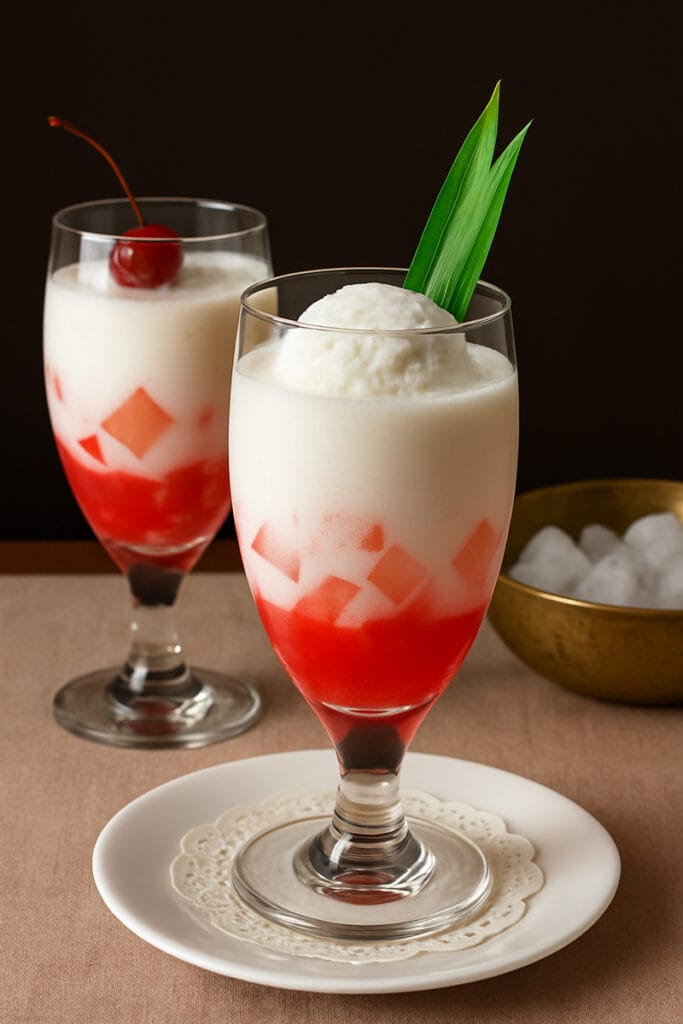
In our version, we give Es Cantik Manis a premium touch without losing its Indonesian authenticity:
- Coconut milk remains the creamy base.
- Coco pandan syrup continues to bring that signature sweetness and fragrance.
- Tape singkong (fermented cassava) adds an adventurous fermented note that Western palates might compare to sake lees or amazake.
- Tender young coconut flesh (kelapa muda) adds tropical freshness.
- A scoop of vanilla or coconut ice cream crowns the drink, making it more indulgent and dessert-like.
This modernized Es Cantik Manis is perfect for international tables—it looks elegant enough for dinner parties but still embodies the soul of Indonesian street food.
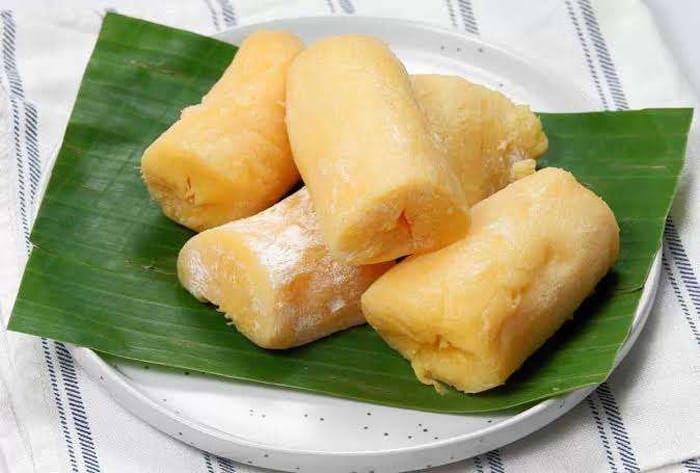
About Tape Singkong
What is Tape Singkong?
Tape singkong (also known as fermented cassava) is a traditional Indonesian delicacy made from cassava that has been naturally fermented using a special yeast culture called ragi. During the fermentation process, the starch in cassava breaks down into sugar and alcohol, giving tape its unique sweet, slightly tangy, and mildly alcoholic flavor with a soft, creamy texture.
It is often eaten as a snack, mixed into desserts, or even used in drinks for a sweet tropical twist.
How is Tape Singkong Made?
– Making tape is quite simple but requires patience:
– Steam or boil cassava until tender.
– Let it cool, then sprinkle evenly with ragi tape (fermentation starter).
– Place it in a covered container and leave it to ferment at room temperature for about 2–3 days.
Once ready, the cassava turns soft, juicy, and sweet with a pleasant aroma.

Philosophy and Symbolism
In Indonesian culinary philosophy, color and texture are as important as taste. Es Cantik Manis is not just sweet—it is playful. The chewy pearls, silky coconut milk, fragrant syrup, and creamy toppings engage all the senses.
The symbolism runs deep:
- Pearls (sago mutiara) represent beauty, prosperity, and celebration.
- Coconut milk symbolizes nourishment and comfort, a staple in Indonesian cooking.
- Sweet syrup reflects joy and festivity.
- The combination embodies balance: sweet, savory, creamy, and refreshing.
No wonder it is often enjoyed at community events and religious gatherings—it’s more than just a drink; it’s a celebration of togetherness.
Nutritional Notes and Benefits
While Es Cantik Manis is indulgent, its ingredients offer certain benefits:
- Sago pearls provide carbohydrates for quick energy.
- Coconut milk contains healthy fats (MCTs) though it should be consumed in moderation.
- Young coconut flesh offers hydration and electrolytes.
- Tape singkong contributes probiotics and fermentation benefits, though it is lightly alcoholic in trace amounts.
For Western health-conscious readers: think of it as an occasional treat, much like ice cream sundaes or bubble tea, but with tropical flair.
How to Enjoy Es Cantik Manis in the West
For American and European kitchens, sourcing ingredients can be both a challenge and an adventure. Fortunately, many components are now available worldwide thanks to Asian supermarkets and online stores.
- Sago pearls → often sold as tapioca pearls for bubble tea.
- Coco pandan syrup → available in Asian stores (brands like Rose Brand). If unavailable, use grenadine + pandan extract.
- Tape singkong → hard to find, but adventurous cooks can try making it with frozen cassava and fermentation starter. Substitutes include sweet plantains, lychee, or candied yams.
- Young coconut → sold fresh in Asian/Latin stores, or canned as “coconut sport.”
- Coconut milk → canned versions are widely available; dilute with water to replicate Indonesian-style light coconut milk.
For a Western twist, serve Es Cantik Manis in a stemless wine glass or dessert coupe, topped with artisanal coconut ice cream, and garnish with mint leaves or maraschino cherries for extra flair.
Why You Should Try It
Es Cantik Manis is more than a drink—it’s a cultural journey. It tells the story of how Indonesian cuisine bridges tradition and creativity, simplicity and sophistication.

Imagine serving it at your next summer party: a glass filled with colorful pearls, coconut jelly, and creamy coconut milk, topped with melting ice cream and drizzled with bright red syrup. Your guests will not only ask, “What is this?” but will also remember it long after the last sip.
It’s like bubble tea, but with a tropical Indonesian soul.
Enjoying the Magic of Es Cantik Manis
From its humble beginnings in Javanese markets to its potential as a premium dessert on international tables, Es Cantik Manis proves that Indonesian food culture is rich, adaptable, and deeply meaningful.
It embodies beauty (cantik), sweetness (manis), and community spirit. Whether enjoyed as a Ramadan treat, a market snack, or a modern dessert with ice cream, this colorful drink remains an unforgettable taste of Indonesia.
So next time you crave something refreshing and unique, skip the usual milkshake or bubble tea—try Es Cantik Manis, and let Indonesia’s vibrant culinary heritage shine in your glass.