(pronounced wah-jeek)
When you travel through Indonesia, you’ll notice something about the food culture: sweets and snacks are never just about taste. They carry stories, memories, and philosophies that stretch back hundreds of years. One such example is this Indonesian traditional cake, a diamond-shaped sticky rice cake made with glutinous rice, coconut milk, and palm sugar.
At first glance, this sweet may look like a simple dessert. But behind its glossy brown sheen and chewy texture lies a tale that connects the ancient Majapahit kingdom, the values of togetherness, and the way Indonesians celebrate life’s most important moments.
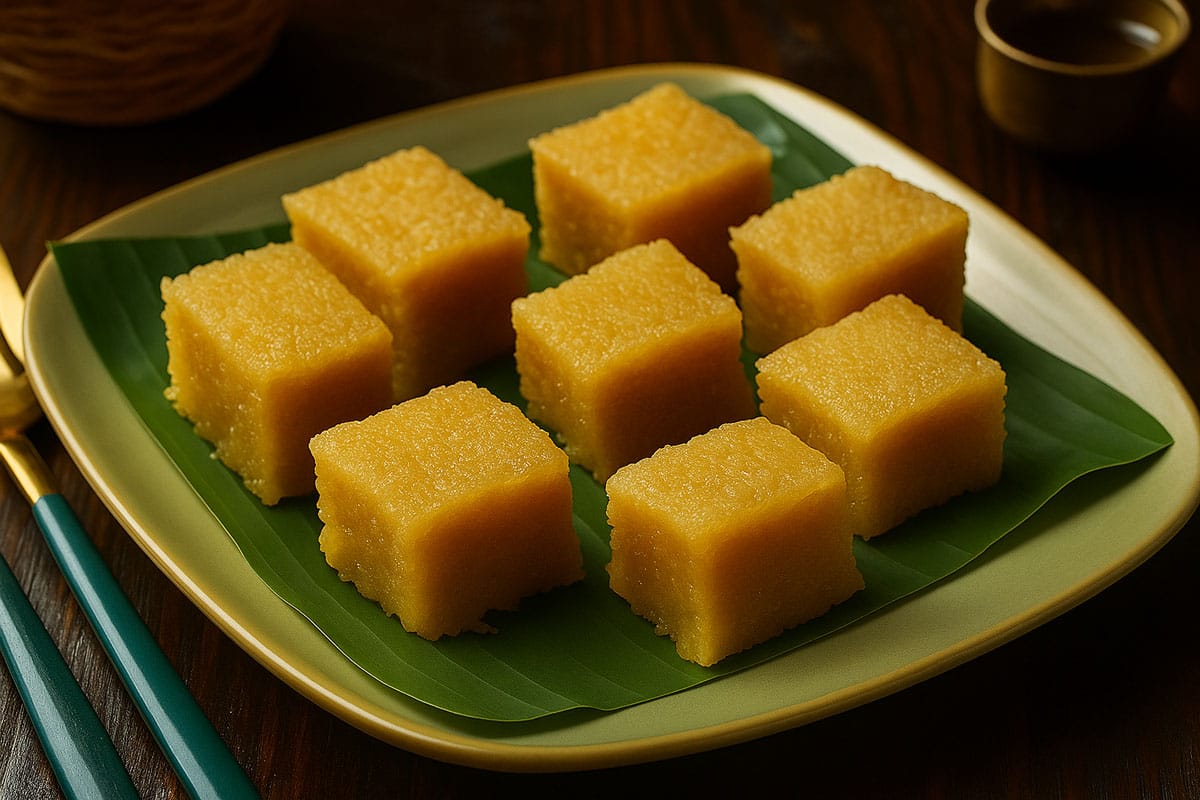
Wajik – Indonesian Sweet Sticky Rice Cake
Ingredients
Instruction
- Prepare the riceRinse the glutinous rice thoroughly, then soak it in water for about 2 hours. Drain well.
- First steamSteam the soaked rice for 20 minutes until half-cooked. Remove from heat.
- Cook the syrupIn a large pan, combine coconut milk, palm sugar, granulated sugar, pandan leaves, cinnamon stick, and salt. Bring to a gentle boil while stirring to prevent the coconut milk from curdling.
- Combine with riceAdd the half-cooked glutinous rice into the coconut milk mixture. Stir continuously over medium heat until most of the liquid is absorbed and the rice looks sticky.
- Second steamTransfer the mixture back into the steamer and cook for another 20 minutes until the rice is fully cooked, soft, and glossy.
- Mold the wajikGrease a heatproof dish or baking pan lightly with oil. Transfer the sticky rice mixture, press it down firmly and evenly, then let it cool completely.
- Cut and serveOnce set and firm, cut the wajik into diamond or square shapes. Serve at room temperature.
Notes
- Palm sugar (gula jawa): If unavailable, use Thai palm sugar or dark brown sugar. The flavor will be slightly different but still delicious.
- Pandan leaves: Not always available in Western grocery stores; substitute with pandan extract (a few drops) or leave it out, though the aroma is unique.
- Cooking method: Steaming twice ensures the rice is perfectly cooked and chewy, not mushy. Don’t skip the soaking step—it makes the rice cook evenly.
- Serving tip: Wajik is naturally rich and sweet; serve it in small portions with tea or coffee.
- Storage: Keeps well at room temperature for 1 day, or refrigerate up to 3 days. Reheat briefly by steaming if needed.
The Origins of Wajik
Historians trace this sweet rice cake back to the Majapahit era, one of the most powerful kingdoms in Southeast Asia. Records mention this sweet in the Kitab Nawaruci (also known as Sang Hyang Tattawajnana), a Javanese literary work written between the 1500s and early 1600s by Empu Siwamurti.
This was a time of transition in Java. The Majapahit court still followed Hindu-Buddhist traditions, filled with rituals and mysticism, but at the same time Islam was spreading rapidly through the rise of the Demak Sultanate and the influence of the Wali Songo (the nine Islamic saints of Java). Cultural practices didn’t simply replace each other overnight—instead, they overlapped.

The dessert became part of this overlap.
- In Hindu-Buddhist rituals, its sticky, sweet, diamond-shaped form was linked to mystical symbolism—unity, prosperity, and cosmic harmony.
- As Islam took root, wajik was easily carried into new traditions like slametan (communal feasts), weddings, and thanksgiving ceremonies, because it was halal, made of staple local ingredients, and still carried a powerful message of togetherness.
But wajik was not only a courtly delicacy.
- In Javanese villages, the treat became a familiar treat at community gatherings, thanksgiving events, and seasonal rituals. Its presence in everyday celebrations shows that wajik was not restricted to nobility but was embraced widely across society.
- In weddings, the diamond-shaped cake took on a more personal meaning. The chewy, sticky texture symbolized the hope that a husband and wife would remain bound together for life. Its sweetness was a metaphor for marital happiness, and the patience needed to cook it reflected the patience required to build a harmonious household.
For Western readers, you might think of it a little like fruitcake or Christmas pudding. Once deeply tied to Christian holidays, those cakes are now enjoyed by families regardless of religious identity. The ritual meaning shifted, but the food remained, carrying centuries of history in every bite.
What’s in a Name?
The word “wajik” itself refers to the shape. After being cooked, the sticky rice is pressed into a tray and cut into diamond-shaped pieces. In Javanese, “wajik” means “diamond,” not just in the geometric sense but also as a symbol of value and beauty.
In different regions, the sweet has different names:
- In Sumatra, it’s often called pulut manis (literally, “sweet glutinous rice”).
- In West Java, there’s a version called Wajik Bandung, which adds grated coconut and is wrapped in colorful paper.
- In Blitar (East Java), locals make Wajik Klethik, a regional twist with its own texture and flair.
The diversity of names and styles shows how wajik has traveled across the archipelago, adapting but never losing its essence.
The Philosophy Behind Wajik
Indonesian food is often full of hidden meanings, and this cake is no exception. Its stickiness represents togetherness and unity. Families, communities, and couples are expected to “stick together” just like the glutinous rice grains bound by palm sugar and coconut milk.
- In weddings: The cake symbolizes marital harmony. Just as the rice and sugar fuse into one inseparable whole, a couple is expected to remain united. The sweetness reflects happiness in the household, while the patience required in cooking reflects patience in building a family.
- In society: Sharing this sweet at community gatherings or religious festivals is a metaphor for social cohesion. The different ingredients—rice, sugar, coconut—represent people of different backgrounds, united into a single whole.
- In philosophy: The shape of the diamond also carries meaning—strength, beauty, and resilience. A diamond cut is precise, yet enduring, echoing values admired in traditional Javanese culture.
Wajik Through the Ages
As Indonesia modernized, the cake never disappeared. It remains a staple during Lebaran (Eid al-Fitr), weddings, thanksgiving rituals, and village feasts. In many Javanese households, offering wajik to guests during special days is still seen as a gesture of respect and goodwill.
Variations have also emerged:
- Wajik Ketan Hitam (Black Sticky Rice Wajik): Using black glutinous rice for a nuttier flavor and deep purple color.
- Wajik Hijau (Green Wajik): Infused with pandan juice for fragrance and color.
- Rainbow Wajik: A modern twist for festive occasions, layering different colors of rice.
Even with these innovations, the heart of this dessert—the sticky bond of rice, coconut, and sugar—remains unchanged.
How Wajik Is Made ?
At its core, the cake is simple: glutinous rice is steamed, then cooked slowly in a mixture of coconut milk and palm sugar until the liquid is absorbed. The rice takes on a caramel color, a glossy sheen, and a sticky, chewy texture. Once set, it’s pressed into trays, cooled, and cut into diamonds.
It’s not a quick recipe. The process takes time, patience, and careful stirring to prevent the coconut milk from curdling or the rice from burning. This effort, however, is part of the symbolism: good things, like marriage or community, require patience and care.
Is Wajik for Western Tastes?
For American or European palates, this Indonesian cuisine can be both familiar and new. On one hand, its chewiness resembles rice pudding or even Japanese mochi, while its caramel-like sweetness may remind some of fudge or toffee. On the other hand, the use of palm sugar and pandan leaves gives it a unique Southeast Asian fragrance that might feel exotic to first-time tasters.
The sweetness level is bold but not cloying, especially when paired with tea or coffee. Many Westerners find it appealing once they try it, though portion sizes are usually smaller—this cake is rich, and a little goes a long way.
Serving Suggestions in the West
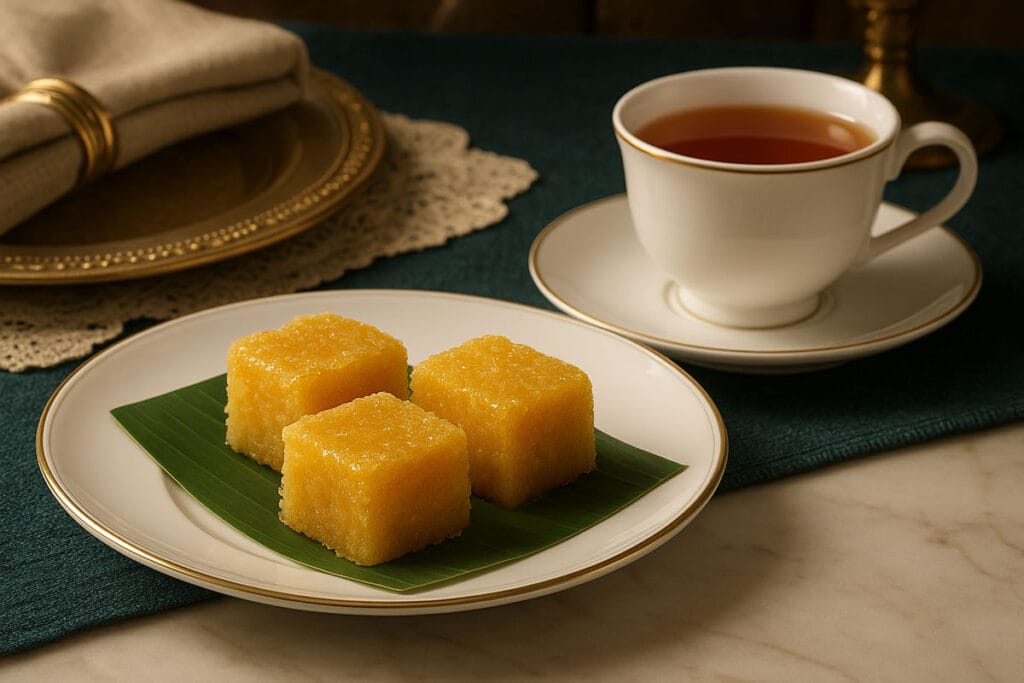
Traditionally, Indonesians serve the sticky rice cake during weddings, religious ceremonies, or holidays. In the West, you don’t need a ceremony—this sweet works beautifully as:
- A tea-time snack, paired with Earl Grey or green tea.
- A coffee companion, much like biscotti or brownies.
- A party dessert, cut into small diamonds and arranged on a platter.
- A fusion twist, paired with ice cream or topped with shredded coconut.
For presentation, small portions work best. Wajik is dense and sweet, so bite-sized diamonds allow guests to enjoy the flavor without being overwhelmed.
Health and Nutritional Notes
While wajik is indulgent, it has a few redeeming qualities. Glutinous rice provides energy through complex carbohydrates, while coconut milk contributes healthy fats. Palm sugar, though still sugar, contains trace minerals like potassium and iron. That said, wajik is definitely a treat, not an everyday snack—it’s best enjoyed in moderation.
Why Wajik Matters
More than just dessert, wajik is a cultural artifact. It has survived centuries of change, from Majapahit kings to modern kitchens, carrying with it values of unity, patience, and sweetness in life. For Indonesians abroad, making or eating wajik can be a way of staying connected to home. For Western audiences, it’s a chance to taste history—quite literally.
When you bite into a chewy, sweet piece of wajik, you’re not just tasting rice and sugar. You’re tasting a piece of Java’s royal past, a symbol of love and harmony, and a tradition that continues to bring people together today.