Ingredients
Instruction
Make the Cilok
- In a mixing bowl, combine tapioca starch, all-purpose flour, salt, and minced garlic. Mix well.
- Slowly pour in boiling water while stirring with a spoon until the dough begins to come together.
- If using an egg, add it now and mix gently until incorporated.
- Add sliced green onions and lightly knead just until smooth and pliable. Do not overwork the dough.
- With lightly oiled hands, shape the dough into small balls (about 1 inch / 2.5 cm in diameter).
Cook the Cilok
- Bring a large pot of water to a rolling boil. Add the oil.
- Drop the cilok into the boiling water and gently stir once to prevent sticking.
- When the dumplings float to the surface, continue boiling for 2–3 minutes to ensure even cooking.
- Remove with a slotted spoon and drain.
Make the Peanut Sauce
- Blend or finely crush the roasted peanuts.
- Mix peanuts with sweet soy sauce, palm sugar, tamarind water, salt, and water.
- Stir until smooth, thick, and pourable. Adjust seasoning to taste.
Serving
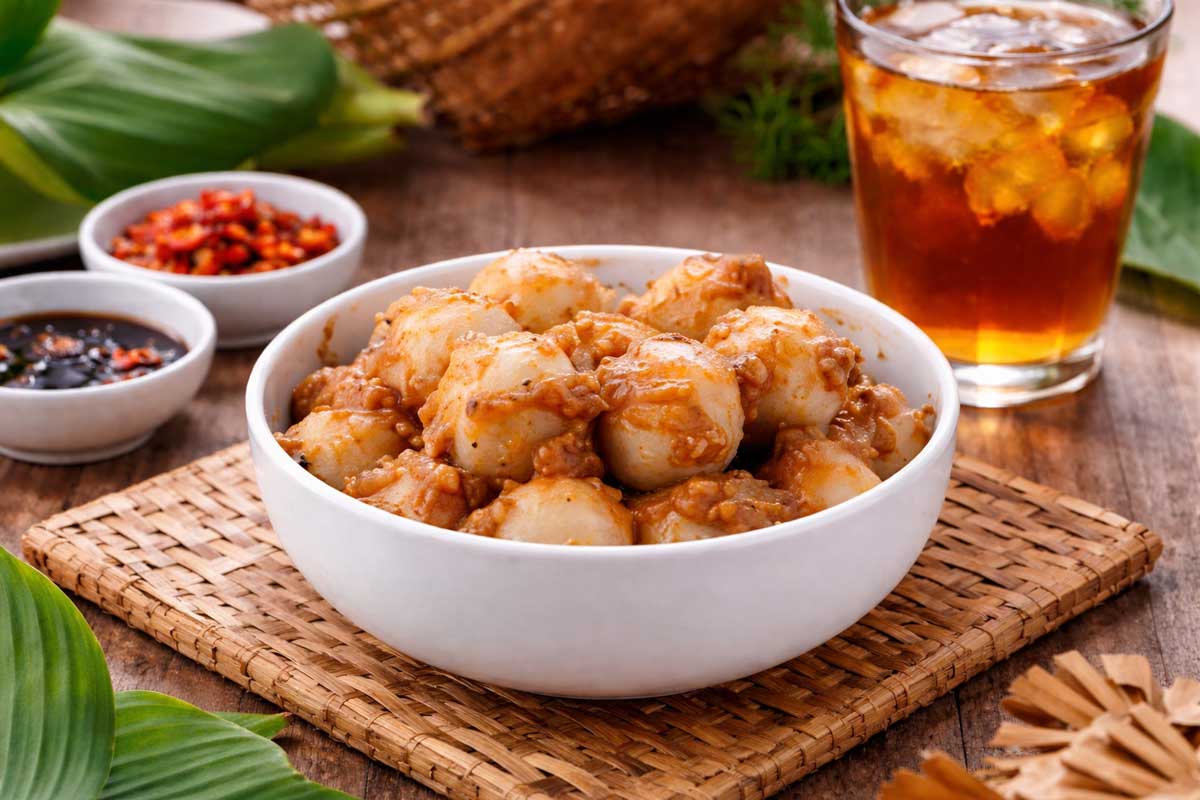
Serve warm cilok generously drizzled with peanut sauce. Cilok can also be enjoyed with chili sauce or extra sweet soy sauce on the side.
Notes
-
Tapioca starch is essential
Tapioca starch (tepung tapioka) gives cilok its signature chewy, bouncy texture. Do not substitute with cornstarch or potato starch, as the result will be very different. -
Correct flour ratio matters
Cilok should be dominated by tapioca starch. A 2:1 ratio (tapioca starch to all-purpose flour) creates a chewy yet tender dumpling. Too much wheat flour will make cilok dense and tough. -
Always use boiling water
Hot water partially gelatinizes the tapioca starch, helping the dough bind properly. Using warm or cold water can result in sticky, mushy, or unevenly cooked cilok. -
Avoid over-kneading the dough
Mix just until the dough comes together. Overworking the dough can make the dumplings firm and rubbery. -
Egg is optional, not required
Traditional cilok is often made without egg. Adding one makes the texture softer and richer, but cilok without egg will still be pleasantly chewy. -
If using chicken, mince it very finely
Ground chicken should be extremely fine so it blends evenly into the dough. Always boil cilok thoroughly when adding meat to ensure it is fully cooked. Cilok with meat is best eaten the same day. -
Use only a small amount of oil when boiling
A little oil in the boiling water helps prevent sticking. Too much oil can make the surface slippery and prevent sauces from clinging. -
Do not overboil
Once the dumplings float, boil for only 2–3 additional minutes. Overcooking may cause cilok to split or develop a slimy surface. -
Cilok naturally firms up as it cools
This is normal for tapioca-based foods. To soften, steam briefly or microwave with a damp paper towel before serving. -
Sweet soy sauce substitution
If kecap manis is unavailable, mix regular soy sauce with brown sugar or honey to approximate its sweet-savory flavor. -
Palm sugar substitution
Palm sugar (gula merah) can be replaced with light or dark brown sugar. -
Texture expectation
Cilok is meant to be chewy and elastic, not fluffy like Western dumplings or bread-based fritters.