Discovering Soto Beyond Java
The first time I tasted Soto Banjar, I assumed it was a regional variation of the countless “soto” dishes from Java—perhaps from Banjar in West Java, or Banjarnegara in Central Java. I was surprised to learn that this dish is actually native to South Kalimantan, from the city of Banjarmasin, deep in the heart of Indonesian Borneo. That first spoonful left a lasting impression. The flavors were bold—deeply aromatic from cloves and nutmeg, yet somehow gentle and comforting. It was unlike any chicken soup I had ever had.

Banjar Chicken Soup (Soto Banjar)
Ingredients
Instruction
- Prepare the Chicken BrothIn a large pot, combine chicken, water, and salt. Bring to a boil over medium heat, then reduce heat and simmer until the chicken is fully cooked and tender (about 30–40 minutes). Remove the chicken, shred the meat, and reserve the broth.
- Make the Spice BaseIn a skillet, heat a bit of oil and sauté the blended spice paste until fragrant. Add the whole spices (cardamom, cloves, cinnamon), bay leaves, and lemongrass. Continue sautéing until the spices release their aroma (about 3–4 minutes).
- Flavor the BrothPour the sautéed spice mixture into the reserved chicken broth. Simmer for another 10–15 minutes so the flavors fully infuse into the soup. Taste and adjust seasoning if needed.
- Assemble the BowlsIn individual serving bowls, add rice cakes (or rice), softened glass noodles, shredded chicken, halved boiled eggs, and optional perkedel. Top with sliced scallions, celery, and fried shallots.
- ServeLadle the hot broth over the ingredients. Serve with sweet soy sauce and lime wedges on the side. Enjoy hot!
Notes
- Chicken: Free-range or organic chicken gives the most authentic flavor. Regular chicken can be used but may be less rich.
- Shallots: Indonesian shallots are smaller and sweeter; you can use red onions if unavailable.
- Nutmeg: Whole nutmeg gives better depth, but ground is fine for convenience.
- Daun Salam: This Indonesian bay leaf has a subtle aroma. Use regular dried bay leaf if you can’t find it.
- Kecap Manis: A sweet soy sauce with molasses-like thickness; you can find it at Asian markets or substitute with a mix of soy sauce and a bit of brown sugar.
- Ketupat/Lontong: These are compressed rice cakes. You can use cooked jasmine rice, sticky rice squares, or even rice noodles as a substitute.
- Perkedel (Potato Patties): Optional, but a nice side. Can be substituted with mashed potato croquettes or skipped altogether.
A Dish Rooted in History and Trade
Soto Banjar is more than just a dish—it’s a culinary reflection of centuries of migration, trade, and cultural blending. Historical records suggest that this dish began to take form after 1563, around the time Chinese traders arrived in Banjarmasin. Back then, Banjarmasin was a bustling kingdom known for producing black pepper, one of the most prized spices of the era.
The term “soto” is believed to have originated from Chinese dishes like shao du, zhu du, or jao to—all of which are organ-based broths with strong herbal aromas. These soups, particularly from the Cantonese tradition, often included fried garlic, spices, and wheat-based additions. As Chinese immigrants settled in Borneo, their culinary heritage began to merge with local ingredients and tastes.
This was no isolated exchange. Other foreign communities—Dutch, Arab, and Indian—also established roots in a district called Tatas. From there, the influences on local cuisine grew even richer. The Dutch introduced their version of clear soups, complete with celery, carrots, and potatoes. Indian immigrants brought their love of thick, spice-laden gravies. Arabs added layers of fragrance with cinnamon, cloves, and star anise. These were absorbed into the evolving Banjar palate and eventually gave rise to what we now know as Soto Banjar.

Another Recipe You Should Taste


Two Faces of Soto Banjar
Interestingly, Soto Banjar isn’t just one dish. There are two main variations: one with a clear broth, and another with a rich, creamy base enhanced by evaporated milk. Both start with chicken simmered slowly with salt, garlic, and onion, creating a base that’s aromatic but clean. Then come the spices—cardamom, cloves, cinnamon, and nutmeg—transforming the broth into something truly unique.
The clear broth version is more common and retains much of the Dutch and Chinese influence. The creamy version leans more toward Indian and Arab preferences for thicker, heartier dishes. Regardless of the type, both are typically served with ketupat (compressed rice cakes), glass noodles (soun), boiled eggs, fried shallots, and a squeeze of lime for brightness. A side of perkedel (potato fritters) often completes the dish.
Soto Banjar in Banjar Culture
Originally, Soto Banjar was served during special ceremonies and family gatherings—weddings, circumcisions, and religious holidays. It was a dish meant to comfort and celebrate at the same time. Over time, it transitioned into a daily meal, found everywhere from roadside stalls to formal banquets.
For the Banjar people, Soto Banjar isn’t just a meal—it’s a symbol of hospitality and pride. Its preparation is often a communal activity, with families gathering to peel garlic, slice onions, and stir the pot together.
Creamy Soto Banjar Variation (With Evaporated Milk)
While the classic Soto Banjar is known for its clear, savory broth, there’s also a richer, creamier version enjoyed in parts of South Kalimantan. This variation is heavily influenced by Indian cuisine, especially in its use of evaporated milk.
To make the creamy version, simply follow the original recipe and:
- After boiling the soup and letting the spices infuse into the broth,
- Add 1 cup (240 ml) of evaporated milk into the pot,
- Stir gently and simmer for another 10 minutes on low heat.
The result is a luxurious broth with a milky texture and deeper aroma that pairs beautifully with the spices like cloves (cengkeh) and cinnamon (kayu manis).
🔸 Tip: If you prefer a richer taste, you can also add a tablespoon of sweetened condensed milk, but make sure to adjust the salt accordingly.
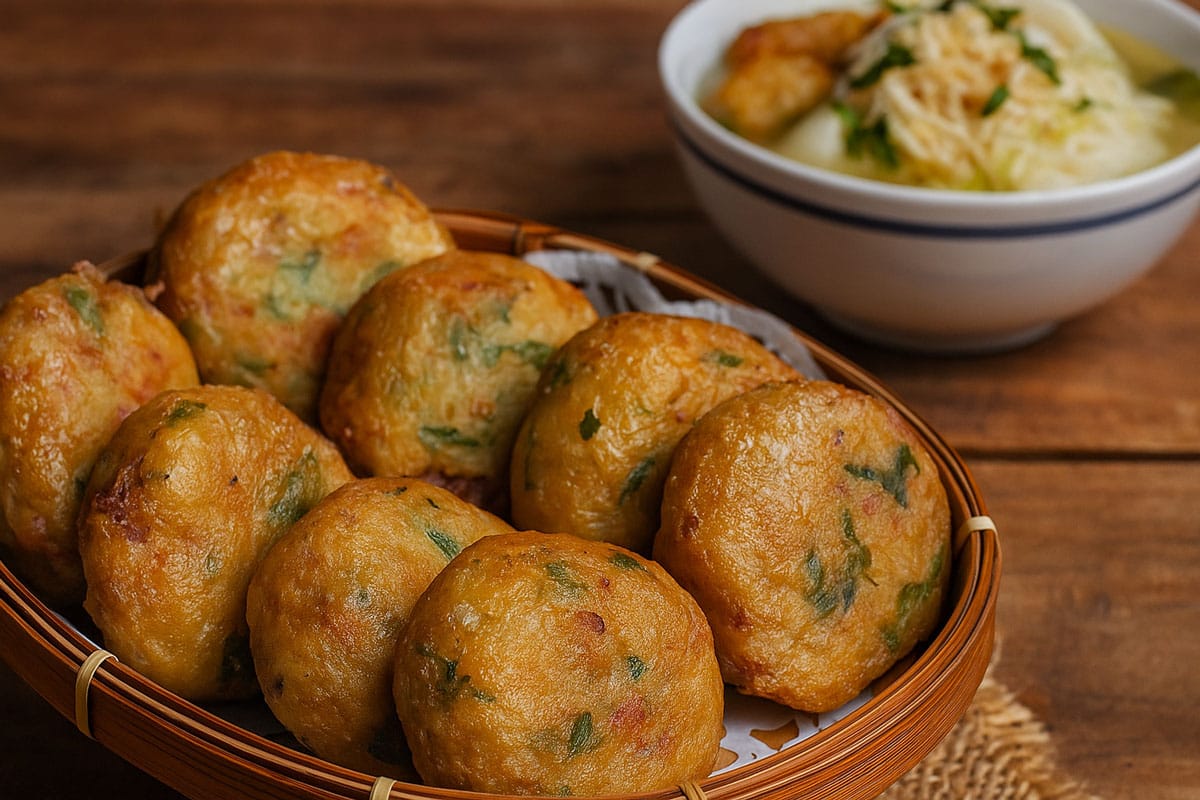
Easy Potato Fritters (Perkedel Kentang)
Traditionally served with Soto Banjar, these fluffy and savory mashed potato patties add a delightful bite to the dish.

Ingredients:
Ingredients:
- 500 g potatoes, peeled and cut into chunks
- 2 cloves garlic, thinly sliced
- 3 shallots (or substitute with 1 small red onion), thinly sliced
- 1 stalk scallion (daun bawang), finely chopped
- 1 egg, beaten (for mixing into the dough)
- 1 egg, beaten separately (for coating before frying)
- Salt and ground pepper to taste
- Cooking oil for frying
Instructions:
- Boil the potatoes until fully tender, then drain and mash until smooth. Let them cool slightly.
- Fry the garlic and shallots in a little oil until golden brown and fragrant. Let cool, then finely chop or crush.
- In a bowl, combine mashed potatoes, fried garlic-shallot mix, chopped scallion, and one beaten egg. Season with salt and pepper. Mix until well combined and sticky.
- Shape the mixture into small, flat patties.
- Dip each patty in the second beaten egg, coating all sides.
- Heat oil in a frying pan over medium heat. Fry the patties until golden brown on both sides.
- Remove and drain on paper towels before serving.
These perkedel are soft on the inside and crisp on the outside — a perfect companion to your Soto Banjar bowl.
Yields:
10–12 fritters
Bringing Soto Banjar to the West
Can Soto Banjar work for American or European kitchens? Absolutely—with a few small adjustments.
- Chicken: Use bone-in chicken thighs or a whole chicken to create a flavorful broth.
- Ketupat substitute: If rice cakes are unavailable, steamed jasmine rice or sticky rice squares work well.
- Glass noodles: Readily available in Asian supermarkets, or substitute with thin rice vermicelli.
- Spices: Cloves, cinnamon, and nutmeg are widely available. Cardamom pods may require a trip to a specialty or international market.
- Kecap manis: A sweet soy sauce essential to Indonesian cooking. If unavailable, blend soy sauce with brown sugar.
- Fried shallots: You can buy these pre-packed in many Asian stores, or make them at home by frying thinly sliced shallots.
In the West, Soto Banjar could shine as a weekend comfort dish, similar to how chicken noodle soup or pho is enjoyed. It’s perfect for chilly days, family dinners, or even a cultural potluck.
When and How to Serve
For American and Western schedules, Soto Banjar makes a perfect Sunday lunch or dinner. It also works well as a first course for a Southeast Asian-themed dinner party. It’s gluten-free (if you skip perkedel), dairy-free (unless you choose the creamy version), and highly customizable.

Serving tips:
- Serve in deep bowls with generous broth
- Offer lime wedges and sweet soy sauce on the side
- Pair with pickled vegetables or a light salad for balance
- Offer sambal (Indonesian chili paste) for spice lovers
A Final Spoonful
Eating Soto Banjar is like tasting history in a bowl. The warming spice of clove and cinnamon, the soothing chicken broth, the playful mix of rice cakes and noodles—it all tells a story of how cultures can blend into something delicious and new. What began as a Chinese-inspired organ soup evolved through Arab perfume, Indian spice, Dutch simplicity, and Banjar soul.
So next time you’re seeking a new dish to warm your table—and maybe spark a conversation about Indonesia’s rich cultural tapestry—try Soto Banjar. You won’t just be making chicken soup. You’ll be sharing a taste of Kalimantan’s past, brought to life in your kitchen.