- The Ontbijtkoek recipe transforms a dense Dutch loaf into a light Indonesian sponge cake.
- Using palm sugar is essential for the authentic Ontbijtkoek recipe flavor profile.
- Bumbu spekuk provides the signature aromatic depth to this spiced dessert.
- This Ontbijtkoek recipe is easy to make with standard supermarket ingredients.
Discover the authentic Ontbijtkoek recipe that blends Dutch heritage with Indonesian warmth. This guide explores how this classic Ontbijtkoek recipe uses local spices to create a unique comfort food.
If there is one scent that instantly transports me back to childhood afternoons in Indonesia, it is the warm, intoxicating aroma of bumbu spekuk (Indonesian mixed spices) wafting from the kitchen. While the world might know Indonesia for its intricate, labor-intensive Lapis Legit (thousand-layer cake), my heart has always belonged to its humbler, fluffier cousin: Ontbijtkoek (Ontbijtkoek recipe).
Growing up, this was the cake my family would bake when the skies turned gray and the monsoon rains began to fall. It is not overly frosted or intensely sweet. Instead, it is a deeply aromatic, incredibly soft sponge cake topped with crunchy nuts. Paired with a steaming cup of robust black coffee or unsweetened tea, it is the ultimate Southeast Asian comfort food (Ontbijtkoek recipe).
It is a beautiful, uncomplicated slice of history—and one that is incredibly easy to recreate in your own kitchen today (Ontbijtkoek recipe). [Dutch East Indies – Wikipedia]
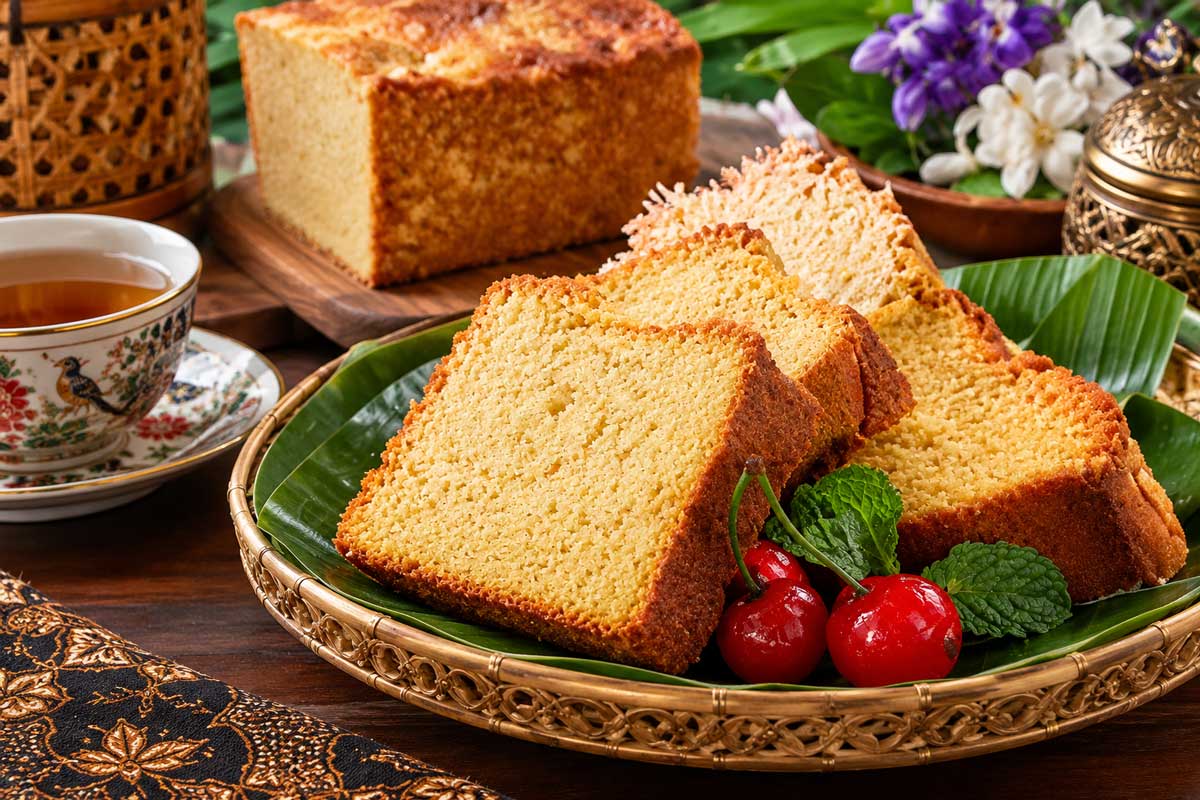
Indonesian Spiced Cake (Ontbijtkoek)
Ingredients
Instruction
- Prepare for baking. Preheat your oven to 350°F (180°C). Grease a standard square or rectangular baking pan and line the bottom with parchment paper.
- Whip the eggs and sugar. In a large, clean mixing bowl, combine the 10 egg yolks, 7 egg whites, and the palm sugar. Using an electric stand mixer or hand mixer on high speed, beat the mixture until it becomes very thick, pale, and fluffy. It should reach the "ribbon stage" (leaving a trail when the whisk is lifted). This takes about 8–10 minutes.
- Fold in the dry ingredients. In a separate bowl, whisk together the sifted flour and the bumbu spekuk (spice mix). Gently fold this dry mixture into the whipped eggs using a silicone spatula. Fold carefully in a figure-eight motion to avoid deflating the airy egg batter.
- Incorporate the butter. Pour the melted (but not hot) butter into the batter. Fold gently just until the butter is completely incorporated and no greasy streaks remain. Do not overmix.
- Pour and garnish. Pour the batter evenly into the prepared baking pan. Tap the pan gently on the counter twice to release any large air bubbles. Sprinkle the chopped walnuts (or kenari) evenly over the top of the batter.
- Bake. Bake in the preheated oven for 30 minutes, or until a wooden skewer inserted into the center of the cake comes out clean and the top springs back when lightly touched.
- Cool. Remove from the oven and let it cool in the pan for 10 minutes before transferring the cake to a wire rack to cool completely. Slice and serve.
Notes
- Spekkoek Spice (Bumbu Spekuk) Substitute: If you cannot find pre-mixed Indonesian bumbu spekuk, make your own by whisking together: 1 tsp ground cinnamon, ½ tsp ground nutmeg, ¼ tsp ground cloves, and ¼ tsp ground cardamom or anise.
- Palm Sugar Alternatives: Authentic gula palem gives the cake its signature caramel-molasses color and flavor. If unavailable, substitute with an equal amount of Dark Brown Sugar or Muscovado sugar.
- Nut Substitutions: Indonesian recipes often use kenari (pili nuts), which are native to the Maluku islands. Walnuts or slivered almonds are the perfect, easily accessible Western substitutes.
- The Egg Ratio (Why 10 yolks and 7 whites?): Using more yolks than whites is a classic Indonesian baking secret. It yields a cake that is incredibly rich, tender, and moist, without relying on massive amounts of butter.
The Origins of Spiced Cakes in Indonesia: A Dutch Legacy
To fully appreciate Indonesian Ontbijtkoek, we must look back at the colonial era of the Dutch East Indies (Ontbijtkoek recipe).
When Dutch settlers arrived in the archipelago, they brought with them a longing for the hearty, spiced baked goods of their homeland. One of their absolute staples was Ontbijtkoek—which literally translates to “breakfast cake.” In the chilly, damp climate of the Netherlands, this cake was a dense, chewy loaf made from rye flour and heavily sweetened with molasses or honey, traditionally served at breakfast with a thick slathering of butter (Ontbijtkoek recipe).

However, once the recipe reached the tropics of Indonesia, a brilliant culinary evolution took place.
Local Indonesian cooks, working in colonial kitchens, began adapting the recipe based on the ingredients available to them and the preferences of a much warmer climate. Rye flour was replaced with lighter wheat flour. European molasses was swapped out for the incredibly fragrant local palm sugar (gula aren or gula palem). Most importantly, they infused the batter with the archipelago’s prized commodities: nutmeg, cloves, and cinnamon.
Ontbijtkoek: An Indonesian Nostalgia
Through this fusion, the heavy Dutch breakfast loaf was transformed into a delicate, airy sponge cake. It dropped its status as a breakfast staple and became the ultimate kue sore—an afternoon cake.
Today, in Indonesia, Ontbijtkoek holds a deeply nostalgic place in the culinary landscape. It is not usually the centerpiece of massive holidays like Eid or Christmas (those spots are reserved for cookies like Kastengel and Nastar), but this Ontbijtkoek recipe remains a staple for everyday hospitality. Instead, Ontbijtkoek is the cake of everyday hospitality. It is what a grandmother bakes when family comes to visit on a Sunday afternoon, or what you buy from an old-school bakery to bring as a gift to a neighbor’s house.
Tracing the History: How the Cake Evolved
The journey of Ontbijtkoek is a masterclass in how recipes adapt across borders:
- Birthplace: The Netherlands In its original European form, Ontbijtkoek was (and still is) a robust, sticky, bread-like loaf. It is meant to be sturdy and is almost always eaten with butter because the cake itself is practically fat-free.
- Introduction to the Tropics As the Dutch established plantations in Indonesia, they sought to recreate their comforting foods. But baking a dense rye loaf in a humid, tropical environment wasn’t ideal.
- The Indonesian Sponge Cake Method Indonesian bakers applied their mastery of sponge cakes (bolu) to the Dutch flavor profile. By whipping an abundance of eggs (specifically a high ratio of yolks) with palm sugar, they created a batter that required no yeast and very little butter, yet yielded a cake that was incredibly rich and feather-light.
- The Spice Trade Influence The Dutch originally came to Indonesia for spices. Ironically, it was the local cooks who perfected the spice blend for this cake, creating bumbu spekuk—a harmonious mix of cinnamon, clove, nutmeg, and cardamom that defines Indonesian colonial baking to this day.
Flavor Philosophy — Why It Works
The magic of Indonesian Ontbijtkoek lies in its textural contrast and aromatic depth. Because it uses the sponge cake method (aerating the eggs), the crumb is exquisitely soft and bouncy. Yet, the flavor profile is deep and moody, thanks to the combination of dark palm sugar and the aggressive warmth of the spices.
When you take a bite, the cake instantly dissolves on your tongue, leaving behind the rich, molasses-like notes of the sugar. Then, just as the cake melts away, you get the earthy, savory crunch of the roasted walnuts or kenari on top. It is perfectly balanced—sweet, but not cloying; spiced, but not spicy.

How Indonesian Ontbijtkoek Differs From the Dutch Original
| Aspect | Dutch Ontbijtkoek (Original) | Indonesian Ontbijtkoek (Adaptation) |
|---|---|---|
| Texture | Dense, chewy, bread-like, sticky | Light, airy, fluffy sponge cake |
| Sweetener | Molasses or Honey | Palm sugar (Gula Palem) |
| Flour Used | Rye flour | All-purpose wheat flour |
| Fat Content | Very low fat in the batter | High fat from egg yolks and melted butter |
| Serving Style | Sliced cold, topped with thick butter | Served plain, often warm, with afternoon coffee |
Is Indonesian Ontbijtkoek Known in the West Today?
While the Dutch version of Ontbijtkoek is readily available in European supermarkets, the Indonesian sponge-cake version remains a hidden gem outside of Southeast Asia and the Netherlands.
For Western bakers, this cake bridges a fascinating gap. If you love the flavor profile of American gingerbread, pumpkin spice bread, or British sticky toffee pudding, but you prefer the delicate texture of a Victoria sponge or an angel food cake, Indonesian Ontbijtkoek is exactly what you have been looking for.
Can You Make Ontbijtkoek in the West? Absolutely.
The beauty of this recipe is its accessibility. You do not need to visit a specialty Asian grocer to make it perfectly.
- Eggs & Flour: Standard supermarket staples.
- Palm Sugar: Readily available in most baking aisles, but dark brown sugar works flawlessly as a 1:1 substitute.
- Spices: You likely already have cinnamon, nutmeg, and cloves in your pantry.
- Nuts: While kenari nuts are authentically Indonesian, walnuts provide the exact same buttery crunch and slight bitterness needed to balance the sweet cake.
Tips for Western Kitchens:
- The Mixing: The entire structure of this cake relies on whipping the eggs and sugar properly. Do not rush this step. Whip until the mixture is very thick and pale—it is the secret to a cake that doesn’t collapse.
- The Folding: Use a light hand when adding the flour and butter. Stirring aggressively will knock the air out of the eggs, resulting in a dense, rubbery cake.
How to Serve Ontbijtkoek for Western Tastes
Indonesian Ontbijtkoek is incredibly versatile for Western entertaining. Because it is an inherently spiced, comforting cake, it shines brilliantly during the autumn and winter months.
Serve a warm slice alongside a strong pour-over coffee, a sharp espresso, or a cup of Earl Grey tea. If you want to elevate it for a Western dinner party dessert, serve a slice slightly warmed with a dollop of unsweetened mascarpone cheese or a light drizzle of vanilla bean anglaise. The creaminess of the dairy pairs spectacularly with the bold spices.
Why You Should Try Making It
If you enjoy: ✔ The warm spices of gingerbread or carrot cake ✔ The light, airy texture of a classic sponge cake ✔ Baking with standard, easy-to-find ingredients ✔ Culinary history that tells a story of cultural fusion
…then Indonesian Ontbijtkoek is an absolute must-bake.
Final Invitation
Ontbijtkoek might not be the most elaborate or visually complex cake in the Indonesian repertoire, but it is undoubtedly one of the most comforting. It is a testament to how ingredients and techniques can cross oceans, blend together, and create something entirely new and beautiful.
Preheat your oven, mix up those spices, and let the aroma fill your kitchen. I guarantee that once you taste this Indonesian-Dutch classic, it will become a permanent fixture in your baking rotation.