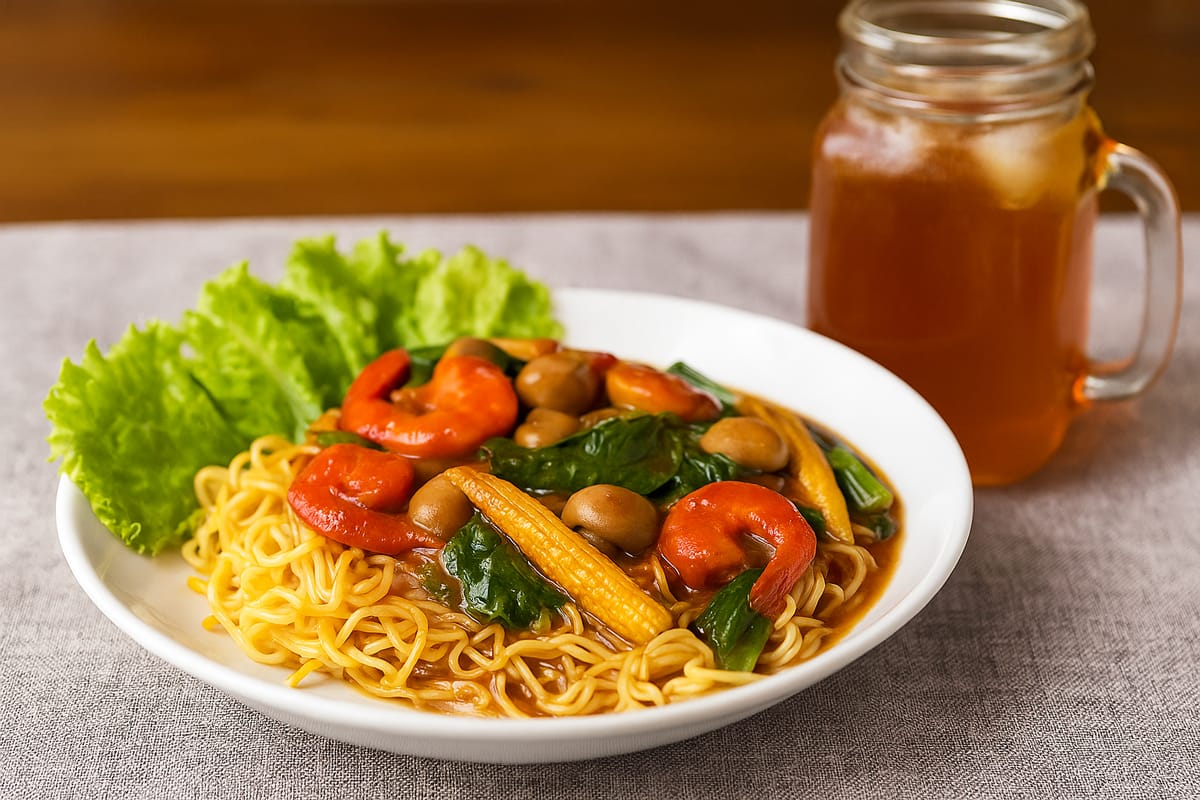
Noodles hold a special place in Indonesian cuisine. From the steaming comfort of mi godog (Javanese noodle soup) to the smoky depth of mi goreng (stir-fried noodles), from hearty mi kuah (brothy noodles) to the ever-popular mi bakso (meatball noodle soup), every region has its own take. Among these favorites, one dish stands out for its unique approach: Mi Siram Tumisan, Indonesian stir-fried noodles topped with a silky, savory gravy.
What makes this dish unique is its structure. Unlike most Indonesian noodles that are cooked directly together with broth or stir-fry seasonings, here the noodles are boiled separately, set aside, and later “bathed” in a savory stir-fry topped with silky gravy. The result is comfort food with a layered texture—springy noodles that soak up a garlicky sauce, rich with shrimp, vegetables, and the unmistakable sweetness of Indonesian kecap manis (sweet soy sauce).
A Journey Through the History of Noodles
Noodles are one of humanity’s oldest comfort foods. The word mi itself has roots in Chinese Hokkien (麵; pronounced mīⁿ in the Xiamen dialect), which later entered Indonesian vocabulary as mie or mi. In Italy, noodles evolved into pasta, while in English we use the word noodles, borrowed from the German Nudel, meaning “dough.”
Archaeological evidence shows that noodles have been part of human diets for at least 4,000 years. In 2005, researchers discovered an ancient bowl of millet noodles in the Yellow River valley of China, dating back to the Han Dynasty (25–220 CE). From China, noodles spread along the Silk Road—transforming into pasta in Italy, soba and udon in Japan, and countless regional variations across Asia.

Indonesia, as a historical crossroads of trade, embraced noodles wholeheartedly. Chinese migrants introduced wheat-based noodles centuries ago, and these gradually fused with local tastes and ingredients. Today, Indonesian noodle dishes range from humble street food to celebratory feasts.
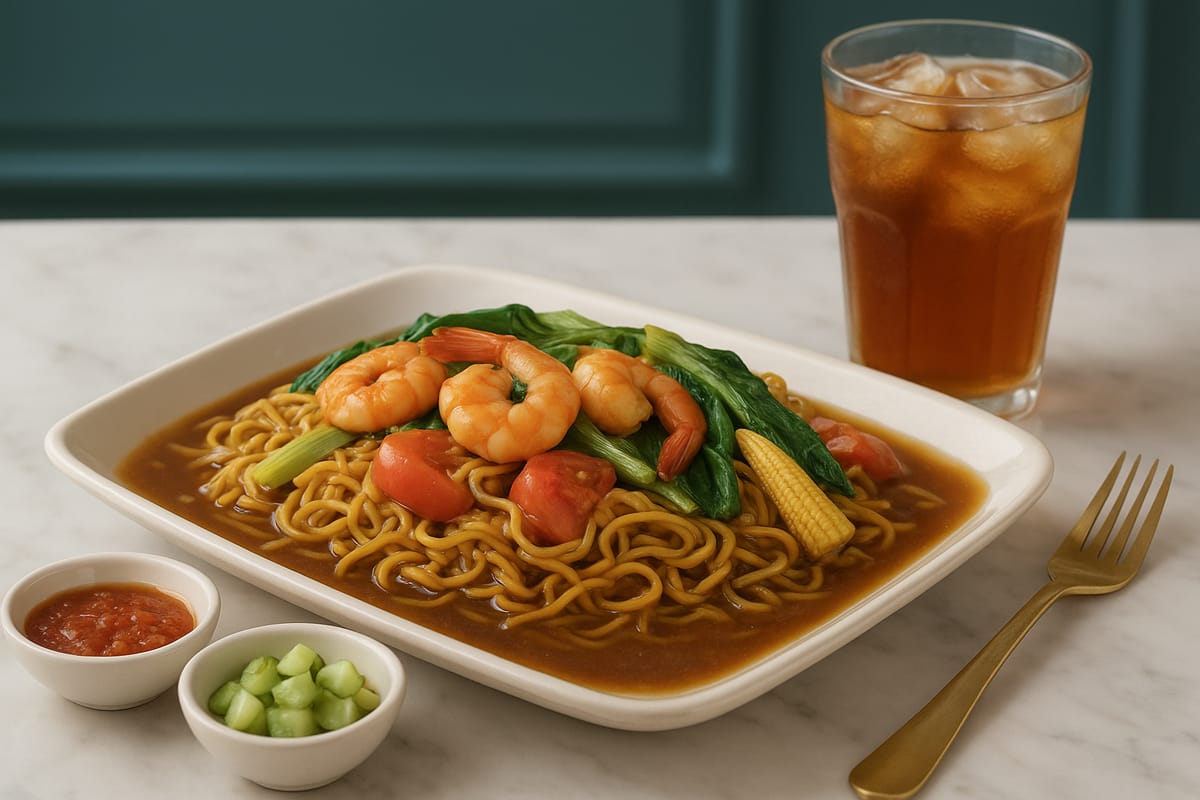
Indonesian Stir-Fried Noodles in Oyster Soy Gravy
Ingredients
Instruction
- Prepare the noodlesBoil dried noodles according to package instructions until al dente. Drain well, toss with 1 tsp oil to prevent sticking, and season lightly with salt and pepper. Set aside.
- Stir-fry the aromaticsHeat 2 tbsp vegetable oil in a wok or large skillet over medium-high heat. Add garlic and ginger, stir-fry until fragrant.
- Cook the proteinAdd the shrimp, stir-fry until they turn pink and slightly firm.
- Add vegetablesStir in baby corn and mushrooms. Cook for 2–3 minutes until slightly tender.
- Make the gravyPour in oyster sauce, kecap manis, and chicken broth. Stir and bring to a boil. Season with salt and pepper. If you prefer a thicker sauce, stir in the cornstarch slurry and cook until the gravy lightly thickens.
- Finish with greensAdd mustard greens (or bok choy/spinach) and sesame oil. Cook just until the greens wilt, about 1–2 minutes.
- ServePlace the noodles on individual serving plates or bowls. Spoon the hot stir-fry and gravy mixture generously over the noodles. Serve immediately.
Notes
- Noodles: If Indonesian dried noodles (mi kering) are not available, Chinese egg noodles, ramen noodles, or even spaghetti work well.
- Greens: Mustard greens (sawi hijau) may be hard to find. Use bok choy, spinach, or Swiss chard instead.
- Baby corn: Fresh baby corn is rare outside Asia; use canned or jarred baby corn, available in the Asian aisle.
- Kecap Manis: This Indonesian sweet soy sauce is key for authentic flavor. If unavailable, mix 2 parts soy sauce with 1 part brown sugar or molasses.
- Flavor balance: Indonesian kecap manis is sweeter than Western soy sauce blends, so adjust to taste if you prefer less sweetness.
- Extra protein: You can substitute shrimp with chicken, beef, or even tofu for a vegetarian version.
The Rise of Instant Noodles
Noodle culture took another leap in 1958, when Momofuku Ando in Japan invented instant noodles. Post–World War II Japan was struggling with food shortages, and ramen shops saw long queues of people waiting hours for a bowl. Ando sought a solution and perfected a technique to flash-fry noodles, creating small air pockets that made them cook quickly while staying shelf-stable. His first creation, Chikin Ramen, marked the birth of instant noodles.
From there, the phenomenon spread worldwide. In Indonesia, Indomie Mi Goreng became a global superstar. Food critics and online rankings have often crowned Indomie as one of the tastiest instant noodles in the world, loved for its sweet, savory, and slightly spicy seasoning. For many students, travelers, and busy workers, a packet of Indomie has been both a late-night snack and a nostalgic comfort.
Yet, while convenient, instant noodles come with nutritional caveats. They are typically made from refined wheat flour and contain preservatives like TBHQ and BHA to prolong shelf life. In moderation, instant noodles are harmless, but excessive consumption may contribute to obesity, liver strain, and poor nutrition. The key, as always, is balance—enjoy instant noodles occasionally, but embrace fresh, wholesome noodle dishes like Mi Siram Tumisan for everyday meals.
Stir-Frying: A Technique That Changed the World
The “tumisan” (stir-fry) element of this dish also has deep roots in Chinese culinary traditions. Historians trace stir-frying back more than 2,000 years, with the technique gaining popularity during the Ming Dynasty (1368–1644). Known in Mandarin as fan chao (翻炒), meaning “to stir and fry,” the method relies on cooking ingredients quickly over intense heat. This preserves texture, color, and nutrients, while creating a smoky, caramelized flavor known as wok hei.
As Chinese migrants spread across Asia and beyond, so did stir-frying. Today it’s one of the most recognized cooking methods worldwide, prized for being fast, healthy, and adaptable. In Indonesian kitchens, stir-frying meets local flavors—sweet soy sauce, chili, and garlic—resulting in a uniquely Southeast Asian taste.

The Philosophy of Noodles
In Asian cultures, noodles are more than food—they are symbols. In Chinese tradition, long noodles represent long life, often served at birthdays and New Year celebrations. In Japan, noodle-making is considered a form of craftsmanship, and dishes like soba are tied to rituals of renewal. Across Asia, noodles embody prosperity, continuity, and comfort.
In Indonesia, noodles play a similar role. They appear at family gatherings, festive banquets, and street food stalls alike. A bowl of noodles can be humble or luxurious, everyday sustenance or a celebration dish. Mi Siram Tumisan captures this spirit perfectly: hearty yet refined, nourishing yet deeply comforting.
Fusion and Modern Creativity
Modern Indonesian cuisine often fuses noodles with global influences. Just as Italian pasta inspired local variations, today’s chefs play with crossovers like spaghetti rendang (pasta with Indonesia’s iconic beef curry), ramen with sambal (Japanese noodles spiced with Indonesian chili paste), or carbonara with kecap manis. These playful creations prove that noodles are endlessly versatile, capable of bridging cultures while sparking creativity.
Why Mi Siram Tumisan Works for Western Palates
For American, European, and international audiences, this dish feels both exotic and familiar. The stir-fry technique mirrors popular Chinese takeout, while the gravy is reminiscent of comfort foods like chicken and mushroom sauce. The use of garlic adds warmth, while kecap manis provides a sweet-savory balance that resonates with Western tastes accustomed to teriyaki or honey-soy glazes.
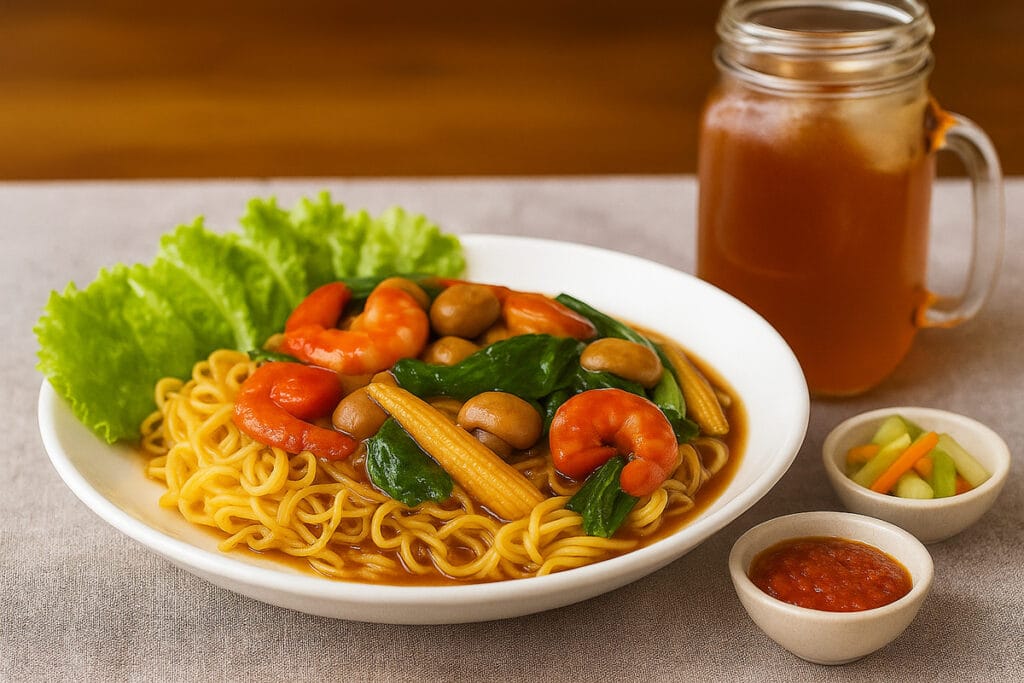
The vegetables—baby corn, mushrooms, mustard greens—offer texture and freshness. Shrimp brings a seafood richness, though chicken, beef, or tofu can be substituted easily. The final touch of sesame oil adds aroma without overpowering the dish. It’s a bowl that feels indulgent yet light, perfect for weeknight dinners or weekend comfort meals.
When to Serve Mi Siram Tumisan
This dish is flexible enough for many occasions:

- Family dinner: Quick to prepare, nutritious, and crowd-pleasing.
- Casual gathering: Serve in large bowls for guests to ladle over noodles.
- Celebration meals: Add extra seafood or beef for a more festive version.
- Cool evenings: The warm gravy is especially comforting in cold weather.
Whether for a cozy night in or a casual dinner party, this dish delivers warmth, comfort, and conversation.
Recipe Recap
Mi Siram Tumisan starts with boiled noodles (egg noodles, ramen, or even spaghetti in a pinch). The stir-fry combines shrimp, garlic, baby corn, mushrooms, and greens, all glazed in a sauce of oyster sauce, kecap manis, and chicken broth. A cornstarch slurry creates a glossy gravy that clings to the noodles. Served piping hot, it’s a dish that invites sharing.
Final Thoughts
Noodles have traveled across continents, transforming into countless forms yet always remaining a source of comfort. From ancient millet strands in China to Italian pasta, from instant ramen to Indonesian mi siram, noodles tell a story of migration, adaptation, and creativity.
Indonesian Stir-Fried Noodles with Savory Gravy is more than just dinner—it’s a culinary narrative. It reflects centuries of trade, the blending of cultures, and the joy of eating something simple yet profound. For Western audiences seeking both authenticity and accessibility, this dish is the perfect gateway into Indonesian home cooking.