- Lontong Daging originated as a preservation method during the Mataram Sultanate era.
- The dish features a creamy rice exterior and a spiced savory beef filling.
- Traditional banana leaf wrapping provides natural antibacterial properties and aroma.
- Lontong Daging is highly adaptable for Western kitchens with simple ingredient substitutions.
Discover the rich history and flavor of Lontong Daging, a beloved Indonesian rice cake. This guide explores the savory beef filling and traditional banana leaf wrapping techniques.
Unfolding a freshly boiled Lontong Daging reveals centuries of Javanese culinary ingenuity. The glossy, jade-green tinted rice cake releases an immediate aroma of floral coconut milk, earthy banana leaf, and bruised lemongrass. Cutting into it exposes a rich, spiced core of minced beef and root vegetables, simmered slowly in a turmeric and candlenut paste. This is not just a snack; it is a masterclass in texture and flavor balance, wrapped neatly in nature’s original eco-friendly packaging.
For foreigners looking to explore authentic Indonesian cooking, mastering Lontong Daging offers a profound entry point into the archipelago’s culinary soul. While the ingredient list may look extensive to those unfamiliar with Southeast Asian pantries, the techniques are deeply logical and highly adaptable for modern Western kitchens. (Sayur Godog Recipe: A Bold, Flavorful, and Legendary Betawi Stew – Lontong Daging).
The History and Origins of Lontong
The practice of wrapping food in leaves predates modern cookware in Southeast Asia. According to Indonesian food historians like Fadly Rahman, author of Jejak Rasa Nusantara, the technique of boiling rice in banana or palm leaves was born out of pure necessity. During the era of the Mataram Sultanate in Java, travelers, merchants, and warriors required a carbohydrate source that could withstand the sweltering tropical heat without spoiling rapidly. [Banana leaf – Wikipedia]
The tight wrapping compresses the rice, while the natural polyphenols in the banana leaves act as a mild antibacterial agent, extending the shelf life of this Lontong Daging. Over time, what began as a practical preservation method evolved into a culinary art. As highlighted by regional culinary publications like Kompas KLASS and echoed in global features by Saveur, regional variations emerged. While plain lontong is sliced and served with stews like Sayur Lodeh or Sate Ayam, stuffed versions like Lontong Daging (meat) or Lontong Isi Sayur (vegetables) became beloved standalone snacks, often categorized under jajanan pasar (traditional market snacks).

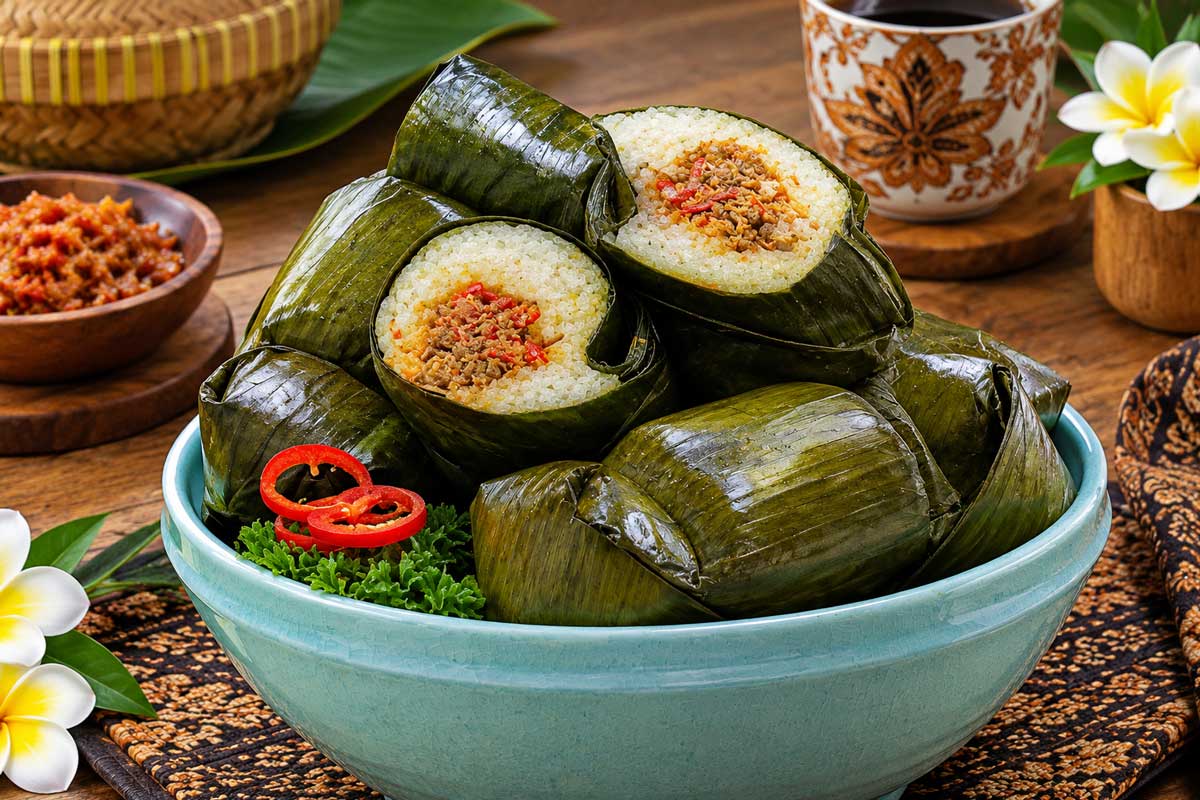
Authentic Lontong Daging (Indonesian Stuffed Rice Cakes)
Ingredients
Instruction
- Blend the Spice Paste: In a food processor or mortar and pestle, grind the shallots, garlic, curly red chilies, 2 large red chilies, toasted candlenuts, roasted turmeric, and shrimp paste until it forms a smooth paste.
- Sauté Aromatics: Heat 2 tablespoons of oil in a skillet over medium heat. Fry the blended spice paste along with the julienned large red chilies and 1 bay leaf until highly fragrant, and the oil begins to separate from the paste (about 5-7 minutes).
- Cook the Meat: Add the ground beef to the skillet. Stir constantly, breaking up any clumps, until the meat is fully browned and cooked through.
- Incorporate Vegetables and Seasoning: Add the pre-fried diced potatoes, boiled diced carrots, and sliced green beans. Toss to coat in the spices. Stir in the salt, white pepper, and sugar.
- Simmer: Pour in the 250ml of coconut milk. Reduce the heat to medium-low and simmer gently until the coconut milk is completely absorbed by the mixture and the filling is relatively dry. Remove from heat and let it cool completely.
- Boil the Liquids: In a large, heavy-bottomed pot, combine the 725ml coconut milk, bruised lemongrass, 2 bay leaves, and 1 ¼ tsp salt. Bring to a gentle boil over medium heat, stirring frequently so the coconut milk does not split.
- Cook the Rice: Once boiling, add the washed rice. Stir continuously over medium-low heat until the rice absorbs all the coconut milk. The rice will be half-cooked (aron) and sticky. Remove the lemongrass and bay leaves. Let the rice mixture cool slightly so it is easy to handle.
- Form the Lontong: Take a small handful of the half-cooked coconut rice (about 2-3 tablespoons). Flatten it in the palm of your hand (use plastic gloves or a bit of oil to prevent sticking). Place a spoonful of the cooled meat filling in the center. Carefully fold the rice over the filling, sealing it completely, and shape it into a neat oval or cylinder.
- Wrap: Place the formed rice cylinder onto a piece of softened banana leaf. Roll the leaf tightly around the rice. Fold both ends in securely (like wrapping a gift), and tie the bundle tightly with butcher's twine to ensure it stays compressed. Repeat until all 16 pieces are formed.
- Boil: Bring a large stockpot of water to a rolling boil. Submerge the wrapped lontong completely in the boiling water. Cover the pot and boil continuously for 3 hours. (Check periodically and add more boiling water to ensure the lontong remains fully submerged).
- Drain and Cool: Carefully remove the lontong from the water and place them in a colander in an upright or slanted position to drain excess water. Allow them to cool completely at room temperature before serving; they will firm up as they cool.
Notes
- Banana Leaf Prep: If using frozen banana leaves, thaw them first, wash them gently, and wipe them dry. To prevent tearing during the wrapping process, pass the cut sheets briefly over an open gas flame or dip them in hot water for a few seconds until they turn glossy and pliable.
- Boiling Time: Do not shortcut the 3-hour boiling time. This extended cooking process is what changes the texture of the rice from separate grains into a cohesive, compressed cake. For a faster method, a pressure cooker (Instant Pot) can be used on high pressure for 60 minutes with a natural release, though traditional boiling yields the most authentic texture.
- Storage: Lontong Daging is best enjoyed the day it is made. However, it can be kept in the refrigerator for up to 3 days. To reheat, steam the wrapped packages for 15 minutes until warmed through.
The Philosophy and Meaning Behind the Name
Linguistically, “lontong” simply describes the cylindrical shape of the pressed rice. However, in Javanese cultural philosophy, leaf-wrapped rice dishes carry deeper symbolism. Much like its diamond-shaped cousin, ketupat, the wrapping of lontong represents human flaws and sins, while the pure white rice inside symbolizes purity, cleanliness, and the heart. The painstaking process of making it—soaking, cooking, wrapping, and boiling for hours—teaches patience and communal effort, which is why these dishes are central to Indonesian gatherings.
How Lontong Daging is Served in Indonesia
In Indonesia, Lontong Daging is omnipresent. It is a staple in morning breakfast carts, stacked high alongside fried tofu and tempeh. It is frequently included in kue kotak (snack boxes) served at corporate meetings, community gatherings, and religious recitations.
Traditionally, it is eaten at room temperature. It requires no utensils; you simply peel back the banana leaf as you eat. Indonesians often eat it with a whole raw bird’s eye chili (cabe rawit hijau) held in the other hand, taking a small bite of the chili with each bite of the rice cake to add bursts of fiery heat. Occasionally, it is served alongside a thick, sweet-and-savory peanut sauce.
The Taste Profile
Lontong Daging is an umami bomb wrapped in a comforting carbohydrate blanket. The exterior rice is creamy, slightly chewy, and heavily perfumed by the coconut milk, lemongrass, and Indonesian bay leaf it was cooked in.
The filling provides a striking contrast. Ground beef, diced potatoes, carrots, and crisp green beans are heavily seasoned with a spice paste featuring toasted candlenut, earthy turmeric, and savory shrimp paste (terasi). The addition of sugar and coconut milk to the filling creates a localized caramelization as it cooks down, resulting in a savory, sweet, and deeply spiced interior that balances perfectly with the mild rice casing.
Global Cousins: Similar Foods Around the World
The concept of a stuffed, steamed carbohydrate is a universal human comfort, adapting to the native crops of different regions.

- Tamales (Mexico/Mesoamerica): Perhaps the closest Western equivalent. Instead of rice, tamales use masa (nixtamalized corn dough) and are wrapped in corn husks or banana leaves. While lontong is coconut-forward and creamy, tamales have an earthy, distinctively corn-forward flavor.
- Zongzi / Bak Chang (China): Sticky glutinous rice stuffed with pork, mushrooms, and salted egg yolk, wrapped in bamboo leaves. Zongzi is much denser and stickier than lontong, with flavor profiles leaning heavily into soy sauce, five-spice, and rich pork fat.
- Pasteles (Puerto Rico): A dough made from green plantains, root vegetables, and squash, filled with stewed pork and boiled in banana leaves. It shares the same earthy wrapper aroma but offers a completely different, slightly sweet plantain texture.
Nutritional Profile: Benefits and Risks
The Benefits: Lontong Daging is a highly energy-dense food. The inclusion of carrots and green beans provides Vitamin A and dietary fiber. The ground beef offers essential proteins and iron, while the spices like turmeric provide curcumin, known for its anti-inflammatory properties. It is a complete meal in a single package.
The Risks: This dish is rich in carbohydrates and saturated fats. The rice provides a high glycemic load, and the generous use of coconut milk in both the rice and the filling adds significant saturated fat. For individuals managing diabetes, high cholesterol, or watching their caloric intake, Lontong Daging should be consumed in moderation as an occasional treat rather than a daily staple.
International Adaptability & Ingredient Substitutions
Cooking authentic Indonesian food in the West often requires navigating around hyper-local ingredients. Fortunately, Lontong Daging is highly adaptable for international kitchens. Here is a curated substitution guide for Western supermarkets:
- Banana Leaves: These are crucial for the aroma and the green tint. You can almost always find them frozen in the freezer aisle of Asian or Hispanic grocery stores. Substitute: If completely unavailable, you can wrap the rice in food-safe parchment paper, then wrap that tightly in aluminum foil. You will lose the herbal aroma, but the structural integrity will remain.
- Daun Salam (Indonesian Bay Leaf): This has a citrusy, earthy flavor, unlike the Mediterranean bay leaf. Substitute: Use standard dried bay leaves, but add a tiny squeeze of fresh lime juice to the cooking liquid to mimic the missing citrus note.
- Kemiri (Candlenut): Used as a thickener and flavor enhancer. Substitute: Unsalted Macadamia nuts are a near-perfect botanical and textual match.
- Terasi (Fermented Shrimp Paste): Substitute: 1 teaspoon of high-quality fish sauce, or a dab of anchovy paste. Omit entirely if dealing with shellfish allergies.
- Rice: The recipe calls for standard Indonesian medium/long-grain rice. Substitute: Jasmine rice works beautifully. For the best texture, mix 80% Jasmine rice with 20% short-grain (sushi) rice to give it the necessary stickiness to bind together.
Estimated Cost to Make
Making Lontong Daging is highly economical, particularly because it relies on bulk pantry staples. Based on average US supermarket prices:
- Rice, Coconut Milk, Spices: $4.00
- Ground Beef (100g / ~0.25 lb): $2.00
- Vegetables (Potato, Carrot, Beans): $2.00
- Frozen Banana Leaves: $3.00 Total Estimated Cost: ~$11.00 USD for 16 substantial pieces, breaking down to less than $0.70 per lontong.