- Udang Goreng Masak Kecap is a historic Javanese dish blending Chinese soy sauce with local palm sugar.
- The signature flavor of Udang Goreng Masak Kecap comes from the viscous, jet-black kecap manis syrup.
- This Peranakan fusion food offers a unique balance of sweet, savory, and mild chili heat.
- Serving Udang Goreng Masak Kecap with jasmine rice and lalapan creates the perfect textural contrast.
Discover the authentic taste of Udang Goreng Masak Kecap, a beloved Indonesian sweet soy shrimp dish. This guide explores the Javanese seafood dish roots and how to master this Peranakan fusion food at home. Long before the sun rises over the bustling northern coasts of Java, the morning fish markets are already a symphony of shouted negotiations and the briny scent of the ocean. Fishermen haul in their nightly catch of udang jerbung (banana shrimp), laying them out on crushed ice beneath the glow of hanging lamps. By midday, these treasures of the Java Sea find their way into the heavy iron woks of local homes and warungs (small family-owned eateries), ready to be transformed by one of the archipelagos most beloved culinary inventions: kecap manis.
Udang Goreng Masak Kecap—fried shrimp cooked in sweet soy sauce—is far more than a simple weeknight dinner. It is a delicious historical ledger, mapping the centuries-old cross-pollination between indigenous Indonesian sensibilities and Chinese migrant traditions. When Hokkien traders settled along the coastal cities of the Indonesian archipelago centuries ago, they brought with them their essential culinary cornerstone: fermented soy sauce (kecap asin). However, the Javanese palate has long harbored a deep affection for sweetness, heavily relying on gula aren (dark, smoky palm sugar) harvested from indigenous palm trees. (Semur Daging: A Rich and Timeless Indonesian Stew – Udang Goreng Masak Kecap).
According to Indonesian culinary historian William Wongso, as well as accounts detailed in international gastronomy journals exploring Southeast Asian foodways, this intersection birthed kecap manis. Local cooks blended the salty, umami-rich Chinese soy sauce with thick, molasses-like palm sugar and indigenous spices like star anise and galangal. The result was a viscous, jet-black syrup that would become the defining flavor profile of the nation, a process similar to the creation of soy sauce globally, which is central to Udang Goreng Masak Kecap. When fresh coastal shrimp meets this deeply caramelized sauce, alongside the aromatic pungency of garlic and the mild, fruity heat of large tropical chilies, the resulting dish is a masterclass in Peranakan (Chinese-Indonesian) fusion. It is a heritage dish that tells the story of two distinct cultures uniting over a roaring flame.
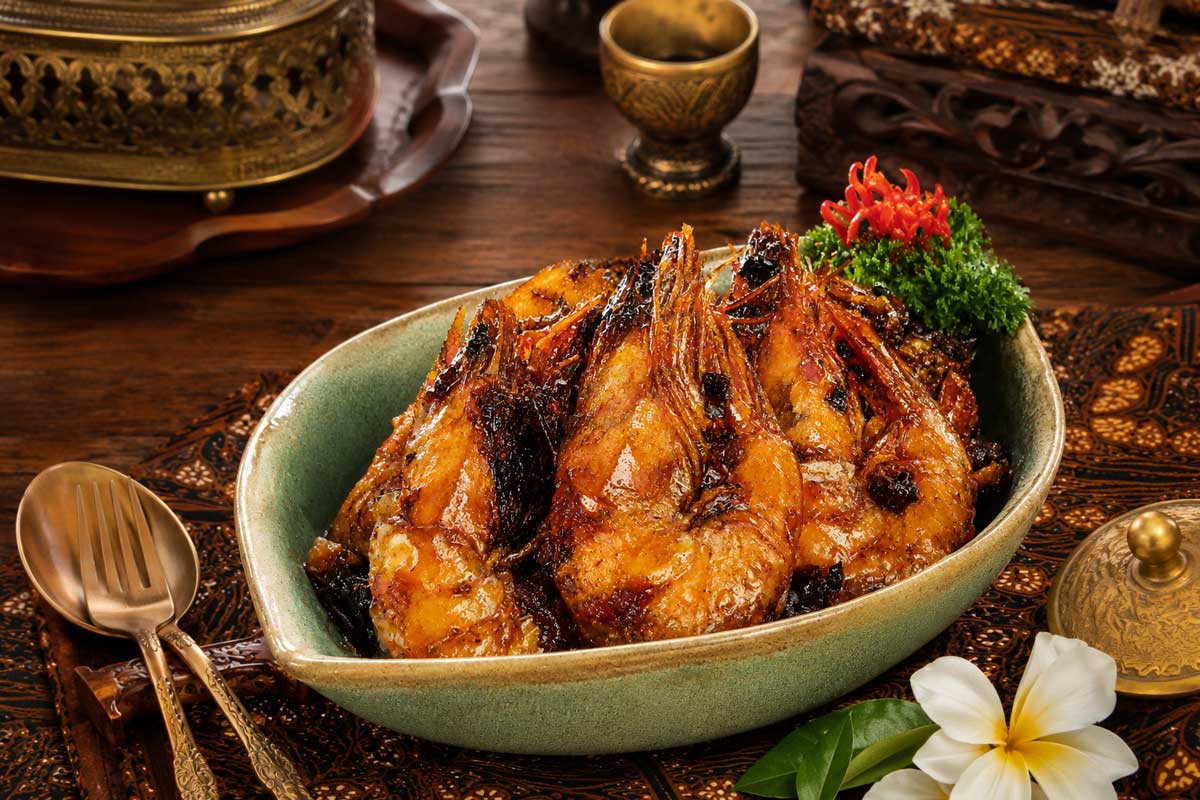
Authentic Udang Goreng Masak Kecap (Indonesian Sweet Soy Fried Shrimp)
Ingredients
Equipment
Instruction
- The Marination and Initial Fry:Begin by thoroughly cleaning the shrimp. You may choose to leave the shells on for extra flavor (a traditional Indonesian preference) or peel them while leaving the tails intact for a more elegant presentation. Place the cleaned shrimp into a mixing bowl and toss them with the fresh lime juice, 1/2 teaspoon of salt, and 1/2 teaspoon of pepper. Ensure every piece is well-coated. Let the shrimp rest at room temperature for precisely 20 minutes.Once marinated, pour enough oil into your wok to shallow fry the shrimp. Heat the oil over medium heat. Carefully drop the shrimp into the hot oil. Fry them briefly until they turn a beautiful opaque pink and are just cooked through (about 2-3 minutes). Do not overcook them, as they will return to the wok later. Remove the shrimp with a slotted spoon and set them aside on a plate lined with paper towels to drain excess oil.
- Building the Aromatic Base:Carefully discard the excess frying oil, leaving only about 2 tablespoons in the wok. Return the wok to medium-high heat. Add your roughly chopped garlic and yellow onion. Sauté this mixture continuously for about 2 minutes, or until the onions become translucent and the kitchen is filled with a rich, fragrant aroma. Next, toss in your chopped red and green chilies. Continue to stir-fry for another minute until the chilies slightly soften and wilt, releasing their natural oils into the pan.
- Crafting the Caramelized Glaze:Lower the heat slightly to prevent burning. To the aromatic mixture in the wok, add the 1/4 teaspoon of salt, 1/4 teaspoon of pepper, 1/4 teaspoon of sugar, the oyster sauce, and the star of the show—the 2 tablespoons of sweet soy sauce (kecap manis). Stir everything together vigorously. Allow the sauces to bubble and reduce for about 60 seconds. You are looking for the sauce to thicken into a sticky, glossy glaze that coats the back of your spatula.
- The Final Toss:Return the fried shrimp to the wok. Toss the shrimp in the bubbling, dark sauce, ensuring every single piece is completely enrobed in the sticky glaze. Stir-fry for a final 1 to 2 minutes so the shrimp can absorb the complex flavors of the soy, garlic, and chilies while reheating perfectly.Remove from the heat immediately. Transfer to a warmed serving platter and serve instantly alongside steaming hot rice.
A Symphony of Flavors: What to Expect
If you have never experienced Udang Goreng Masak Kecap, your palate is in for an extraordinary awakening. The dish is built on a foundation of profound umami, but it masterfully avoids being overwhelmingly salty.
When you take your first bite, the initial sensation is the sticky, caramelized glaze clinging to the shrimp shell and meat. This glaze offers a robust, smoky sweetness akin to dark molasses or treacle, courtesy of the kecap manis. This sweetness is immediately grounded by the savory depth of the oyster sauce and the sharp, earthy bite of roughly chopped garlic and onions. The shrimp themselves—having been marinated in lime juice—carry a faint, bright citrus undertone that cuts through the richness of the sauce, completely neutralizing any unwanted overly fishy odors (bau amis), a classic Indonesian seafood preparation technique.

Finally, the large red and green chilies provide a vibrant, grassy freshness. Because the seeds are removed, they act more as an aromatic vegetable than a fiery spice, offering just a gentle warmth that lingers pleasantly at the back of the throat without overpowering the delicate sweetness of the ocean-fresh shrimp.
Culinary Cousins: Global Equivalents
While this dish is distinctly Indonesian, it shares DNA with several celebrated recipes from around the globe, making it somewhat familiar to international food enthusiasts.
In the Philippines, Adobong Hipon (Shrimp Adobo) utilizes a similar cooking philosophy. However, where the Indonesian recipe leans heavily into the syrupy sweetness of kecap manis, the Filipino adobo relies on cane vinegar and regular soy sauce, resulting in a sharper, more acidic, and tangier flavor profile.
In China, specifically within Shanghainese cuisine, Hong Shao Xia (Red Braised Shrimp) is a close relative. Both dishes feature a dark, glossy coating, but the Chinese variation achieves this through a combination of light soy sauce, dark soy sauce, and rock sugar. The Indonesian version is noticeably thicker and carries the unique smoky undertone of palm sugar.
In Japan, one might draw a comparison to Ebi Teriyaki (Teriyaki Shrimp). While both are sweet and savory, Teriyaki utilizes mirin and sake for a glossy finish and a refined, slightly alcoholic sweetness. Udang Goreng Masak Kecap is much more rustic, utilizing the bold alliums (garlic and onion) and chilies to create a thicker, more textured, and profoundly aromatic sauce.
Nutritional Profile: Benefits and Considerations
As with most traditional recipes, understanding the nutritional value helps in planning a balanced diet.
The Benefits: Shrimp is a fantastic source of high-quality, lean protein, making it excellent for muscle repair and satiety. Furthermore, international nutrition science highlights that shrimp is abundant in astaxanthin—the reddish pigment that becomes visible when they are cooked. Astaxanthin is a powerful antioxidant known to support skin health and reduce cellular inflammation. The generous use of garlic and onions infuses the dish with allicin and quercetin, natural compounds renowned for their immune-boosting and antimicrobial properties.
The Risks and Dangers: While highly nutritious, shrimp is naturally high in dietary cholesterol. Although modern dietetics suggests that dietary cholesterol has less impact on blood cholesterol than previously thought, individuals with specific cardiovascular concerns should consume it in moderation. The more pressing concern in this dish is the sodium and sugar content. Both kecap manis and oyster sauce are high in sodium, and the sweet soy sauce is, by definition, loaded with sugar. Therefore, this dish is best enjoyed as part of a balanced meal rather than an everyday staple. Crucially, this dish poses a severe danger to anyone with a shellfish allergy, and those individuals must strictly avoid it.

The Art of Serving
In Indonesia, dishes are rarely eaten in isolation; they are part of a communal dining experience known as makan tengah (eating from the center).
Udang Goreng Masak Kecap is exceptionally rich and intensely flavored, meaning it requires a neutral canvas. It must be served piping hot alongside a generous mound of steamed jasmine rice (nasi putih). The rice absorbs the excess caramelized soy glaze beautifully.
To balance the richness of the sweet and savory sauce, it is highly recommended to serve this alongside a crisp, refreshing vegetable dish. A simple stir-fry of water spinach (tumis kangkung) or a platter of freshly sliced cucumbers, tomatoes, and cabbage (lalapan) provides the perfect textural crunch and palate-cleansing hydration. Do not forget a side of kerupuk (Indonesian tapioca or prawn crackers) to add an essential auditory crunch to the meal. This dish is perfect for a lively weekend family dinner, or as a centerpiece during festive gatherings such as Eid al-Fitr or Lunar New Year celebrations in Peranakan households.
Navigating the Western Supermarket: Ingredient Substitutions
For readers living outside of Southeast Asia, hunting down specific Indonesian ingredients can sometimes feel like an impossible quest. However, with a few clever substitutions, you can replicate this authentic flavor profile using ingredients found in almost any standard Western supermarket or local Asian grocery store.
- Udang Jerbung (Banana Shrimp): This specific variety is prized in Indonesia for its firm texture and sweet meat. If unavailable, look for large Tiger Prawns, King Prawns, or standard large White Shrimp (often sold as 21/25 count per pound). Frozen shrimp are perfectly fine; just ensure they are fully thawed and patted completely dry with paper towels before marinating.
- Kecap Manis (Indonesian Sweet Soy Sauce): This is the soul of the dish. If you cannot find the ABC or Bango brand at your local Asian grocer, you can easily make a substitute at home. Simmer equal parts regular soy sauce (like Kikkoman) and dark brown sugar or molasses in a small saucepan over low heat until the sugar dissolves and the liquid reduces to a thick, syrupy consistency. Let it cool before using.
- Cabai Merah dan Hijau Besar (Large Red and Green Chilies): Indonesian large chilies are relatively mild and are used more for their vibrant color and bell-pepper-like flavor rather than pure heat. In a Western supermarket, Fresno chilies or Anaheim peppers are excellent substitutes. If you are entirely averse to heat, you can safely use sliced red and green bell peppers (capsicum) without compromising the structural integrity of the recipe.
- Bawang Bombay (Onion): The recipe calls for bawang bombay, which translates directly to the standard yellow or brown onion found globally. A sweet Vidalia onion or even shallots would also work wonderfully.
- Jeruk Nipis (Key Lime/Lime): The small, aromatic limes of Indonesia can be substituted with standard Persian limes or even a splash of lemon juice in a pinch. The goal is simply to provide a citric acid wash to clean the seafood flavor.
Estimated Cost to Cook
One of the beauties of this dish is its elegance disguised in affordability. Depending on your location (estimated here in US Dollars for a Western audience), preparing this dish for four people is quite economical.
- Large Shrimp (400g / ~1 lb): $10.00 – $14.00
- Aromatics (Garlic, Onion, Chilies, Lime): $2.50
- Pantry Staples (Kecap Manis, Oyster Sauce, Oil, Spices): ~$1.50 (assuming you have the bottles, representing a fraction of their total cost)
- Estimated Total Cost: $14.00 – $18.00 (Approximately $3.50 to $4.50 per serving), making it a highly cost-effective gourmet meal compared to dining out at a Southeast Asian restaurant.