- Mi Bebek originated in Banjar, West Java, and is a hyper-regional street food staple.
- The authentic Mi Bebek recipe traditionally uses Muscovy duck (entok) for a less gamey flavor.
- The broth is a complex blend of duck bones, ginger, and toasted candlenut for depth.
- Serving Mi Bebek with vinegar and sambal allows diners to balance the rich, savory profile.
Discover the deep, savory secrets of Mi Bebek, the legendary dish that defines West Javanese cuisine. This guide explores the authentic Mi Bebek recipe and its unique cultural roots.
Long before the sun sets over the West Javanese landscape, the bustling provincial market of Pasar Langensari begins to shift its rhythm. Amidst the winding down of daily vegetable vendors, a distinct, deeply savory aroma begins to waft through the humid air—the smell of poultry fat rendering slowly, mingled with the earthy notes of toasted coriander and bruised lemongrass. This is the unmistakable scent of Mi Bebek, a hyper-regional duck noodle soup that has quietly anchored the culinary identity of Banjar Patroman since the 1960s.
When foreign gastronomes think of “Banjar,” their minds often drift across the Java Sea to Banjarmasin in South Kalimantan, or perhaps Banjarnegara in Central Java. But the city of Banjar in West Java, a critical transit hub acting as the gateway to the beautiful beaches of Pangandaran, harbors its own fiercely guarded culinary secrets. According to local West Javanese culinary archives and the oral histories passed down by street food vendors, Mi Bebek began as a humble cart operation over six decades ago. (Udang Goreng Masak Kecap: The Heritage Sweet Soy Shrimp of Java – Mi Bebek).
What makes this dish truly extraordinary is the traditional choice of poultry. While modern iterations use standard duck (bebek), the original Langensari masters utilized entok (Muscovy duck). With its distinctive black-and-white plumage and shorter stature, the entok yields a meat that is significantly less gamey and muddy-tasting than standard farm ducks. Today, whether using entok or standard duck, the dish stands as a testament to Indonesian ingenuity: transforming humble poultry bones into a liquid gold broth, and heavily spicing the meat to eradicate any trace of unpleasant gaminess (bau amis). [Aleurites moluccanus – Wikipedia]
Decoding the Flavor Profile of Mi Bebek
Eating Mi Bebek is an exercise in textural and aromatic layering. Unlike many noodle soups where the meat is simply boiled, the duck in Mi Bebek undergoes a rigorous double-cooking process.

First, the duck is braised in a potent spice paste featuring roasted turmeric, toasted candlenut, and aromatic leaves until the liquid evaporates, driving the flavors deep into the muscle fibers. Then, it is deep-fried. This results in a topping that is incredibly savory, with a slightly crispy exterior and a tender, heavily spiced interior.
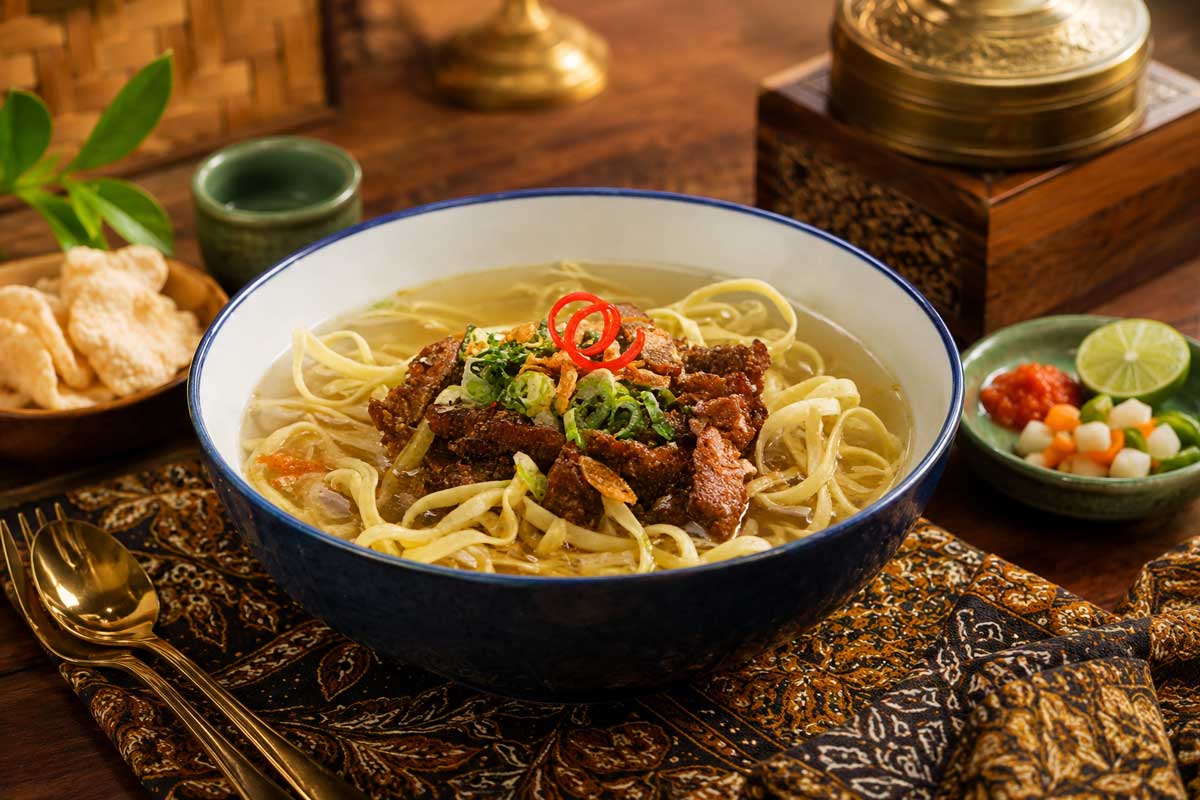
The noodles—traditionally wide, flat wheat noodles—are blanched and tossed with a splash of salty soy sauce (kecap asin) before the broth is introduced. The broth itself is a revelation. By relying exclusively on duck bones heavily fortified with ginger, toasted candlenut, and white pepper, the soup is deeply savory, slightly yellow in hue, and aggressively fragrant. It possesses a luxurious mouthfeel from the rendered duck collagen but stops short of being heavy or cloying.
Mi Bebek (Banjar-Style Duck Noodle Soup)
Ingredients
Equipment
Instruction
- Prepare the Duck Meat:Place the duck meat in a bowl and massage it thoroughly with the tamarind paste and 1/2 teaspoon of salt. Let it rest at room temperature for 15 minutes. This step neutralizes any gamey odors.
- Braise the Duck (Ungkep):In a food processor or mortar, grind all the ingredients for the Duck Marinade Spice Paste into a smooth paste. In a wok or skillet, combine the marinated duck meat, the spice paste, bay leaves, bruised ginger, lime leaves, lemongrass, and 200 ml of water. Stir well. Bring to a simmer over low heat. Cook gently until the duck is tender, the water has entirely evaporated, and the spices cling tightly to the meat. Remove the duck and let it cool slightly.
- Fry the Duck:Heat a generous amount of oil in a wok over medium heat. Carefully fry the braised duck pieces until the exterior is deeply browned and crispy. Remove from the oil, drain on paper towels, and set aside. Once cooled to the touch, chop the duck into bite-sized pieces.
- Craft the Bone Broth:First, prepare the broth paste by grinding the garlic, white pepper, and toasted candlenuts until smooth. Heat 2 tablespoons of oil in a large stockpot over medium heat. Sauté this broth paste until it is highly fragrant and lightly golden (about 2-3 minutes).
- Simmer the Soup:To the sautéed paste in the stockpot, add the 2 liters of water, duck bones, bruised ginger, salt, sugar, and the chicken bouillon block. Bring the mixture to a rolling boil, then reduce the heat and let it simmer uncovered for at least 45 minutes to an hour, allowing the duck bones to release their rich flavor. Skim any excessive foam off the top. Just before turning off the heat, stir in the thinly sliced scallions. Taste and adjust seasoning if necessary.
- Assemble the Bowls:Divide the hot, boiled wide noodles equally among four large serving bowls. Add exactly 1 teaspoon of salty soy sauce (kecap asin) to each bowl and toss the noodles vigorously until they are evenly coated.Top the noodles with a generous mound of the chopped, crispy duck meat. Ladle the boiling hot duck bone broth over the noodles and meat. Garnish generously with chopped celery leaves and crispy fried shallots. Serve immediately while piping hot!
Global Relatives of This Duck Noodle Masterpiece
While deeply rooted in West Javanese culture, Mi Bebek shares a fascinating culinary dialogue with other international duck dishes.
In Thailand, Kuay Teow Ped (Thai Duck Noodle Soup) is a beloved street food staple. However, the Thai version relies heavily on Chinese five-spice, star anise, and cinnamon, creating a dark, sweet, and herbal broth. Mi Bebek, by contrast, draws its power from native Southeast Asian rhizomes—galangal, turmeric, and ginger—resulting in a brighter, more earthy, and peppery profile.
In China, Cantonese Roast Duck Noodle Soup pairs incredibly delicate, clear chicken or pork broths with slices of sweet, plum-glazed roast duck. The Chinese philosophy often highlights the contrast between the rich meat and a highly purified broth. The Indonesian approach is more holistic; the duck bones themselves create the heavily spiced soup, ensuring the essence of the bird permeates every single drop.
In France, one might look to a classic Duck Consommé. While the French technique focuses on clarifying the broth to crystal perfection using egg whites and gentle simmering with mirepoix (celery, carrots, onions), Mi Bebek is unapologetically rustic. It embraces the cloudy, emulsified richness of crushed candlenuts and bone marrow.
The Nutritional Truths Behind Mi Bebek
Understanding the nutritional landscape of Mi Bebek requires looking at both its nourishing qualities and its indulgences.
The Benefits: The slow-simmered duck bone broth is an exceptional source of natural collagen, glucosamine, and chondroitin, which international nutritional sciences recognize as vital for joint health and skin elasticity. Duck meat is incredibly rich in high-quality protein, iron, and essential B vitamins, particularly Niacin (Vitamin B3) and Riboflavin, which aid in converting food into usable energy. Furthermore, the extensive use of turmeric provides a healthy dose of curcumin, a scientifically proven anti-inflammatory compound.
The Dangers and Considerations: Duck is inherently fattier than chicken. While much of this fat is rendered out during the cooking process, the broth and the deep-fried meat still contain high levels of saturated fats and calories. Additionally, the use of chicken bouillon blocks and soy sauce introduces a significant amount of sodium. It is a hearty, restorative meal, but one better suited as an occasional indulgence rather than a daily dietary staple for those monitoring their cardiovascular health.
Demystifying Candlenut (Kemiri): A Warning and A Guide
For a Western cook attempting authentic Indonesian cuisine, kemiri (candlenut) is often the most confusing ingredient. Biologically known as Aleurites moluccanus, this waxy, cream-colored nut is the secret behind the thick, velvety texture of many Indonesian curries and broths, acting as a natural thickener and flavor enhancer.
The Danger: You must never eat candlenut raw. Raw candlenuts contain toxic compounds, specifically saponins and phorbol, which act as severe gastrointestinal irritants. Consuming raw candlenut will lead to intense stomach cramps, nausea, and vomiting.
The Solution: The toxicity is completely neutralized by heat. Before grinding candlenut into your spice pastes (bumbu halus), you must always dry-roast (toast) them. Simply place the raw nuts in a dry skillet over medium-low heat. Toss them continuously for 5 to 10 minutes until they turn golden brown and release a deeply nutty, slightly smoky aroma. Once toasted, they are perfectly safe, incredibly delicious, and ready to be crushed into your marinades.
Sourcing Ingredients for Mi Bebek in Western Markets
Recreating a West Javanese street food classic in a Western kitchen requires some strategic shopping. Here are the best substitutions if you cannot find a local Asian grocer:
- Daging & Tulang Bebek (Duck Meat & Bones): Finding a Muscovy duck (entok) in a Western supermarket is nearly impossible unless you visit a specialty butcher. Standard Pekin duck or Long Island duck works perfectly. Buy a whole duck, break it down, use the meat (breast and legs) for the braise, and reserve the entire carcass (bones) for the broth.
- Kemiri (Candlenut): If you cannot find candlenuts, the universally accepted, perfect substitute is the Macadamia nut. Macadamias have an almost identical fat content and texture. You do not need to roast macadamia nuts for safety, but toasting them lightly will better mimic the smoky flavor of traditional kemiri.
- Asam Jawa (Tamarind): If tamarind pulp is unavailable, substitute the 1 tablespoon of tamarind with 1 tablespoon of fresh lime juice mixed with a tiny pinch of brown sugar.
- Daun Salam (Indonesian Bay Leaf): This leaf is earthy and citrusy. If unavailable, use Indian bay leaves (Tejpatta) or standard Western bay leaves, though the flavor will be slightly more medicinal.
- Kunyit Dibakar (Roasted Turmeric): The recipe calls for 2 cm of fresh turmeric, roasted over an open flame. If you only have ground turmeric, use 1/2 teaspoon of ground turmeric powder.
- Mi Lebar (Wide Noodles): If you cannot find fresh Asian wide wheat noodles, Italian Fettuccine or Pappardelle pastas are fantastic textural substitutes. Wide egg noodles also work beautifully.
The Art of Serving Mi Bebek
In Banjar, serving Mi Bebek is a carefully orchestrated ritual. The bowls are assembled á la minute.
It is traditionally served on cool, rainy evenings, acting as a warming balm against the chill. The wide noodles are blanched and placed in the bottom of a wide bowl, immediately tossed with a splash of salty soy sauce so the noodles absorb the flavor before the broth even hits them.
The chopped, fried duck is piled high in the center. The boiling, fragrant golden broth is ladled over the top, wilting the fresh celery leaves and rehydrating the crispy fried shallots. It is imperative to serve this dish with a side of white vinegar (to cut the richness), a spoonful of fiery chili sambal, and a bottle of sweet soy sauce (kecap manis) so diners can adjust the final flavor profile to their exact liking.
Estimated Cost to Cook
Cooking duck in a Western country is generally considered a luxury, so this recipe leans toward a weekend culinary project. (Prices estimated in USD).
- Whole Duck (for meat and bones): $20.00 – $25.00
- Noodles (Wide wheat or Fettuccine): $3.00
- Aromatics & Spices (Ginger, Lemongrass, Macadamia/Candlenut, etc.): $5.00
- Garnishes & Condiments: $3.00
- Estimated Total Cost: $31.00 – $36.00 (Roughly $8.00 – $9.00 per serving). While pricier than standard chicken soup, it is a fraction of the cost of ordering a specialty duck dish at a high-end restaurant.