Go Back
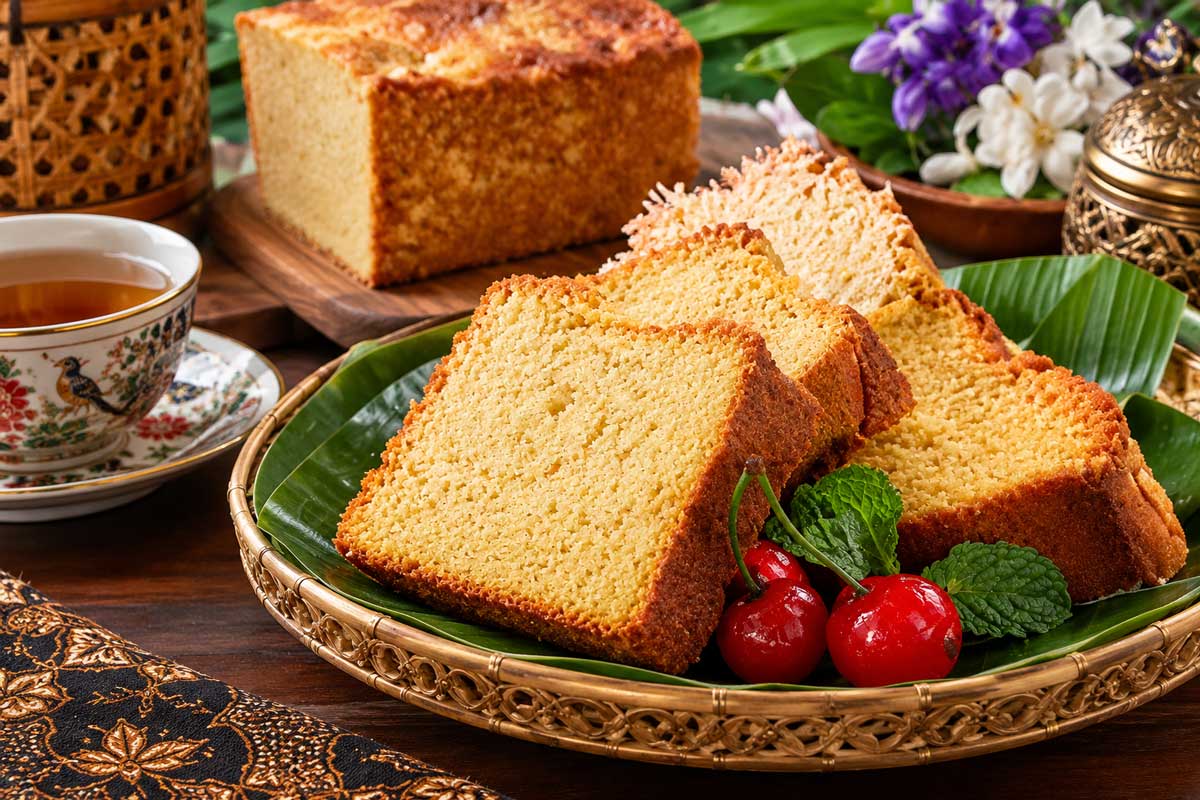
Slice of fluffy Ontbijtkoek recipe cake with nuts

Indonesian Spiced Cake (Ontbijtkoek)

Ontbijtkoek is a beloved Indonesian-Dutch heritage cake—fluffy, aromatic, and rich with the scent of cinnamon, nutmeg, and cloves. Unlike the dense, bread-like Dutch original, the Indonesian adaptation is a light, airy sponge cake sweetened with deep, caramel-like palm sugar. It is traditionally served as an afternoon snack with coffee or tea, offering a warm, nostalgic flavor profile that is perfect for autumn and winter baking.
This Western-adapted recipe preserves the authentic Indonesian sponge technique while utilizing spices and sugars easily found in standard grocery stores.
Prep Time 15 minutes
Cook Time 30 minutes
Total Time 45 minutes
Servings: 20 slices (1 standard baking pan)
Course: Cake, Dessert, Snack
Cuisine: Dutch-Indonesian Fusion, Indonesian
Calories: 120

Ingredients
  

For the Cake Batter
  • 10 large egg yolks room temperature
  • 7 large egg whites room temperature
  • 1 cup 200 g palm sugar (gula palem), sifted to remove lumps
  • 1 ⅓ cups 175 g all-purpose flour (tepung terigu), sifted
  • 2 tsp bumbu spekuk Indonesian layer cake spice mix
  • ⅓ cup 75 g unsalted butter, melted and slightly cooled
For the Topping
  • 1 cup 100 g walnuts or kenari nuts, roughly chopped

Instruction
 

  1. Prepare for baking. Preheat your oven to 350°F (180°C). Grease a standard square or rectangular baking pan and line the bottom with parchment paper.
  2. Whip the eggs and sugar. In a large, clean mixing bowl, combine the 10 egg yolks, 7 egg whites, and the palm sugar. Using an electric stand mixer or hand mixer on high speed, beat the mixture until it becomes very thick, pale, and fluffy. It should reach the "ribbon stage" (leaving a trail when the whisk is lifted). This takes about 8–10 minutes.
  3. Fold in the dry ingredients. In a separate bowl, whisk together the sifted flour and the bumbu spekuk (spice mix). Gently fold this dry mixture into the whipped eggs using a silicone spatula. Fold carefully in a figure-eight motion to avoid deflating the airy egg batter.
  4. Incorporate the butter. Pour the melted (but not hot) butter into the batter. Fold gently just until the butter is completely incorporated and no greasy streaks remain. Do not overmix.
  5. Pour and garnish. Pour the batter evenly into the prepared baking pan. Tap the pan gently on the counter twice to release any large air bubbles. Sprinkle the chopped walnuts (or kenari) evenly over the top of the batter.
  6. Bake. Bake in the preheated oven for 30 minutes, or until a wooden skewer inserted into the center of the cake comes out clean and the top springs back when lightly touched.
  7. Cool. Remove from the oven and let it cool in the pan for 10 minutes before transferring the cake to a wire rack to cool completely. Slice and serve.
Notes

  • Spekkoek Spice (Bumbu Spekuk) Substitute: If you cannot find pre-mixed Indonesian bumbu spekuk, make your own by whisking together: 1 tsp ground cinnamon, ½ tsp ground nutmeg, ¼ tsp ground cloves, and ¼ tsp ground cardamom or anise.
  • Palm Sugar Alternatives: Authentic gula palem gives the cake its signature caramel-molasses color and flavor. If unavailable, substitute with an equal amount of Dark Brown Sugar or Muscovado sugar.
  • Nut Substitutions: Indonesian recipes often use kenari (pili nuts), which are native to the Maluku islands. Walnuts or slivered almonds are the perfect, easily accessible Western substitutes.
  • The Egg Ratio (Why 10 yolks and 7 whites?): Using more yolks than whites is a classic Indonesian baking secret. It yields a cake that is incredibly rich, tender, and moist, without relying on massive amounts of butter.