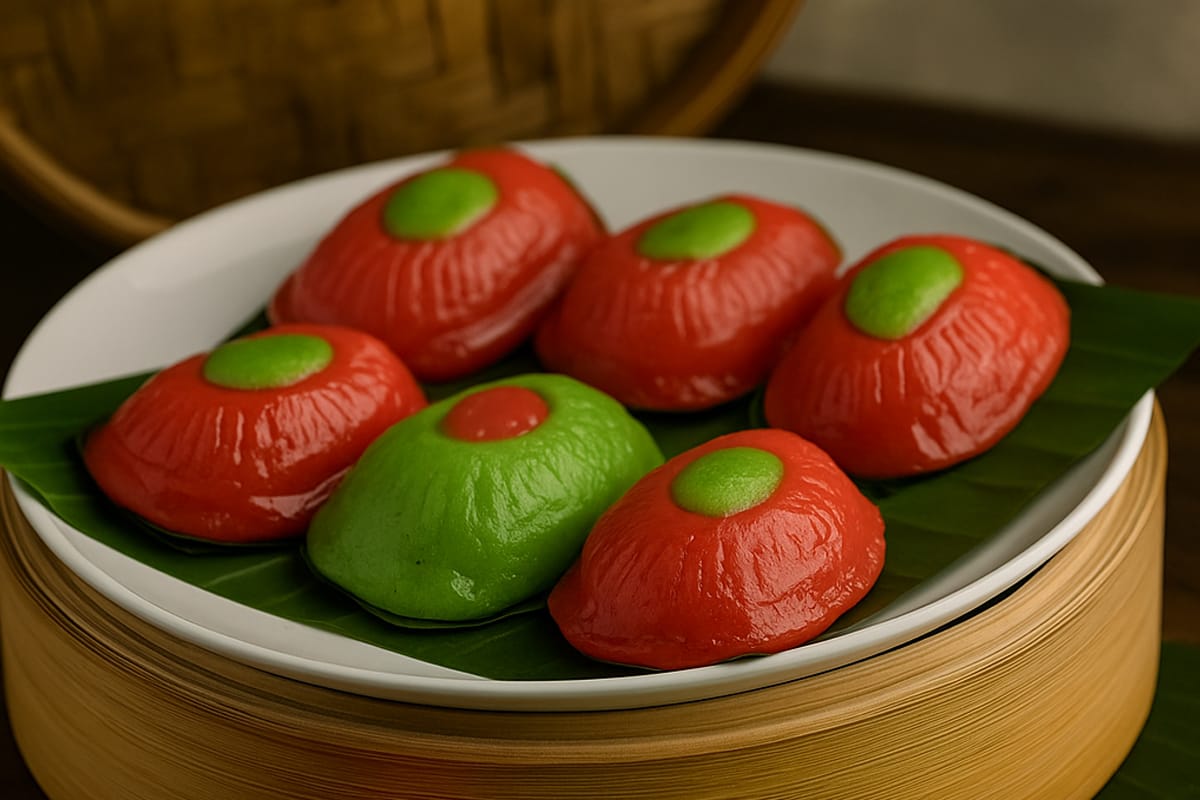
Among the colorful array of Southeast Asian pastries, few are as visually striking and symbolically rich as Kue Ku, also known as Ang Ku Kueh or the “red turtle cake.” This chewy glutinous rice pastry, filled with sweet mung bean paste and often pressed into a turtle-shaped mold, has traveled centuries from Chinese temples to Indonesian markets, from royal feasts to humble street stalls. Today, it continues to be enjoyed not only in Indonesia but also across Malaysia, Singapore, Thailand, Taiwan, and among Chinese diaspora communities worldwide.
This article explores the history, culture, and symbolism of Kue Ku, while also guiding Western readers through its taste, preparation, challenges, and possible adaptations for modern kitchens.
Origins of Kue Ku: From China to Indonesia
Kue Ku is deeply rooted in Chinese Hokkien tradition, where it is called Ang Ku Kueh (紅龜粿). The name itself reflects its essence:
- Ang means red, a color that symbolizes luck, happiness, and prosperity in Chinese culture.
- Ku means turtle, a creature revered for longevity, wisdom, and resilience.
- Kueh means cake or pastry.
Thus, Ang Ku Kueh literally translates to “red turtle cake.”
This pastry was traditionally prepared as an offering during birthdays, temple ceremonies, and particularly during Chinese New Year. The turtle shape represents long life, while the red color symbolizes good fortune. Eating and offering this pastry was a way of sharing blessings of health and prosperity within families and communities.

As Chinese migrants settled in Indonesia centuries ago, especially during the era of kingdoms and later under Dutch colonial influence, they brought this pastry along. Over time, Ang Ku Kueh blended with Indonesian culinary identity, becoming known locally as Kue Ku.
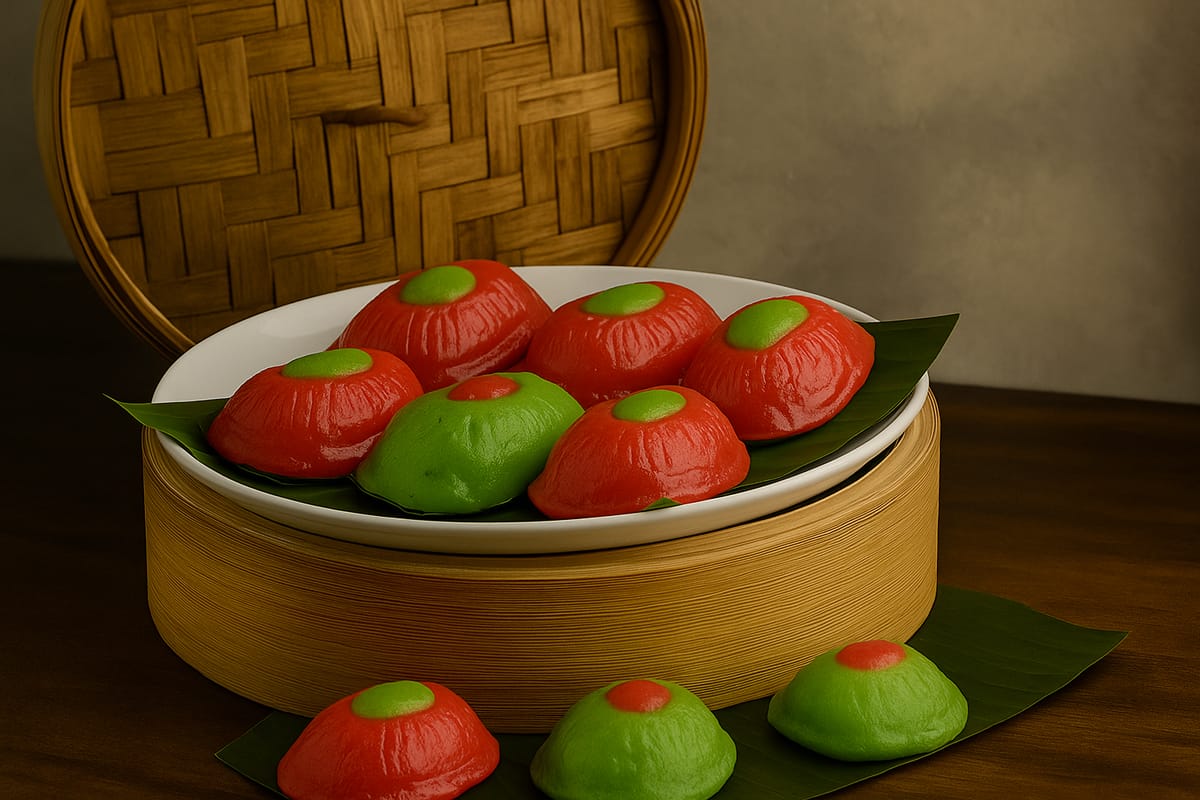
Indonesian Kue Ku (Ang Ku Kueh – Sweet Mung Bean Pastry)
Ingredients
Instruction
- Soak mung beans in water for 2 hours. Drain.
- Steam for 30 minutes until soft, then mash until smooth.
- Cook mashed beans in a nonstick pan with sugar, coconut milk, salt, and pandan leaves. Stir constantly over medium heat until mixture thickens and can be shaped.
- Remove pandan leaves, cool completely, then roll into small balls (about 2 teaspoons each). Set aside.
- In a bowl, combine glutinous rice flour, mashed potato, powdered sugar, salt, and oil.
- Gradually add warm coconut milk, kneading until the dough is soft, smooth, and pliable.
- Divide: color ¾ of the dough green, and ¼ red (or any preferred combination).
- Take a piece of dough (about 1 tablespoon), flatten in your palm, and place a mung bean ball inside. Seal and roll into a smooth ball.
- Dust a traditional kue ku mold (turtle-shaped mold) with glutinous rice flour. Place dough ball inside, press firmly, then tap out carefully.
- Place each piece on an oiled banana leaf square.
- Prepare a steamer with boiling water. Wrap the steamer lid with a clean kitchen towel to prevent condensation dripping onto the pastries.
- Steam the kue ku for 12–15 minutes over medium heat.
- Remove from steamer and immediately brush lightly with oil for a glossy finish.
Notes
- Mung beans (kacang hijau kupas): Look for yellow hulled mung beans at Asian groceries. Split yellow mung beans or lentils can be substituted, though the flavor is slightly different.
- Banana leaves: Found frozen in Asian or Latin markets. If unavailable, line the steamer with parchment paper.
- Coconut milk: Canned coconut milk works well. Choose a full-fat version for authentic richness.
- Potato (kentang): Some versions use sweet potato instead of regular potato, which gives a slightly sweeter and softer dough.
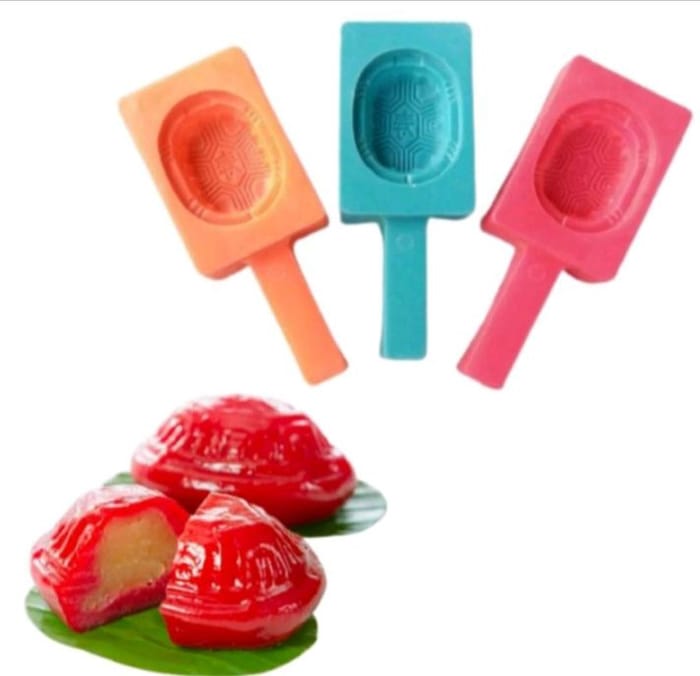
- Molds: Traditional turtle-shaped molds are sold in Asian kitchenware shops or online. A small mooncake mold or any patterned press can be used instead.
- Coloring: Traditionally red or green. Natural coloring (beet juice, matcha, pandan extract) can be used instead of food dye.
- Storage: Best enjoyed fresh. Store leftovers in an airtight container at room temperature for 1 day, or refrigerate up to 3 days. Steam briefly before serving to soften.
Kue Ku in Indonesian Culture
In Indonesia, Kue Ku is often categorized as “jajanan pasar”—traditional market snacks. Its popularity spread far beyond Chinese communities, becoming a familiar treat for Javanese, Sundanese, and other ethnic groups.
- In Java, it is also called Kue Thok. The name comes from the thok (knock) sound produced when the pastry is tapped out of its mold.
- In some regions, it is casually referred to as “kue kura-kura” (turtle cake) because of its shell-like pattern.
- During weddings, circumcision ceremonies, and communal feasts (kenduri), Kue Ku is often served as a symbol of blessing.
What makes Kue Ku particularly Indonesian is its integration into diverse ceremonies—from Chinese New Year to Javanese slametan rituals. This reflects Indonesia’s cultural tapestry, where culinary traditions merge seamlessly across ethnic boundaries.
The Philosophy and Symbolism Behind Kue Ku
Kue Ku is more than a sweet snack—it is a cultural symbol of fortune, longevity, and prosperity.
- Turtle Shape: Turtles are believed to live up to 80–100 years, making them a universal emblem of long life. In both Javanese and Chinese beliefs, turtles embody resilience and wisdom.
- Red Color: In Chinese culture, red is associated with joy, auspiciousness, and protective energy. A red turtle cake is thus a double symbol of good luck and longevity.
- Sweet Filling: The mung bean paste inside represents the “sweetness of life” and the hope that the recipient’s journey will be filled with happiness and abundance.
This combination of form, color, and flavor makes Kue Ku not only a food but also a ceremonial blessing.
Taste and Texture: What to Expect
For Western readers who have never tried Kue Ku, imagine a cross between Japanese mochi and a filled dumpling.
- The skin (dough): Made from glutinous rice flour (tepung ketan) mixed with mashed potato or sweet potato for softness. It is chewy, slightly sticky, yet tender.
- The filling: Sweetened mung bean paste, smooth and fragrant with coconut milk (santan) and pandan leaves, offering a mild, nutty sweetness.
- The aroma: Banana leaves (daun pisang), often used as a steaming base, add a subtle herbal fragrance.
- The finish: A light brush of oil makes the pastry glossy and prevents it from drying out.
The result is a pastry that is soft, chewy, lightly sweet, and deeply comforting.
Differences Between Original Ang Ku Kueh and Indonesian Kue Ku
While Ang Ku Kueh in China and Singapore remains strongly tied to religious rituals and strict traditions, the Indonesian Kue Ku has adapted:
- Shapes: While the turtle shell mold is traditional, some Indonesian vendors make round or oval versions for convenience.
- Colors: Red is the most traditional, but green, yellow, and even rainbow-colored versions are now common in Indonesia.
- Occasions: In China, it is closely linked to temple offerings and Chinese New Year. In Indonesia, it is widely available year-round in markets and not restricted to religious events.
Thus, Indonesia transformed Kue Ku into a shared national delicacy, transcending its Chinese origins.
Serving Suggestions for Western Audiences
In Indonesia, Kue Ku is typically enjoyed with tea or coffee as a light snack. For Western tables, here are some serving ideas:
- Pair with green tea or jasmine tea to balance the sweetness.
- Serve as part of an Asian dessert platter, alongside mochi, sesame balls, or coconut-based cakes.
- Present on small squares of banana leaf for authenticity—or substitute with parchment paper for practicality.
Challenges in Making Kue Ku Abroad and How to Solve Them
For home cooks in the U.S. or Europe, preparing Kue Ku may come with challenges:
- Finding Ingredients:
- Mung beans (kacang hijau kupas) are not sold in most Western supermarkets. Solution: buy them at Asian groceries or substitute with yellow split mung beans.
- Pandan leaves are rare. Solution: use pandan extract, or combine vanilla with a hint of almond extract for a similar aroma.
- Banana leaves may be hard to find fresh. Solution: use frozen banana leaves (available in Latin or Asian stores) or parchment paper.
- Steaming Equipment:
- Many Western kitchens lack bamboo or tiered steamers. Solution: use a vegetable steamer insert, bamboo steamer (widely sold online), or an Instant Pot with steaming function.
- Special Mold:
- The turtle-shaped mold is not common in Western markets. Solution: substitute with mooncake molds, cookie presses, or simply form round dumplings without a pattern.
- Texture Familiarity:
- Some Westerners may find the chewy, sticky texture unusual. Solution: compare it to Japanese mochi or Chinese tang yuan when introducing it.
Similar Pastries Around the World
Kue Ku shares similarities with other global treats:
- Japanese Mochi: Both use glutinous rice flour and have a chewy texture.
- Chinese Mooncakes: Like Kue Ku, mooncakes carry symbolic meanings and often contain sweet bean pastes.
- Korean Songpyeon: A half-moon-shaped rice cake filled with beans or nuts, steamed on pine needles.
- Turkish Lokma or Greek Loukoumades: While fried instead of steamed, these symbolize festivity and share a connection to sweet offerings.
These parallels show how cultures worldwide use pastry as a vessel for blessings and community sharing.
More Than Just a Pastry
Kue Ku is more than just a pastry—it is a living piece of heritage. From its origins as Ang Ku Kueh in China to its transformation into Kue Ku in Indonesia, this red turtle cake embodies cross-cultural exchange, symbolism, and culinary artistry. Its turtle form represents longevity, its red hue radiates prosperity, and its sweet filling carries the promise of happiness.

For Western cooks and food lovers, Kue Ku offers not only a delicious experience but also a gateway into the rich cultural connections between Indonesia and the broader Chinese diaspora. With some ingredient substitutions and creative use of kitchen tools, this centuries-old delicacy can easily find a place on international tables.