Ingredients
Instruction
Make the Filling
- Soak mung beans in water for 2 hours. Drain.
- Steam for 30 minutes until soft, then mash until smooth.
- Cook mashed beans in a nonstick pan with sugar, coconut milk, salt, and pandan leaves. Stir constantly over medium heat until mixture thickens and can be shaped.
- Remove pandan leaves, cool completely, then roll into small balls (about 2 teaspoons each). Set aside.
Make the Dough
- In a bowl, combine glutinous rice flour, mashed potato, powdered sugar, salt, and oil.
- Gradually add warm coconut milk, kneading until the dough is soft, smooth, and pliable.
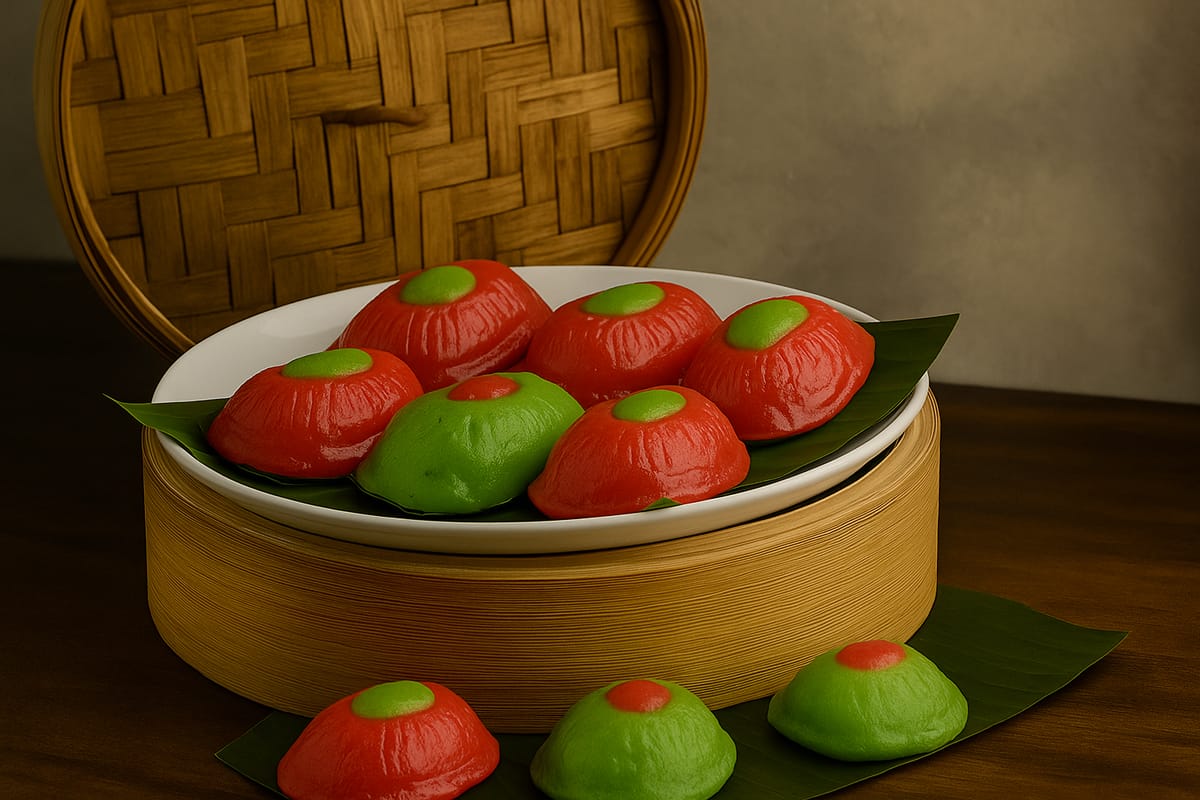
- Divide: color ¾ of the dough green, and ¼ red (or any preferred combination).
Assemble the Kue Ku
- Take a piece of dough (about 1 tablespoon), flatten in your palm, and place a mung bean ball inside. Seal and roll into a smooth ball.
- Dust a traditional kue ku mold (turtle-shaped mold) with glutinous rice flour. Place dough ball inside, press firmly, then tap out carefully.
- Place each piece on an oiled banana leaf square.
Steam the Pastries
- Prepare a steamer with boiling water. Wrap the steamer lid with a clean kitchen towel to prevent condensation dripping onto the pastries.
- Steam the kue ku for 12–15 minutes over medium heat.
- Remove from steamer and immediately brush lightly with oil for a glossy finish.
Notes
- Mung beans (kacang hijau kupas): Look for yellow hulled mung beans at Asian groceries. Split yellow mung beans or lentils can be substituted, though the flavor is slightly different.
- Banana leaves: Found frozen in Asian or Latin markets. If unavailable, line the steamer with parchment paper.
- Coconut milk: Canned coconut milk works well. Choose a full-fat version for authentic richness.
- Potato (kentang): Some versions use sweet potato instead of regular potato, which gives a slightly sweeter and softer dough.
- Molds: Traditional turtle-shaped molds are sold in Asian kitchenware shops or online. A small mooncake mold or any patterned press can be used instead.
- Coloring: Traditionally red or green. Natural coloring (beet juice, matcha, pandan extract) can be used instead of food dye.
- Storage: Best enjoyed fresh. Store leftovers in an airtight container at room temperature for 1 day, or refrigerate up to 3 days. Steam briefly before serving to soften.