A Personal First Encounter
The first time I heard the name Pisang Hijau was not in Makassar itself, but in a small Makassar restaurant in Jakarta. I was enjoying a bowl of Coto Makassar, the city’s famous beef soup, when the waiter suggested I try their signature drink called Es Pisang Hijau.
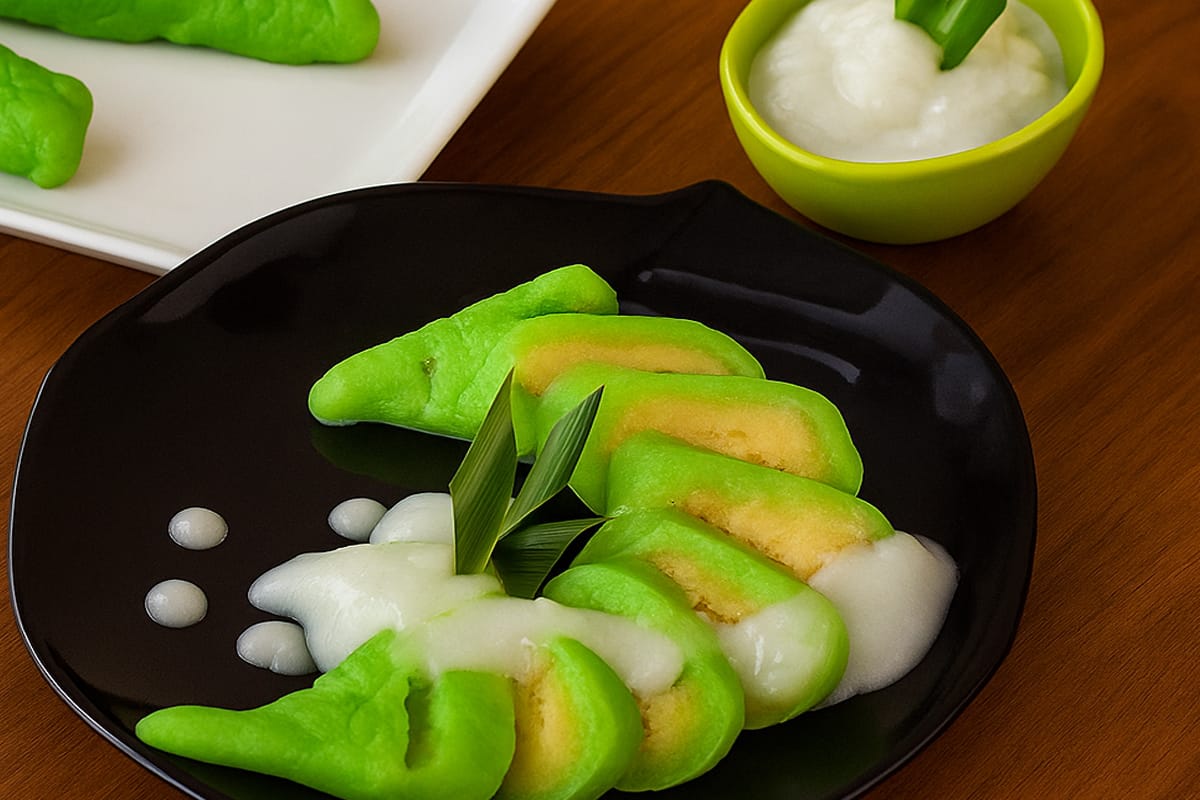
At first, I was puzzled. The name literally means “green banana.” Did that mean there was actually a banana with green flesh? As far as I knew, ripe bananas were yellow, and unripe ones were pale white inside—not bright green. When the dessert finally arrived, I realized the truth. The banana itself wasn’t green. Instead, it was wrapped in a smooth, soft rice flour dough, naturally tinted green with pandan leaves. This dough gave the banana a delicate fragrance and a silky texture.
Served with a sweet coconut milk sauce, crushed ice, and bright red syrup, Es Pisang Hijau was unlike any dessert I had tasted before. The combination of warm, fragrant pandan dough and the refreshing icy syrup was both comforting and festive. That first spoonful instantly turned me into a fan.
Pisang Hijau – Green Banana Dessert from Makassar, Indonesia
Ingredients
Instruction
- Prepare the pandan extract (if using fresh leaves):Blend pandan leaves with water, strain, and set aside.
- Make the dough:In a saucepan, combine rice flour, thin coconut milk, sugar, salt, and pandan water. Cook over medium heat, stirring constantly until the mixture thickens and becomes smooth. Remove from heat and let cool slightly.
- Wrap the bananas:– If using banana leaves, soften them by briefly steaming or heating over a flame.– Brush the leaf (or parchment) lightly with thick coconut milk.– Spread about 3 tablespoons of the dough into a thin layer (½ cm thick).– Place one banana in the center, then roll and seal so the banana is fully wrapped.
- Steam:Place the wrapped bananas in a steamer and steam for about 10 minutes until the dough is set.
- Make the coconut sauce:In a saucepan, combine coconut milk, sugar, salt, and rice flour (dissolved in a little water). Cook over low heat, stirring constantly until the mixture comes to a gentle boil and thickens.
- Serve:Slice the wrapped bananas, arrange on a plate, and drizzle generously with the warm coconut sauce.
Notes
- Banana substitution: Pisang raja/kepok are firm, sweet Indonesian bananas. If unavailable, use ripe plantains (closer in texture) or regular Cavendish bananas (slightly softer).
- Pandan substitution: If fresh pandan leaves are not available, use pandan extract (found in Asian grocery stores) or green food coloring + vanilla for aroma.
- Banana leaves: They add fragrance and authenticity, but parchment paper or plastic wrap can be used instead. If using parchment, lightly grease before wrapping.
- Coconut milk: Full-fat canned coconut milk works well. For thin coconut milk, dilute with water (2:1 ratio).
- Sauce texture: Rice flour makes the sauce thick and a bit rustic. For a smoother, lighter sauce, use cornstarch instead.
- Serving idea: Traditionally served warm, but it’s also delicious chilled, especially in warmer climates.
Origins and Legends of Pisang Hijau
The history of Pisang Hijau is as colorful as its appearance. Several versions of its origin story exist, blending folklore, culinary tradition, and historical influence.
Legendary Tale
One version tells of a cruel king who was known for punishing his servants harshly. His cook, named Ijo, once served a dish that displeased the king. Facing the threat of execution, Ijo begged for one last chance to redeem himself. Inspired by the king’s love for bananas, he created a new dessert: bananas wrapped in a green dough made from rice flour and pandan. To everyone’s surprise, the king loved it so much that he spared Ijo’s life. The dish was named Es Pisang Ijo in honor of the cook.

Cultural Roots
A second version ties the dessert more directly to the Bugis-Makassar culinary tradition. Known for their creativity with rice flour, coconut, and bananas, the Bugis people developed Pisang Hijau as a festive treat for family gatherings and religious celebrations. Over time, variations emerged, with some adding cheese, chocolate, or nuts as toppings—but the classic version remains the most beloved.
Historical Evolution
The third story connects Pisang Hijau to the arrival of ice in Indonesia during the late 19th century. According to historian Denys Lombard in Nusa Jawa Silang Budaya, ice was first imported from Boston, USA, and was considered a luxury item in Batavia (now Jakarta). As ice became more accessible, Makassar’s local cooks began pairing Pisang Hijau with crushed ice, sweet syrups, and coconut sauce. Thus, the warm banana dish evolved into Es Pisang Hijau—a cold, refreshing dessert perfect for Indonesia’s tropical climate.
Symbolism and Philosophy
For the Makassar people, Pisang Hijau carries deeper meaning than just a sweet treat. The green dough symbolizes malabbiri, a Bugis-Makassar cultural value associated with elegance, politeness, and harmony. Green is also considered a sacred and calming color, believed to bring peace and balance.
The act of wrapping a banana inside a green layer reflects the philosophy of modesty and protection—something beautiful concealed within something equally graceful. In many ways, Pisang Hijau mirrors the Makassar people’s values: respectful, composed, yet full of richness inside.
How Pisang Hijau is Enjoyed in Indonesia
In Makassar, Pisang Hijau is most popular during the holy month of Ramadan. It is a staple dish for breaking the fast, often served alongside other local desserts such as Es Palu Butung (a banana dessert without the green dough) and Es Poteng (fermented cassava with syrup).

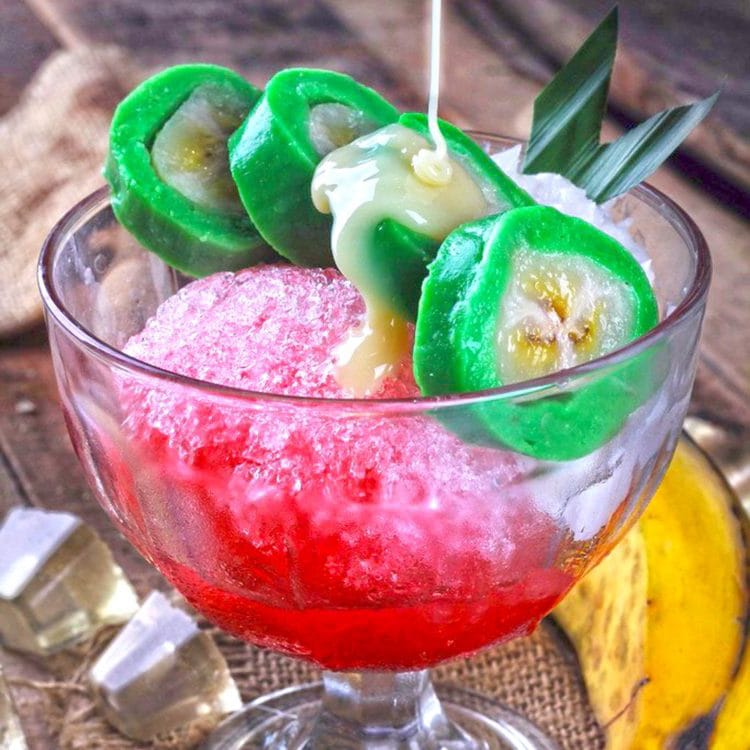
Traditionally, the dessert is made with pisang raja or pisang kepok, two varieties of Indonesian bananas known for their sweet yet firm texture. The banana is wrapped in the green rice flour dough, steamed until tender, then served with coconut milk sauce. For Es Pisang Hijau, it is combined with shaved ice and drizzled with red syrup—creating a visually striking contrast of green, white, and red.
The presentation is not just about taste; it’s about celebration. A bowl of Es Pisang Hijau looks festive, refreshing, and inviting—perfect for marking special occasions.
Health Benefits of Pisang Hijau
While it is considered a dessert, Pisang Hijau has some surprising nutritional values:
- Bananas provide potassium, vitamin C, and dietary fiber, supporting heart health and digestion.
- Rice flour dough is gluten-free, making the dessert suitable for those with gluten sensitivity.
- Coconut milk offers healthy fats (medium-chain triglycerides) that provide energy, though it should be consumed in moderation.
- Pandan leaves not only give natural fragrance but are also traditionally believed to help reduce stress and aid digestion.
Of course, the addition of syrup and sugar makes it more indulgent than health food, but compared to many Western desserts, Pisang Hijau offers a nice balance of nutrition and indulgence.
Bringing Pisang Hijau to Western Kitchens
For cooks in America, Europe, or other Western countries, making Pisang Hijau at home is absolutely possible with a few adjustments:
- Bananas: Since pisang raja or pisang kepok are rarely available abroad, ripe plantains or regular Cavendish bananas work well. Plantains give a closer texture to the original.
- Pandan: Fresh pandan leaves may be hard to find, but many Asian grocery stores sell frozen leaves or bottled pandan extract. If unavailable, vanilla extract plus a few drops of green food coloring can mimic the look and aroma.
- Banana leaves: While authentic, they can be replaced with parchment paper or food-safe plastic wrap. The flavor won’t be the same, but the cooking process remains accessible.
- Coconut milk: Full-fat canned coconut milk is widely available and works perfectly. To create “thin coconut milk,” dilute with water in a 2:1 ratio.
Tips for Success
- Don’t skip steaming: Even if you’re tempted to wrap the dough and eat it fresh, steaming helps the dough set properly and creates a tender texture.
- Balance the sauce: The coconut milk sauce should be thick enough to coat the banana but still pourable. If too thick, thin with a little water.
- Serve chilled in summer: Western readers might enjoy Es Pisang Hijau as a refreshing summer dessert. Add shaved ice and a splash of grenadine syrup if Indonesian rose syrup (sirup cocopandan) isn’t available.
- Experiment with toppings: While traditionalists may prefer the classic version, modern variations include grated cheese, chocolate shavings, or toasted almonds.
Similar Desserts Around the World
Pisang Hijau belongs to a larger family of banana-based and coconut-based desserts across tropical regions.
- In the Philippines, Turon is a fried banana roll wrapped in lumpia wrapper, sweet and crispy.
- In Thailand, Kluai Buat Chi is a dessert of bananas cooked in coconut milk, sometimes served warm.
- In the Caribbean, plantains are often used in sweet puddings or boiled in coconut milk.
- Even in Southern U.S. cuisine, banana pudding plays a similar cultural role—comfort food tied to family gatherings.
What sets Pisang Hijau apart is its striking green wrapping, symbolic meaning, and the combination of warm and cold elements in Es Pisang Hijau.
Pisang Hijau Beyond Indonesia
Pisang Hijau is more than just a dessert—it is a piece of Makassar’s history, culture, and philosophy, wrapped in the sweet simplicity of bananas and pandan. Whether you believe in the legend of the cook Ijo who saved his life with this dish, or you see it as an evolution of Bugis-Makassar culinary tradition, one thing is certain: this dessert has stood the test of time.

For Indonesians, especially during Ramadan, it is a nostalgic comfort food. For international audiences, it is an exotic yet approachable recipe that bridges tradition and modern creativity. If you ever find yourself in Makassar, don’t miss the chance to taste it at its source. But if you’re in America, Europe, or anywhere else, try making it at home with the adaptations above.
The next time someone asks you about Indonesian desserts, you can proudly share the story of Pisang Hijau—a green banana dish that’s not really green inside, but carries a richness of flavor, culture, and history worth celebrating.