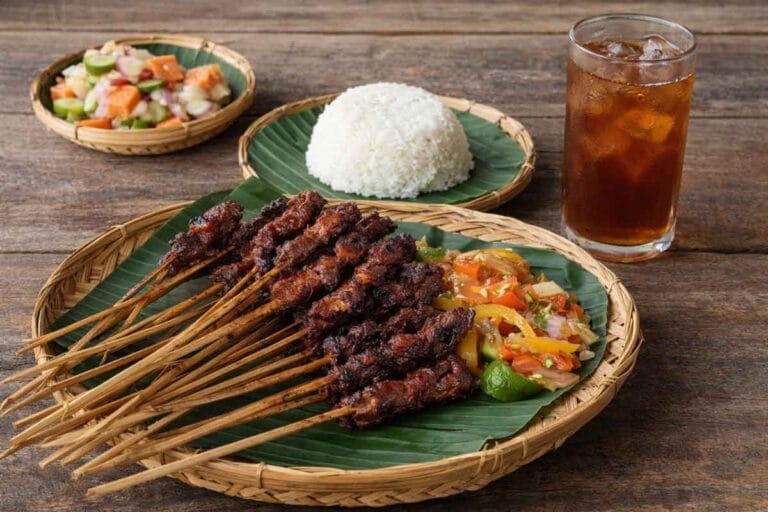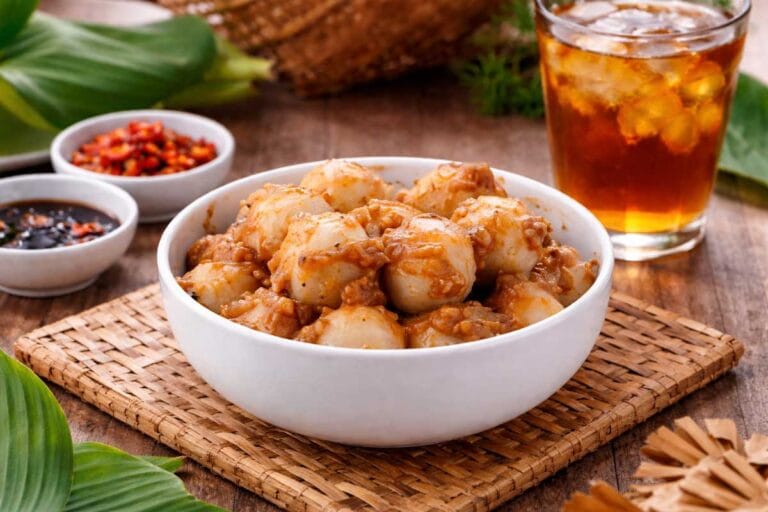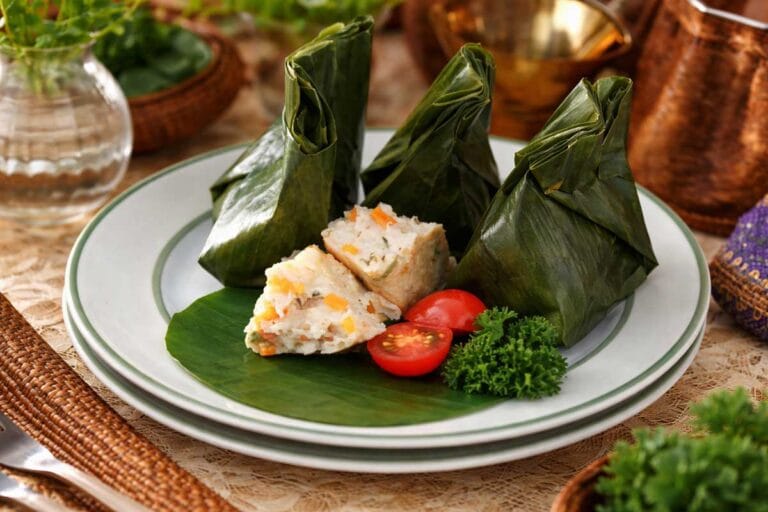
I Believe you’ll quickly notice something unique about Sundanese cuisine. Unlike the elaborate spice blends of Padang food from West Sumatra or the sweet-salty complexity of Central Javanese cooking, Sundanese dishes often celebrate simplicity. Fresh vegetables are served raw as lalapan (salad greens), sambal (chili paste) is often pounded fresh with tomatoes and chilies, and fish is fried golden and eaten with little more than a squeeze of lime.
But among this seemingly simple landscape, there is one dish that quietly captures the heart and imagination of food lovers: Pepes Ayam, or Indonesian steamed chicken in banana leaves.
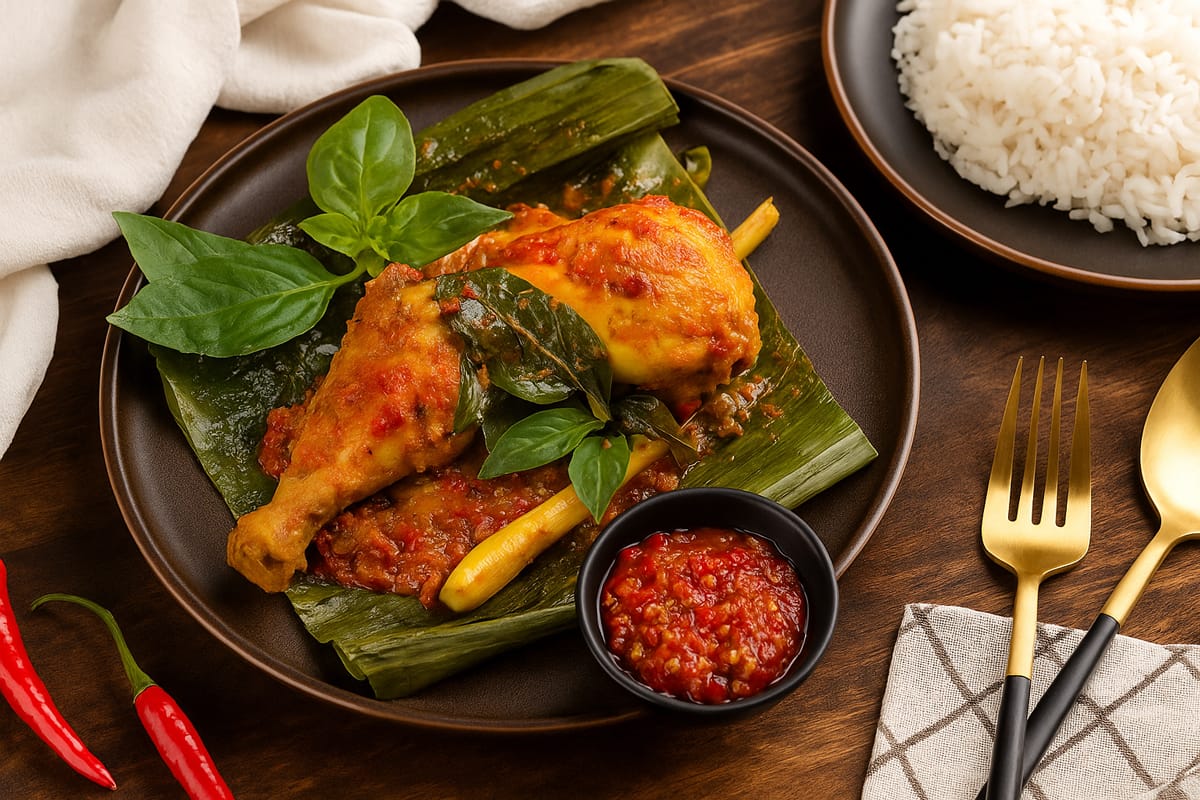
Pepes Ayam – Indonesian Steamed Chicken in Banana Leaves
Ingredients
Instruction
- Prepare the spice pasteBlend garlic, candlenuts, turmeric, chili peppers, salt, and sugar until smooth. You can use a blender or mortar and pestle.
- Mix the chickenIn a large bowl, combine chicken with the spice paste. Add bay leaves, galangal, shallots, lemongrass, basil leaves, and tomato slices. Toss well until chicken is fully coated.
- Wrap in banana leavesDivide the mixture into 4 portions. Place each portion in the center of a banana leaf, fold tightly, and secure with toothpicks or skewers.If using parchment and foil, wrap first in parchment then foil to trap the steam.
- Steam the packetsPlace in a steamer basket and steam over medium heat for 40–50 minutes, until chicken is fully cooked and tender.
- Optional finishingFor a smoky aroma, grill or broil the wrapped packets for 2–3 minutes per side.
- ServeServe hot with steamed rice and chili sauce (sambal).
Notes
- Banana leaves (daun pisang): Found frozen in Asian or Latino grocery stores. If unavailable, use parchment paper + aluminum foil for wrapping.
- Candlenuts (kemiri): Must always be toasted or cooked before use. Raw candlenuts contain natural toxins (saponins and phorbol esters) that can cause stomach upset if eaten raw. Safe once roasted; substitute with macadamia nuts or cashews if unavailable.
- Daun kemangi: Indonesian basil is more fragrant than Italian basil. If unavailable, use Thai basil or regular sweet basil.
- Daun salam: Unique Indonesian bay leaf. Substitute with regular bay leaf, though the aroma will be slightly different.
- Galangal (laos): Has a sharp citrusy flavor. If unavailable, substitute with ginger + a squeeze of lime juice.
- Spice level: Adjust chili peppers to your tolerance—Indonesian pepes is often moderately spicy.
What Exactly Is Pepes?
The origin of pepes (or pais, as it was once called) is traced back to West Java, the land of the Sundanese people. Sundanese cuisine is known for its light seasoning, minimal use of oil, and its respect for natural ingredients. Think of freshly fried fish, sambal made from raw chili and tomato, crispy crackers, and raw vegetables (lalapan) served straight from the garden.
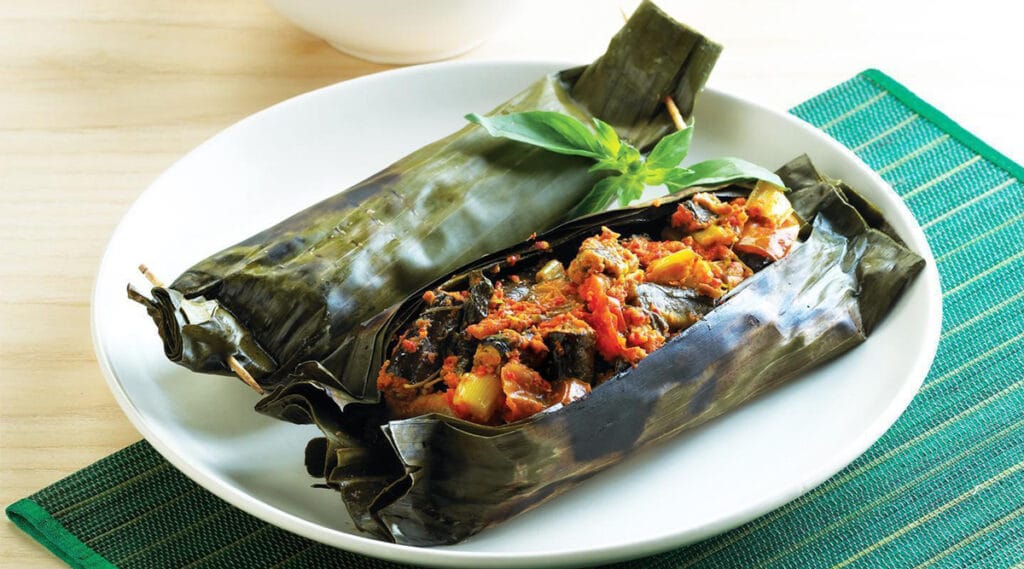
Pepes perfectly embodies this philosophy. Villagers would take whatever ingredients they had—fresh fish from rivers, tofu made from soybeans, mushrooms from the fields, or chicken raised in the backyard—wrap them with homegrown herbs like turmeric, lemongrass, and basil (daun kemangi), and steam them inside banana leaves.
What’s fascinating is that in its earliest form, pepes wasn’t just food—it was a method of preservation. Before refrigeration, Sundanese communities cooked food slowly in hot ashes for hours (sometimes up to 8 hours), using banana leaves as natural packaging. This not only kept food moist and flavorful but also helped it last longer. Over time, this necessity turned into a culinary art.
Interestingly, Bali also claims an ancient tradition of pepes. Historical records like the Trunyan inscriptions (9th–10th century AD) mention foods wrapped in banana leaves and cooked over fire. Whether in Sunda or Bali, the technique shows how deeply ingrained this style of cooking is in Indonesian culture.

Why Banana Leaves?
If you’ve never cooked with banana leaves, imagine nature’s version of parchment paper—but better.
- Aromatic infusion: When steamed or grilled, banana leaves release a subtle, grassy aroma that seeps into the food.
- Eco-friendly: Before plastic and foil, banana leaves were the original sustainable packaging—biodegradable and abundant.
- Non-stick surface: Just like modern non-stick pans, banana leaves prevent food from sticking.
- Heat resistance: They can withstand steaming and grilling, protecting the food inside while locking in moisture.
For Indonesians, banana leaves aren’t just practical—they carry cultural meaning. Food wrapped in leaves feels more natural, more connected to the earth. Serving dishes in banana leaves often symbolizes hospitality and respect for tradition.
Pepes Ayam: A Dish of Comfort and Celebration
Among the many types of pepes—fish (pepes ikan), anchovies (pepes teri), tofu, mushrooms, or even shrimp—Pepes Ayam (chicken pepes) stands out as a favorite.
The chicken is marinated with garlic, candlenuts (kemiri), turmeric, and chilies, then mixed with basil leaves, tomatoes, and lemongrass before being wrapped in banana leaves. Once steamed, the chicken turns tender, the spices seep deep inside, and the banana leaves lend a fragrant note that no frying pan can match.
In Sundanese households, Pepes Ayam is often served with warm steamed rice, sambal chili paste, and a plate of fresh vegetables. It’s everyday comfort food, yet also special enough for family gatherings.
A Dish Fit for a President
Here’s a fun fact that makes Pepes Ayam truly international: Former U.S. President Barack Obama is a fan of pepes.
Obama spent part of his childhood in Indonesia, and according to his half-sister Maya Soetoro-Ng, some of his favorite Indonesian dishes included bakso (meatball soup), sambal tempeh, and ikan pepes (fish pepes). If the young Obama enjoyed pepes so much, there’s a good chance many Americans would too—especially those open to new flavors with a touch of familiarity.
Health Benefits of Pepes Ayam
Unlike many fried foods, Pepes Ayam is actually quite healthy:
- Low in fat – The steaming method requires little to no oil.
- High in protein – Chicken provides a lean source of protein.
- Rich in antioxidants – Spices like turmeric, garlic, and basil are natural immune boosters.
- Good for digestion – Lemongrass and galangal aid the digestive system.
- Naturally gluten-free – Perfect for health-conscious Western diets.
This combination makes Pepes Ayam not just a cultural treasure but also a dish that fits well into modern wellness-oriented lifestyles.
Variations Across Indonesia
Just like pizza in Italy or barbecue in the U.S., pepes has countless regional variations:

- Pepes Ikan (Fish Pepes): Traditionally carp, catfish, or gourami.
- Pepes Tahu (Tofu Pepes): A vegetarian version, mild yet flavorful.
- Pepes Jamur (Mushroom Pepes): Often made with oyster mushrooms.
- Pepes Udang (Shrimp Pepes): A seafood lover’s delight.
- Pepes Telur Ikan (Fish Roe Pepes): Stronger flavor, usually spicier.
Each reflects the local environment—coastal villages use fish, highland farmers use tofu or mushrooms, and households with poultry turn to chicken.
Philosophy and Culture Behind Pepes
At its heart, pepes is about patience and respect for nature.
Cooking pepes requires waiting—letting the steam do its slow work, letting the flavors mingle inside their green wrapping. It’s a reminder that good food isn’t rushed. It’s also about togetherness: pepes is rarely made for one person. It’s usually cooked in portions, shared with family, neighbors, or guests.
In Sundanese philosophy, food is not just sustenance—it’s a way of connecting people to nature and to each other. Banana leaves symbolize harmony with the earth, while the spices represent the richness of life.
Would Americans and Europeans Enjoy Pepes Ayam?
The short answer: yes, absolutely.
While the banana leaf presentation may be new to Western eyes, the flavor profile is surprisingly familiar: garlic, onion, basil, tomato, and chicken—all common ingredients in Western kitchens. The turmeric and lemongrass add an exotic twist, but not in an overwhelming way.
For American or European dining tables, Pepes Ayam could be served as:
- A healthy dinner entrée with rice or quinoa.
- An exotic weekend dish for adventurous foodies.
- A festive menu for summer cookouts—swap steaming for grilling, banana leaves for foil if needed.
In fact, the dish could easily find its place alongside Mediterranean or Latin American cuisines, which also use herbs, tomatoes, and wrapped cooking techniques (like tamales in Mexico or hallacas in Venezuela).
Pepes in the Modern World
Today, pepes continues to evolve. While many Indonesians still swear by banana leaves, some urban kitchens adapt the recipe using foil or parchment paper. Restaurants also serve pepes as part of fusion menus—sometimes combining it with global ingredients like cheese or new types of vegetables.

But at its core, Pepes Ayam remains what it has always been: a dish that carries history, nature, and community in every bite.
Your Turn to Taste the Tradition
From the quiet villages of West Java to the table of a U.S. president, Pepes Ayam has traveled far, both literally and culturally. It tells the story of a people who cook with what nature gives, who wrap food not just to preserve it but to celebrate it, and who believe that good flavor takes time.
For Western audiences, Pepes Ayam is more than just an exotic recipe—it’s a gateway to Indonesian culture, history, and philosophy. Try it once, and you might just understand why Barack Obama himself grew up loving pepes.
So next time you’re in the mood for something healthy, flavorful, and deeply meaningful, remember Pepes Ayam—Indonesia’s timeless gift to the culinary world.