Kue Lapis Pepe (Indonesian Steamed Layered Coconut Cake)
✨ Key Takeaways
- The Kue Lapis Pepe recipe uses only coconut milk, sugar, rice flour, and tapioca starch, making it naturally vegan and gluten-free.
- Two main versions exist: the tender rice flour version with a biang starter and the chewier classic tapioca/sago version.
- Steaming requires patience; wrapping the lid in a towel prevents condensation from ruining the glossy surface.
- This dessert is culturally significant in Betawi weddings, symbolizing layered prosperity and unbreakable unity.
The Kue Lapis Pepe recipe is a traditional Betawi dessert made by steaming thin layers of coconut milk, sugar, and starch. It is naturally vegan and gluten-free, offering a chewy, glossy texture distinct from Western baked cakes. The process involves careful layering to achieve the signature elastic bite and vibrant stripes.
Discover the authentic Kue Lapis Pepe recipe that transforms simple coconut milk and starch into a glossy, chewy masterpiece. If you have ever watched someone eat Kue Lapis Pepe in Jakarta, you will notice an unspoken rule: almost nobody bites straight through it. Instead, people carefully peel off one glossy, fragrant layer at a time, savoring the sweet coconut aroma and bouncy chew until the very last stripe disappears.
Unlike Western layer cakes that rely on ovens, butter, eggs, and baking powder, this classic Indonesian dessert is steamed—and it is naturally gluten-free and vegan. Made from just coconut milk, sugar, rice flour, and tapioca starch, Kue Lapis Pepe is a staple of Indonesia’s traditional jajanan pasar. Below, you will learn the history behind this beloved Betawi treat, how to adapt it using Western supermarket ingredients, and two authentic recipes: the tender Rice Flour (Tepung Beras) version using a traditional cooked starter (biang), and the Classic Betawi Tapioca/Sago (Tepung Tapioka/Sagu) version prized for its extra-glossy, chewy bounce.
The History and Cultural Roots of Kue Lapis Pepe
Kue Lapis Pepe is deeply rooted in Betawi culture. While layered steamed cakes exist across Southeast Asia, the specific name Kue Pepe (or Lapis Pepe) is distinctly Betawi.
According to Indonesian culinary historians—including documentation in the Ensiklopedia Kuliner Nusantara, regional heritage archives from the Jakarta Provincial Government, and culinary features in Kompas—Betawi cuisine is a living crossroads of Malay, Chinese (Peranakan), Arab, and Dutch influences. Kue Lapis Pepe reflects the long-standing Chinese-Indonesian (Peranakan) mastery of rice-and-starch steaming techniques, blended with the Malay archipelago’s love for rich coconut milk (santan) and vibrant natural colors.
Historically, before electric ovens existed in Indonesian households, steaming over a wood-fired dandang (tall metal steamer pot) was the primary way to bake celebratory sweets. In Betawi society, Kue Lapis Pepe became far more than an everyday snack. Alongside Kue Bugis and Kue Talam, it earned a permanent place on the ceremonial seserahan (wedding gift trays) during Betawi engagements (lamaran) and weddings, as well as during Eid (Lebaran) and neighborhood thanksgiving gatherings.

Also check out:
Kastengel Recipe: Irresistible Indonesian Cheese Cookies
Kue Lapis Pepe Tepung Beras (Indonesian Steamed Layered Coconut Rice Cake)
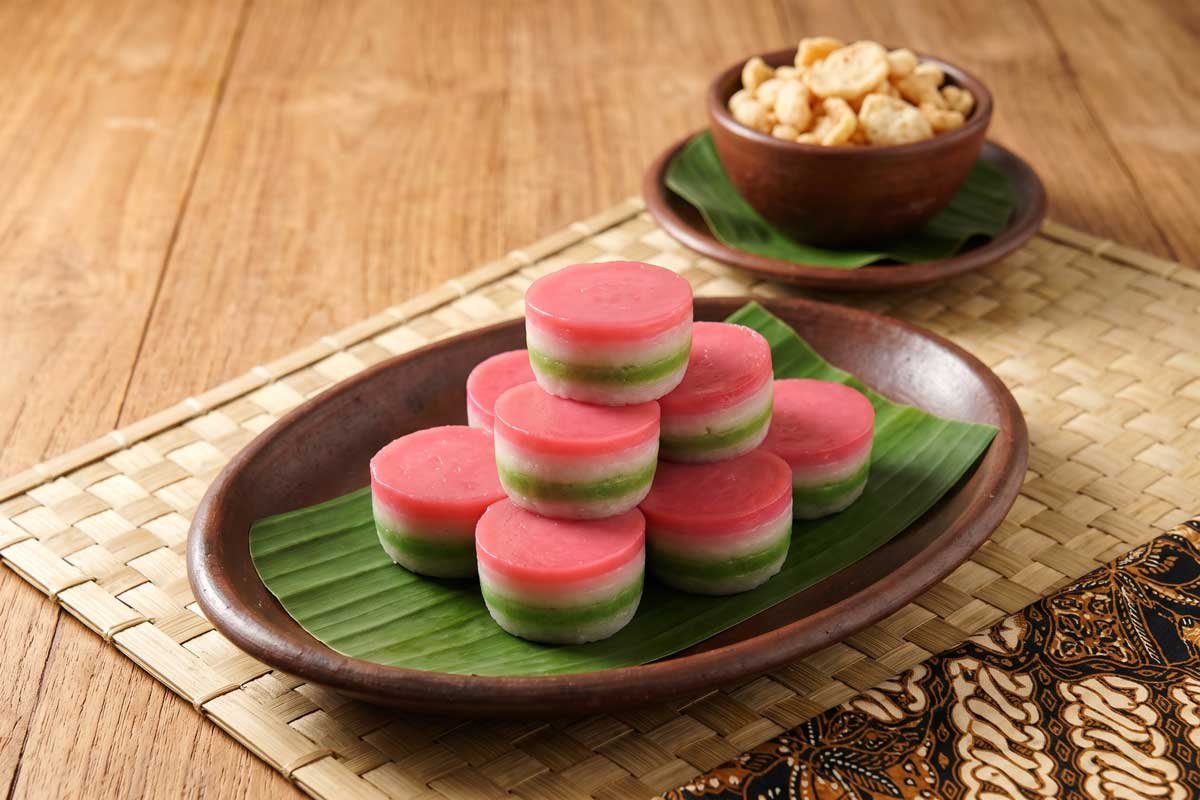
An authentic, naturally gluten-free and vegan Indonesian steamed layered cake made with rice flour, a cooked biang starter paste, tapioca starch, and rich coconut milk, steamed into ten colorful white, green, and red stripes.
Ingredients
Instruction
- Make the Starter Paste (Biang): In a small saucepan, whisk together the 25 g of rice flour and 100 ml of water until completely smooth. Cook over low heat, stirring constantly, until it thickens into a smooth, glossy paste (about 2–3 minutes). Remove from heat and let cool slightly.
- Mix & Strain the Batter: In a large mixing bowl, combine the granulated sugar, 200 ml thick coconut milk, 200 ml water, 200 g rice flour, 50 g tapioca starch, and the cooled biang paste. Whisk thoroughly until the sugar dissolves and the batter is completely smooth. Pass the batter through a fine-mesh sieve to remove any lumps.
- Divide & Color: Divide the strained batter into 3 bowls: keep the largest portion white (for 6 layers total), tint the second portion with 2 drops of green (for 2 layers), and tint the third portion with 2 drops of red (for 2 layers).
- Prep the Molds & Steamer: Lightly brush small individual molds (cucing or small ramekins) with neutral oil. Bring water to a steady simmer in a steamer pot (dandang) and wrap the lid with a clean kitchen towel to catch condensation.
- Steam the First White Layers: Place the oiled molds in the steamer. Pour 3 tablespoons of white batter into each mold (or divide evenly across your molds), cover, and steam for 5 minutes. Repeat this process until you have 3 white layers, steaming 5 minutes for each layer.
- Steam the Green Layers: Pour 3 tablespoons of green batter over the set white layer and steam for 5 minutes. Repeat for a total of 2 green layers.
- Steam the Second White & Final Red Layers: Continue layering with 3 layers of white batter (3 tbsp each, 5 minutes per layer), followed by 2 final layers of red batter (5 minutes for the first red layer).
- Final Steam & Cool: Once the very last red layer is poured, cover and steam the entire cake for a final 30 minutes until thoroughly cooked and glossy. Remove from the steamer and let cool completely to room temperature before unmolding and serving.
Notes
- Stir Before Every Pour: Rice flour and tapioca starch naturally settle at the bottom of the bowl. Always give your batter a quick stir right before ladling each new layer so the texture stays uniform from bottom to top.
- Wrap the Steamer Lid: Tying a clean tea towel around the steamer lid prevents condensation from dripping onto the cake and creating watery craters on the glossy surface.
- Keep the Heat Steady (Medium, Not Roiling): Steaming on overly high, aggressive heat causes the layers to bubble and wrinkle. Maintain a steady, gentle medium simmer.
- The Plastic-Wrap Knife Trick: If steaming in a square pan, wrap a sharp knife tightly in plastic wrap (or lightly oil the blade) before slicing. This guarantees razor-sharp, clean stripes with zero sticking.
- Storage: Kue Lapis Pepe stays soft at room temperature for up to 2 days in an airtight container. If refrigerated, it will firm up—simply steam it for 5 minutes or microwave for 15 seconds to restore its fresh, bouncy softness.
Classic Betawi Kue Lapis Pepe (Tapioca / Sago Starch Version)
If you want the traditional Jakarta street-market texture—translucent, ultra-glossy, and noticeably bouncier and chewier—use this classic tapioca-forward ratio with the exact same steaming technique:
Ingredients
Instruction
Quick Method (Classic Tapioca/Sago Version)
- Infuse the Coconut Milk: Simmer the 650 ml coconut milk, salt, and knotted pandan leaves over low heat until steaming and fragrant (do not let it boil violently). Turn off the heat, discard the pandan leaves, and let the coconut milk cool to room temperature.
- Mix & Strain: Whisk the tapioca starch, rice flour, and sugar in a large bowl. Gradually pour in the cooled coconut milk while whisking until smooth, then strain through a fine-mesh sieve.
- Color & Steam: Divide into white, green, and red portions, and steam layer by layer (5 minutes per layer) in oiled cucing molds or a lined 7×7-inch (18×18 cm) square pan, finishing with a final 25–30 minute steam. Cool completely before slicing or unmolding.
Notes
- Stir Before Every Pour: Rice flour and tapioca starch naturally settle at the bottom of the bowl. Always give your batter a quick stir right before ladling each new layer so the texture stays uniform from bottom to top.
- Wrap the Steamer Lid: Tying a clean tea towel around the steamer lid prevents condensation from dripping onto the cake and creating watery craters on the glossy surface.
- Keep the Heat Steady (Medium, Not Roiling): Steaming on overly high, aggressive heat causes the layers to bubble and wrinkle. Maintain a steady, gentle medium simmer.
- The Plastic-Wrap Knife Trick: If steaming in a square pan, wrap a sharp knife tightly in plastic wrap (or lightly oil the blade) before slicing. This guarantees razor-sharp, clean stripes with zero sticking.
- Storage: Kue Lapis Pepe stays soft at room temperature for up to 2 days in an airtight container. If refrigerated, it will firm up—simply steam it for 5 minutes or microwave for 15 seconds to restore its fresh, bouncy softness.
The Name and Culinary Philosophy
The name Lapis Pepe carries both a literal description and a rich cultural symbolism:
- Lapis means “layer” in Indonesian, referring to the thin, colorful stripes steamed one by one.
- Pepe is a Betawi term traditionally associated with the cake’s signature sticky, elastic, and closely bonded texture.
In Betawi wedding philosophy, gifting Kue Lapis Pepe to the bride’s family is a blessing in edible form:
- Layered Prosperity (Rejeki Berlapis): Just as the cake is built layer upon layer, the couple is wished a life of continuous, stacking blessings and good fortune.
- Unbreakable Unity: Because the chewy, sticky layers cling tightly together without falling apart, the cake symbolizes a strong, harmonious bond between the newlyweds and their extended families.
- Patience and Devotion: You cannot rush Kue Lapis Pepe. Steaming ten thin layers one at a time requires steady heat, attention, and patience—values considered essential to a lasting marriage.
What Does Kue Lapis Pepe Taste Like? (Rice Flour vs. Tapioca Version)
At its core, Kue Lapis Pepe tastes like sweet, creamy, lightly salted coconut pudding transformed into a firm, sliceable, chewy confection. It is rich without being cloying, and when made with pandan or subtle vanilla-like coconut notes, it smells incredible straight out of the steamer.
However, the flour ratio changes the eating experience significantly, which is why home cooks in Indonesia often debate their favorite style:
- Lapis Pepe Tepung Beras (Rice Flour Version with Biang): Using primarily rice flour with a cooked starter paste (biang) and a touch of tapioca creates a cake that is soft, tender, and clean-biting. It holds crisp, distinct stripes and feels slightly more substantial and cake-like, while still peeling apart neatly.
- Classic Betawi Lapis Pepe (Tapioca/Sago Version): Using mostly tapioca or sago starch produces a translucent, ultra-glossy, and noticeably bouncier, chewier cake (kenyal). This is the version most famous in Jakarta’s traditional markets for stretching slightly as you peel each thin ribbon.
How It Is Traditionally Served in Indonesia
In Indonesia, Kue Lapis Pepe is served at room temperature. Cooling the cake completely is non-negotiable, because the starches need time to set so the cake slices cleanly without sticking to the knife.
Traditional ways to enjoy it include:
- Morning & Afternoon Snack: Paired with bitter, strong Indonesian black coffee (kopi tubruk) or hot unsweetened jasmine tea (teh melati), which balances the cake’s rich coconut sweetness.
- Individual Cucing Molds or Diamond Slices: In the rice flour recipe below, the batter is steamed in small individual bowls (cucing), making charming personal-sized portions. When steamed in a square pan, it is sliced into neat rectangles or diamonds using a knife wrapped in plastic wrap (to prevent sticking).
When to Serve It
Kue Lapis Pepe is a fantastic make-ahead dessert for dinner parties, potlucks, afternoon tea, or holiday platters. Because it contains no dairy, no eggs, and no wheat, it is also a crowd-pleasing showstopper whenever you are hosting vegan or gluten-free guests who rarely get to enjoy intricate, colorful layered cakes.
Can Kue Lapis Pepe Be Adapted Internationally?
Yes. You do not need any specialized Indonesian baking gear. A standard bamboo steamer, a stainless steel steamer insert over a deep pot, or even a deep roasting pan with a wire rack and foil lid works perfectly.
Also check out:
Pepes Ayam: Legendary Indonesian Recipe Loved by Obama
The most important tip for Western kitchens is wrapping the steamer lid in a clean kitchen towel. This catches condensation and stops water droplets from falling onto the surface of the cake, keeping the top layer smooth and glossy.
Ingredient Substitutions for Western Supermarkets
Every ingredient in both versions of Kue Lapis Pepe is easy to find at standard Western supermarkets or Asian grocery stores:
| Authentic Indonesian Ingredient | Role in the Dish | Best Western Supermarket Substitute |
|---|---|---|
| Tepung Beras (Indonesian rice flour) | Tender structure & matte-creamy body | White rice flour (not glutinous/sweet rice flour). Look in the gluten-free baking aisle. |
| Sagu Tapioka / Tepung Tapioka (Tapioca/sago starch) | Glossy shine & chewy bounce | Tapioca starch / tapioca flour (widely sold by Bob’s Red Mill and other baking brands). Do not use cornstarch, as it turns cloudy and less elastic. |
| Santan Kental (Fresh thick coconut milk) | Rich, creamy coconut flavor | Canned full-fat coconut milk (shake well before measuring; use a brand with high coconut extract and no added sugar). |
| Cetakan Cucing (Small traditional ceramic/plastic cups) | Individual portioned molds | Small ramekins, silicone cupcake liners, or a standard 7×7-inch (18×18 cm) square baking pan. |
| Pewarna Makanan (Merah & Hijau) (Red & green food coloring) | Traditional festive stripes | Standard gel or liquid food coloring, or pandan extract (for green) and rose/beetroot extract (for red/pink). |
Global Culinary Cousins: Similar Dishes Around the World
If you love chewy, steamed Asian desserts, Kue Lapis Pepe sits right alongside several famous regional cousins:
- Kuih Lapis (Malaysia & Singapore): Virtually identical in concept and heritage, often flavored with pandan leaves and finished with a signature bright red top layer.
- Khanom Chan (Thailand): Thailand’s famous “nine-layer dessert” (chan = layer, nine = good luck). It uses a similar tapioca-and-rice-flour base, is scented with jasmine water and pandan, and is served at Thai weddings for the exact same reason—symbolizing rising prosperity.
- Bánh Da Lợn (Vietnam): Vietnam’s “pig skin cake” gets its nickname from its translucent, chewy tapioca layers, but it alternates green pandan layers with a rich, mashed mung bean filling.
- Sapin-Sapin (Philippines): A vibrant, multi-layered steamed glutinous rice cake topped with toasted coconut curds (latik), typically featuring purple yam (ube), jackfruit, and coconut layers.
Nutritional Overview, Health Benefits, and Precautions
A single serving of Kue Lapis Pepe (based on 12 servings) contains approximately 175 kcal, 1.5g of protein, 4.5g of fat, and 32g of carbohydrates.
Key Health Benefits
- Naturally Gluten-Free & Vegan: Free from wheat, eggs, butter, and dairy, making it accessible for people with celiac disease, lactose intolerance, or plant-based diets.
- Quick, Clean Energy: Rice flour and tapioca starch are easily digestible carbohydrates, which is why jajanan pasar like Kue Lapis Pepe are traditionally eaten for a quick morning or mid-afternoon energy boost.
Precautions to Keep in Mind
- High in Sugar & Refined Carbs: Like most traditional confections, Kue Lapis Pepe has a relatively high glycemic index due to granulated sugar and refined starches. Enjoy it in moderation—one or two slices alongside unsweetened tea or coffee is the ideal portion.
- Saturated Fat: Full-fat coconut milk contributes saturated fat, though in moderate amounts per individual slice.
Estimated Cost Breakdown (Western Supermarket)
Kue Lapis Pepe is one of the most budget-friendly desserts you can make from scratch. Here is a realistic cost estimate for 12 servings in the US or Europe:
- White rice flour & tapioca starch (275g total): $2.00 – $3.00
- 1 can (400 ml) full-fat coconut milk (using 200 ml): $1.25 – $1.50
- Granulated sugar (250g): $0.75 – $1.00
- Food coloring & oil for greasing: $0.50 (prorated)
- Total Estimated Cost: $4.50 – $6.00 (roughly $0.40 – $0.50 per serving).
Frequently Asked Questions
What is the difference between rice flour and tapioca Kue Lapis Pepe?
The rice flour version is softer and more cake-like, while the tapioca version is glossier, more translucent, and significantly chewier.
Can I use cornstarch instead of tapioca starch?
No, cornstarch will make the cake cloudy and less elastic. You must use tapioca or sago starch for the correct bounce.
How do I prevent water droplets from falling on the cake?
Wrap the steamer lid in a clean kitchen towel to absorb condensation before it drips onto the surface.