In the constant rhythm of Jakarta—a city that never truly pauses—there is one dish that has survived wars, colonialism, migration, and the changing tides of modern taste: sayur godog. Behind its unassuming name lies a long history, layers of philosophy, and a powerful identity tied to the Betawi people. For generations, this coconut-milk vegetable stew has been more than just a dish; it is a symbol of family, celebration, and cultural memory.
This article explores the meaning of godog, traces the origins of the dish, examines the cultural exchanges that shaped it, breaks down its many variations, and considers how it can be recreated in Western kitchens. Written in a narrative yet informative style, it aims to accompany readers from start to finish with stories, insights, and flavors worth discovering.
What Does the Word “Godog” Mean?
In both Javanese and Betawi languages, the word godog simply means to boil or to simmer. But in the culinary context, “menggodok” doesn’t mean boiling something rapidly—it refers to cooking ingredients slowly, until they soften and the flavors meld completely.
That patient simmering process is at the heart of sayur godog. The stew is cooked gently in coconut milk, allowing aromatic spices like galangal, ginger, turmeric, and chilies to fully infuse the broth. The result is a dish that tastes calm, rich, and comforting—a flavor built through time and attention.
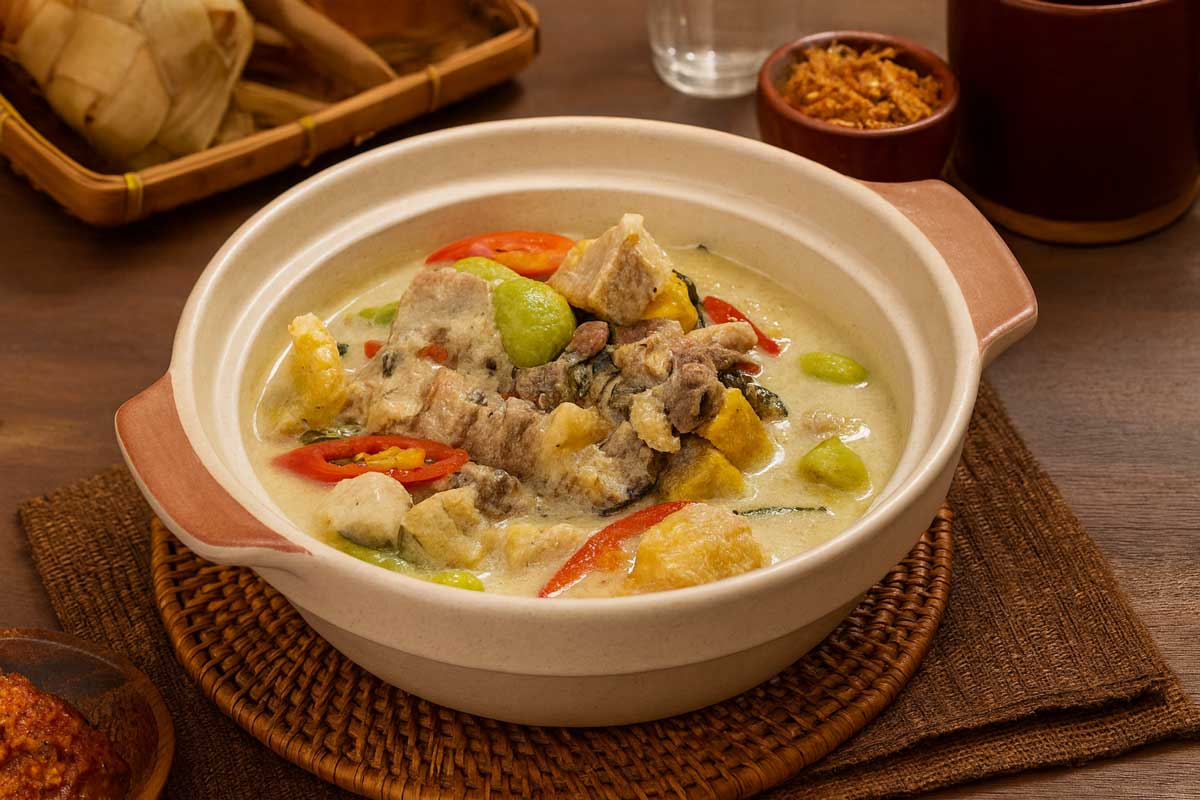
Indonesian Sayur Godog (Betawi Coconut Vegetable Stew)
Ingredients
Instruction
- Dry-roast the candlenuts (kemiri) on a pan until slightly golden.
- Blend or process shallots, garlic, red chiles, roasted candlenuts, turmeric, and soaked ebi until smooth.
- Add a splash of oil or water if needed to help blending.
- Heat 2–3 tablespoons oil in a pot.
- Sauté the spice paste until fragrant and slightly oily (about 4–5 minutes).
- Add galangal, lemongrass, and bay leaves. Stir for another minute.
- If using beef, add it now along with broth. Simmer until halfway tender.
- Add papaya (or chayote), green beans, tempeh, and tofu.
- Simmer until vegetables are tender but not mushy.
- Lower the heat and pour in the coconut milk.
- Stir gently and continuously for the first minute to prevent curdling.
- Add salt, pepper, and palm sugar.
- Simmer on low for 10–12 minutes until flavors meld.
Serve
Ladle the warm, creamy stew into bowls. Traditionally served with ketupat or lontong, but it also pairs well with jasmine rice.
Notes
1. About candlenuts (kemiri)
-
Always dry-roast before blending.
Raw candlenuts contain mild natural toxins and should never be eaten raw. - If unavailable, substitute with macadamia nuts for texture.
2. About ebi (dried shrimp)
- Soak for 10 minutes to soften and reduce the strong aroma.
- Western palates may prefer 1 teaspoon instead of 1 tablespoon; adjust to taste.
- Adds authentic Betawi umami—don’t skip unless allergic.
3. Vegetable substitutes
- Young papaya can be replaced with chayote, easier to find in the U.S.
- Tofu and tempeh can be baked or air-fried first for a firmer texture.
4. Coconut milk tips
- Use full-fat coconut milk for best texture.
- Keep the heat low after adding santan to avoid splitting.
5. Making it vegetarian/vegan
- Use vegetable broth and skip beef.
- The stew remains delicious and fully authentic.
A Journey Through Time: From 17th-Century Batavia to the Modern Betawi Table
Historical records and oral traditions suggest that sayur godog dates back to the 17th century, during the early days of colonial Batavia (now Jakarta). At the time, it was a humble household dish made from readily available local produce: chayote or green papaya, long beans, and coconut milk—ingredients that grew abundantly in the region.
But as Batavia grew into a bustling port city and cultural crossroads, the dish evolved. The Betawi people, an ethnic group formed through centuries of intermarriage and cultural fusion, absorbed influences brought by Chinese settlers, Peranakan families, and Indian traders. These interactions left their mark on sayur godog, transforming it into the rich, aromatic stew known today.
Chinese and Indian Influences That Shaped the Flavor
One of the clearest influences comes from Chinese Peranakan cuisine. Sayur godog shares similarities with Lontong Cap Go Meh, a festive dish featuring coconut-milk broth and assorted ingredients. Chinese families who settled in Batavia often intermarried with locals, introducing ingredients such as red chilies, young papaya, and certain cooking techniques.

Indian traders brought spices—particularly turmeric, galangal, and coriander—which added warmth and depth to the Betawi stew. Over time, the dish adopted a more complex flavor structure, with aromatics and seasonings that made sayur godog uniquely Betawi.
It was this cultural blending—rich, layered, and diverse—that elevated sayur godog from a modest vegetable soup into a defining dish of Jakarta.
Philosophy in a Bowl: What Sayur Godog Represents
Like many traditional Indonesian dishes, sayur godog carries symbolic meaning.
Coconut milk represents gentleness and patience.
The combination of various ingredients—each different in flavor, texture, and color—symbolizes unity in diversity, a value deeply rooted in Betawi culture.
When families gather during festive moments, sayur godog becomes more than food. It becomes a reminder that differences do not separate; instead, when brought together, they create harmony and richness.
Sayur Godog on the Lebaran Table: A Tradition That Never Fades
No Betawi Eid celebration is complete without sayur godog.
Early in the morning, before guests arrive, the aroma of simmering coconut milk, sautéed dried shrimp, and freshly crushed spices fills Betawi kitchens. The dish is traditionally served with ketupat, lontong, semur daging, and sambal goreng ati, often accompanied by toasted coconut flakes for added depth.
Beyond Eid, sayur godog also appears in many traditional Betawi ceremonies, such as:
- Nuju Bulan — a seven-month pregnancy celebration where families gather to express gratitude and pray for the mother and child.
- Tahlilan — a communal prayer gathering held to honor and remember loved ones who have passed away.
Sayur godog is also often served at Betawi weddings as part of a traditional banquet that reflects heritage and hospitality.
Recognized as an Intangible Cultural Heritage
On October 29, 2021, the Jakarta Provincial Government officially recognized sayur godog as an Intangible Cultural Heritage of Indonesia.
This recognition underscores the dish’s cultural significance and ensures that Betawi culinary traditions continue to be preserved for future generations. Today, sayur godog is also introduced in local school programs in Jakarta to help children learn about their cultural roots.
What Does Sayur Godog Taste Like?
If described in a single line:
It is creamy, comforting, aromatic, slightly sweet, and deeply savory.
Coconut milk provides richness and softness.
Young papaya or chayote gives a mild sweetness and crisp texture.
Red chilies lend gentle heat and vibrant color.
Dried shrimp (ebi) adds umami depth without overwhelming the broth.
And then there’s pete (stink beans)—perhaps the most polarizing ingredient.
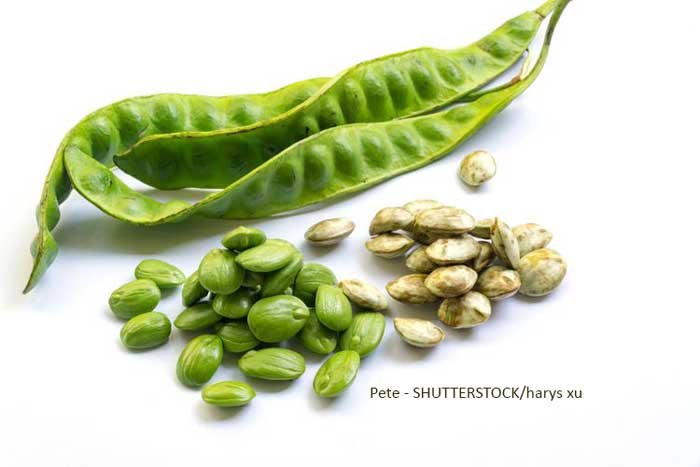
Pete (pronounced peh-teh)
Pete is a tropical bean with a famously strong aroma. It might surprise you at first, but once cooked into a dish like sayur godog or sambal goreng, it becomes earthy, rich, and surprisingly addictive.
A note for Western readers:
Pete has a strong, unmistakable aroma.
It can leave your mouth smelling somewhat funky and, yes, the scent carries through when you use the bathroom.
For Indonesians, this is completely normal—and for many, it’s part of the charm.
But for Western cooks, pete is optional. The dish remains delicious even without it.
Regional Variations of Sayur Godog
1. Classic Betawi Sayur Godog
The most iconic version: young papaya or chayote, pete, long beans, tempeh, tofu, dried shrimp, and sometimes beef trimmings. Thick, aromatic coconut broth defines this style.
2. Sayur Godog Sambel Betawi
A spicier variation using a base of red sambal.
This version was the one officially recognized as an Intangible Cultural Heritage.
3. Javanese Sayur Godog
Lighter, milder, often featuring chayote, carrots, and long beans.
The broth is thinner and less spicy.
4. Lebaran Sayur Godog
A festive version with extra coconut milk, beef, or richer side dishes—typically served only during holidays.
Can Sayur Godog Be Made in Western Kitchens?
Absolutely—though it comes with a few challenges.
Common obstacles include:
1. Pete (stink beans)
Rare in Western grocery stores and strong in aroma.
Can be omitted or replaced with fava beans or edamame.
2. Dried shrimp (ebi)
Available in Asian stores but may be intense for beginners.
Soaking them for 10 minutes softens the flavor.
3. Young papaya
Difficult to find outside tropical regions.
Chayote is the perfect substitute.
4. Indonesian bay leaves (daun salam)
Not the same as Western bay leaves.
Indian bay leaves (tej patta) work well as an alternative.
But despite these challenges, the dish is surprisingly adaptable. Many Western cooks who enjoy Thai curries or Malaysian laksa find sayur godog familiar yet refreshing, thanks to its comforting coconut base.
Tips for Making Sayur Godog in the West
- Choose full-fat coconut milk for authentic creaminess.
- Sauté dried shrimp until fragrant but not burnt to reduce sharp aromas.
- If pete is too intense, replace it or omit it altogether.
- Keep the heat low once coconut milk is added to prevent curdling.
- Serve with rice, rice cakes, or even crusty bread.
Nutritional Benefits
Sayur godog is surprisingly balanced.
It contains:
- Dietary fiber from vegetables
- Plant-based protein from tofu and tempeh
- Healthy fats from coconut milk
- Minerals from long beans and green papaya
- Antioxidants from turmeric, chilies, and shallots
Depending on ingredients, one serving ranges from 250–350 calories, making it satisfying without being overly heavy.
An Invitation to Explore Betawi Heritage Through Food
Sayur godog is more than a stew—it is a living story of cultural exchange, family traditions, and culinary creativity. By cooking it, you take part in a centuries-old narrative that continues to evolve.
If you live outside Indonesia, let sayur godog be your gateway into Betawi culture. Try it in your kitchen, experiment with available ingredients, share the dish with friends, or even tell the story of pete’s unforgettable aroma.
You might just discover a new favorite comfort food—one that carries the warmth, richness, and spirit of Jakarta in every spoonful.